
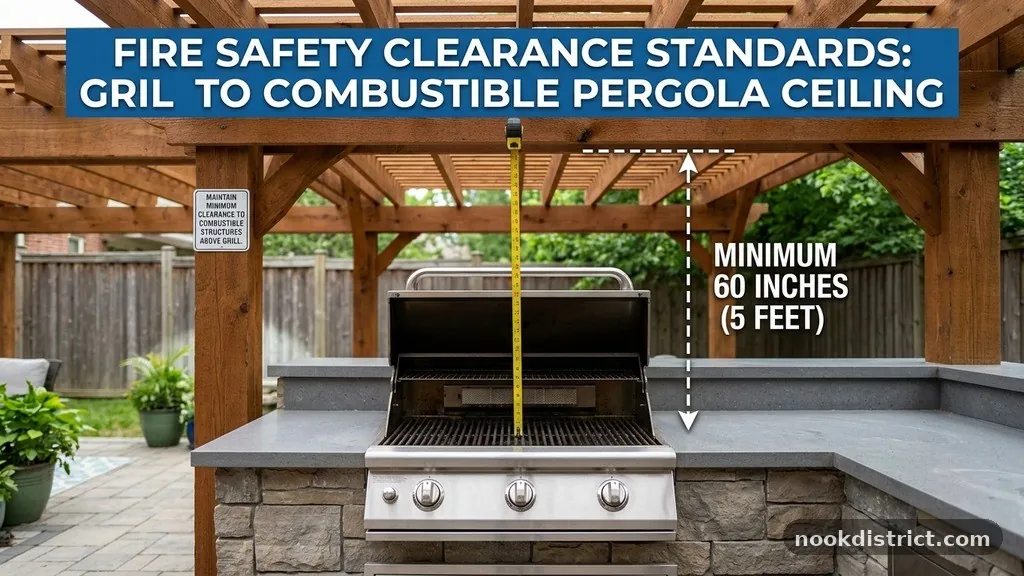
Distance from Built-In Grill to Combustible Patio Ceilings and Pergolas
Determining the proper distance from built-in grill to combustible patio ceilings and pergolas is a critical safety step for any outdoor kitchen project. Homeowners often underestimate how much heat, grease, and smoke can accumulate under a covered structure, leading to significant fire risks.
By following standardized clearance guidelines, you can ensure your cooking area remains both functional and compliant with local building codes. This information helps you plan your layout effectively while protecting your property from potential ignition hazards associated with high-temperature outdoor cooking equipment.
The Minimum Clearance Standards
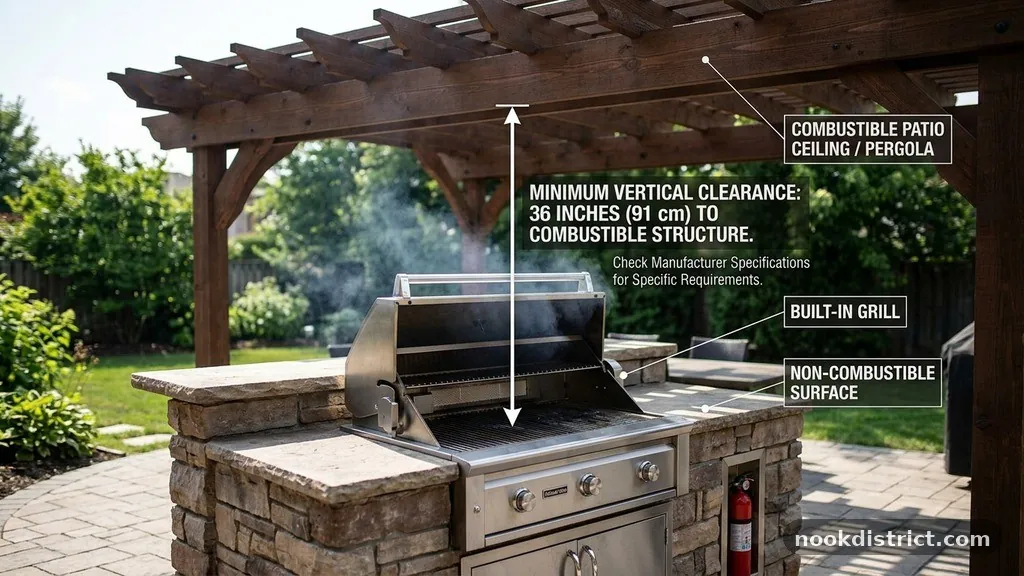
For most residential gas grills, the absolute minimum clearance to a combustible overhead surface is typically 48 inches or 4 feet. This measurement is taken from the top of the grill’s cooking surface or the highest point of the hood to the underside of the ceiling or pergola rafters.
While some manufacturers might suggest lower numbers in their manuals, local fire codes and insurance requirements often override these suggestions. You should always prioritize the most restrictive requirement to maintain the highest level of safety.
If you choose to ignore these clearances, you are essentially inviting heat to build up in an enclosed space that wasn’t designed for it. Combustible materials like cedar, pine, or even finished drywall can reach their ignition point surprisingly quickly when exposed to direct, rising heat.
Keeping a clear 4-foot buffer allows for better airflow and prevents the localized heat concentration that causes structural materials to warp or char. Always verify the specific clearance needs of your appliance, as high-BTU professional grills often require even more overhead space than standard residential units.
Understanding Combustible Materials
It is vital to recognize what constitutes a combustible material in the context of an outdoor kitchen. Wood, vinyl, plastic, and even certain types of composite decking fall into this category.
When these materials are used for a pergola or a patio ceiling, they are not inherently heat-resistant. Over time, consistent exposure to smoke and heat can dry out wood, making it increasingly susceptible to ignition from a stray flare-up or excessive heat transfer.
Even if you treat wood with fire-retardant coatings, these products are not permanent solutions. They often break down under UV exposure and outdoor weather conditions, losing their effectiveness over several seasons.
Therefore, the physical distance from built-in grill to combustible patio ceilings and pergolas remains your primary line of defense. By maintaining that critical gap, you ensure that even if the grill produces a large grease fire, the flames are not immediately in contact with your structural roof.
The Role of Ventilation in Outdoor Kitchens
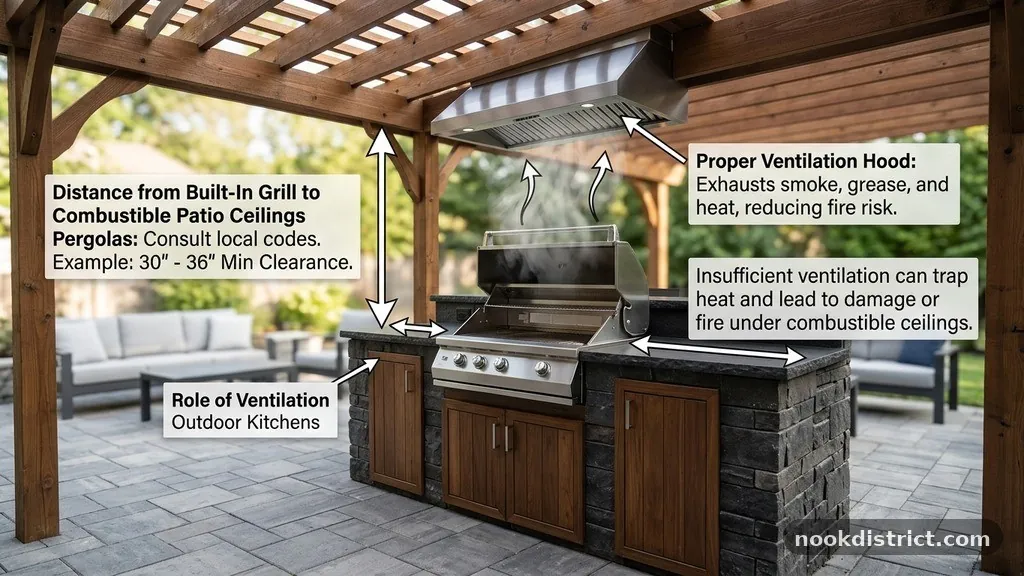
Ventilation is often the missing piece of the puzzle when people discuss overhead clearances. A grill produces more than just heat; it generates grease-laden smoke that can coat the underside of a pergola or ceiling.
This buildup is highly flammable and significantly increases the risk of a fire spreading rapidly if a flare-up occurs. If you decide to install a grill under a roof, you must consider installing a high-quality stainless steel hood with an exhaust fan.
A proper exhaust system helps move heat and smoke away from the ceiling structure. Even with a hood, you still need to maintain the required distance from built-in grill to combustible patio ceilings and pergolas to account for radiant heat.
The hood acts as a heat shield, but it cannot completely replace the need for vertical clearance. Proper ventilation also keeps your seating area comfortable, preventing smoke from lingering where guests are trying to eat or relax.
Comparing Different Grill Types
Different cooking appliances present different levels of risk based on their design and fuel source. Gas grills are common, but charcoal and wood-fired grills generally produce higher, more sustained temperatures and more airborne embers.
If you are using a charcoal or wood-burning unit, you should strictly adhere to the upper limit of recommended clearance distances. It is safer to treat these units as needing significantly more space than a controlled gas-fired appliance.
The following table provides a general reference for clearance requirements based on common grill configurations and fuel types.
| Grill Type | Standard Minimum Clearance | Recommended Safety Buffer |
|---|---|---|
| Standard Gas Grill | 48 Inches | 60+ Inches |
| Charcoal/Wood Grill | 60 Inches | 72+ Inches |
| Professional High-BTU Gas | 60 Inches | 72+ Inches |
Impact on Insurance and Home Value
Your insurance provider may have specific clauses regarding outdoor cooking installations. If a fire occurs and investigators determine that the grill was installed closer to the structure than manufacturer specifications, your claim could be denied.
This is why following the correct distance from built-in grill to combustible patio ceilings and pergolas is not just a DIY concern; it is a financial necessity. Always consult with your insurance agent before finalizing your outdoor kitchen design.
Beyond insurance, proper clearance protects your property value. A scorched or charred pergola looks unsightly and signals poor craftsmanship to future buyers.
By building with safety in mind, you create a professional-looking space that adds value to your home rather than acting as a liability. Proper installation demonstrates that the project was done correctly and with an eye toward longevity and safety.
Managing Radiant Heat and Fire Spread
Radiant heat is a silent danger in outdoor kitchen design. Unlike convective heat, which moves with the air, radiant heat travels in straight lines from the heat source to any object in its path.
Even if the air around your grill feels relatively cool, the underside of your pergola could be absorbing significant amounts of thermal energy. This is why simply adding a thin piece of metal to the ceiling is rarely enough to solve a clearance problem.
To mitigate radiant heat, you need to create a thermal break. This can involve using non-combustible materials like fiber-cement board or metal cladding, but even these materials can transfer heat to the wooden structure behind them if not installed with an air gap.
The most effective way to manage this is to keep the grill far enough away that the radiant heat intensity drops off significantly before it reaches the overhead structure. Always prioritize distance over attempting to “shield” a space that is too small for the appliance.
Common Mistakes in Patio Design
Many homeowners make the mistake of designing the pergola first and trying to fit the grill underneath later. This often leads to a situation where the grill is technically “under” the structure but lacks the necessary height to be safe. It is much better to plan the cooking zone as a distinct area, ideally with a higher roof pitch or an open-air section that allows smoke and heat to dissipate naturally.
Another common error is failing to account for the size of the grill’s hood when it is opened. When you lift the lid, you are often moving the heat source closer to the ceiling.
You must calculate your clearance based on the position of the hood when fully open, not just when the grill is closed. This simple adjustment often changes the required height by 12 to 18 inches, which can make or break your design plan.
Essential Safety Checklist for Outdoor Kitchens
Before you finalize your build, run through a quick inventory of your safety measures. A well-planned outdoor space is one that anticipates the unexpected, such as a grease fire or a sudden gust of wind. The following list outlines critical safety components for any permanent outdoor cooking setup:
- Maintain a minimum of 48 inches of vertical clearance from the cooking surface to any combustible overhead structure.
- Install a fire extinguisher specifically rated for grease fires (Class K or multi-purpose ABC) within easy reach of the grill.
- Ensure all gas lines are installed by a licensed professional to prevent leaks near heat sources.
- Use non-combustible materials like stone, brick, or metal for the immediate surround of the built-in unit.
- Keep a clear perimeter of at least 3 feet around the sides and back of the grill to prevent accidental contact.
- Avoid installing ceiling fans directly above the grill, as they can draw heat and smoke into the motor or melt the blades.
Consulting Local Building Codes
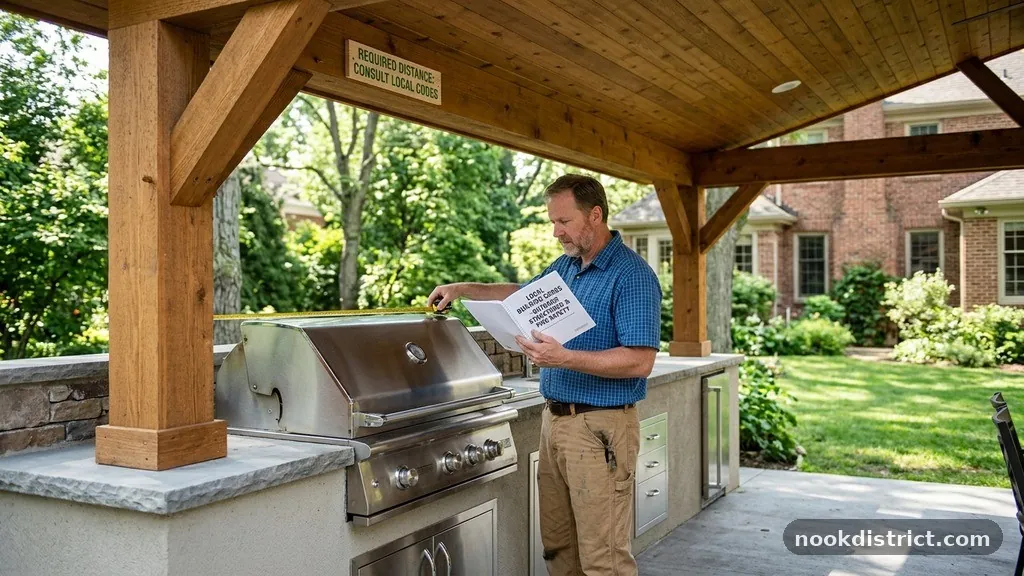
Local municipalities often have their own set of rules that go beyond the general manufacturer guidelines. You can find the National Fire Protection Association (NFPA) standards, which provide the framework that many local inspectors use to approve outdoor kitchen projects.
Before pulling permits, check your city or county building department’s website for specific ordinances related to outdoor cooking. Ignoring these codes can lead to fines or a requirement to dismantle your project entirely.
If you are working with a contractor, ask them directly about their experience with these specific clearance codes. A reputable builder will be well-versed in the requirements for your area and will proactively suggest ways to ensure your grill setup is compliant. Do not be afraid to ask for documentation or proof of compliance if you have doubts about the safety of the planned installation.
The Future of Outdoor Cooking Safety
As outdoor kitchens become more popular, manufacturers are developing new technologies to address safety concerns. Some high-end grills now feature advanced heat-shielding technology that helps reduce the amount of heat escaping from the bottom and back of the unit.
While this is a positive development, it does not replace the need for appropriate physical clearance. Technology should be viewed as an additional layer of protection, not as a shortcut to bypass standard safety distances.
Additionally, the trend toward using non-combustible materials for pergolas and patio covers is making outdoor kitchens safer. Using steel or aluminum for the framing of your pergola can drastically reduce the fire risk compared to traditional wood. If you are in the early stages of planning, consider these material choices to create a more resilient outdoor space that lasts for years.
Frequently Asked Questions
Is it safe to put a grill under a pergola if it is made of metal?
While metal is non-combustible, it is still a thermal conductor. It will absorb and radiate heat, potentially causing damage to surrounding areas or heating up the structure to the point where it could ignite nearby items. You must still adhere to recommended clearance distances to prevent heat-related damage.
How do I measure the distance from the grill to the ceiling?
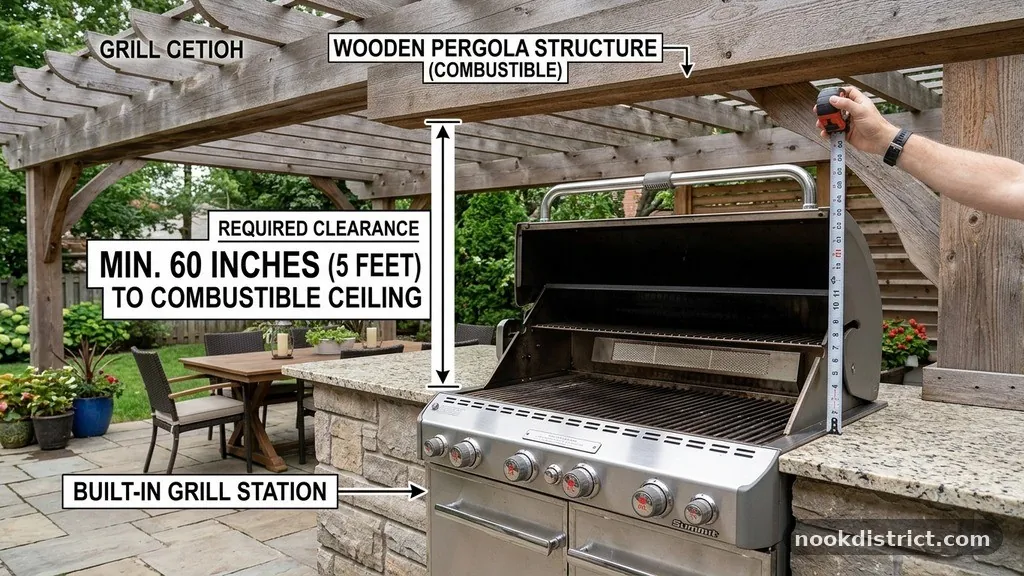
Measure from the highest point of the grill, usually the top of the open lid, to the lowest point of the ceiling or any hanging fixture. This ensures you are measuring the most restrictive point. Do not measure from the closed lid, as the open position is what matters during active cooking.
Can I use a heat shield to reduce the required clearance?
Heat shields can help, but they are not a universal solution. They must be professionally installed with an air gap to prevent heat transfer to the structural material behind them. It is almost always safer and more cost-effective to simply increase the physical distance between the grill and the ceiling.
What happens if my grill is too close to the ceiling?
The most immediate risk is the accumulation of grease and soot, which are highly flammable. Over time, the intense heat will cause the ceiling materials to become brittle, discolored, or charred. In a worst-case scenario, the heat can reach the ignition temperature of the wood, leading to a structure fire.
Do I need a permit for an outdoor kitchen?
In most jurisdictions, if your outdoor kitchen includes gas, electrical, or plumbing work, you will need a permit. Even if you are just building a pergola, local zoning laws may dictate how close it can be to your property line or house. Always check with your local building department before starting construction.
Maintaining Your Outdoor Cooking Space
The distance from built-in grill to combustible patio ceilings and pergolas is just the first step in maintaining a safe environment. Regular cleaning of your grill, including the grease tray and internal burners, is essential to prevent flare-ups.
A clean grill is a safer grill. Also, keep the area around your cooking station free of clutter like paper towels, napkins, or flammable decor that could be caught by a breeze and blown toward the heat.
If you have a pergola, inspect the underside regularly for any signs of soot or discoloration. If you see dark marks, it is a clear indicator that your grill is not venting properly or that you are exceeding your clearance limits. Addressing these signs early can prevent a major accident.
By staying vigilant and respecting the physical requirements of your equipment, you can enjoy your outdoor kitchen for years to come. If you have questions about your specific setup, consult with a local fire safety professional to ensure your home remains protected while you enjoy your backyard.