10 DIY Fire Pit Ideas That Anyone Can Make
A fire pit can turn an ordinary backyard into a place where people naturally gather. It gives you somewhere to sit on cool evenings, roast marshmallows, enjoy casual conversations, or simply spend more time outside after sunset.
The good news is that a backyard fire pit doesn’t have to be an expensive landscaping project. With thoughtful planning and the right materials, there are several approachable DIY options that can add warmth and character to an outdoor space.
Before choosing a design, however, think beyond appearance. A fire pit needs to be positioned safely, built with appropriate heat-resistant materials, and used according to local fire regulations. Some communities restrict open fires or require specific clearances, so check your local rules before starting.
It’s also important to remember that not every attractive material is suitable for direct exposure to high heat. Decorative stones, ordinary concrete products, painted materials, and reclaimed items can behave unpredictably when heated. Choose products specifically appropriate for fire-pit construction and follow the manufacturer’s instructions.
Once the safety basics are covered, the creative part becomes much more enjoyable.
You can build a simple circular pit surrounded by gravel, create a more polished stone centerpiece, or design a larger gathering area with built-in seating. Even a compact fire feature can make a small backyard feel more intentional.
The ideas below focus on approachable designs that can be adapted to different backyard styles and budgets. Some are simple weekend projects, while others require more planning or construction skill.
The goal isn’t to build the most complicated fire pit possible. It’s to create a safe, attractive outdoor feature that fits naturally into your backyard.
Table of Contents
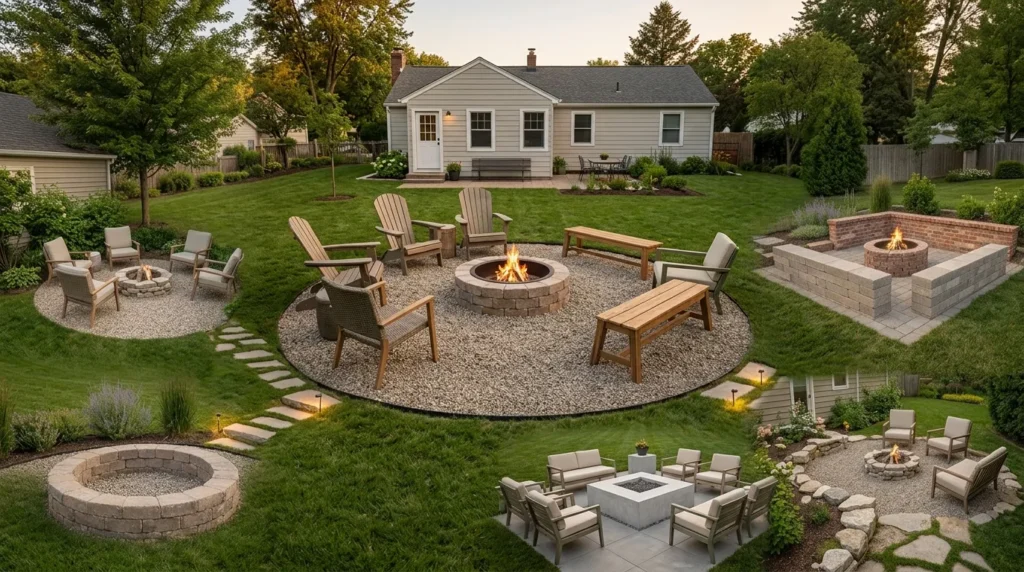
1. Gravel Fire Pit
Create a simple outdoor gathering area using a fire-rated pit surrounded by a compact gravel patio.
2. Stone Ring Pit
Build a classic circular fire pit using appropriately rated landscape materials.
3. Paver Patio Pit
Combine a fire pit with a small paver seating area for a polished backyard setup.
4. Retaining Wall Pit
Use compatible fire-rated masonry products to create a substantial built-in centerpiece.
5. Sunken Fire Pit
Design a recessed gathering area with careful attention to drainage, access, and local safety requirements.
6. Gravel Seating Circle
Surround a simple fire pit with a dedicated circular seating area for casual entertaining.
7. Modern Square Pit
Create a clean-lined outdoor focal point using a purpose-built square fire-pit structure.
8. Rustic Stone Pit
Combine natural-looking stone and simple landscaping for a relaxed backyard aesthetic.
9. Portable Fire Pit
Use a commercially manufactured portable unit when you want flexibility without permanent construction.
10. Fire Pit Gathering Zone
Build a complete outdoor destination by combining the fire feature with seating, lighting, and landscaping.
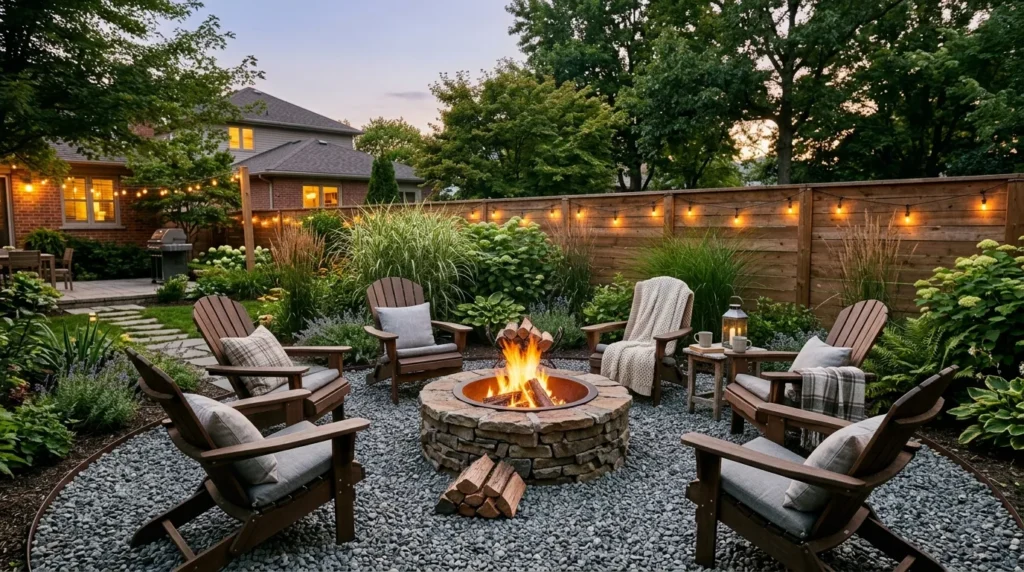
1. Gravel Fire Pit
Quick Benefits
- Simple landscape design
- Works in many backyard styles
- Easy to maintain
- Creates a defined gathering zone
- Gravel can visually separate the fire area from the lawn
Why It Works
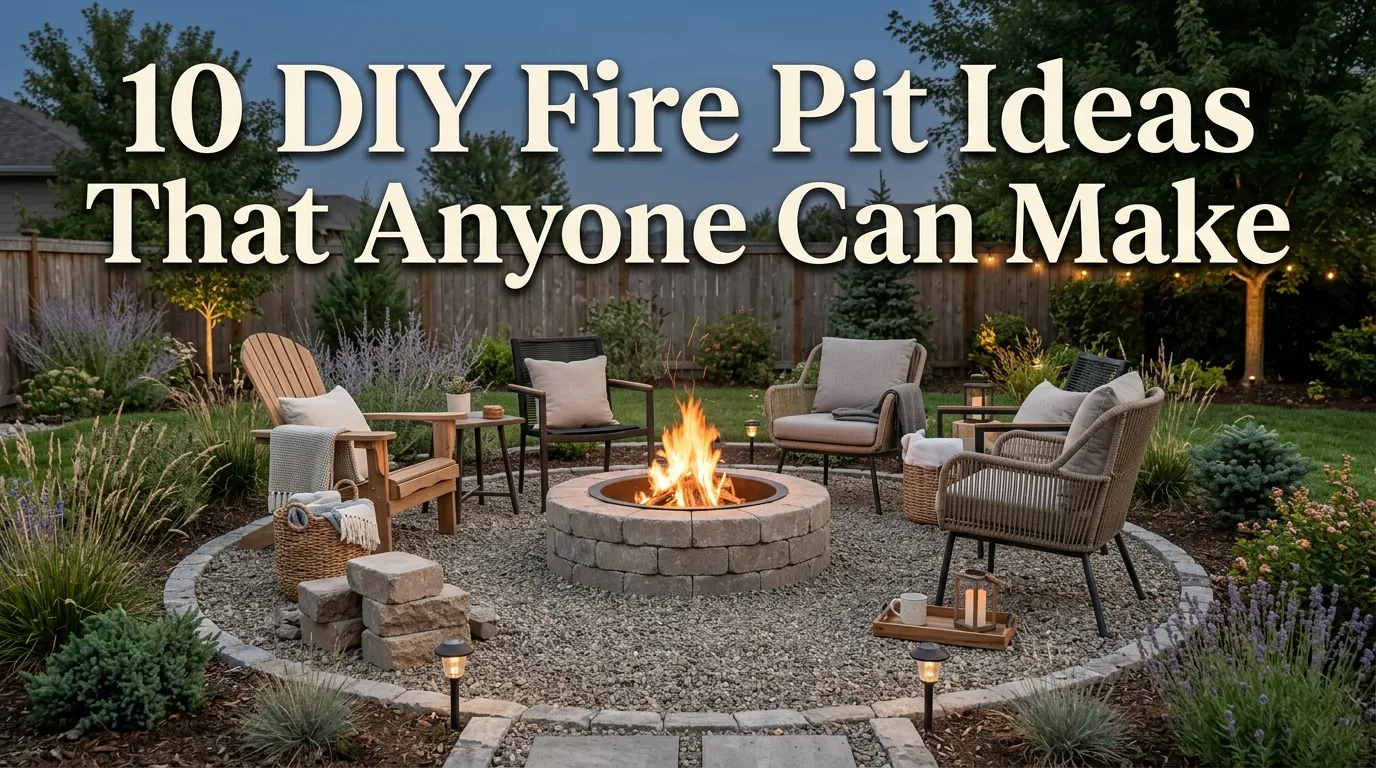
A gravel fire pit area is one of the simplest ways to give a backyard fire feature a finished appearance.
Instead of placing a fire pit randomly in the grass, create a defined surface around it. The gravel visually establishes the area as a separate outdoor room and gives chairs a more stable surface.
It also provides a relaxed, informal appearance that works especially well with natural landscaping.
The fire pit itself should be a purpose-built, appropriately rated unit or constructed according to a suitable manufacturer’s or professional design specification.
The gravel is primarily the surrounding landscape treatment—not a substitute for proper fire-resistant construction.
How To Style It
Choose a level area away from structures, fences, low branches, and other combustible materials, while following local clearance requirements.
Prepare the ground properly and use appropriate landscape edging to keep gravel contained.
Create enough space around the fire pit for chairs and comfortable movement.
Add simple Adirondack-style chairs or weather-resistant lounge chairs around the perimeter.
Use large planters or nearby ornamental grasses to soften the space without placing combustible vegetation too close to the fire.
Keep the center uncluttered.
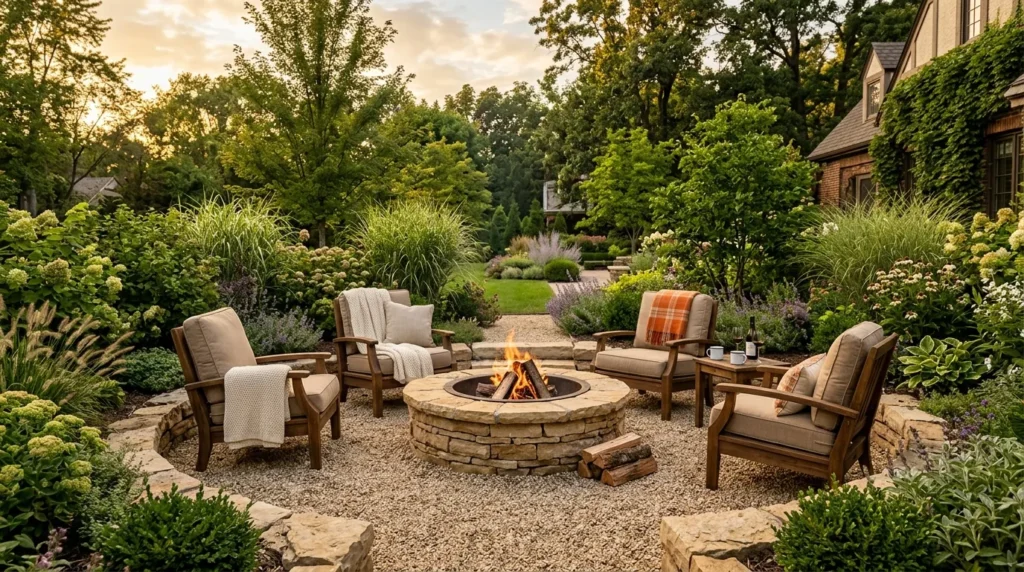
2. Stone Ring Pit
Quick Benefits
- Classic appearance
- Fits natural landscapes
- Creates a strong focal point
- Can be surrounded by simple seating
- Works well with rustic and traditional yards
Why It Works
A circular stone fire pit has a timeless backyard appearance.
The round shape naturally encourages conversation because seating can face inward toward the center.
For safety, the construction should use materials specifically rated or approved for fire-pit applications. Ordinary decorative stones or masonry products aren’t automatically suitable for repeated high heat.
A properly designed ring also creates a visual boundary around the fire area.
How To Style It
Use a level, noncombustible surface beneath and around the fire pit as required by the design and local regulations.
Choose stone colors that complement the house and surrounding landscape.
Warm tan stone works beautifully with natural wood furniture.
Gray stone pairs well with contemporary outdoor spaces.
Surround the area with crushed stone or another suitable noncombustible landscape surface.
Keep seating at a comfortable distance from the fire.
Add low-maintenance plants farther away from the heat zone to create a softer transition into the rest of the backyard.
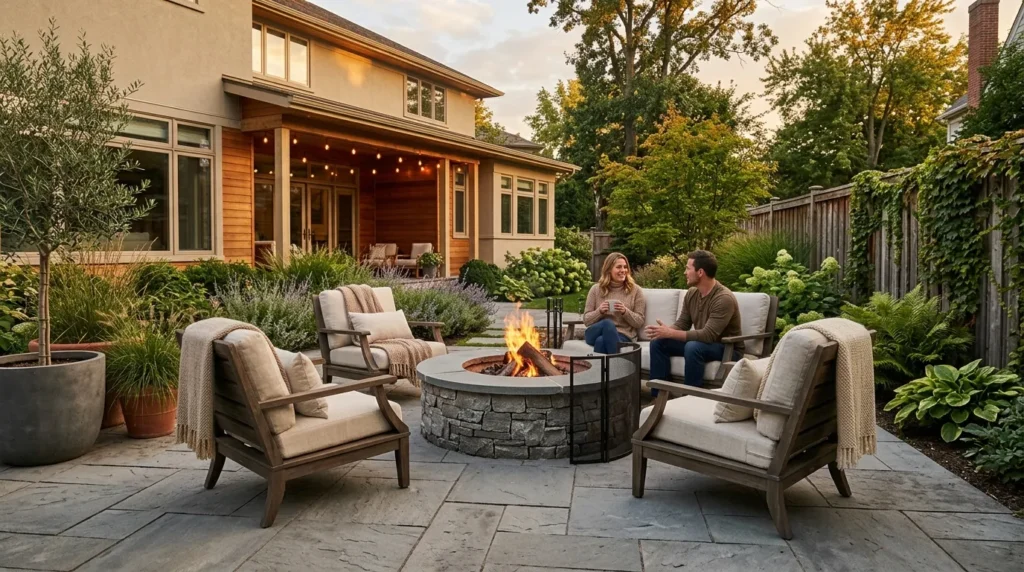
3. Paver Patio Pit
Quick Benefits
- Creates a polished appearance
- Combines seating and fire features
- Works well in small yards
- Provides a stable surface
- Can complement an existing patio
Why It Works
If your backyard already has pavers, extending that material into a fire-pit area can make the entire landscape feel connected.
A small paver patio can become an outdoor room centered around the fire pit.
This is particularly useful when you want the fire feature to feel like part of the home’s overall landscape design rather than a separate object placed in the yard.
Proper installation matters.
The base needs to be stable and appropriate for the intended use, and the fire pit itself should be designed for installation over the chosen surface.
How To Style It
Choose pavers that complement the home’s exterior.
Keep the pattern simple.
A rectangular or square patio can work well with modern homes, while irregular natural-looking paving can create a more relaxed garden feel.
Position seating around the fire pit while maintaining appropriate clearances.
Add an outdoor rug only if it is specifically suitable for the environment and kept safely away from flames and embers.
Keep cushions, furniture, plants, and other combustible materials outside the required safety zone.
4. Retaining Wall Pit
Quick Benefits
- Creates a substantial focal point
- Can visually anchor a large yard
- Provides opportunities for integrated seating
- Works with structured landscaping
- Adds architectural character
Why It Works
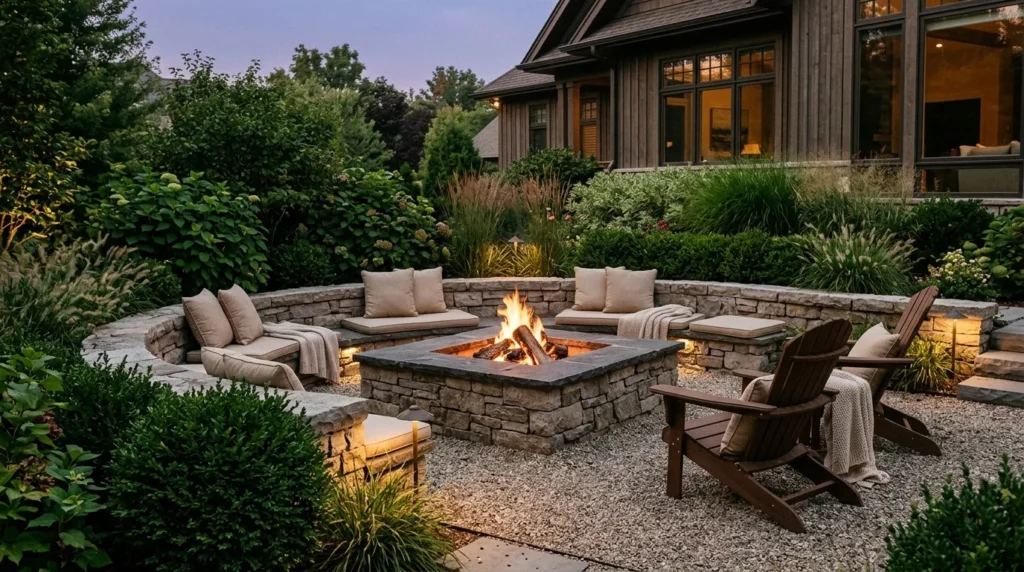
A larger masonry-style fire pit can become the centerpiece of a backyard.
The substantial appearance works particularly well when the landscape already contains stone retaining walls, raised planting beds, or other architectural features.
However, this is one area where “DIY” should not mean improvising.
The materials and construction need to be suitable for fire exposure.
Some retaining wall blocks are not designed for use around fire and can crack, spall, or deteriorate when exposed to repeated high temperatures.
How To Style It
Use a purpose-designed fire-pit kit or manufacturer-approved masonry components.
Create a level foundation appropriate for the system.
Keep the structure separated from fences, buildings, trees, and other combustible elements according to local requirements.
If you’re considering built-in seating, make sure the seating is positioned outside the required fire clearance.
Finish the surrounding landscape with gravel, stone, or another suitable hardscape material.
This design works especially well in larger backyards where the fire pit needs enough scale to balance the surrounding landscape.
5. Sunken Fire Pit
Quick Benefits
- Creates a dramatic focal point
- Defines a separate outdoor room
- Provides visual separation
- Works well with built-in seating
- Can make a large backyard feel more intimate
Why It Works
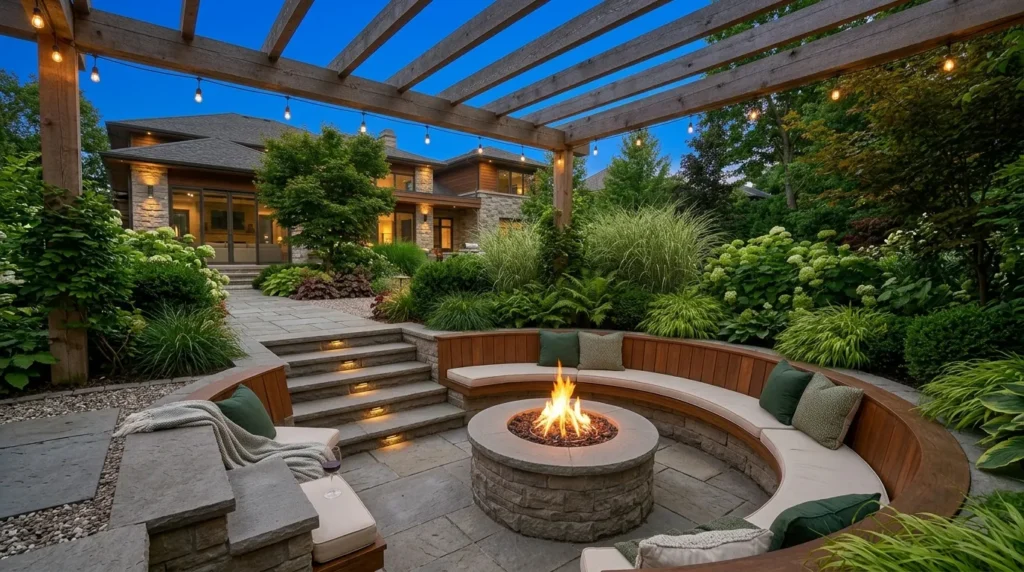
A sunken fire-pit area can create the feeling of a dedicated outdoor lounge.
Lowering the seating area visually separates it from the rest of the yard and can make a large property feel more intimate.
But excavation introduces additional considerations.
Drainage is especially important.
A recessed area can collect rainwater, and poor drainage can damage the hardscape or create standing water.
The design also needs safe access, stable retaining structures where applicable, and compliance with local fire requirements.
How To Style It
Don’t excavate simply to create the appearance of a sunken lounge.
Plan drainage first.
Consider how rainwater will move away from the area.
Use noncombustible hardscape around the fire feature.
Create wide, stable steps into the seating area.
Built-in seating can make the design visually cohesive, but maintain appropriate separation from the flame.
Use simple landscaping around the upper perimeter to soften the transition.
This is a project where professional advice may be worthwhile if significant excavation or retaining walls are involved.
6. Gravel Seating Circle
Quick Benefits
- Simple to create
- Encourages conversation
- Works for casual entertaining
- Flexible furniture arrangement
- Easy to update over time
Why It Works
Sometimes the landscaping around a fire pit makes a bigger visual difference than the fire pit itself.
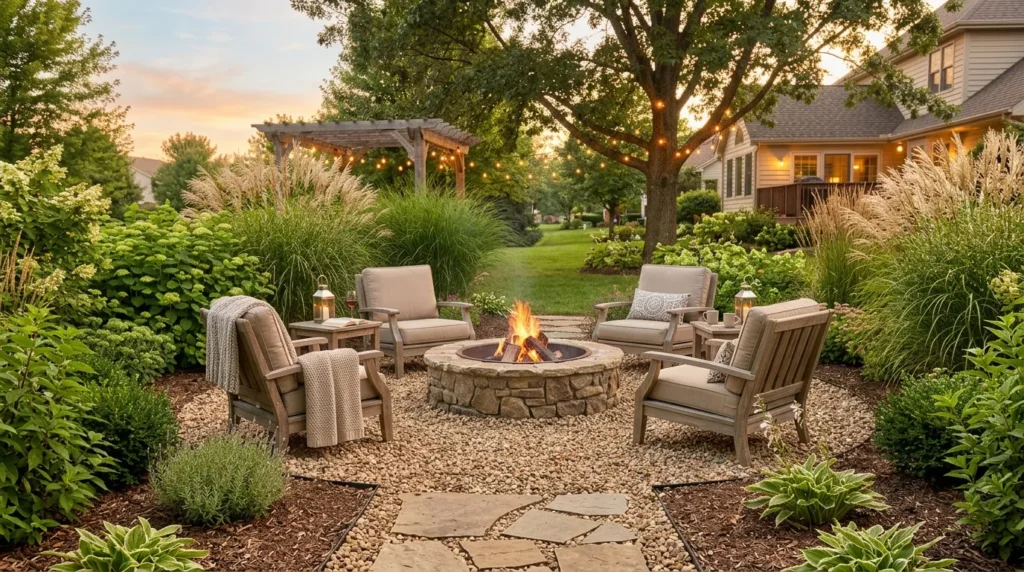
A circular gravel seating area creates a clear outdoor destination without requiring an elaborate patio.
The geometry also naturally supports conversation.
Arrange seating around the perimeter and keep the center open.
This design is especially practical for homeowners who want a relaxed outdoor gathering space without committing to a large permanent patio.
How To Style It
Create a broad circular or gently rounded seating area.
Use landscape edging to keep gravel contained.
Place the fire pit in the center with adequate clearance.
Choose comfortable outdoor chairs that can withstand weather.
For a casual look, mix two chair styles that share a similar material or color.
Add a small side table between some chairs.
Use nearby planting beds to frame the circle, but don’t place flammable vegetation immediately beside the fire.
7. Modern Square Pit
Quick Benefits
- Clean contemporary appearance
- Fits modern patios
- Uses simple geometry
- Creates a strong focal point
- Works with minimalist landscaping
Why It Works
Not every fire pit needs to be round.
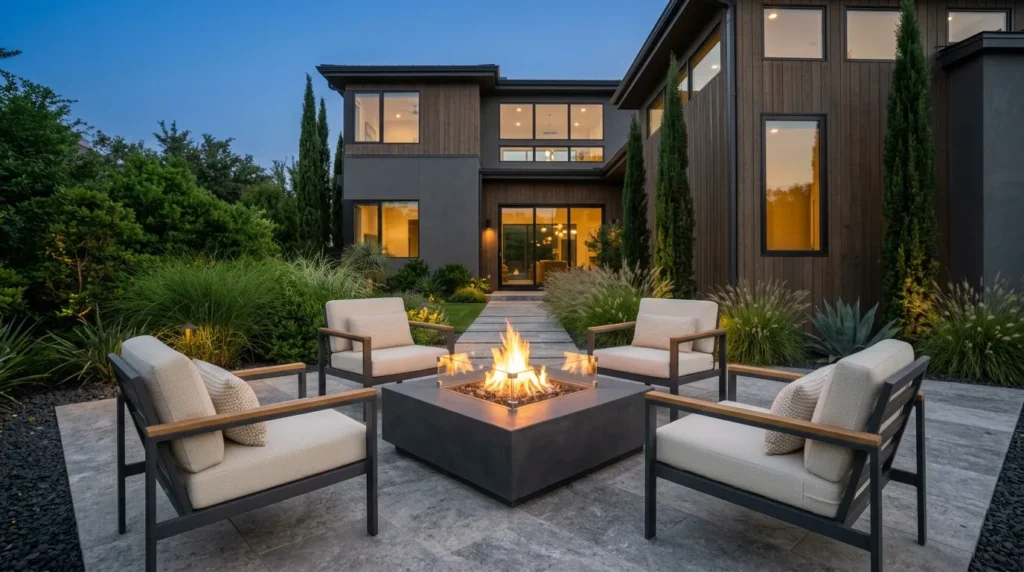
A square or rectangular fire feature can complement contemporary architecture beautifully.
Clean lines work particularly well with rectangular patios, modern outdoor furniture, concrete-look surfaces, and structured planting.
For an approachable DIY project, a purpose-built square fire-pit kit or commercially manufactured unit is generally a better choice than improvising a masonry structure from materials that haven’t been tested for high heat.
How To Style It
Keep the surrounding landscape simple.
Use large-format pavers, gravel, or another appropriate noncombustible surface.
Choose furniture with straight lines.
Limit the color palette to two or three major tones.
For example:
Charcoal + warm wood + green
or
Gray + cream + natural stone
Add ornamental grasses around the outer edge of the seating area.
Avoid overcrowding the space with accessories.
The clean geometry should remain the visual focus.
8. Rustic Stone Pit
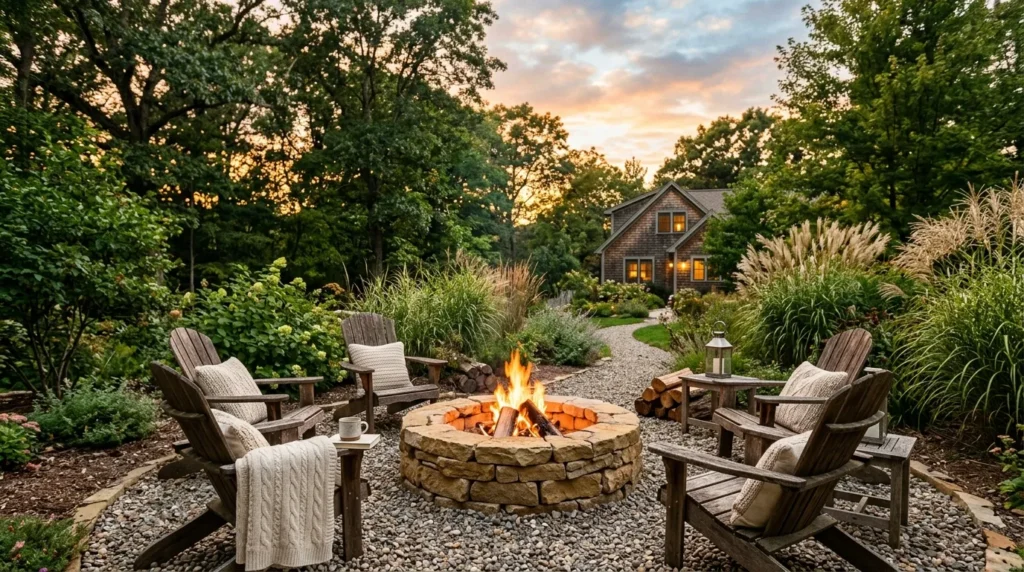
Quick Benefits
- Natural appearance
- Works with cottage and farmhouse landscapes
- Adds earthy texture
- Blends into garden settings
- Creates a relaxed atmosphere
Why It Works
A rustic fire pit can feel like a natural extension of the garden.
The look comes from combining stone, wood, gravel, and informal planting rather than adding lots of decorative objects.
However, rustic doesn’t mean randomly assembled.
The materials still need to be appropriate for the fire application, and the area should have a stable, safe foundation.
A simple design often looks more convincing than a pit surrounded by too many themed accessories.
How To Style It
Choose natural-looking fire-rated materials.
Surround the fire area with gravel or another appropriate hardscape.
Use weathered-looking but structurally sound outdoor furniture.
Add woven cushions in neutral colors.
Plant ornamental grasses and hardy shrubs around the outer perimeter.
A few large stones can help visually connect the fire pit to the surrounding landscape.
Keep combustible materials at the appropriate distance from the fire.
9. Portable Fire Pit
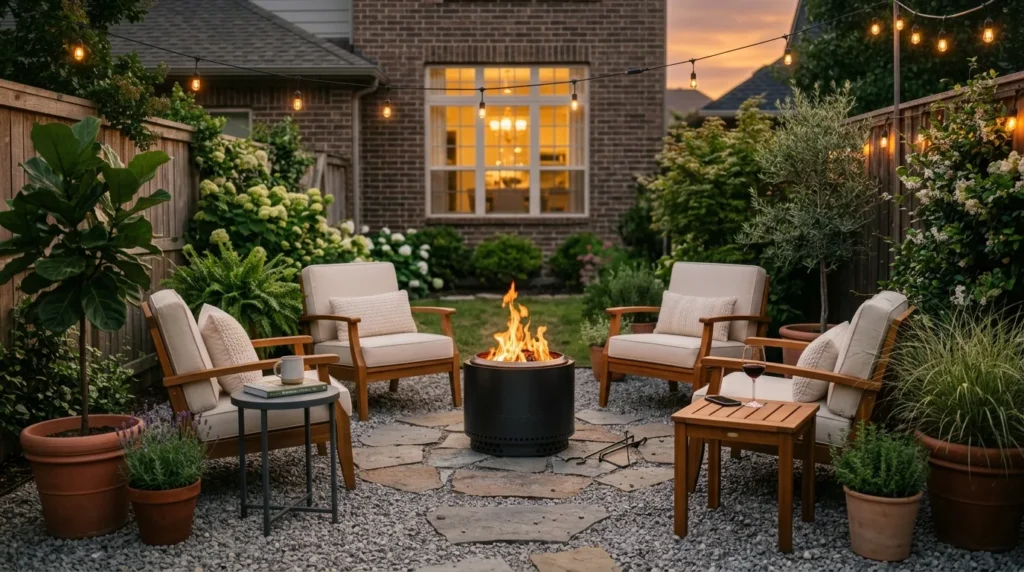
Quick Benefits
- No permanent construction
- Easy to reposition
- Suitable for renters in some situations
- Available in many styles
- Simplifies installation
Why It Works
A portable fire pit can be a practical alternative to building a permanent structure.
Commercially manufactured units are available in many forms, including wood-burning and gas-powered designs.
Because the unit is engineered for its intended use, you don’t have to experiment with homemade construction materials.
That doesn’t eliminate safety considerations, though.
Portable fire pits still need proper placement, clearance, stable surfaces, and responsible operation.
How To Style It
Choose a location with sufficient clearance from structures, fences, trees, outdoor furniture, and other combustible materials.
Place the unit on an appropriate noncombustible surface as directed by the manufacturer.
Create a small seating arrangement around it.
When the fire pit isn’t being used, follow the manufacturer’s instructions for storage or covering.
This option works particularly well for people who want flexibility or don’t want to commit to permanent backyard construction.
10. Fire Pit Gathering Zone
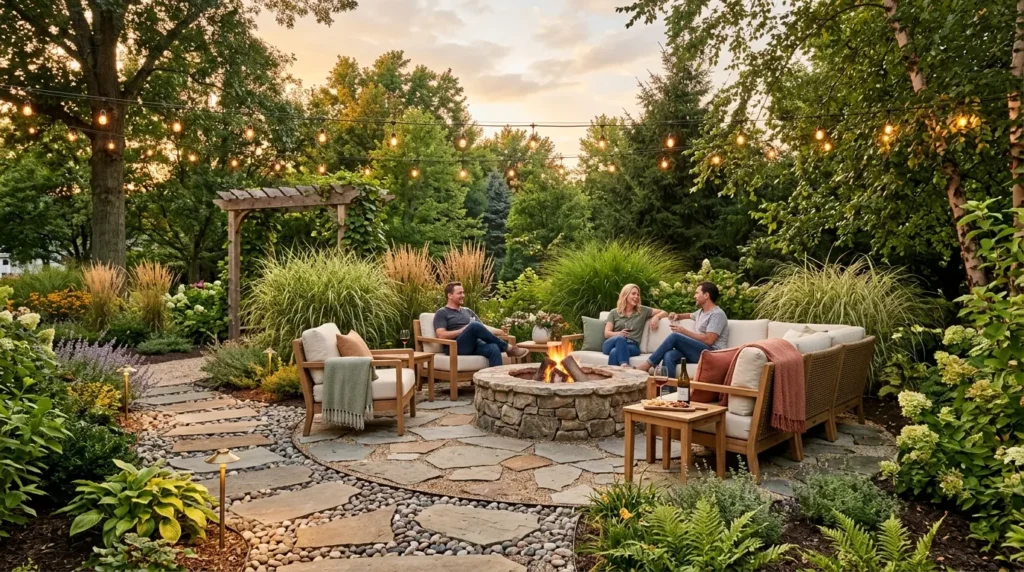
Quick Benefits
- Creates a complete outdoor room
- Excellent for entertaining
- Combines multiple landscape elements
- Makes the backyard more functional
- Can be customized over time
Why It Works
The most successful fire-pit designs often aren’t really about the fire pit.
They’re about what surrounds it.
A comfortable seating arrangement, practical surface, subtle lighting, nearby planting, and clear circulation can turn a simple fire feature into a genuine outdoor destination.
This approach also lets you build the project in stages.
You might start with the fire pit and gravel.
Later, you can add better seating.
Then lighting.
Then planting.
The result evolves naturally instead of requiring one large renovation.
How To Style It
Start with a safe location and appropriate fire feature.
Create a defined noncombustible surface around it.
Arrange seating at safe distances.
Add low-level outdoor lighting along nearby paths.
Use planters and landscaping around the outer edge of the zone.
Consider a small outdoor table for drinks and snacks.
Keep firewood, cushions, blankets, and other combustible items stored well away from the active fire.
The final space should feel comfortable without compromising safe operation.
How to Choose the Right DIY Fire Pit
The best fire pit depends on your backyard, budget, local regulations, and how you plan to use it.
Choose a Gravel Area If:
You want a simple landscape project with a relaxed appearance.
Choose a Stone Design If:
You prefer a permanent natural focal point.
Choose Pavers If:
You want the fire pit integrated with an existing patio.
Choose a Portable Unit If:
You want flexibility or don’t want permanent construction.
Choose a Larger Built-In Design If:
You have the space, budget, and construction experience for a more substantial project.
Don’t choose a design solely because it looks good in a photograph.
Consider maintenance, smoke, seating, storage, drainage, access, and local regulations.
Fire Pit Safety Basics
Before building or using any backyard fire pit, check your local regulations and the manufacturer’s instructions for your specific unit.
Important considerations include:
- Required distance from buildings and property features
- Local burn restrictions
- Wind conditions
- Suitable surface
- Safe fuel storage
- Fire extinguishing equipment
- Supervision
- Spark and ember control
- Children’s and pets’ access
- Proper extinguishing procedures
Never leave an active fire unattended.
Keep a suitable means of extinguishing the fire immediately available.
Avoid using a fire pit during strong winds or when local authorities have issued restrictions.
For permanent masonry construction, particularly structures involving excavation, retaining walls, gas lines, or complex drainage, professional guidance can be worthwhile.
A beautiful fire pit is never worth compromising safety.
How to Make a DIY Fire Pit Area Look Expensive
You don’t need expensive landscaping to create a polished fire-pit area.
Start by defining the space.
A clean gravel circle, simple paver patio, or well-edged stone area immediately makes the fire feature look more intentional.
Then repeat materials.
If your fire pit uses warm stone, echo that tone in a nearby retaining wall or pathway.
Keep furniture coordinated.
Choose two or three colors rather than many unrelated shades.
Add texture with outdoor cushions, woven furniture, natural wood, and greenery.
Finally, pay attention to lighting.
A few carefully positioned lights can create a much more inviting evening atmosphere than a yard filled with bright fixtures.
Common DIY Fire Pit Mistakes
Using unsuitable materials: Not every stone, block, or concrete product is designed for repeated high heat.
Building too close to structures: Always follow local clearance requirements and manufacturer instructions.
Ignoring drainage: Water can damage poorly designed outdoor structures and create an unusable seating area.
Making the pit too large: Bigger isn’t automatically better. The scale should suit the backyard and seating arrangement.
Skipping the base: An unstable surface can create structural and safety problems.
Overcrowding the area: Furniture, plants, decorations, and firewood need appropriate separation.
Ignoring local regulations: Rules vary by municipality, especially for open wood fires.
Treating a DIY project like a construction shortcut: Complex masonry, gas, excavation, or retaining-wall projects may require professional help.
FAQ
What is the easiest DIY fire pit to make?
A simple setup using a commercially manufactured fire pit placed on an appropriate noncombustible surface is generally easier than constructing a permanent masonry pit from scratch. You can then create the surrounding look with gravel, suitable landscaping, and outdoor seating while following all manufacturer and local requirements.
What is the cheapest way to make a fire pit?
The total cost depends on local material prices, the type of fire pit, and whether you already have suitable landscaping materials. A simple manufactured fire pit surrounded by an inexpensive gravel seating area can reduce construction complexity. Avoid choosing materials solely because they are cheap; they must be appropriate for their intended use.
Can I build a fire pit with regular concrete blocks?
You should not assume ordinary concrete blocks are suitable for direct exposure to fire. High heat can cause certain masonry products to crack, spall, or fail. Use a fire-pit system or materials specifically rated for the application and follow the manufacturer’s installation instructions.
What should I put around a backyard fire pit?
Appropriate noncombustible surfaces such as properly installed gravel, stone, or suitable pavers can help define the area. The exact surface depends on the fire-pit design and local requirements. Keep furniture, plants, firewood, cushions, and other combustible materials outside the required safety zone.
How far should a fire pit be from a house?
The required clearance varies by location, fire-pit type, fuel, and local regulations. Always check your municipality’s requirements and the manufacturer’s instructions rather than relying on a generic distance found online. Trees, fences, structures, overhead branches, and other combustible features also need consideration.
Can I put a fire pit directly on grass?
A fire pit should not simply be placed on grass without considering the manufacturer’s requirements and local fire-safety rules. Grass can dry out and ignite from heat, sparks, or embers. A suitable noncombustible setup is generally preferable, with the exact surface determined by the fire pit and installation instructions.
Do DIY fire pits require a permit?
Permit requirements vary considerably by city, county, and type of installation. Permanent structures, gas connections, excavation, or certain wood-burning fire pits may have additional requirements. Check with your local fire department, municipality, or building authority before beginning construction.
Conclusion
A backyard fire pit can become much more than a source of warmth.
With the right layout, it can create a natural gathering point, define an unused section of the yard, and make outdoor evenings feel more inviting.
The simplest designs can be surprisingly effective. A purpose-built fire pit surrounded by gravel and comfortable chairs may be all you need. If you want something more substantial, a properly designed stone or paver installation can become a permanent part of the landscape.
Start with safety, local regulations, and the practical needs of your backyard.
Then think about the atmosphere you want.
Do you picture relaxed evenings around a rustic stone pit? A modern fire feature surrounded by clean-lined furniture? Or a casual gravel circle where friends can gather?
Choose one direction and build around it.
You don’t have to complete the entire project at once. Start with the fire feature and seating area, then add landscaping, lighting, and finishing details over time.
The best DIY project is one that looks beautiful, works for your lifestyle, and remains safe every time you light it.
Related Articles
- 10 Backyard Landscape Design Ideas for Outdoor Entertaining
- 10 Backyard Privacy Ideas for a More Private Outdoor Space
- 10 Backyard Patio Ideas for Cozy Outdoor Living
- 10 Garden Decor Ideas That Feel Like a Resort
- 10 DIY Garden Projects Using Recycled Materials