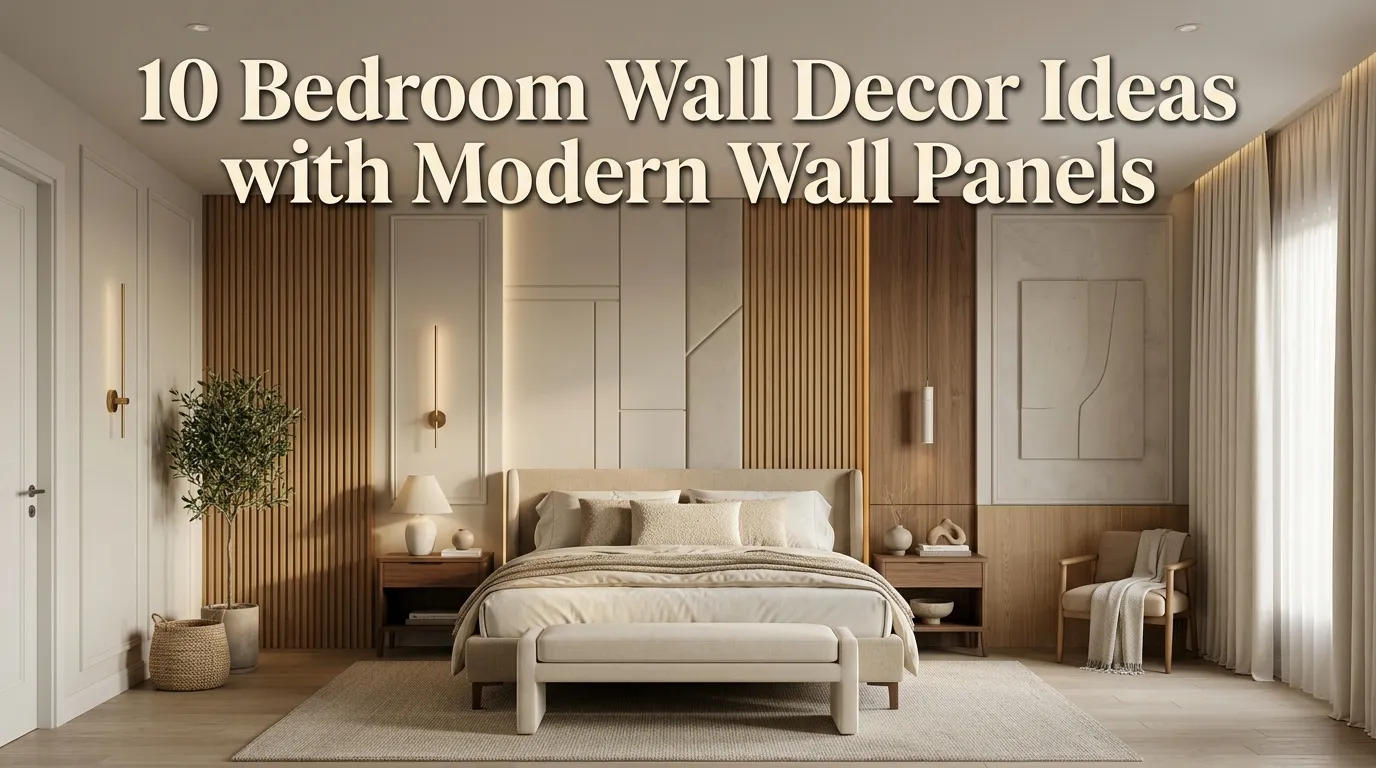
10 Bedroom Wall Decor Ideas with Modern Wall Panels
Bedroom walls have a surprisingly large influence on how the entire room feels. A plain wall can make an otherwise thoughtfully decorated bedroom seem unfinished, while a well-designed feature wall can add depth, warmth, and architectural character without changing the room’s entire layout.
Modern wall panels are especially useful because they create texture and structure while giving you plenty of design flexibility. Vertical slats can emphasize ceiling height, fluted panels can add subtle movement, and upholstered panels can make a bed wall feel softer and more comfortable.
The best part is that wall panels don’t have to dominate the room. A carefully selected panel treatment can become a quiet backdrop for bedding, artwork, lighting, and furniture rather than competing with them.
I’ve noticed that the most successful bedroom feature walls usually begin with the bed. When the panel design frames the headboard or visually anchors the sleeping area, the entire room feels more intentional.
Color matters, too. Warm oak can introduce natural character, while painted panels in cream, taupe, greige, sage, or charcoal can create a more contemporary atmosphere. The right choice depends on your room’s natural light, furniture finishes, and overall style.
Below, you’ll find ten ways to use modern wall panels as bedroom decor, from simple vertical designs to dramatic full-wall treatments. Each idea focuses on creating a bedroom that feels stylish, comfortable, and practical enough for everyday living.
Table of Contents
1. Vertical Wood Slats
Use vertical slats to add warmth and emphasize ceiling height.
2. Fluted Feature Wall
Create subtle rhythm with dimensional fluted panels.
3. Upholstered Bed Wall
Bring softness and comfort to the wall behind the bed.
4. Painted Panel Molding
Combine classic paneling with a modern color palette.
5. Half-Wall Paneling
Add architectural detail while keeping the upper wall light.
6. Dark Accent Panels
Create depth with a dramatic but balanced feature wall.
7. Warm Oak Panels
Use natural wood to create a calm, inviting bedroom.
8. Geometric Wall Panels
Introduce contemporary structure with simple geometric forms.
9. Panel-and-Lighting Wall
Combine wall texture with carefully placed illumination.
10. Minimal Full-Wall Panels
Create a seamless backdrop with understated modern panels.
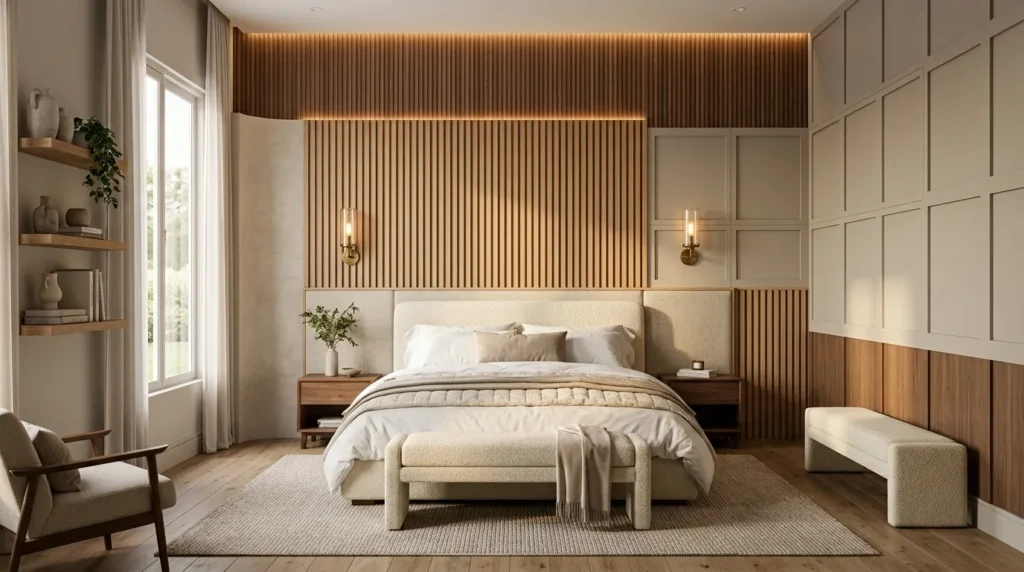
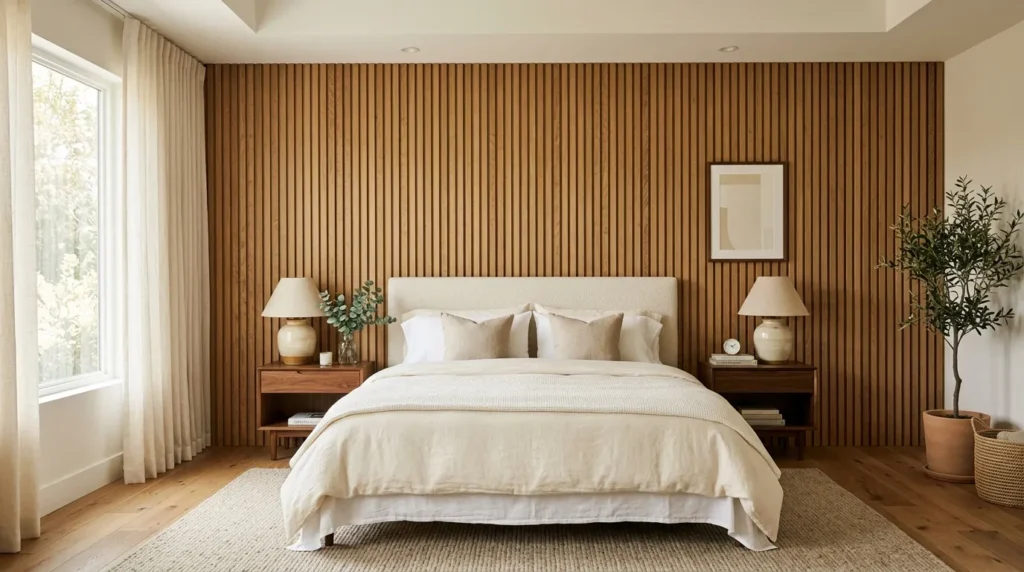
1. Vertical Wood Slats
Quick Benefits
- Emphasize ceiling height
- Add natural warmth
- Create visual rhythm
- Work with modern furniture
- Make a strong bed-wall backdrop
Why It Works
Vertical lines naturally draw the eye upward, making them particularly effective in bedrooms with average or low ceilings.
Wood slats also soften the clean geometry of modern furniture. Their repeated lines introduce texture without requiring busy patterns or excessive decoration.
This approach works beautifully behind a bed because the wall becomes a subtle architectural feature while the bedding remains the main comfort-focused element.
How To Style It
Choose a wood tone that relates to the furniture. Light oak works well with cream and beige, while walnut creates stronger contrast.
You can cover the entire wall or use slats across a narrower section behind the bed.
Keep the surrounding decor relatively simple.
Pair the panels with neutral bedding, upholstered furniture, linen curtains, and warm lighting.
For a contemporary appearance, use evenly spaced slats with a consistent width and finish.
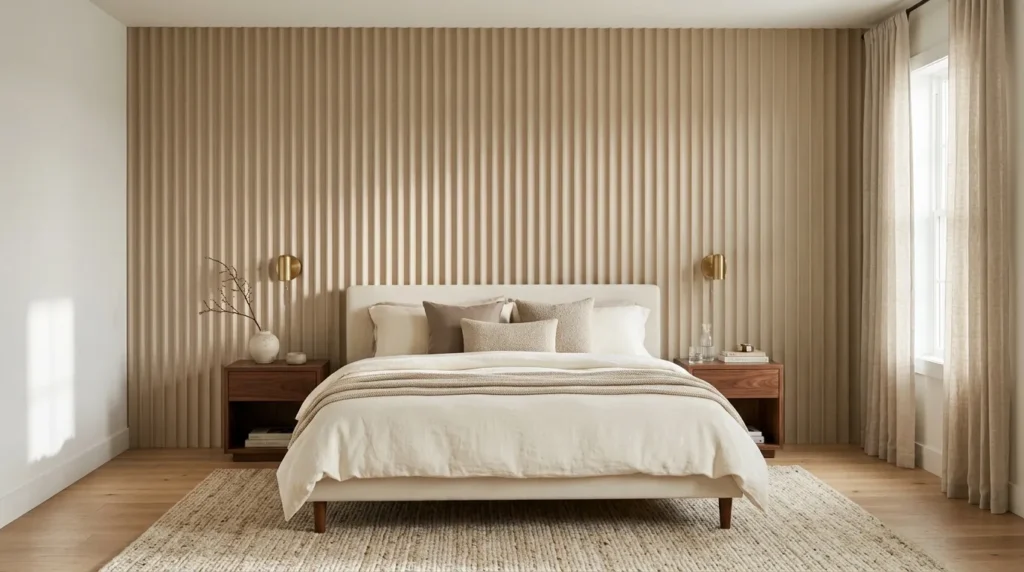
2. Fluted Feature Wall
Quick Benefits
- Adds dimensional texture
- Creates subtle shadows
- Works with neutral colors
- Gives the bed wall visual interest
- Complements contemporary furniture
Why It Works
Fluted panels create depth through repeated vertical grooves. As natural or artificial light moves across the surface, the grooves produce gentle highlights and shadows.
This gives the wall more character than a flat painted surface while maintaining a relatively restrained appearance.
Fluted treatments are especially effective when you want texture but don’t want the strong visual contrast of wallpaper or bold artwork.
How To Style It
Choose a fluted panel in natural wood or a painted finish.
Cream, beige, taupe, warm gray, and muted green can create a softer bedroom.
For more contrast, consider walnut or charcoal.
Use the panel behind the headboard and keep bedside furniture simple.
Warm wall sconces can emphasize the vertical grooves and create attractive evening shadows.
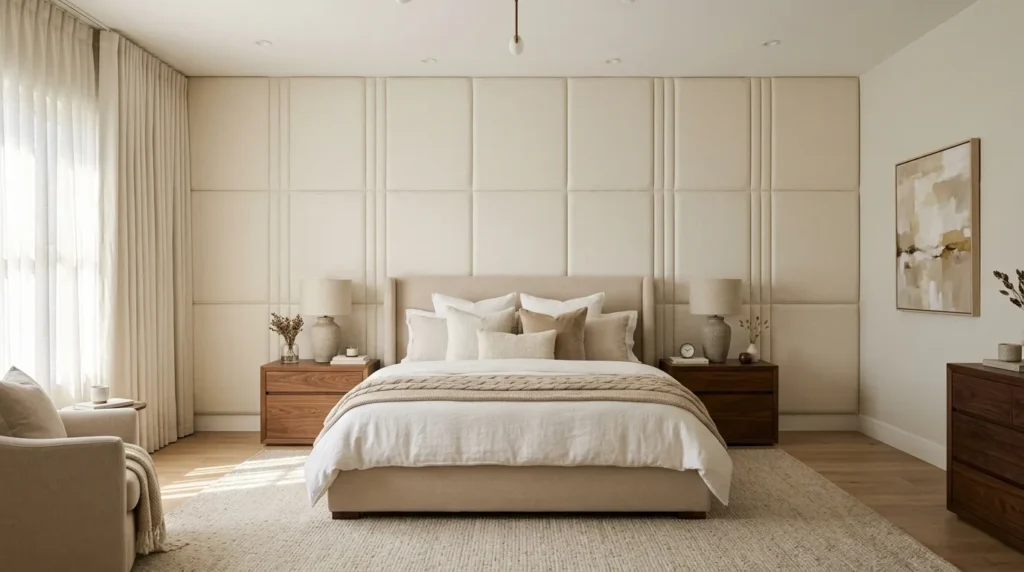
3. Upholstered Bed Wall
Quick Benefits
- Adds softness
- Creates acoustic comfort
- Makes the bed feel substantial
- Provides a cozy backdrop
- Works well in modern bedrooms
Why It Works
Not every wall treatment needs to be hard. Upholstered panels can introduce softness and a tactile quality that works particularly well in bedrooms.
They also create a more substantial visual connection between the bed and the wall.
Large upholstered panels can make the sleeping area feel almost like a custom installation, while smaller panels can frame the headboard.
How To Style It
Choose durable upholstery in cream, oatmeal, beige, taupe, or soft gray.
For a modern appearance, use large rectangular panels with clean seams.
Coordinate the upholstery with the bedding without matching everything exactly.
Add simple bedside lamps or wall sconces.
Avoid excessive wall decoration when using large upholstered panels. Let the texture provide the visual interest.
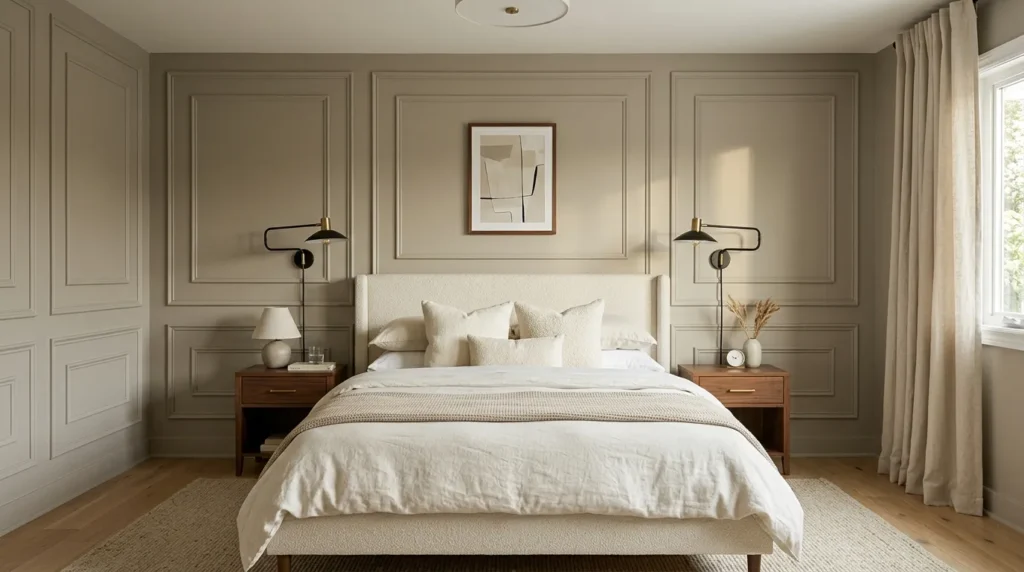
4. Painted Panel Molding
Quick Benefits
- Adds architectural detail
- Works in traditional and modern rooms
- Creates a polished backdrop
- Offers many color options
- Can visually frame the bed
Why It Works
Panel molding has a classic architectural quality, but it can look surprisingly contemporary when paired with modern furniture and a restrained color palette.
Painting the panels and the wall in the same color creates subtle depth rather than strong contrast.
This is particularly useful when you want architectural character without introducing natural wood.
How To Style It
Choose a calm wall color such as warm white, greige, taupe, muted sage, or soft charcoal.
Use simple rectangular panel proportions rather than highly ornate molding.
Center the design around the bed.
Pair it with contemporary nightstands, streamlined lighting, and simple bedding.
Keep the panel spacing consistent for a polished result.
5. Half-Wall Paneling
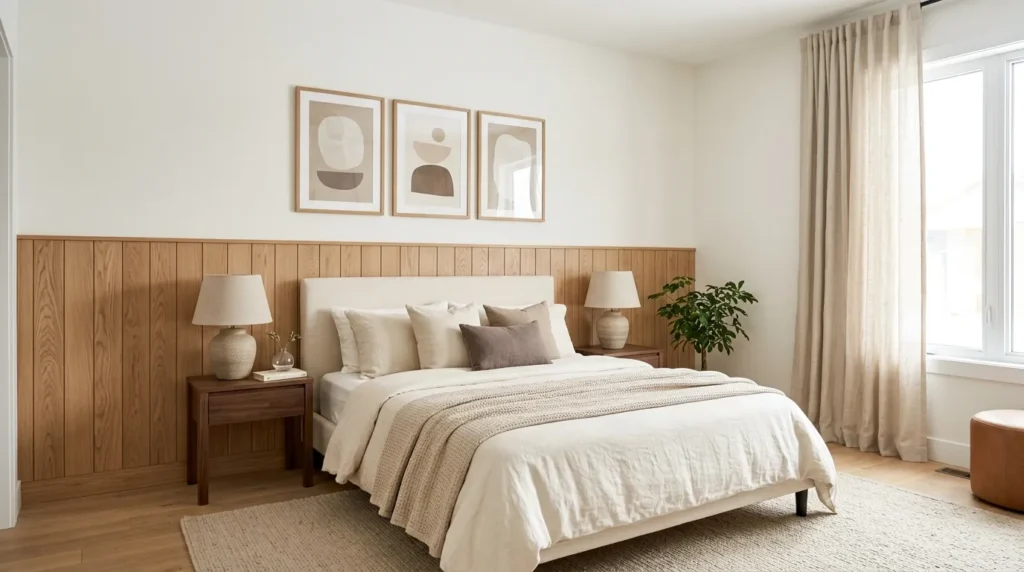
Quick Benefits
- Adds character without overwhelming the room
- Creates visual layering
- Keeps upper walls light
- Works in smaller bedrooms
- Can frame artwork beautifully
Why It Works
Full-wall paneling isn’t always necessary. A half-wall treatment adds texture and architectural definition while leaving enough open wall space above for artwork or a lighter visual effect.
This approach can also help balance a room with tall furniture or a substantial headboard.
How To Style It
Use wood slats, fluted panels, beadboard-style materials, or simple molding below the midpoint of the wall.
Paint the paneling in a slightly darker shade than the upper wall for subtle contrast.
Alternatively, use natural wood for a stronger textural effect.
Place artwork or a mirror above the paneling, keeping the composition proportional to the bed.
6. Dark Accent Panels
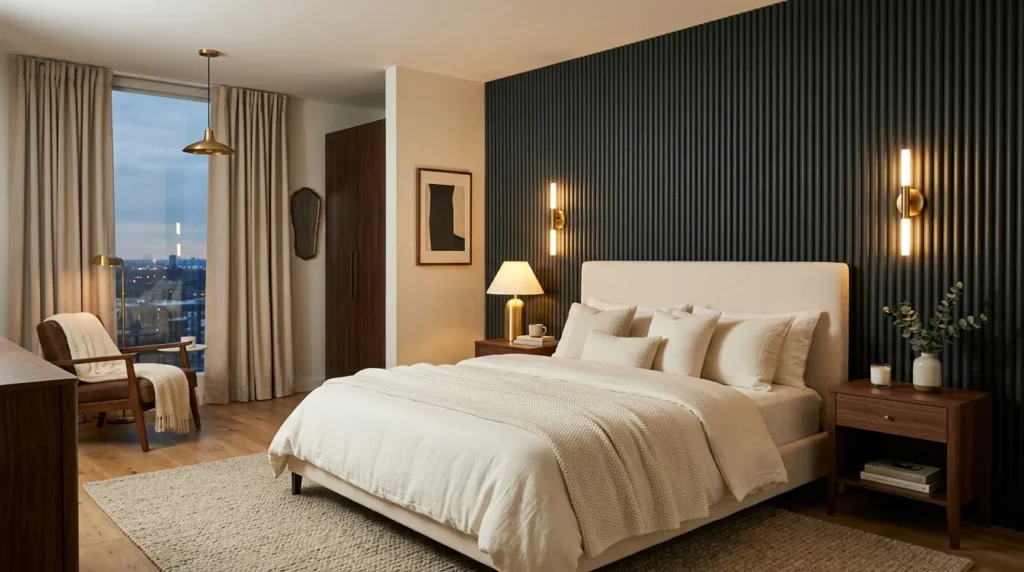
Quick Benefits
- Creates dramatic depth
- Defines the sleeping area
- Makes lighter bedding stand out
- Adds sophisticated contrast
- Works well with warm lighting
Why It Works
A dark feature wall can make a bedroom feel intimate and sophisticated when balanced correctly.
Charcoal, deep brown, muted navy, and dark olive can all create depth without the harshness of pure black.
The key is controlling contrast. Dark panels work best when the rest of the room contains enough lighter tones and warm textures to prevent the space from feeling heavy.
How To Style It
Use dark panels behind the bed rather than on every wall.
Pair them with cream or ivory bedding.
Add warm wood nightstands and soft lighting.
Introduce brass, bronze, or warm metal details in small quantities.
If the room receives limited daylight, test the panel color at different times of day before committing to the entire wall.
7. Warm Oak Panels
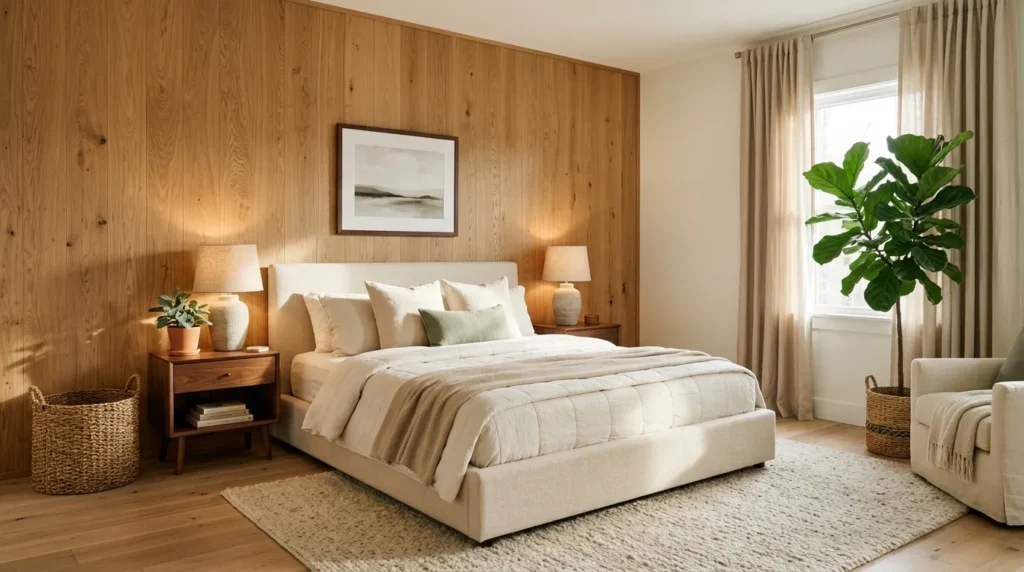
Quick Benefits
- Adds natural texture
- Makes bedrooms feel warmer
- Complements neutral decor
- Creates a timeless backdrop
- Works with modern furniture
Why It Works
Natural oak has a light, organic appearance that can soften contemporary interiors.
Its grain creates visual movement without relying on bold colors or patterns.
Oak panels work especially well with cream bedding, beige rugs, linen curtains, and simple furniture because the wood becomes the main textural element.
How To Style It
Use oak panels behind the bed for a focused feature wall.
Choose a finish that preserves the natural character of the wood rather than making it overly glossy.
Pair it with cream upholstery and neutral textiles.
Add black or dark bronze accents for definition.
Keep decorative accessories relatively restrained so the wood remains the feature.
8. Geometric Wall Panels
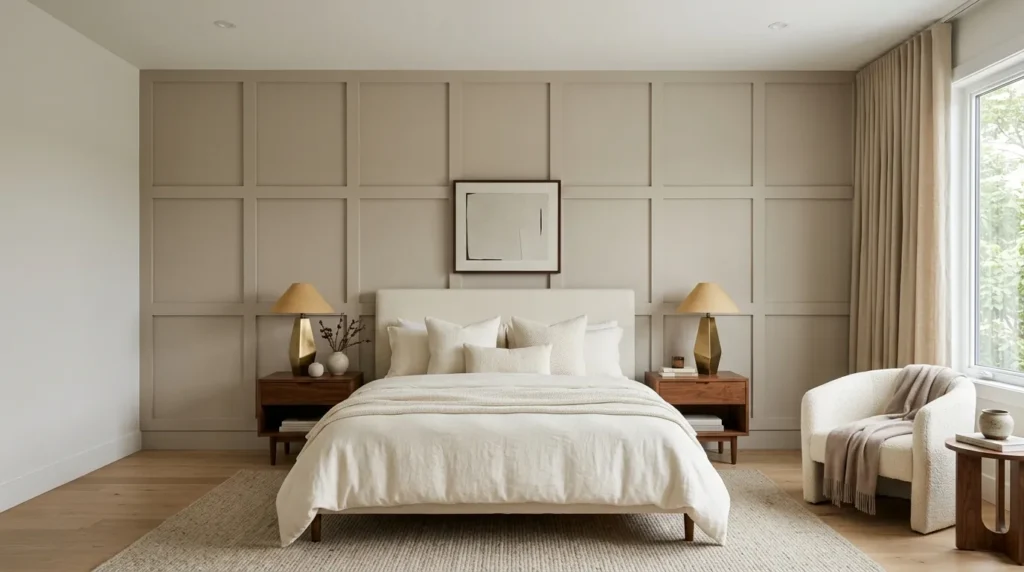
Quick Benefits
- Creates a contemporary focal point
- Adds architectural structure
- Works with simple furniture
- Provides visual movement
- Can personalize a neutral room
Why It Works
Geometric panel designs can make a bedroom feel more architectural without requiring elaborate decoration.
Simple rectangles, squares, arches, or linear arrangements can create a sophisticated backdrop.
The most timeless versions use repeated shapes and a restrained color palette rather than complicated patterns.
How To Style It
Choose one geometric concept and repeat it consistently.
Large rectangular panels can create a clean contemporary look.
Arched forms can soften a modern bedroom.
Paint the entire feature wall one color if you want subtle dimensionality.
Use contrasting colors only when the rest of the room is relatively simple.
Keep furniture silhouettes clean so the wall pattern doesn’t compete with too many shapes.
9. Panel-and-Lighting Wall
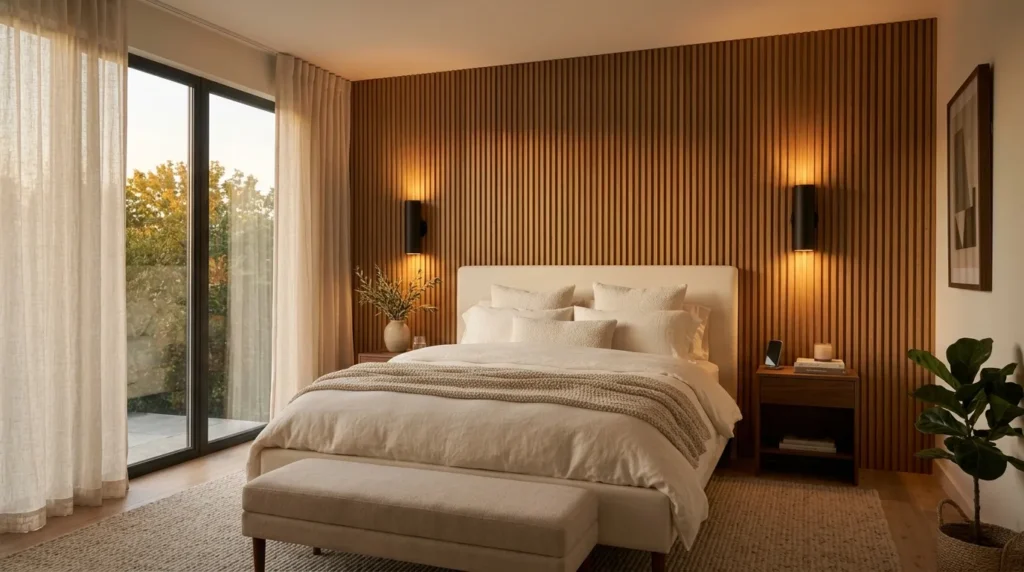
Quick Benefits
- Highlights wall texture
- Creates evening atmosphere
- Adds functional bedside lighting
- Saves bedside surface space
- Makes the feature wall more noticeable
Why It Works
Wall panels and lighting complement each other because texture becomes more visible when light creates shadows across the surface.
This is especially effective with slatted or fluted panels.
Wall-mounted sconces also free up nightstand space, which can help maintain the clean appearance associated with modern bedrooms.
How To Style It
Install wall sconces at a practical height for reading and bedside use.
Choose fixtures that complement the panel finish.
For wood walls, warm metal, black, or ceramic fixtures can provide contrast.
For painted panels, select lighting based on the room’s overall hardware.
Keep the remaining bedside surfaces simple so the lighting and wall treatment remain visually connected.
10. Minimal Full-Wall Panels
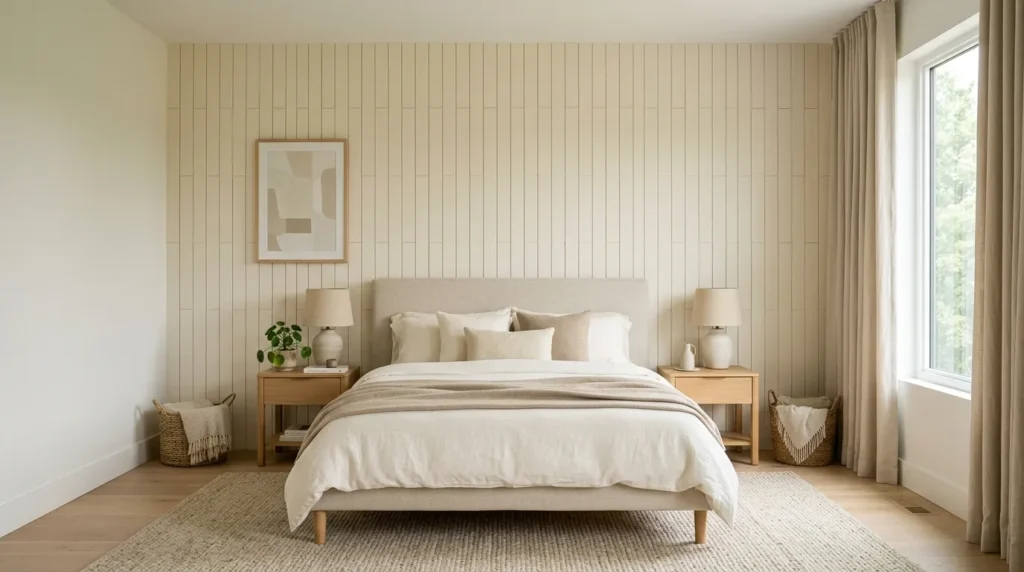
Quick Benefits
- Creates a seamless backdrop
- Makes the room feel cohesive
- Adds subtle architectural depth
- Works well with minimalist decor
- Creates a custom appearance
Why It Works
Sometimes the most elegant wall treatment is the quietest one.
Full-wall panels in a single color can create subtle shadows and architectural depth without becoming a dramatic feature.
This approach is particularly effective in modern bedrooms where furniture and textiles already provide plenty of visual interest.
How To Style It
Choose one soft, sophisticated color.
Warm white, beige, taupe, greige, and muted gray are versatile choices.
Use slim panel profiles for a subtle appearance.
Let the bed, bedding, lighting, and artwork provide the main contrast.
Avoid placing too many decorative pieces directly over the paneling.
What Are the Best Wall Panels for a Modern Bedroom?
Vertical wood slats, fluted panels, upholstered panels, simple painted molding, and minimalist full-wall panels all work well in modern bedrooms. The best choice depends on the room’s size, ceiling height, natural light, furniture, and desired atmosphere.
For warmth, natural oak or walnut is particularly effective. For a softer appearance, upholstered or painted panels work well. Fluted panels are useful when you want texture without strong color contrast.
How To Choose the Right Panel Color
Start with the existing colors in the bedroom.
If your bedding and furniture are mostly light neutrals, darker panels can create a strong focal point. If the room already has dark furniture, lighter oak or warm cream panels can balance the overall composition.
Consider natural light, too.
A bright south-facing bedroom can generally handle deeper colors more easily than a dark room with limited daylight.
Before installing a large panel treatment, view samples at different times of day. A color that looks perfect in a showroom can appear very different under your home’s natural and artificial lighting.
Are Wall Panels Good for Small Bedrooms?
Yes. The key is choosing the right scale and direction.
Vertical panels can visually emphasize ceiling height. Light-colored panels can maintain an airy feeling, while a focused panel treatment behind the bed can create a strong focal point without requiring additional decoration.
Avoid covering every surface with complicated patterns in a small bedroom. A single feature wall usually provides enough visual interest.
How To Make Bedroom Wall Panels Look Expensive
The finish and proportions matter more than excessive decoration.
Use consistent spacing, clean edges, appropriate scale, and a finish that complements the rest of the room.
Choose fewer, larger design elements rather than many small ones.
Warm lighting also makes a major difference. Sconces or carefully positioned lamps can highlight the panel texture and create attractive shadows.
Finally, keep the area around the feature wall uncluttered. A beautiful panel treatment needs enough visual space to be appreciated.
Related Articles
- 10 Modern Bedroom Ideas with Hotel-Inspired Comfort
- 10 Modern Bedroom Ideas with Elegant Wood Accents
- 10 Cozy Neutral Aesthetic Bedroom Ideas
- How to Decorate a Bedroom with Elegant Decor
- How to Make a Small Bedroom Feel Bigger with Light Colors
Frequently Asked Questions
Are wall panels suitable for bedrooms?
Yes. Wall panels can add texture, architectural detail, and visual warmth to bedrooms. They are particularly effective behind the bed because they naturally create a focal point. Choose materials and finishes appropriate for interior residential use and follow the manufacturer’s installation requirements.
What wall panel style is most modern?
Simple vertical slats, fluted panels, clean rectangular molding, and minimalist full-wall treatments are popular modern approaches. The most timeless option usually depends less on a specific trend and more on clean proportions, restrained colors, and quality installation.
Are wood wall panels good for a small bedroom?
Light wood panels can work especially well in smaller bedrooms because they introduce warmth without requiring strong color contrast. Vertical arrangements can also emphasize height. Keep the rest of the room relatively simple so the wall treatment doesn’t visually overwhelm the space.
What color goes best with bedroom wall panels?
Cream, beige, taupe, greige, warm white, natural oak, walnut, muted green, and charcoal are versatile choices. The best color depends on your existing furniture, flooring, bedding, and natural light. Always test samples in the actual bedroom before making a large installation.
Should wall panels go behind the bed?
The wall behind the bed is one of the most effective locations because it naturally functions as the bedroom’s focal wall. Paneling can frame the headboard and visually anchor the sleeping area without requiring additional artwork.
Can wall panels replace a headboard?
Some wall panel systems can function as a visual headboard, particularly upholstered, wood, or fluted treatments. However, if you regularly sit up in bed, a comfortable padded headboard may still provide more practical support.
How do you decorate a bedroom with wall panels?
Keep the surrounding decor relatively restrained. Use bedding, lighting, nightstands, rugs, curtains, and artwork that complement the panel’s material and color. The panel wall can serve as the main decorative element, allowing the rest of the room to remain calm.
Conclusion
Modern wall panels can completely change the character of a bedroom without requiring a full renovation.
The right treatment gives the room a focal point, adds texture, and creates architectural interest behind the bed. Vertical slats can make the ceiling feel taller, fluted panels can create subtle shadows, and upholstered panels can introduce softness.
If you’re drawn to natural materials, warm oak provides an inviting backdrop. If you prefer a more contemporary appearance, painted molding, geometric panels, or a dark accent wall can create stronger definition.
The most important consideration is balance. A feature wall doesn’t need to compete with every other element in the bedroom. Let the panels provide structure while the bedding, lighting, rug, curtains, and furniture create comfort.
For a first project, the wall behind the bed is usually the easiest place to begin. Choose a material that complements your existing furniture and test colors or finishes before committing.
A well-designed panel wall can make even a simple bedroom feel more finished, personal, and thoughtfully designed.