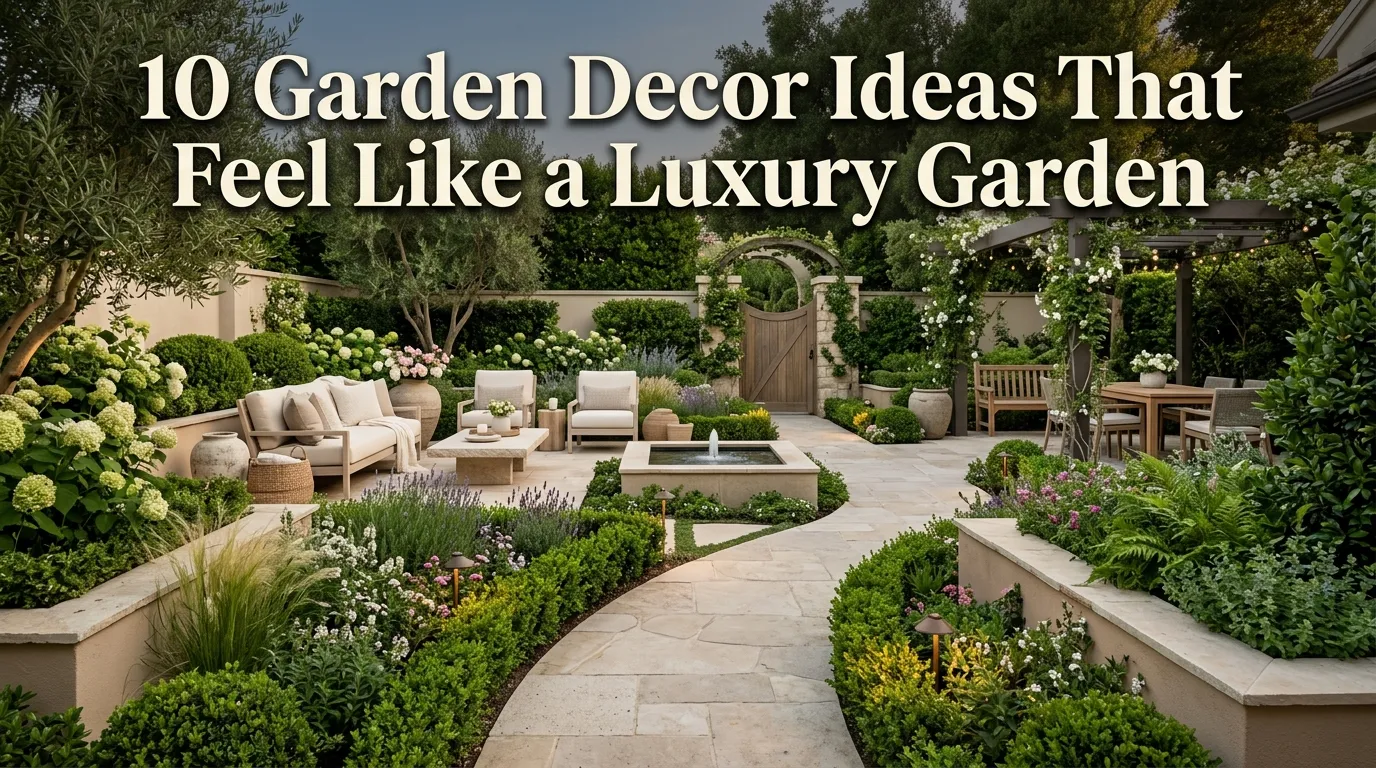
10 Garden Decor Ideas That Feel Like a Luxury Garden
A beautiful garden doesn’t have to be enormous to feel luxurious. In many of the most inviting outdoor spaces, the sense of elegance comes from thoughtful details rather than expensive materials or an endless collection of decorations.
A well-designed garden usually has a clear visual rhythm. Plants are grouped intentionally, pathways have a purpose, seating feels comfortable, and decorative elements repeat colors or materials throughout the space. Even a small backyard, patio garden, or narrow side yard can benefit from this approach.
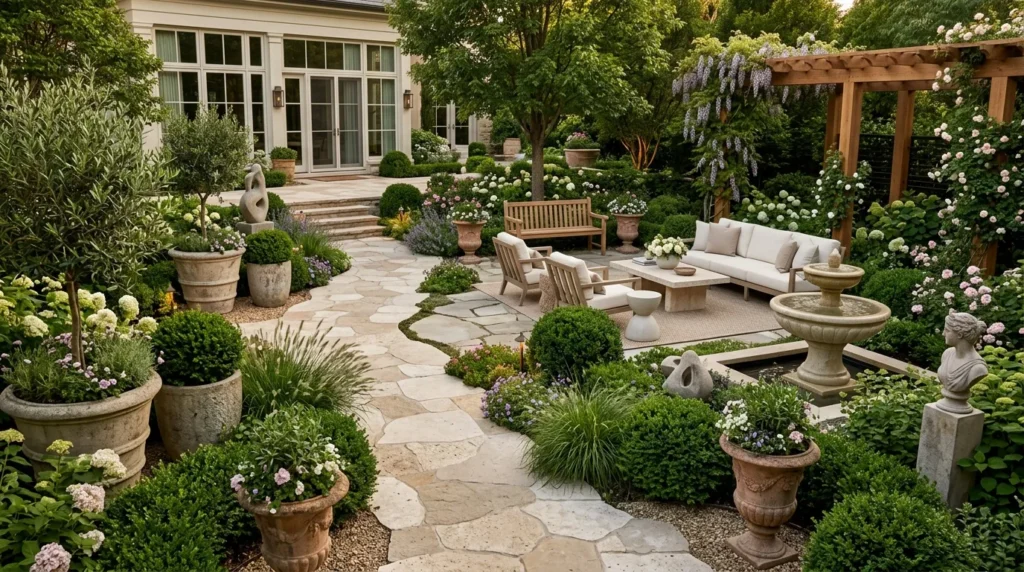
I’ve noticed that luxury-inspired gardens often feel calmer because they aren’t overloaded with competing features. Instead, they use a few strong elements—a beautiful seating area, a well-placed fountain, elegant planters, atmospheric lighting, or a defined pathway—and allow those elements to stand out.
Materials make a difference, too. Natural stone, weathered wood, metal, terracotta, gravel, and textured ceramics can make an outdoor space feel collected and established. The goal isn’t to make everything perfectly matched. A little variation gives the garden personality.
You also don’t need to redesign the entire landscape at once. Start with the area you use most. A comfortable seating corner can become the garden’s destination, while planters and lighting can gradually connect it to the rest of the yard.
The ten ideas below focus on creating a garden that feels peaceful, intentional, and elevated while remaining practical for everyday outdoor living.
Table of Contents
1. Elegant Garden Seating
Create a comfortable destination for relaxing outdoors.
2. Natural Stone Pathways
Add structure and timeless character with stone.
3. Oversized Planters
Use large containers to create visual impact.
4. Water Feature
Introduce gentle movement and a soothing focal point.
5. Layered Garden Lighting
Create atmosphere after sunset with warm illumination.
6. Outdoor Dining Nook
Turn an unused garden area into an elegant gathering space.
7. Sculptural Garden Objects
Add artistic details without creating visual clutter.
8. Layered Greenery
Create depth through varied plant heights and textures.
9. Private Garden Retreat
Use plants and screens to create a secluded atmosphere.
10. Coordinated Materials
Repeat finishes to create a polished garden design.
1. Elegant Garden Seating
Quick Benefits
- Creates a dedicated relaxation area
- Makes the garden more functional
- Provides a natural focal point
- Encourages outdoor living
- Adds a polished designer feel
Why It Works
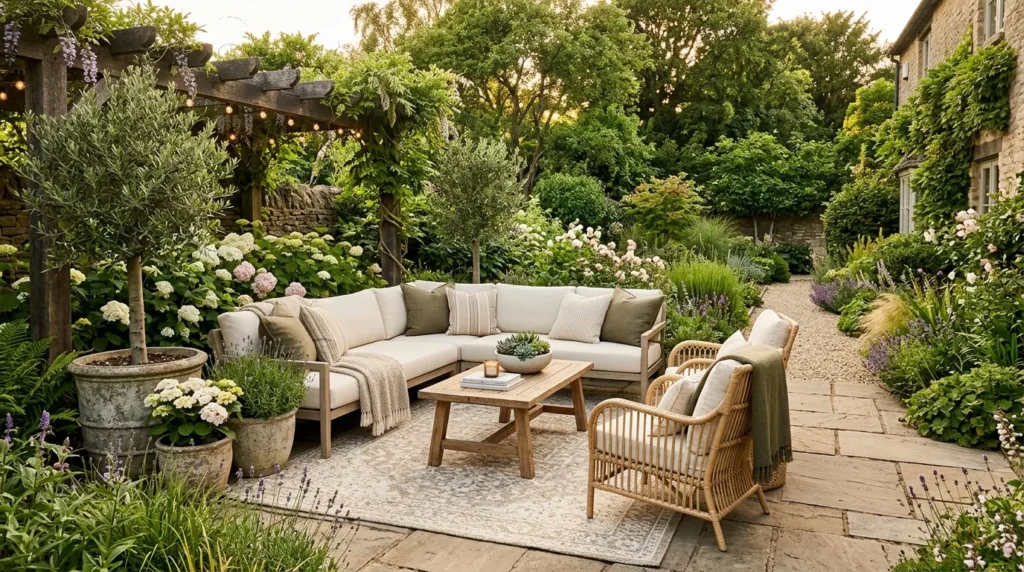
A luxury garden needs somewhere to enjoy it. Comfortable seating transforms an attractive landscape into a destination.
Instead of placing chairs randomly around the yard, create a defined seating zone. This gives the garden a sense of purpose and makes the surrounding planting feel more intentional.
A well-positioned bench, lounge chair, or outdoor sofa can also frame an important view, such as a flowering border, mature tree, fountain, or beautifully planted container.
How To Style It
Choose furniture with simple silhouettes and durable outdoor materials.
Natural wood, woven textures, powder-coated metal, and weather-resistant upholstered pieces can all work beautifully.
Add cushions in cream, beige, olive, taupe, or another color already found in the garden.
Place the seating on a patio, gravel area, stone platform, or another clearly defined surface.
Add a small side table for drinks, books, or gardening accessories.
2. Natural Stone Pathways
Quick Benefits
- Creates visual structure
- Guides movement through the garden
- Adds natural texture
- Makes planting areas feel intentional
- Develops character over time
Why It Works
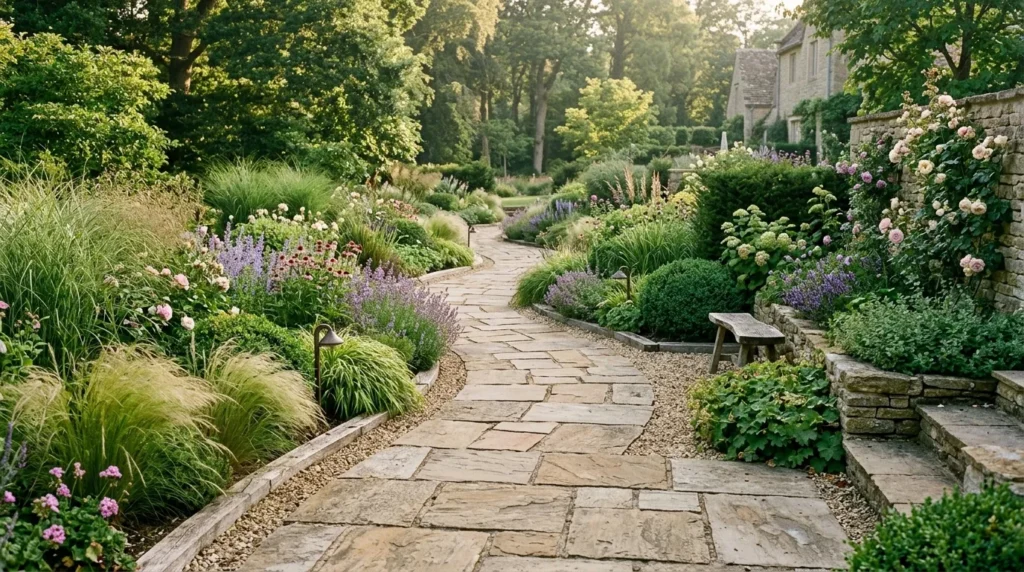
A pathway does more than connect two points. It creates a sense of movement and discovery.
Natural stone has an established, timeless appearance that works particularly well with greenery. Irregular stepping stones can feel relaxed and organic, while larger rectangular slabs create a more architectural look.
The pathway material can also become one of the garden’s repeating design elements.
How To Style It
Use stone that complements your home’s exterior and existing hardscape.
For a relaxed garden, place irregular stones through gravel or low groundcover.
For a more formal appearance, use larger slabs with consistent spacing.
Soften the edges with ornamental grasses, herbs, shrubs, or flowering plants.
Avoid making the pathway too narrow. It needs enough room for comfortable everyday movement.
3. Oversized Planters
Quick Benefits
- Creates immediate visual impact
- Adds height to patios and terraces
- Defines outdoor zones
- Works well in small gardens
- Provides flexible seasonal styling
Why It Works
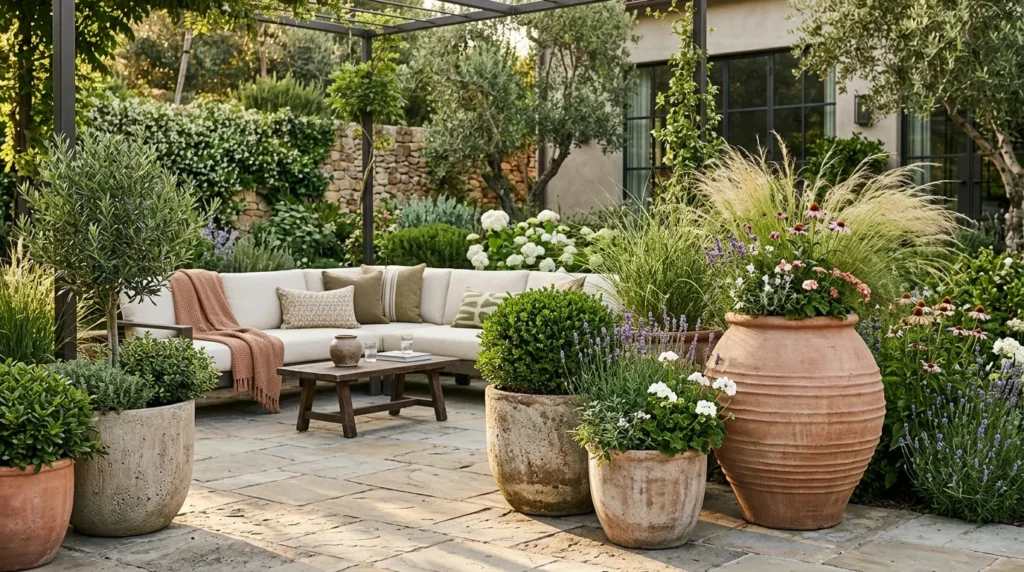
Large planters can make a garden feel more substantial because they add architectural scale.
Instead of scattering many small containers, a few oversized planters create stronger visual anchors.
They are especially useful near entrances, seating areas, stairways, and outdoor dining spaces.
How To Style It
Choose containers in stone, terracotta, concrete, ceramic, or another durable material suitable for outdoor use.
Repeat the same planter style in several locations for cohesion.
Use plants with strong silhouettes, such as ornamental grasses, small shrubs, structured evergreens, or suitable flowering plants.
Place larger containers at transitions between spaces rather than randomly throughout planting beds.
4. Water Feature
Quick Benefits
- Creates a focal point
- Adds soothing sound
- Introduces movement
- Enhances sensory appeal
- Gives the garden a destination
Why It Works
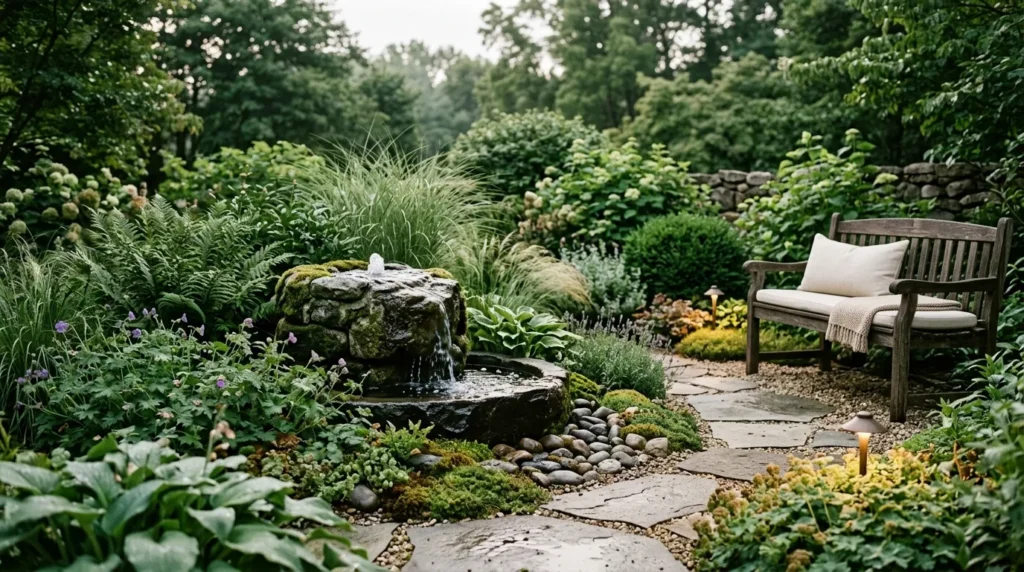
Water adds another sensory dimension to a garden.
The sound of moving water can make a space feel more peaceful, while reflections add visual interest.
A water feature doesn’t have to be enormous. A compact wall fountain, bowl fountain, pond, or small recirculating feature can provide the same design principle on a smaller scale.
How To Style It
Choose a feature appropriate for the size of the garden.
Place it where it can be seen from a seating area or frequently used window.
Surround it with plants that complement its shape without completely hiding it.
Natural stone, concrete, ceramic, and metal can all create different moods.
Keep maintenance requirements in mind before choosing the feature.
5. Layered Garden Lighting
Quick Benefits
- Extends outdoor use into the evening
- Highlights plants and architecture
- Creates a welcoming atmosphere
- Improves pathway visibility
- Adds depth after dark
Why It Works
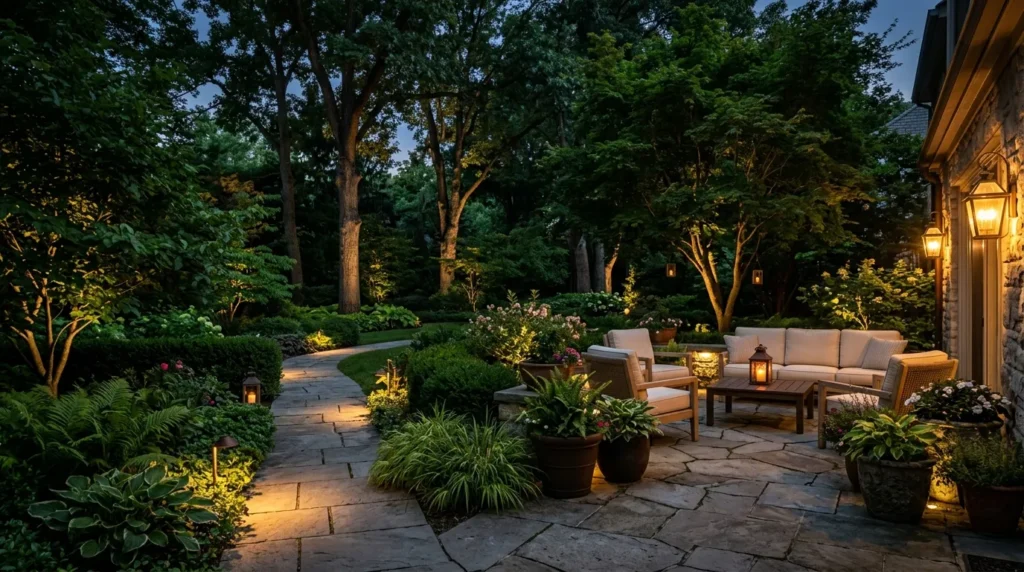
A garden can look completely different after sunset.
Lighting allows you to highlight the features you enjoy most while creating a comfortable atmosphere for evening gatherings.
The most sophisticated outdoor lighting usually isn’t one bright flood of illumination. It comes from several softer sources at different heights.
How To Style It
Use low pathway lights along walking routes.
Place subtle uplighting near trees or architectural plants.
Use wall lights around patios and outdoor dining areas.
Add lantern-style lights or suitable decorative fixtures near seating areas.
Aim the lighting toward focal points rather than illuminating every inch of the garden.
Warm-toned lighting generally creates a more relaxed evening atmosphere.
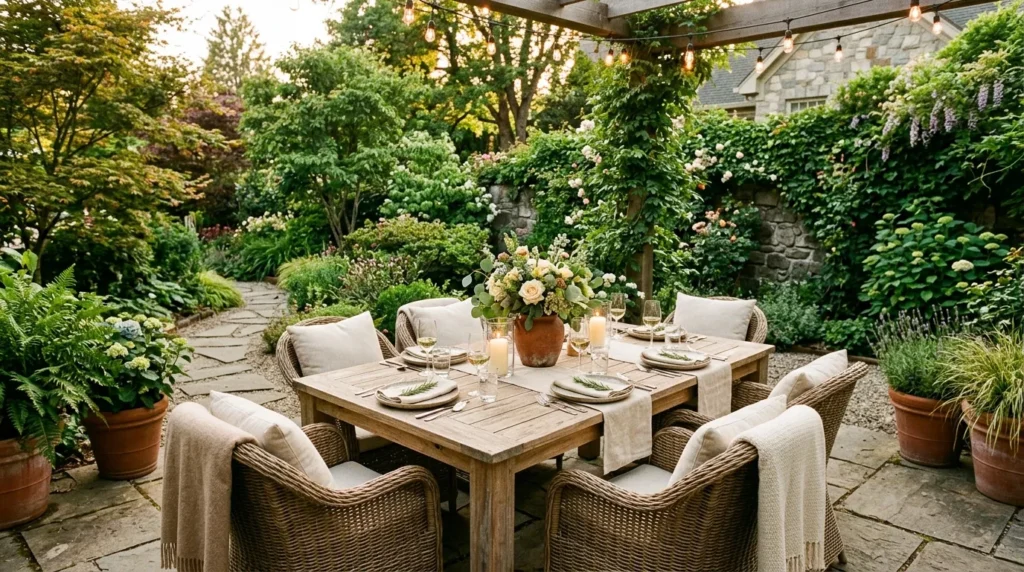
6. Outdoor Dining Nook
Quick Benefits
- Creates a social destination
- Makes unused space functional
- Encourages outdoor meals
- Adds structure to the garden
- Works for everyday entertaining
Why It Works
A dedicated dining area gives the garden a reason to be used beyond gardening.
It can be as simple as a small bistro table or as substantial as a dining table with comfortable chairs.
The important part is creating a defined area rather than simply placing furniture in an open patch of lawn.
How To Style It
Position the dining area near the kitchen or another convenient access point.
Use stone, tile, decking, gravel, or another suitable surface to visually define it.
Choose outdoor furniture that complements the architecture of your home.
Add potted herbs, a simple centerpiece, or a weather-resistant lantern.
For larger spaces, consider a pergola or shade structure to create additional definition.
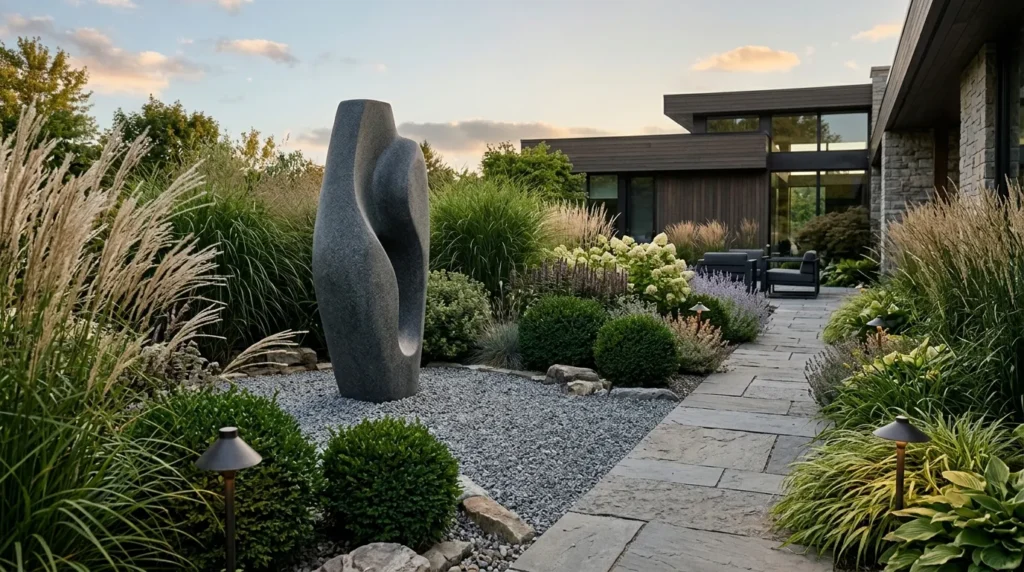
7. Sculptural Garden Objects
Quick Benefits
- Adds artistic personality
- Creates focal points
- Breaks up large planting areas
- Works with minimalist landscapes
- Makes the garden feel curated
Why It Works
A garden can function as an outdoor art space.
One carefully selected sculpture, stone object, urn, or architectural feature can have more impact than numerous small decorations.
Sculptural elements are especially useful in gardens where the planting is relatively simple because they provide structure throughout the year.
How To Style It
Choose an object that relates to the garden’s overall style.
Modern gardens can use simple geometric sculptures.
Traditional landscapes may suit stone urns or classical forms.
Place the object where it has enough surrounding space to be appreciated.
Use planting to frame it rather than hide it.
Avoid placing too many focal points close together.
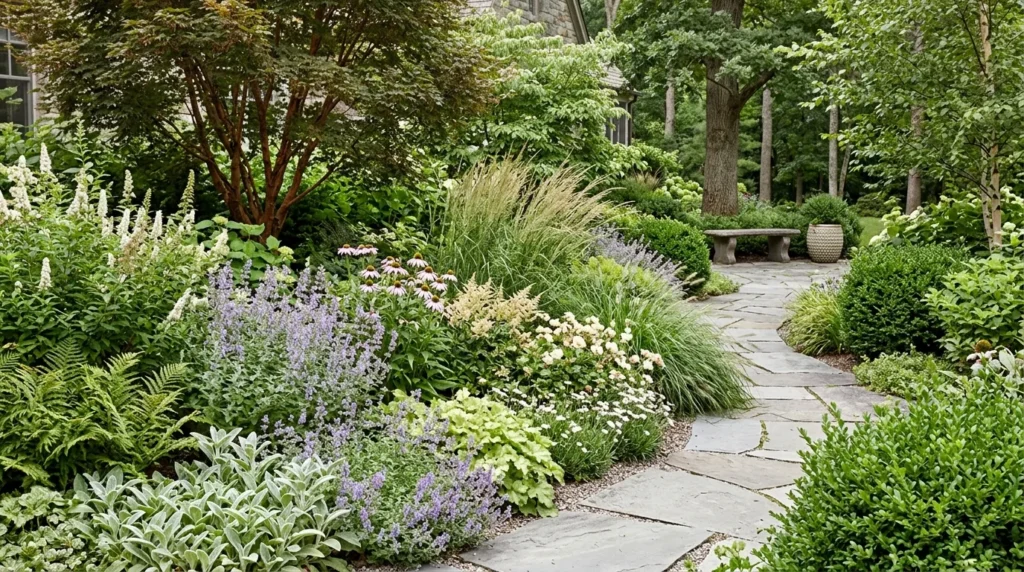
8. Layered Greenery
Quick Benefits
- Creates depth
- Makes planting beds feel fuller
- Provides year-round structure
- Softens hard surfaces
- Creates a lush appearance
Why It Works
A luxury-inspired garden rarely depends on one plant height.
Layering creates visual depth by combining taller structural plants with medium shrubs, lower perennials, groundcovers, and containers.
This makes the garden feel established and abundant without requiring every plant to be identical.
How To Style It
Start with the tallest elements at the back or around the edges.
Add medium-height shrubs and flowering plants in front.
Use lower plants along pathways and borders.
Repeat selected plant forms or colors throughout the garden to create rhythm.
Include evergreen structure where appropriate for your climate so the garden retains visual interest outside the main growing season.
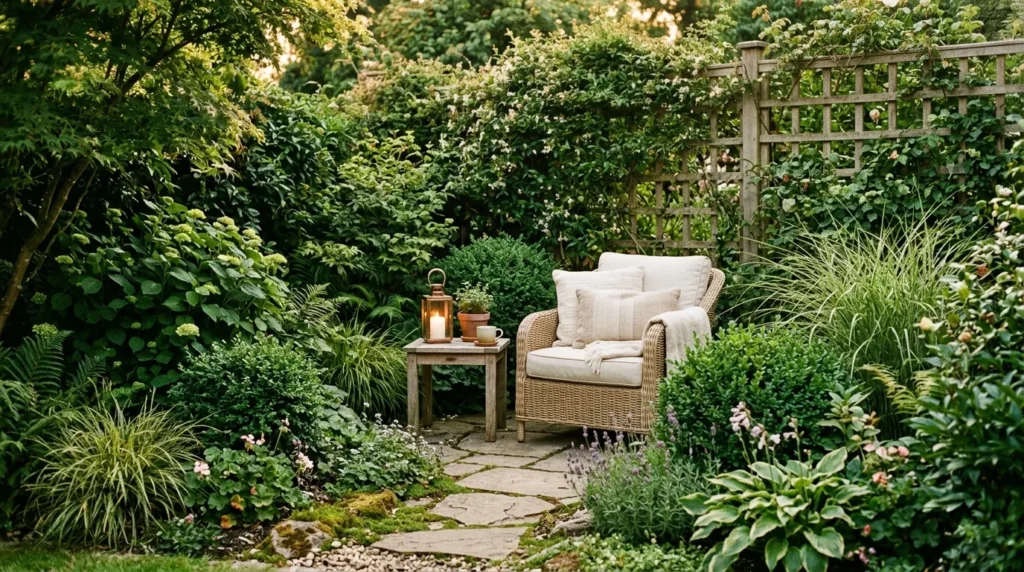
9. Private Garden Retreat
Quick Benefits
- Creates a sense of escape
- Adds privacy
- Makes seating more comfortable
- Defines outdoor rooms
- Gives the garden a secluded character
Why It Works
Privacy changes how a garden feels.
A space surrounded by greenery can feel more intimate than an exposed patio, even when the actual garden is relatively small.
Plants, trellises, screens, pergolas, and strategically positioned shrubs can create a sense of enclosure without making the space feel closed.
How To Style It
Start with the direction of unwanted views.
Use tall shrubs, ornamental grasses, climbing plants, trellises, or appropriate screening elements to soften those sightlines.
Place seating inside the sheltered area.
Layer different plant heights instead of creating one solid wall.
Leave openings where you want views into the rest of the garden.
10. Coordinated Materials
Quick Benefits
- Creates visual cohesion
- Makes the garden feel intentional
- Connects different outdoor zones
- Prevents decorative clutter
- Supports a timeless appearance
Why It Works
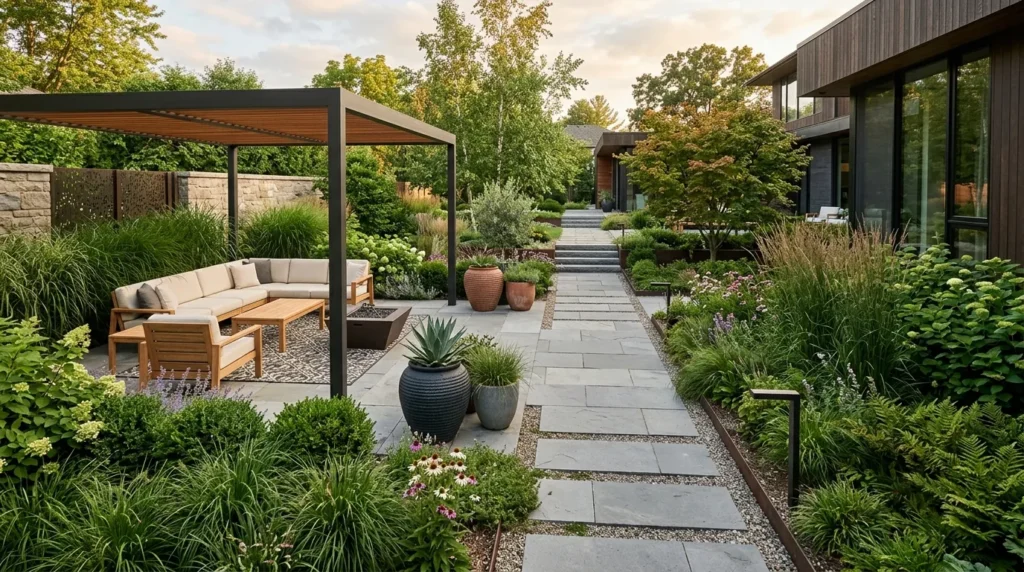
One of the easiest ways to make an outdoor space feel sophisticated is to repeat materials.
If the patio uses natural stone, echo that stone in a pathway or planter. If outdoor furniture includes dark metal, repeat the finish in lighting or small architectural details.
This creates relationships between separate areas of the garden.
How To Style It
Choose two or three primary materials.
For example, use natural stone, warm wood, and dark metal.
Repeat those materials throughout the seating area, pathways, planters, lighting, and dining space.
Avoid introducing too many unrelated finishes.
Let plants provide most of the color while hardscape materials establish the visual foundation.
What Makes a Garden Look Luxurious?
A luxury-inspired garden typically combines comfortable outdoor furniture, well-defined pathways, layered planting, attractive lighting, natural materials, and a few carefully selected focal points. The overall effect comes from balance and consistency rather than simply using expensive decor.
How To Make a Small Garden Feel Luxurious
Small gardens benefit from editing.
Instead of trying to include everything, choose one main destination and build the garden around it.
A compact seating area can become the focal point. Add one large planter, a defined pathway, warm lighting, and layered greenery.
Using larger elements can actually make a small garden feel more sophisticated than filling it with many tiny decorations.
Keep the material palette simple and repeat finishes throughout the space.
What Materials Look Expensive in a Garden?
Natural stone, quality-looking wood, textured ceramic, terracotta, concrete, and well-finished metal can all create an elevated appearance.
The material itself isn’t everything. Consistency matters.
A simple stone patio paired with coordinated planters and outdoor furniture can feel more sophisticated than a space containing many unrelated decorative materials.
Natural weathering can also add character over time.
How To Create a Luxury Garden on a Budget
Start with the features that create the greatest visual impact.
Clean up planting beds, define pathways, repaint or refresh existing furniture, and add a few large containers.
Lighting can also make a substantial difference in the evening.
Rather than purchasing many decorative objects, choose one strong focal point and repeat a small number of materials or colors.
Even rearranging existing furniture can make the garden feel more intentional.
Related Articles
- 10 Garden Decor Ideas That Increase Curb Appeal
- 10 DIY Garden Projects That Add Instant Character
- 10 Backyard Landscape Design Ideas with Beautiful Greenery
- 10 Small Garden Ideas for Beautiful Outdoor Spaces
- 10 Vegetable Garden Ideas for Stylish Backyard Growing
Frequently Asked Questions
How can I make my garden look more luxurious?
Focus on structure, comfort, and consistency. Create a defined seating area, use attractive planters, add layered greenery, install subtle outdoor lighting, and repeat a small selection of materials. Keeping the garden edited and uncluttered can make even inexpensive elements feel more intentional.
What plants make a garden look expensive?
Plants with strong forms, layered heights, and consistent repetition can create a polished appearance. Evergreen shrubs, ornamental grasses, structured perennials, flowering plants, and suitable small trees can all contribute. The best choices depend on your climate, sunlight, soil, and maintenance preferences.
Does outdoor lighting make a garden look better?
Yes. Layered lighting can highlight trees, pathways, planting beds, seating areas, and architectural features after dark. Using several lower-intensity light sources generally creates more depth and atmosphere than illuminating the entire garden with one bright fixture.
How do I decorate a small backyard like a luxury garden?
Use fewer but more substantial elements. A comfortable seating area, one or two large planters, a defined pathway, layered greenery, and carefully positioned lighting can create a strong design. Avoid filling every available space with decorations.
What colors work best for a luxury garden?
Natural greens provide the foundation. Neutral tones such as stone, cream, beige, brown, charcoal, and terracotta can complement the planting. Small amounts of muted color from flowers or accessories can add personality without overwhelming the landscape.
Are water features difficult to maintain?
Maintenance depends on the type, size, equipment, climate, and surrounding planting. Smaller recirculating fountains can be simpler than larger ponds, but every water feature requires some cleaning and upkeep. Choose a design that matches the amount of maintenance you realistically want to handle.
How do I make a garden feel private?
Use layered screening rather than creating an impenetrable wall. Tall shrubs, small trees, ornamental grasses, trellises, climbing plants, and suitable screens can block unwanted views while maintaining a natural atmosphere. Position seating within the most sheltered portion of the garden.
Conclusion
A luxury-inspired garden isn’t defined by how much you spend. It is defined by how intentionally the space is put together.
Start by creating a destination. A comfortable seating area or outdoor dining nook can give the garden a clear purpose. From there, add structure through stone pathways, oversized planters, layered greenery, and a few carefully selected focal points.
Lighting can transform the atmosphere after sunset, while natural materials give the garden a sense of permanence and character. Repeating the same finishes across different areas helps everything feel connected.
If your garden currently feels cluttered or unfinished, resist the urge to add more decorations. Sometimes removing unnecessary objects and giving existing features more space creates the biggest improvement.
Choose one area to refresh first. Add comfortable seating, improve the planting around it, introduce a few containers, or create a simple pathway.
With thoughtful layers and a restrained approach, even an ordinary backyard can become a peaceful outdoor retreat that feels polished, welcoming, and distinctly personal.