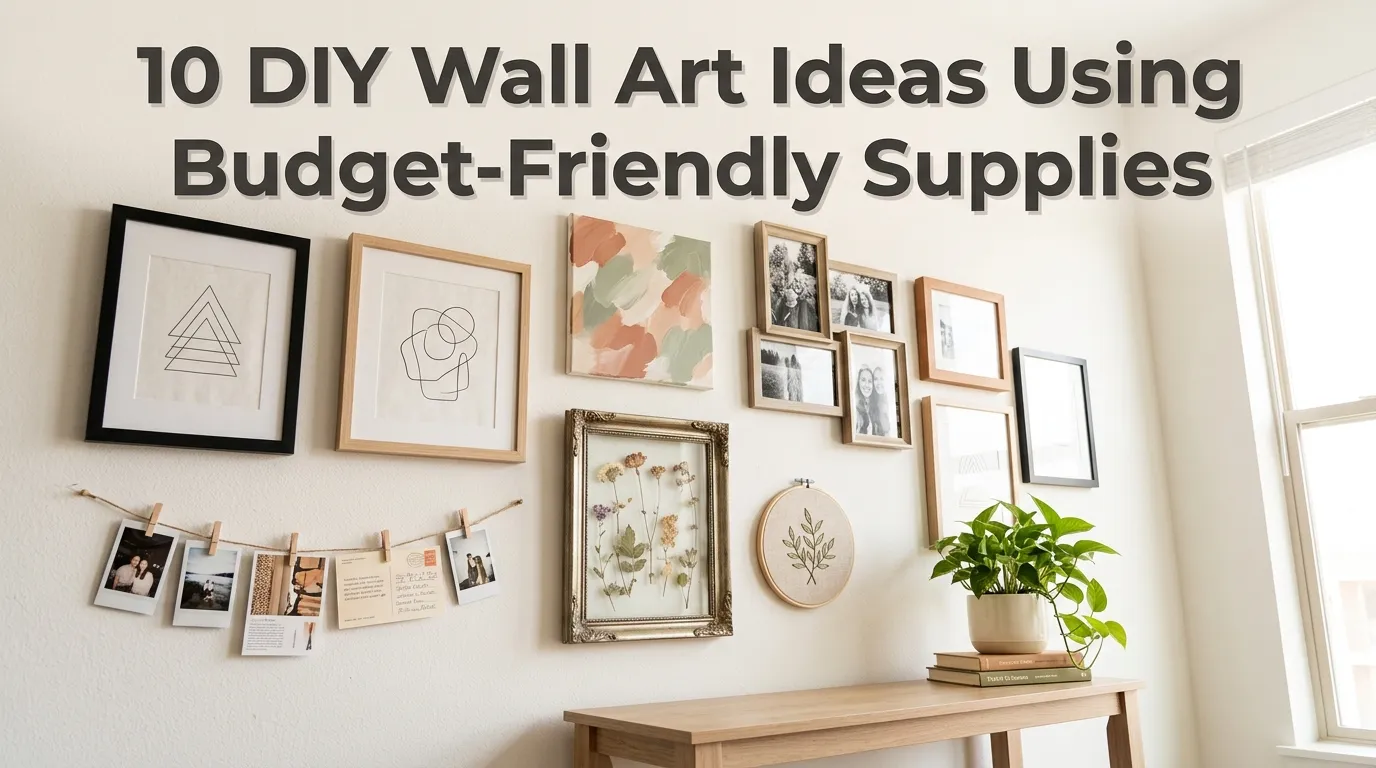
10 DIY Wall Art Ideas Using Budget-Friendly Supplies
Decorating your walls can completely change how a room feels, but creating a beautiful gallery wall or oversized artwork doesn’t require a large decorating budget. Some of the most interesting pieces begin with simple supplies, leftover materials, and a little creativity.
DIY wall art is especially useful when you’re decorating a rental, refreshing a bedroom, filling a blank living room wall, or adding personality to a home office. Instead of searching for artwork that fits a very specific color palette or size, you can create something around the room you already have.
I’ve found that the easiest DIY artwork often looks the most intentional when the design is simple. A large abstract canvas, a framed fabric panel, a collection of botanical prints, or a textured paper design can make a strong statement without complicated techniques.
The key is choosing supplies that are inexpensive but visually interesting. Canvas boards, craft paper, leftover paint, fabric remnants, wooden dowels, thrifted frames, and even cardboard can become the foundation for attractive wall decor.
You also don’t have to be an experienced artist. Many of these projects rely more on composition, color, layering, and texture than precise drawing skills. That’s good news if you want something personal but don’t consider yourself particularly artistic.
The ten ideas below are designed for real homes and approachable weekend projects. Each one includes practical styling suggestions so the finished piece feels like part of your decor rather than simply a craft project hanging on the wall.
Table of Contents
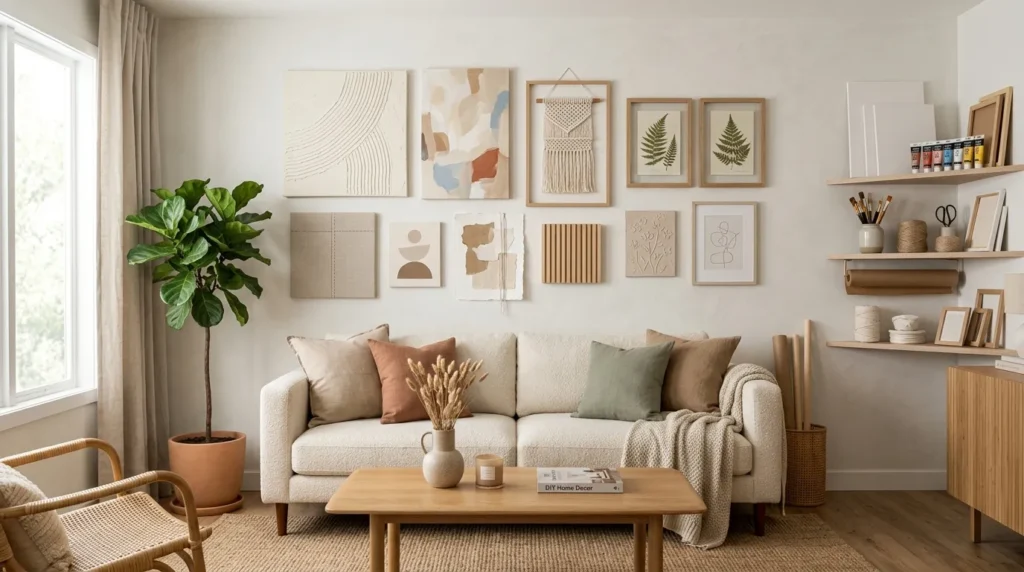
1. Abstract Painted Canvas
Create oversized artwork with simple shapes and layered colors.
2. Framed Fabric Art
Turn inexpensive fabric into soft, colorful wall decor.
3. Botanical Print Gallery
Create a collected display using simple botanical artwork.
4. Textured Paper Art
Build dimensional artwork with affordable paper supplies.
5. Painted Wood Panels
Use inexpensive boards to create warm modern wall art.
6. DIY Line Art
Create minimalist artwork with simple continuous lines.
7. Pressed Botanical Frames
Bring natural texture indoors with dried plant displays.
8. Geometric Color Blocks
Create contemporary artwork with painter’s tape and paint.
9. Fabric Wall Hanging
Add softness with a simple textile-based wall piece.
10. Thrifted Frame Collage
Combine inexpensive frames into a personalized arrangement.
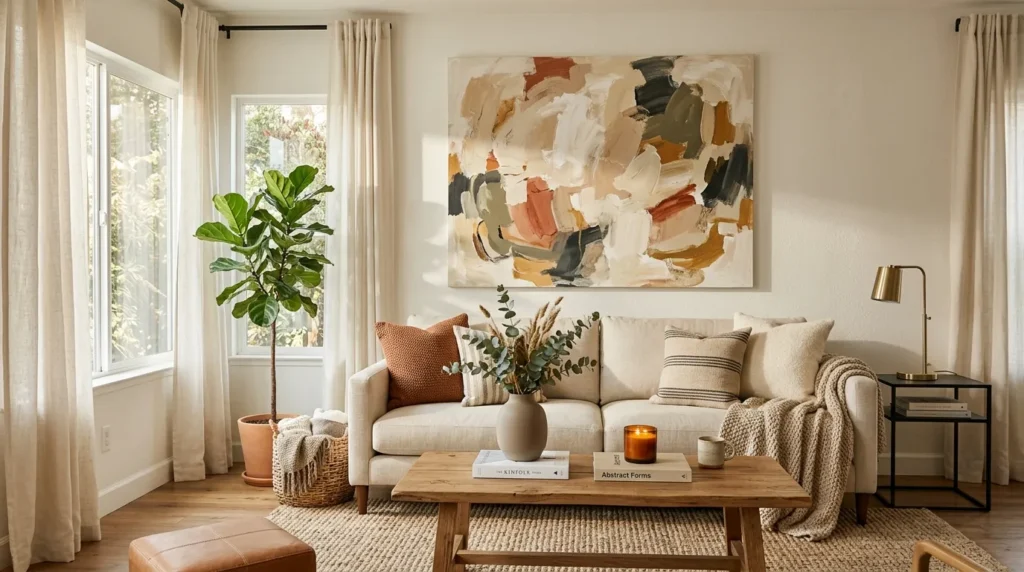
1. Abstract Painted Canvas
Quick Benefits
- Requires basic supplies
- Easy to customize
- Works in many rooms
- Can fill a large blank wall
- Doesn’t require advanced painting skills
Why It Works
Large artwork can be expensive, particularly when you’re trying to fill a substantial wall.
Creating your own abstract canvas gives you control over the size and color palette while allowing you to experiment without needing to reproduce a recognizable image.
Abstract art also works well with modern interiors because shapes and brushstrokes can echo colors already present in furniture, rugs, curtains, and accessories.
How To Style It
Start with an inexpensive canvas or canvas board.
Choose three to five colors already found in the room. Warm white, beige, terracotta, olive, charcoal, and muted blue are easy combinations.
Use large brushes, a small roller, or even a palette knife to create broad shapes.
Don’t try to make every section perfect.
Hang one oversized piece above a sofa, dresser, console, or bed, or create two coordinating canvases for a wider wall.
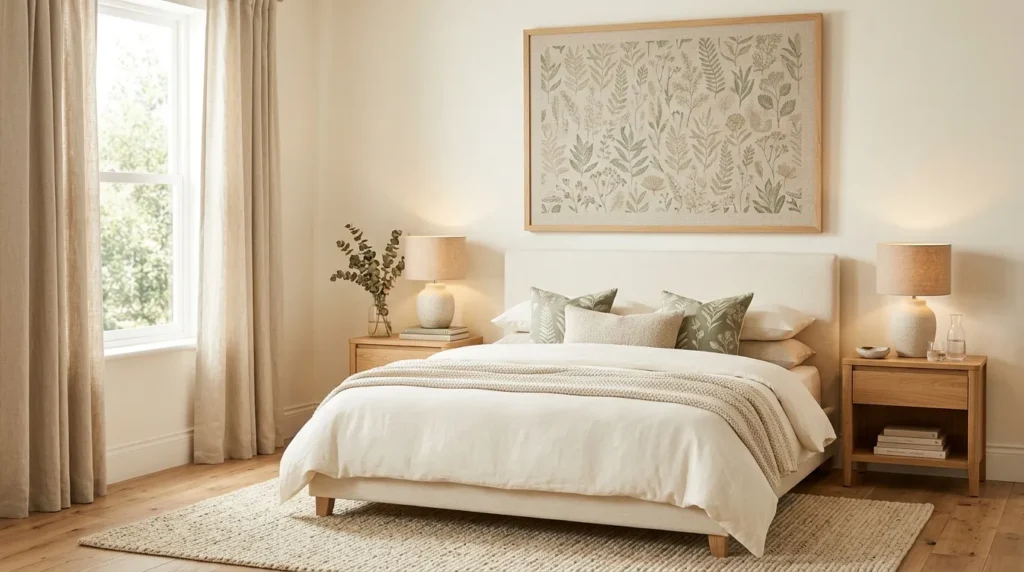
2. Framed Fabric Art
Quick Benefits
- Adds softness
- Uses inexpensive materials
- Introduces pattern
- Works without painting
- Can coordinate with existing textiles
Why It Works
Fabric has natural texture that can make a wall feel warmer.
A beautiful remnant doesn’t have to become a pillow or curtain. A large piece of linen, cotton, block print, or woven fabric can become artwork when stretched or mounted inside a frame.
This is especially useful when you want pattern without committing to patterned wallpaper.
How To Style It
Find fabric with a color palette that complements your room.
Stretch it over a canvas frame or mount it neatly behind an inexpensive frame.
For a more sophisticated appearance, choose a simple neutral frame.
Use oversized fabric art above a bed or sofa.
For smaller pieces, group several coordinating patterns together.
Keep the rest of the wall relatively simple so the fabric remains the focal point.
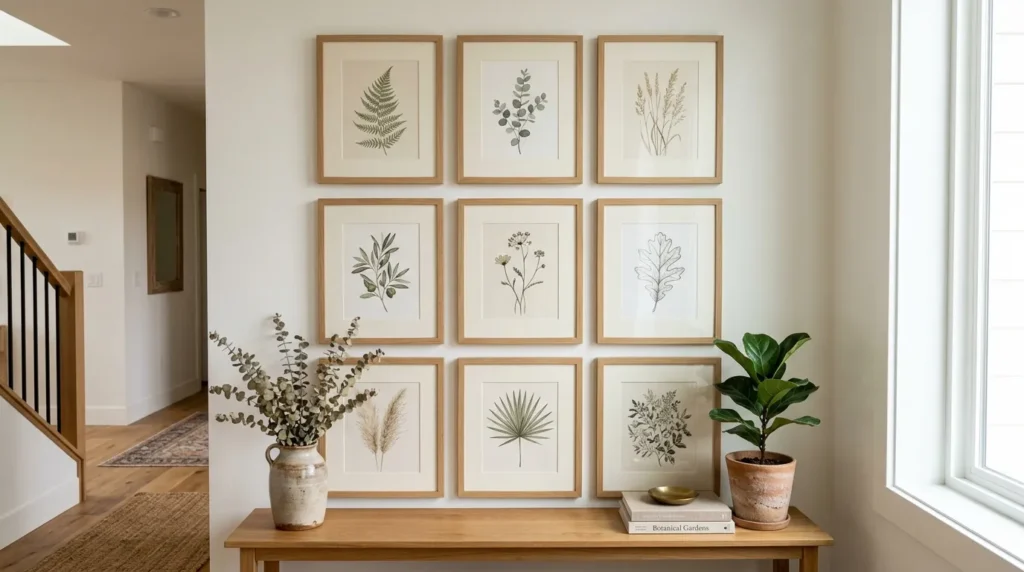
3. Botanical Print Gallery
Quick Benefits
- Creates a collected look
- Easy to customize
- Works with neutral interiors
- Adds natural imagery
- Can be expanded over time
Why It Works
Botanical artwork has a timeless quality and can introduce nature without requiring actual plants in every room.
You can create a gallery using public-domain botanical-style artwork, your own plant photography, or simple hand-painted botanical shapes.
The beauty of this idea is repetition. Similar frames and a consistent palette can make inexpensive individual prints feel like a cohesive collection.
How To Style It
Choose five to nine prints with a common theme.
Use matching frames for a clean appearance or mix wood and black frames for a more collected look.
Arrange the pieces on the floor first to determine spacing.
Keep the center of the arrangement around eye level.
For a modern look, use generous white matting around each print.
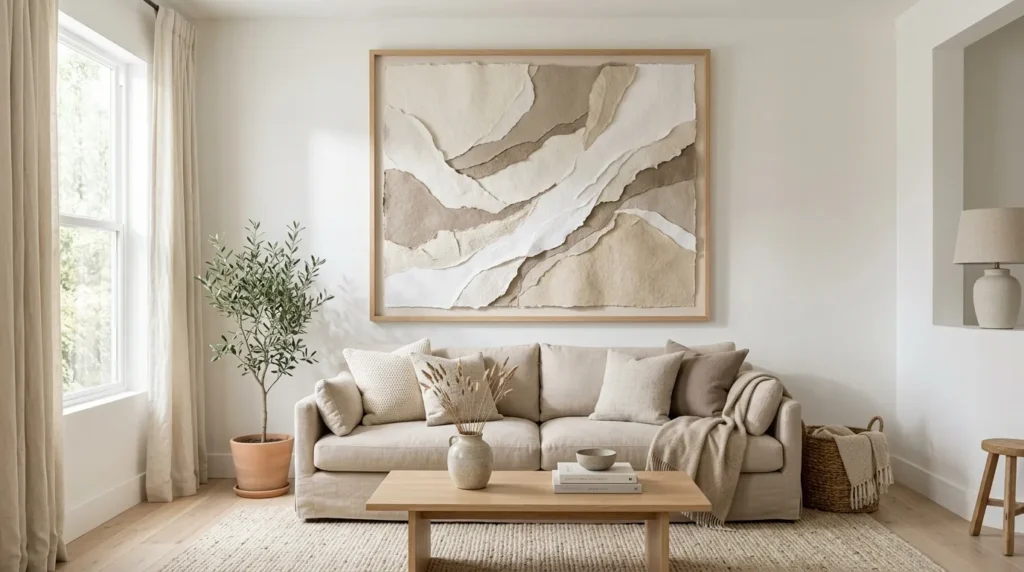
4. Textured Paper Art
Quick Benefits
- Extremely inexpensive
- Adds dimension
- Requires minimal tools
- Easy to customize
- Works well with minimalist decor
Why It Works
Paper can create surprisingly sophisticated artwork when layered carefully.
Folded paper, torn edges, overlapping shapes, and raised sections can produce shadows that change throughout the day.
This makes the artwork feel dimensional without requiring expensive materials.
How To Style It
Use heavyweight paper in cream, beige, white, taupe, or muted colors.
Create overlapping organic shapes and mount them onto a rigid backing.
For stronger texture, layer pieces using small spacers or foam mounting squares.
Place the finished artwork inside a deep frame.
Keep the design relatively simple and let shadows create much of the visual interest.
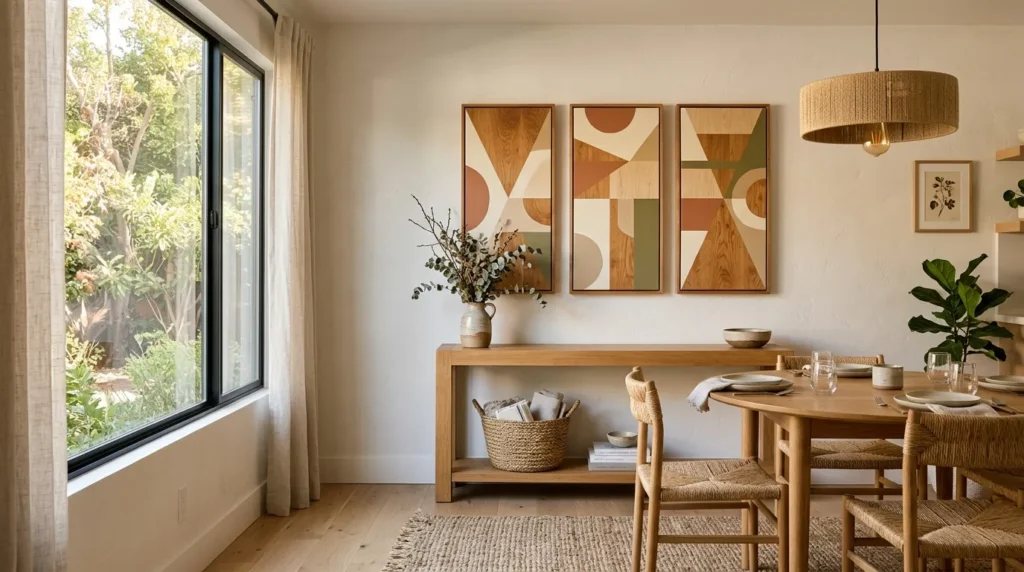
5. Painted Wood Panels
Quick Benefits
- Adds natural texture
- Creates sturdy artwork
- Works with modern interiors
- Can use inexpensive boards
- Provides a warm alternative to canvas
Why It Works
Wood brings a tactile quality that canvas doesn’t always provide.
Simple painted wood panels can combine color with visible grain, creating artwork that feels architectural as well as decorative.
This approach is especially useful in living rooms, entryways, bedrooms, and dining areas where natural materials already appear.
How To Style It
Use smooth plywood, pine boards, or suitable craft panels.
Sand the surface before painting.
Leave portions of the wood exposed if you want the grain to remain visible.
Create simple arches, blocks, stripes, or abstract forms.
Mount one large panel or several smaller panels together.
Choose a finish that complements existing wood furniture rather than trying to match it exactly.
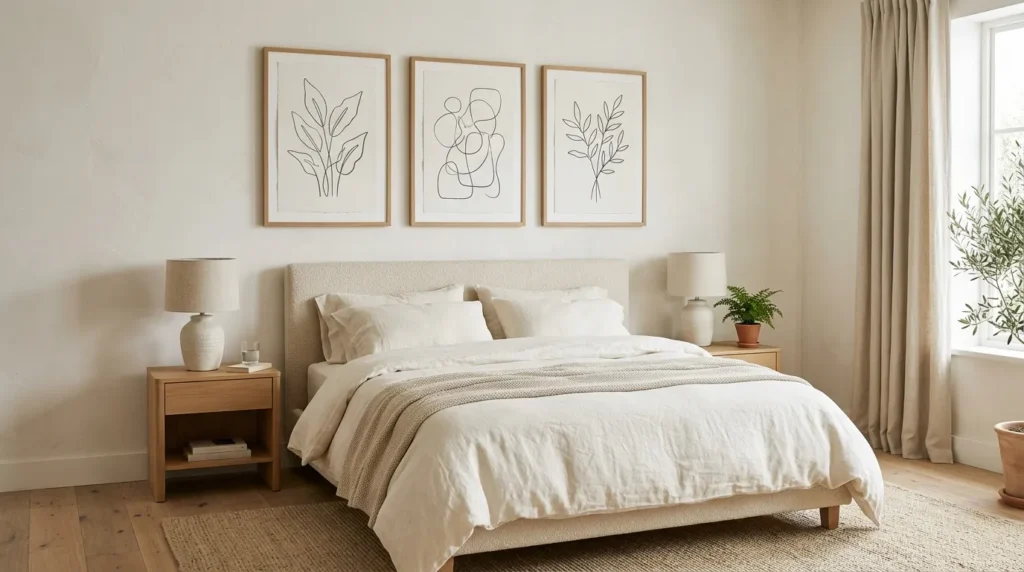
6. DIY Line Art
Quick Benefits
- Uses minimal supplies
- Creates a modern appearance
- Works in small spaces
- Easy to customize
- Complements neutral decor
Why It Works
Simple line art can create visual interest without overwhelming a room.
You don’t need complicated drawing skills. A single continuous line forming a face, botanical shape, vase, or abstract figure can become attractive artwork.
The simplicity also makes line art easy to coordinate with existing decor.
How To Style It
Use heavyweight paper or a small canvas.
Draw with a black, charcoal, brown, or dark olive artist pen.
Keep the background neutral.
Frame the finished piece with natural wood, black, or simple white molding.
For a larger wall, create a series of three related drawings rather than enlarging one tiny piece.
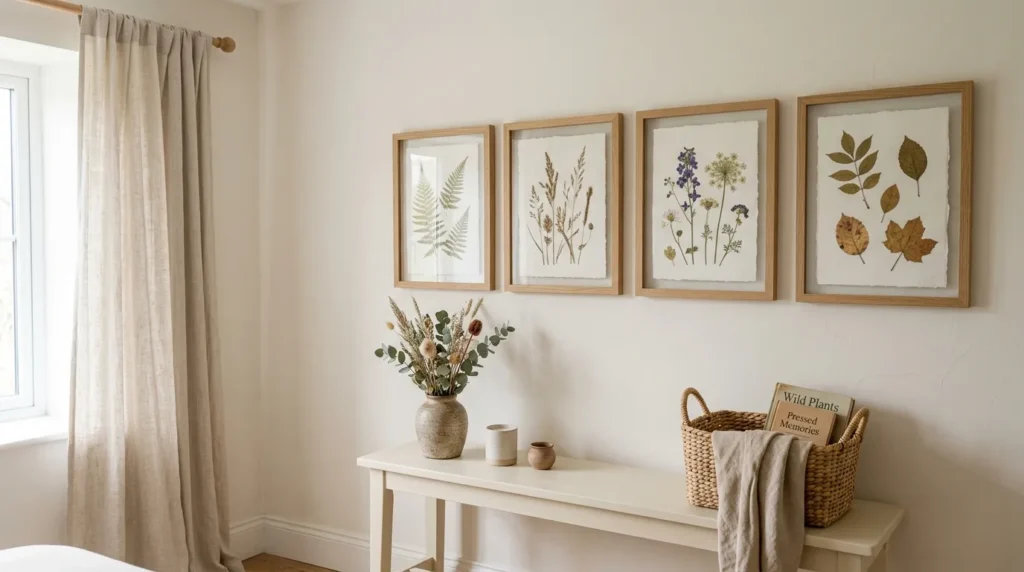
7. Pressed Botanical Frames
Quick Benefits
- Uses natural materials
- Adds delicate texture
- Creates one-of-a-kind artwork
- Works with vintage and modern rooms
- Can be inexpensive
Why It Works
Pressed botanicals bring a direct connection to nature into the room.
Leaves, flowers, grasses, and other suitable plant materials can become delicate wall art when carefully dried and framed.
The irregular shapes make every piece slightly different, which gives the display a handmade quality.
How To Style It
Use plants that dry well and handle them carefully.
Place dried pieces on cream or white paper inside simple glass frames.
Use matching frames if you want a gallery-like appearance.
Natural wood frames work particularly well with botanical artwork.
Display the frames where they won’t receive excessive direct sunlight if you want to preserve the colors.
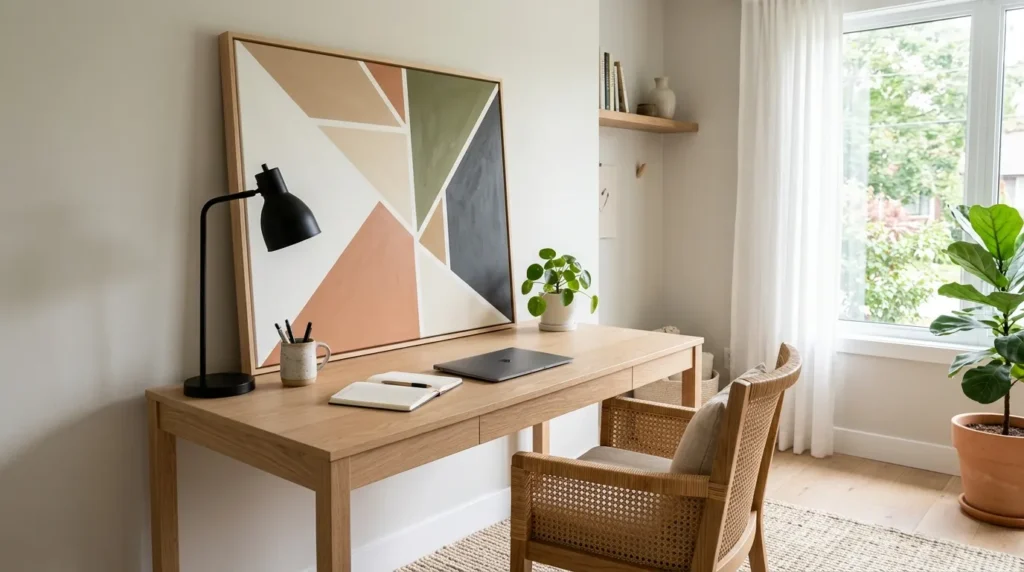
8. Geometric Color Blocks
Quick Benefits
- Very approachable project
- Creates crisp shapes
- Uses inexpensive paint
- Works with modern interiors
- Easy to coordinate with decor
Why It Works
Painter’s tape makes it possible to create clean geometric designs without needing advanced artistic skills.
You can create arches, rectangles, diagonal lines, overlapping blocks, or simple color fields.
The finished artwork can be customized to match the exact colors already present in your room.
How To Style It
Start with a canvas or smooth board.
Choose two to four colors.
Use painter’s tape to define the shapes.
Paint each section and allow the surface to dry before carefully removing the tape.
For a sophisticated appearance, use muted colors and plenty of negative space.
Hang the artwork where its largest color block complements a nearby piece of furniture.
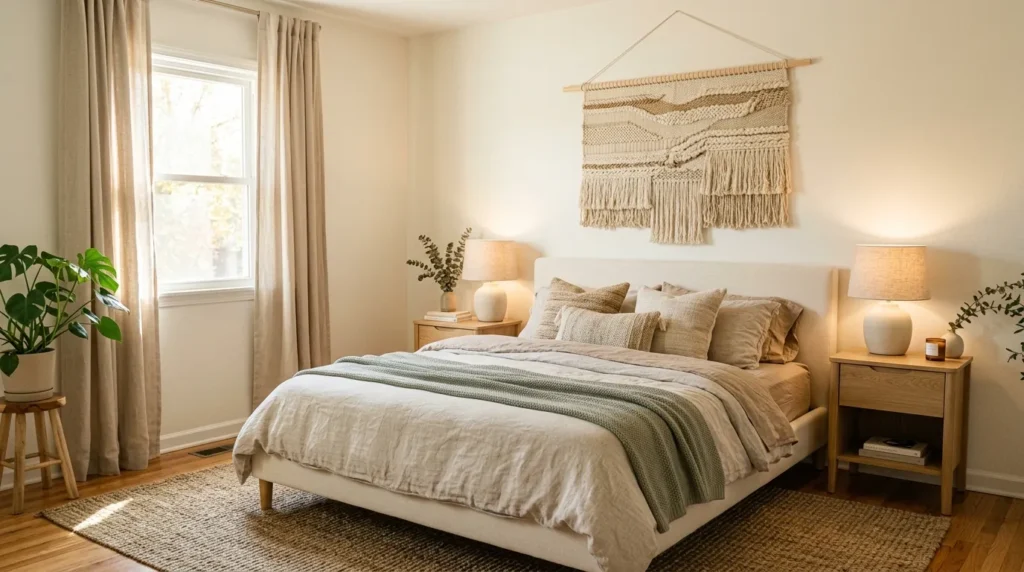
9. Fabric Wall Hanging
Quick Benefits
- Adds softness
- Requires few materials
- Works well above beds and sofas
- Creates movement
- Adds handmade character
Why It Works
Wall hangings provide something that framed artwork doesn’t: movement and softness.
A piece of woven fabric, cotton, linen, or suitable textile can introduce warmth to rooms filled with hard furniture surfaces.
The relaxed nature of textile art works particularly well in bedrooms, reading corners, and cozy living rooms.
How To Style It
Choose a textile with attractive texture or subtle pattern.
Attach it to a wooden dowel and hang it with leather cord, cotton rope, or another suitable material.
For a cleaner modern appearance, keep the shape simple and the fabric neutral.
For a bohemian-inspired room, consider fringe, weaving, or layered textiles.
Place the wall hanging above a bed, sofa, console, or reading chair.
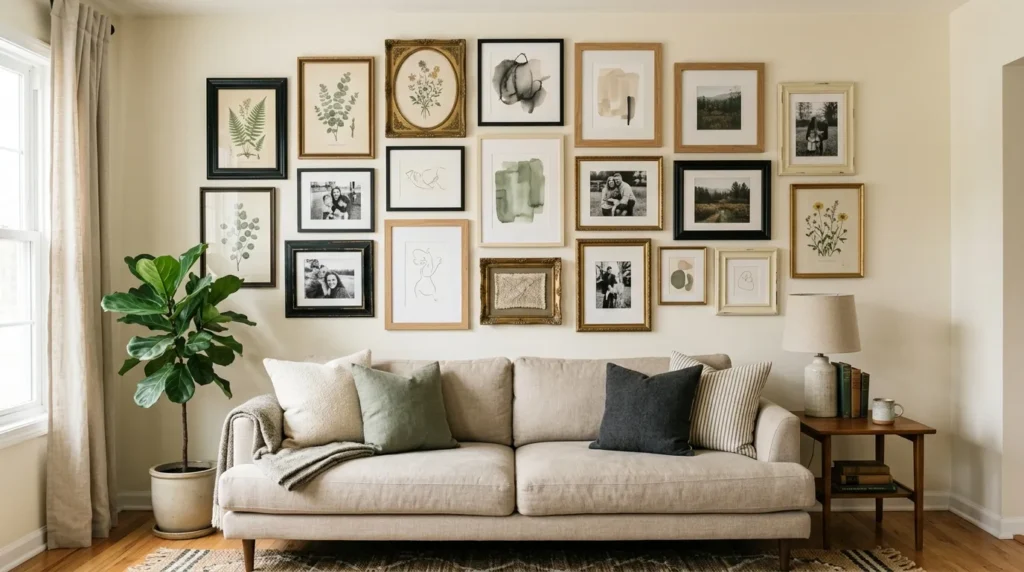
10. Thrifted Frame Collage
Quick Benefits
- Keeps costs low
- Creates a collected appearance
- Reuses existing materials
- Works with many decorating styles
- Easy to personalize
Why It Works
A gallery wall doesn’t require a matching set of expensive frames.
Thrifted frames often have interesting shapes and finishes that make the collection feel more established.
Painting several mismatched frames the same color can also create cohesion.
How To Style It
Collect frames in different sizes.
Remove damaged or outdated artwork and replace it with your own prints, sketches, fabric, photographs, or painted paper.
For a cohesive appearance, choose one repeating element such as black frames, natural wood, cream mats, or a limited artwork palette.
Lay everything on the floor before hanging.
Start with the largest frame and build outward.
Leave consistent visual breathing room between pieces.
What Is the Cheapest Way To Make Wall Art?
One of the most affordable options is creating artwork from paper, leftover paint, fabric scraps, or inexpensive canvas boards. Simple abstract shapes, geometric designs, line art, and layered paper compositions can look polished without requiring expensive materials.
The biggest visual difference often comes from scale and presentation. A large, simple piece with a clean frame can have more impact than many small decorations.
How Do You Make DIY Wall Art Look Expensive?
Keep the design simple and pay attention to presentation.
Use a limited color palette, clean edges, consistent spacing, and an appropriately sized frame.
Oversized artwork can create a stronger presence than several tiny pieces.
Natural wood, black, white, and simple neutral frames tend to work across many decorating styles.
Also consider the wall around the artwork. Giving a piece enough breathing room can make it feel more intentional.
What Supplies Are Best for Budget DIY Wall Art?
Useful supplies include canvas boards, acrylic paint, heavyweight paper, painter’s tape, wooden boards, fabric remnants, thrifted frames, wooden dowels, craft knives, brushes, and simple mounting materials.
You don’t need to buy everything at once.
Look around your home first. Leftover paint, old frames, unused fabric, cardboard, and scrap wood can become useful materials for future projects.
How Do You Choose Colors for DIY Wall Art?
Start with colors already present in the room.
Choose one dominant neutral, one or two supporting colors, and possibly one darker accent.
For example, a living room with beige upholstery and warm wood can use cream, terracotta, olive, and charcoal in the artwork.
Repeating one or two room colors in the artwork helps the finished piece feel connected to the existing decor.
Related Articles
- 10 DIY Wall Art Ideas for Cozy Modern Homes
- How to Decorate a Living Room with Stylish Accessories
- 10 DIY Coffee Tables for Modern Living Rooms
- 10 Modern Living Room Ideas with Timeless Elegance
- 10 Bedroom Wall Decor Ideas That Feel Warm and Stylish
Frequently Asked Questions
What is the easiest DIY wall art for beginners?
Abstract painted canvas, geometric color blocks, and framed fabric are among the easiest projects. They don’t require advanced drawing skills and can be adapted to almost any color palette. Start with a simple composition and a limited number of colors for a polished result.
How can I make wall art without painting?
Fabric, paper, pressed botanicals, photographs, printable artwork, and thrifted frames can all become wall decor without painting. A framed piece of textured fabric or a carefully arranged botanical gallery can create plenty of visual interest.
What can I use instead of a canvas?
Wood panels, plywood, heavyweight paper mounted to a rigid backing, cardboard, fabric stretched over a frame, and even certain thrifted objects can serve as artwork foundations. Choose a surface appropriate for the materials and mounting method you’re using.
How do I make a DIY gallery wall look cohesive?
Repeat at least one element throughout the arrangement. This could be the frame finish, mat color, artwork palette, subject matter, or spacing. The individual pieces can vary while the repeated element creates visual connection.
How much does DIY wall art cost?
The cost varies depending on what you already have. Projects using leftover paint, scrap paper, thrifted frames, or fabric remnants can cost very little. Larger canvases, quality frames, and specialty materials increase the budget.
What DIY wall art works best for a large wall?
Oversized abstract canvases, large fabric panels, grouped wood panels, and expanded gallery walls work well on large walls. The artwork needs enough scale to relate to the furniture below it. Several small pieces can work when arranged as one cohesive composition.
Can DIY wall art increase the value of a room?
While artwork itself doesn’t necessarily increase a home’s monetary value, thoughtful wall decor can improve the room’s visual appeal and sense of completion. A well-scaled, cohesive piece can make furniture and architectural features feel more intentional.
Conclusion
DIY wall art is one of the easiest ways to personalize a home without spending a fortune.
You don’t need professional painting skills or a dedicated craft room. A canvas, a few paint colors, an old frame, a fabric remnant, or a piece of scrap wood can become something completely different with a thoughtful design.
Start by looking at the room you’re decorating. Notice the colors, textures, furniture, and empty wall space. Then choose a project that fills a genuine need.
A large abstract canvas can anchor a living room. Framed fabric can soften a bedroom. Botanical prints can bring nature into a hallway. A geometric panel can add structure to a home office.
Don’t feel pressured to make every piece perfect. Handmade details have character precisely because they aren’t mass-produced.
Choose a simple project, work with a restrained color palette, and give the finished piece enough space on the wall. A little creativity can turn an inexpensive collection of supplies into artwork that feels personal, polished, and completely at home.