
10 DIY Coffee Tables That Look Truly Custom Built
A coffee table can completely change the way a living room feels. It sits at the center of the seating area, so even a relatively simple design can become one of the first things people notice when they walk into the room.
The challenge is finding something that looks intentional without spending a fortune on a designer piece.
That’s where a DIY coffee table can make sense.
Building your own table gives you control over the size, wood tone, shape, storage, and finish. More importantly, you can make the proportions work for your actual living room instead of trying to squeeze a standard-size table into a space that wasn’t designed around it.
I’ve noticed that the DIY tables that look the most expensive aren’t necessarily the most complicated. They usually have a strong silhouette, consistent proportions, quality-looking materials, and a finish that suits the rest of the room.
A basic wood slab can look beautifully custom when the edges are finished carefully. A simple box-style table can feel architectural when the joints and proportions are clean. Even a budget-friendly plywood project can look surprisingly sophisticated when it’s painted or veneered properly.
Before building anything, measure your seating area carefully. Think about walking clearance, sofa height, storage needs, and how you actually use the room. A gorgeous table that makes it difficult to walk around the sofa isn’t a successful project.
The ideas below range from beginner-friendly builds to more ambitious designs. Some focus on natural wood, while others use painted finishes, metal details, hidden storage, or unusual shapes.
Whether you’re furnishing a new home or simply want to replace an uninspiring table, these projects can help you create a centerpiece that looks thoughtfully made rather than mass-produced.
Table of Contents
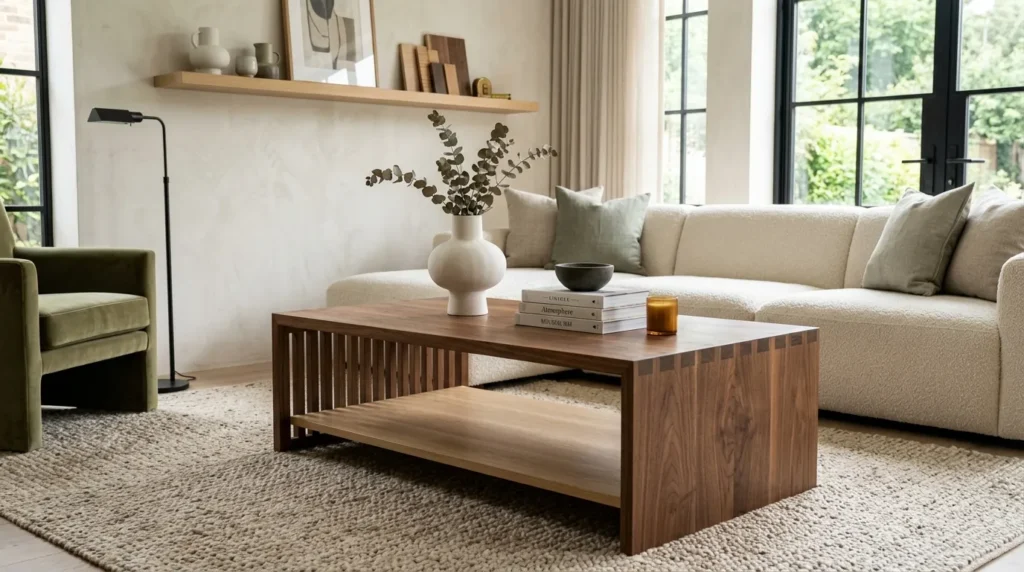
1. Chunky Wood Table
Create a substantial wood coffee table with a simple architectural silhouette.
2. Slatted Wood Table
Use evenly spaced wood slats to create texture and visual interest.
3. Hairpin Leg Table
Combine a simple wood top with metal hairpin legs for an understated modern look.
4. Storage Cube Table
Build a box-style table that adds concealed storage to the living room.
5. Round Pedestal Table
Create a sculptural round table with a sturdy central pedestal.
6. Reclaimed Wood Table
Use character-rich wood to create a one-of-a-kind rustic centerpiece.
7. Concrete Look Table
Create a modern industrial-inspired table with a smooth architectural finish.
8. Waterfall Edge Table
Use a continuous-looking top and side profile for a refined contemporary design.
9. Lift-Top Table
Combine a custom appearance with practical hidden workspace and storage.
10. Nested Coffee Tables
Build coordinating tables that can be separated or grouped together as needed.
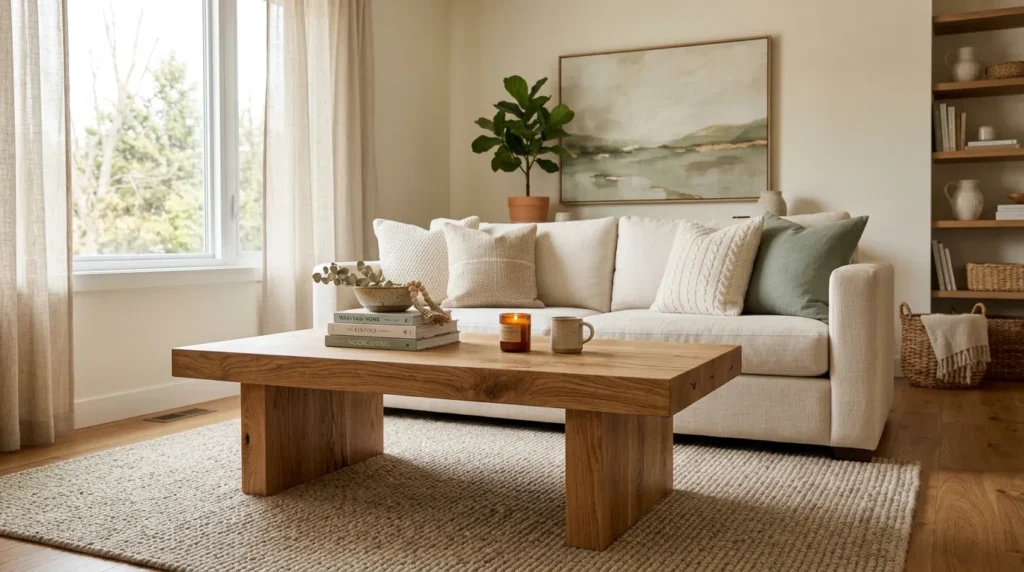
1. Chunky Wood Table
Quick Benefits
- Strong custom appearance
- Easy to adapt to different sizes
- Works with many decor styles
- Creates visual weight
- Looks beautiful with natural finishes
Why It Works
Few things make a DIY coffee table look more substantial than a thick, simple silhouette.
A chunky wood design relies on proportion rather than complicated construction. Wide legs, a substantial top, and clean lines give the table an almost architectural quality.
This style works especially well in living rooms where the sofa and surrounding furniture already have some visual weight.
It can also be customized easily.
You can adjust the length to suit your sofa, change the leg shape, or choose a wood tone that coordinates with your flooring and other furniture.
The finished table can feel like a high-end custom piece because the design is intentionally simple.
How To Style It
Choose straight-grained boards or quality panels with a consistent appearance.
Sand every visible surface carefully.
For a natural look, use a clear protective finish that preserves the wood’s character.
A walnut-toned stain can create a richer appearance, while a light oak finish works beautifully in Scandinavian or contemporary interiors.
Keep the tabletop styling minimal.
A ceramic bowl, coffee-table books, and a small vase are usually enough.
Leave plenty of exposed wood visible so the construction remains part of the design.
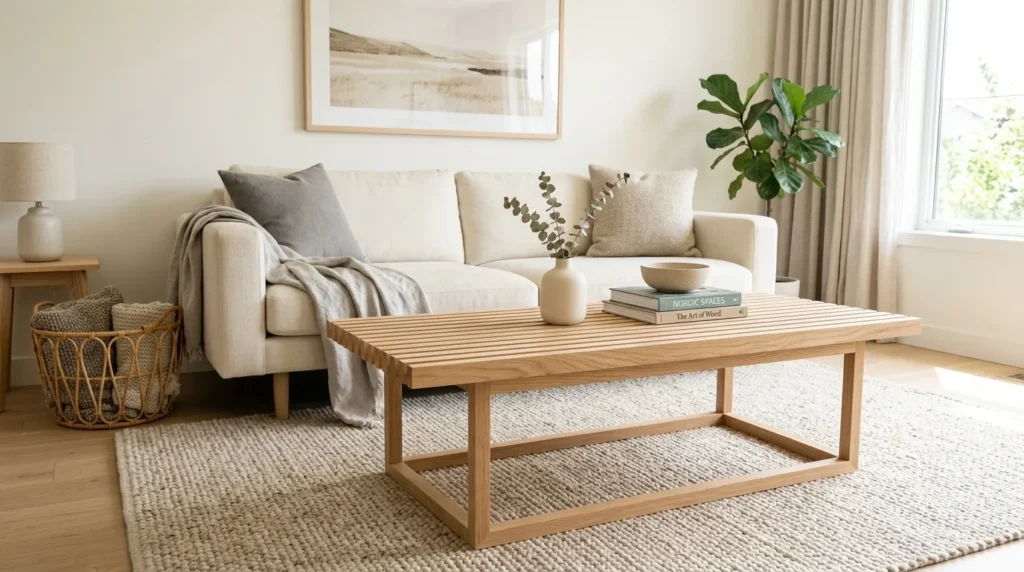
2. Slatted Wood Table
Quick Benefits
- Adds texture
- Creates visual rhythm
- Looks custom-made
- Works with modern interiors
- Can be built from standard lumber
Why It Works
Slatted furniture has a distinctive architectural quality.
Repeating narrow boards across the tabletop or base creates texture without relying on decorative details.
The repetition makes the design look carefully planned.
This approach works particularly well with modern, Japandi, Scandinavian, and contemporary interiors.
The key is consistency.
Uneven spacing or poorly finished edges can make the project look homemade in the wrong way.
Precise measurements and careful sanding are what turn simple boards into a polished piece.
How To Style It
Use evenly sized boards.
Decide on the spacing before beginning the build.
A natural wood finish emphasizes the texture.
For a modern look, consider a pale oak or light natural finish.
For more contrast, use a medium walnut tone.
Pair the table with a simple neutral sofa and textured rug.
Avoid covering the entire surface with accessories.
The slats should remain visible.
3. Hairpin Leg Table
Quick Benefits
- Simple construction
- Affordable materials
- Lightweight appearance
- Modern silhouette
- Easy to customize
Why It Works
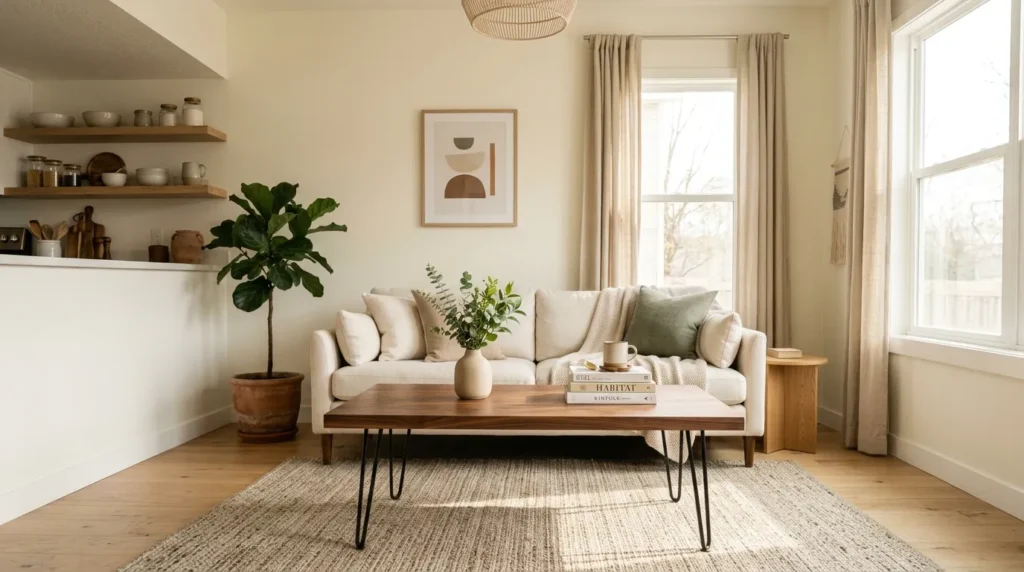
Hairpin legs can make a straightforward wooden top look surprisingly refined.
The thin metal legs create negative space underneath the table, which can help the furniture feel visually lighter.
This is especially useful in smaller living rooms where a bulky base can make the seating area feel crowded.
The design also gives you flexibility.
You can build the top from a single wood panel, joined boards, or a properly prepared reclaimed surface.
How To Style It
Choose a tabletop thickness that feels substantial enough for the metal legs.
Sand the wood thoroughly.
A clear finish works well if you like natural grain.
For a more contemporary appearance, choose a dark wood stain.
Keep the rest of the furniture relatively simple.
A neutral rug beneath the table can help define the seating zone.
Because the legs are visually light, this table works particularly well with sofas that have lower profiles.
4. Storage Cube Table
Quick Benefits
- Adds hidden storage
- Maximizes floor space
- Keeps living rooms organized
- Creates a clean silhouette
- Useful for families
Why It Works
A custom coffee table doesn’t have to sacrifice practicality.
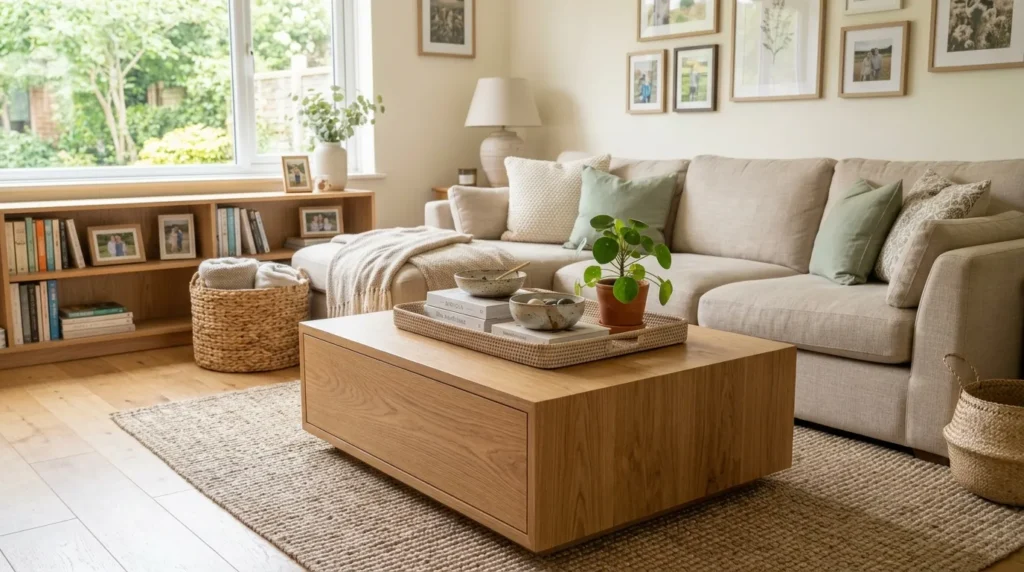
A box-style design can incorporate hidden compartments beneath the tabletop, creating storage for blankets, games, remotes, magazines, or children’s items.
This is especially valuable in smaller homes.
Instead of adding another storage cabinet to the room, the coffee table performs two jobs.
The trick is keeping the exterior simple.
A clean rectangular shape can look like a professionally designed furniture piece when the seams are neat and the finish is consistent.
How To Style It
Use furniture-grade plywood, hardwood panels, or another suitable material.
Build the storage compartment around the items you actually want to keep inside.
Consider a hinged top or removable panel, depending on your design.
Paint the entire piece a warm neutral for a seamless appearance.
Alternatively, use wood veneer or a natural wood finish.
Add a large tray on top to organize smaller items while keeping the surface visually tidy.
5. Round Pedestal Table
Quick Benefits
- Softens angular furniture
- Improves circulation
- Creates a sculptural focal point
- Works in smaller rooms
- Looks sophisticated
Why It Works
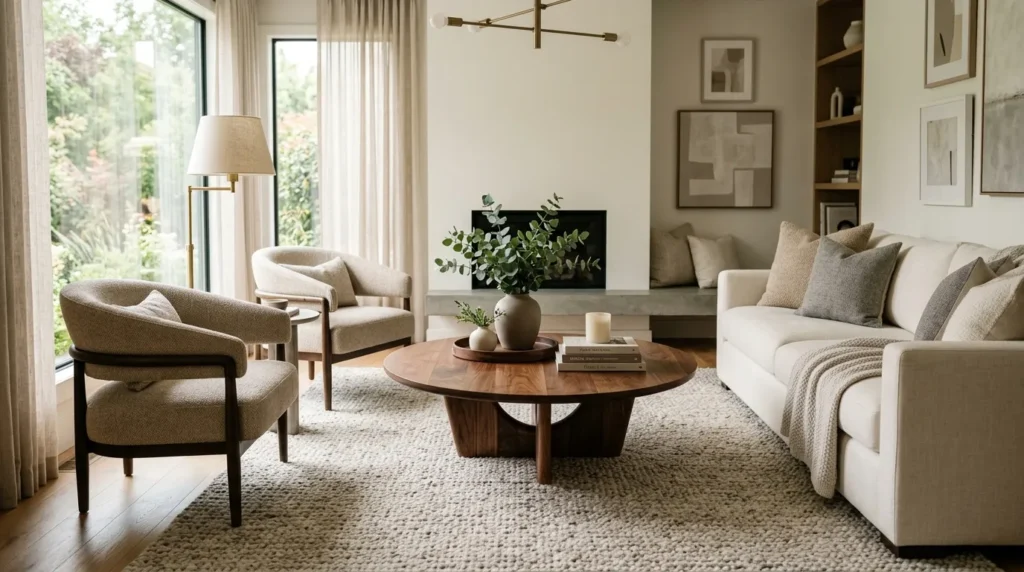
A round coffee table can make a seating arrangement feel more fluid.
There are no sharp corners to navigate around, which can be particularly useful when the table sits between a sofa and additional chairs.
A central pedestal also creates a clean silhouette.
Instead of four visible legs, the base becomes one strong sculptural element.
This style can look surprisingly high-end when the proportions are right.
How To Style It
Choose a tabletop diameter appropriate for the seating arrangement.
Avoid making the table so large that it blocks walking paths.
Use a sturdy pedestal design that provides enough support for the top.
Natural wood creates warmth.
A painted finish can make the table feel more contemporary.
For a minimalist look, keep the tabletop almost empty except for one sculptural object or low tray.
6. Reclaimed Wood Table
Quick Benefits
- Naturally unique
- Adds character
- Works with rustic interiors
- Can use existing materials
- Creates visible texture
Why It Works
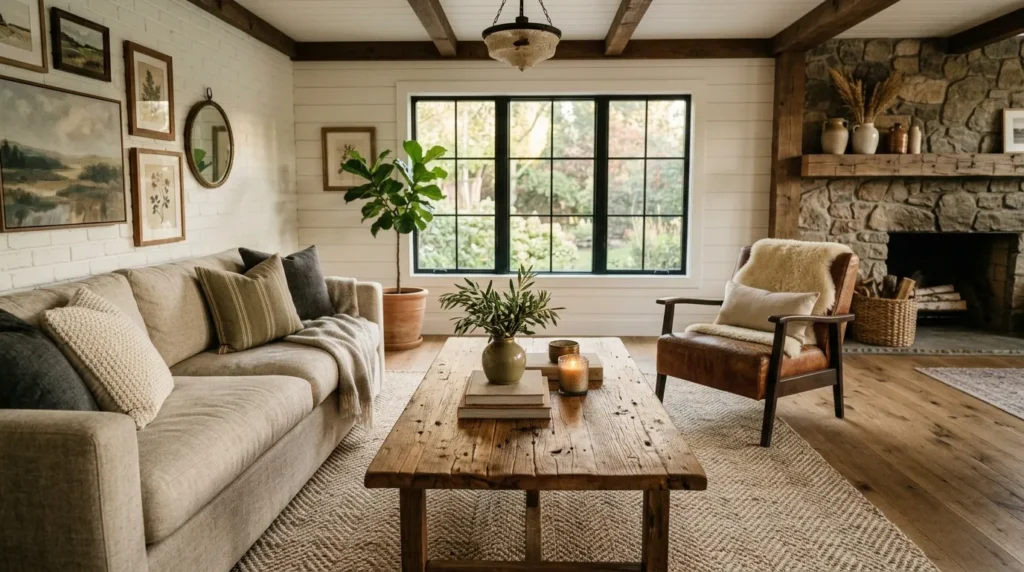
Reclaimed wood brings character that is difficult to reproduce with new lumber.
Knots, grain variations, weathering, and subtle imperfections can make the finished table feel genuinely one-of-a-kind.
The goal isn’t to make the table look unfinished.
Instead, the character of the material becomes the design feature.
Careful cleaning, preparation, sanding, and finishing are important.
Reclaimed wood should also be inspected carefully for structural problems, pests, nails, chemicals, or unknown finishes before being used indoors.
How To Style It
Keep the surrounding decor relatively refined.
A weathered tabletop paired with a simple neutral sofa can create a sophisticated contrast.
Choose a protective finish that suits the intended use.
Avoid excessive rustic accessories.
A few natural elements, such as a ceramic bowl, linen textiles, or greenery, can be enough.
Let the wood remain the star.
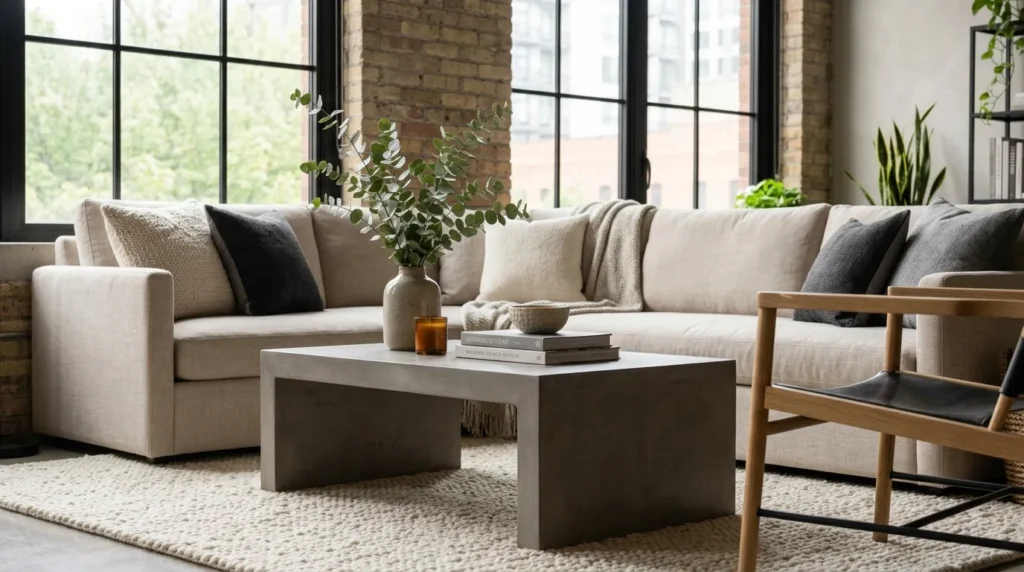
7. Concrete Look Table
Quick Benefits
- Modern appearance
- Strong architectural style
- Works with industrial interiors
- Creates contrast with soft furniture
- Can mimic high-end designs
Why It Works
Concrete-inspired furniture has a distinctive minimalist quality.
The smooth, monolithic appearance contrasts beautifully with upholstered sofas, woven rugs, and soft textiles.
For a DIY project, you don’t necessarily need to work with heavy poured concrete.
Depending on the design, you can create a concrete-inspired appearance using suitable furniture materials and finishes.
If you do use actual concrete, remember that the finished table can become extremely heavy and may require appropriate structural planning.
How To Style It
Use a restrained palette.
Think:
- Warm gray
- Cream
- Natural wood
- Black accents
- Soft beige
Pair the table with a textured area rug to prevent the room from feeling too hard.
Add one or two warm materials nearby, such as wood or woven baskets.
The contrast between hard and soft surfaces is what makes the design appealing.
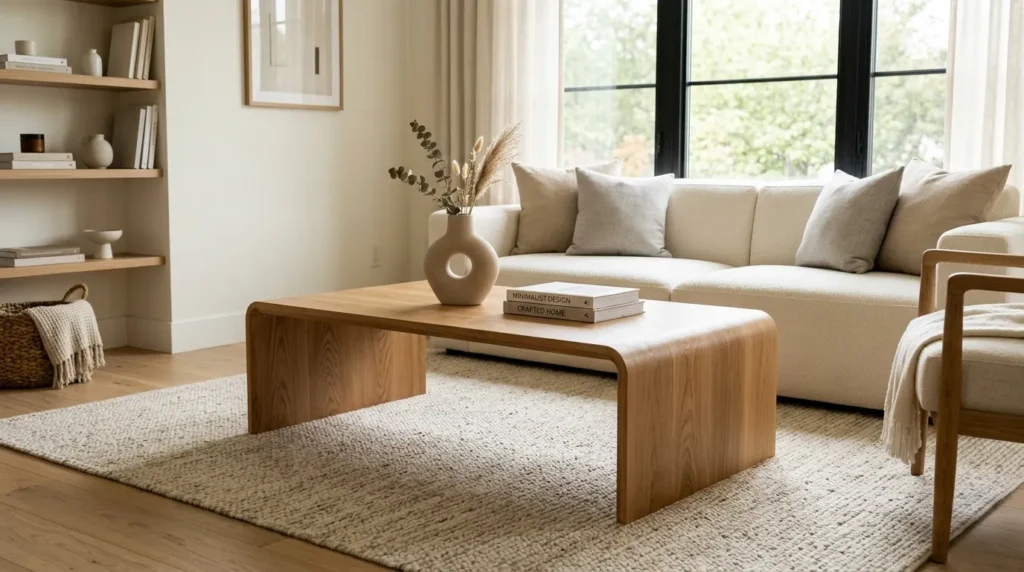
8. Waterfall Edge Table
Quick Benefits
- Looks professionally designed
- Creates a continuous silhouette
- Works with modern interiors
- Highlights wood grain
- Has a refined appearance
Why It Works
A waterfall edge creates the illusion that the tabletop flows continuously over the side and toward the floor.
It’s a deceptively simple shape with a strong visual impact.
Because the design depends heavily on clean joinery, careful measurement is essential.
When executed well, the result can look like a custom furniture piece rather than a weekend project.
How To Style It
Choose attractive wood with a grain pattern that looks good across the top and down the side.
A simple clear finish can showcase the material.
Pair the table with a low-profile sofa and simple upholstery.
Keep accessories minimal.
A single tray, coffee-table book, or ceramic object works better than a crowded arrangement.
The uninterrupted wood surface should remain visible.
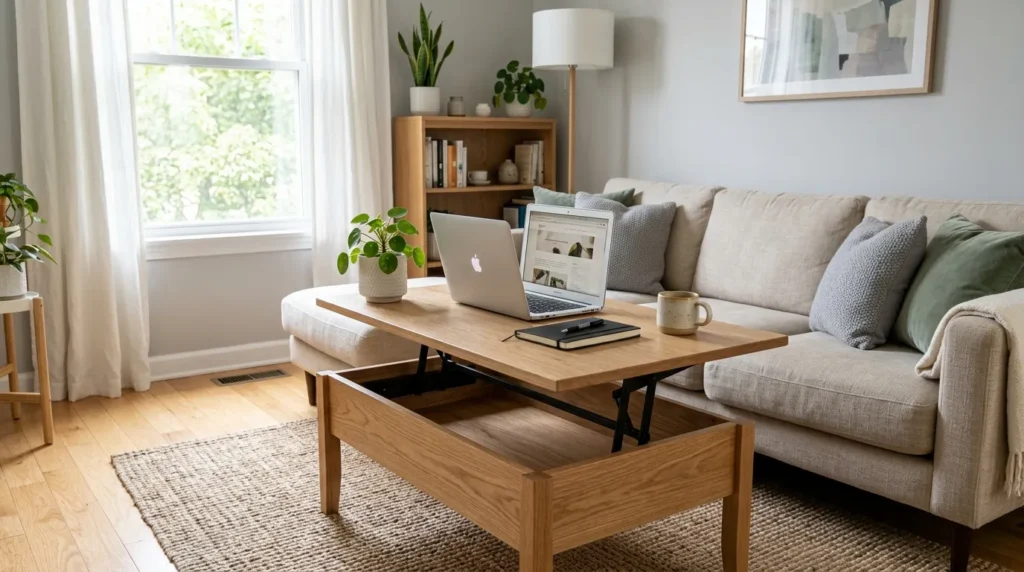
9. Lift-Top Table
Quick Benefits
- Adds hidden functionality
- Provides a temporary workspace
- Offers storage
- Great for apartments
- Combines form and function
Why It Works
A lift-top coffee table is one of those pieces that can solve an everyday problem.
The tabletop can rise to create a more comfortable working or dining position, while the compartment underneath provides additional storage.
This makes it particularly useful for smaller homes, apartments, and multipurpose living rooms.
The mechanism needs to be installed correctly.
Choose quality hardware rated for the weight and intended use of the tabletop.
How To Style It
Keep the exterior simple.
A clean wood finish can make the table look like ordinary custom furniture when the top is closed.
Inside, use the storage area for laptops, chargers, notebooks, remotes, or blankets.
Choose a sofa height that works comfortably with the raised tabletop.
Avoid placing heavy decorative objects on a lift-top surface.
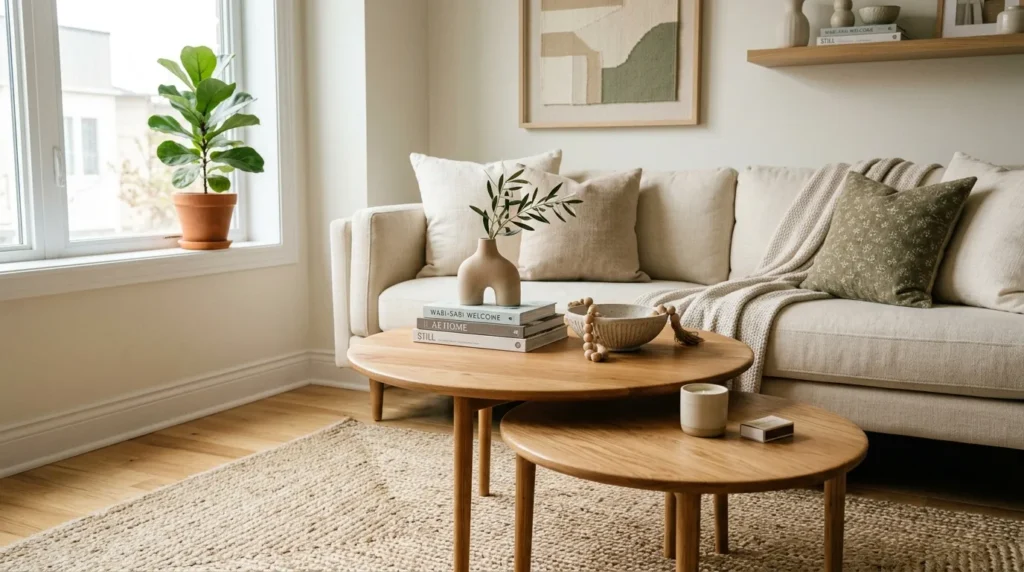
10. Nested Coffee Tables
Quick Benefits
- Flexible arrangement
- Works in small spaces
- Provides multiple surfaces
- Creates visual interest
- Easy to rearrange
Why It Works
Nested tables give you two or more surfaces without permanently occupying the entire floor area.
The smaller table can slide underneath the larger one when you want more open space.
Pull it out when guests arrive or when you need an additional surface.
This flexibility makes nested designs particularly useful for compact living rooms.
Building the tables as a matching set also creates a more custom appearance.
How To Style It
Use the same wood or finish across both tables.
Vary the heights and tabletop sizes.
Round nesting tables can soften a room filled with rectangular furniture.
Rectangular designs work well in longer seating arrangements.
Keep the smaller table partially tucked beneath the larger one.
The layered silhouette creates visual depth even when the tables aren’t being used separately.
How to Make a DIY Coffee Table Look Expensive
The difference between an ordinary DIY table and one that looks custom often comes down to finishing.
Focus on Proportions
The table should relate to the sofa.
A table that’s too small can look accidental, while an oversized one can dominate the room.
Sand Carefully
Visible rough edges immediately reveal an unfinished project.
Spend time sanding edges, corners, and surfaces.
Use Quality Hardware
If your project uses hinges, drawer slides, brackets, or lift mechanisms, choose hardware designed for the job.
Keep the Design Simple
Complicated doesn’t necessarily mean expensive-looking.
Clean lines and balanced proportions often look more sophisticated.
Choose the Right Finish
A finish should complement the wood and the surrounding room.
Test it on a scrap piece first.
Hide Fasteners When Appropriate
Visible hardware can be part of the design, but accidental-looking screws and brackets can distract from an otherwise beautiful build.
Choosing the Right Coffee Table Size
Before cutting any wood, measure the room.
A practical starting point is to keep comfortable walking space between the table and surrounding furniture.
The table should also relate reasonably to the sofa’s height.
For many living rooms, a tabletop close to the sofa seat height—or slightly lower—feels comfortable.
But the best measurement depends on the sofa, seating arrangement, and how you use the table.
If you frequently eat, work, or play games at the coffee table, functionality may influence the ideal height more than appearance.
Best Materials for DIY Coffee Tables
Hardwood
Durable and naturally beautiful, but usually more expensive.
Furniture-Grade Plywood
Strong and versatile, particularly when painted or veneered.
Reclaimed Wood
Character-rich and unique, but requires careful inspection and preparation.
Pine
Accessible and easy to work with, although softer than many hardwoods.
Metal
Excellent for legs and frames, particularly in industrial and modern designs.
Concrete
Striking and durable when properly designed, but extremely heavy.
Choose materials based on the design, tools available, skill level, and intended use.
FAQ
What is the easiest DIY coffee table to build?
A simple wood tabletop attached to premade legs is usually one of the most approachable options. Hairpin legs can also simplify construction because you only need to prepare the tabletop and attach the legs properly. The easiest project is one that matches your available tools and woodworking experience.
What wood is best for a DIY coffee table?
Hardwoods such as oak and maple offer durability and attractive grain, while pine can be more affordable and easier to work with. Furniture-grade plywood is another versatile choice. Consider the table’s intended use, budget, desired appearance, and finishing method before choosing the material.
How do I make a DIY coffee table look professional?
Pay close attention to proportions, sanding, joinery, edges, hardware, and finishing. A simple design built accurately can look more professional than a complicated project with rough details. Choose a finish that complements your room and avoid overcrowding the tabletop with decorative accessories.
How high should a coffee table be?
The ideal height depends on the sofa and how you use the table. Many living rooms work well with a coffee table around the height of the sofa seat or slightly lower. Before building, measure the actual sofa rather than relying solely on a standard dimension.
Can I build a coffee table from reclaimed wood?
Yes, reclaimed wood can create a beautiful custom appearance. However, inspect the material carefully for nails, pests, structural damage, chemical contamination, and unknown finishes. Clean, prepare, sand, and seal the wood appropriately before bringing it into the home.
Is a lift-top coffee table worth building?
A lift-top design can be particularly useful if your coffee table doubles as a workspace or dining surface. It also provides hidden storage. The project requires more hardware and precision than a basic table, so it is best suited to DIYers comfortable with accurate measurements and mechanical hardware.
How much does it cost to build a DIY coffee table?
The cost varies significantly based on lumber, hardware, tools, finish, and design. A basic tabletop with purchased legs can be relatively inexpensive, while hardwood, specialty hardware, or complex construction can raise the price. Compare material costs with comparable finished furniture before starting.
Conclusion
A custom-looking coffee table doesn’t require a professional workshop or an elaborate furniture design.
The strongest projects often begin with a simple idea: good proportions, attractive materials, clean lines, and careful finishing.
A chunky wood table can bring warmth to a neutral living room. A slatted design can add texture. A round pedestal table can improve circulation. A lift-top model can solve a practical storage or workspace problem.
The important thing is to choose a design that works with the way you actually use your living room.
Measure before cutting.
Think about the sofa, rug, walking paths, storage needs, and overall color palette.
And don’t underestimate the finishing stage. Sanding, edge treatment, hardware, and protective finishes can make a major difference in the final appearance.
You also don’t need to build the most complicated table to create something special.
Start with a design that matches your skill level, take your time with the details, and let the materials do some of the visual work.
A well-built DIY coffee table can become more than a budget-friendly furniture project. It can be a piece that feels genuinely connected to your home because you designed it specifically for the space.
Related Articles
- 10 DIY Wall Art Ideas for Living Room Walls
- 10 Modern Living Room Ideas with Luxury Style
- 10 Small Living Room Ideas That Feel Spacious and Stylish
- How to Decorate a Living Room with Cozy Layered Decor
- 10 Modern Living Room Ideas You’ll Love Coming Home To