

How to Decorate a Bedroom Without Spending a Fortune
Decorating a bedroom can feel expensive when you start browsing furniture stores, bedding collections, lighting, artwork, and all the little accessories that seem to make a room look finished. But creating a beautiful bedroom doesn’t require a complete makeover or a large decorating budget.
In fact, some of the most effective bedroom updates cost very little. Rearranging furniture, editing clutter, changing the way you make the bed, adding a secondhand piece, or bringing in warmer lighting can completely change how a room feels.
The key is to stop thinking about decorating as buying more things. Instead, look at what you already have and ask how it can work better.
A dated nightstand might look completely different after being cleaned, painted, or paired with a new lamp. Plain bedding can feel more inviting when layered with a textured throw and a few coordinating pillows. Empty walls don’t necessarily need expensive artwork; personal photographs, thrifted frames, printable art, or a simple DIY project can add character.
I’ve also found that inexpensive decorating works best when you choose a clear direction before shopping. A simple color palette makes mismatched pieces feel connected, while repeating a few materials—such as wood, linen, rattan, or metal—creates a more intentional appearance.
Whether you’re furnishing your first apartment, refreshing a guest room, updating a primary bedroom, or simply tired of looking at the same four walls, you can create meaningful change without overspending.
The ideas below focus on practical updates that make a noticeable difference while keeping your budget under control.
Table of Contents
1. Rearrange the Furniture
Give your existing bedroom a fresh look by changing the layout before buying anything.
2. Shop Your Home
Repurpose furniture and accessories from other rooms to create an inexpensive refresh.
3. Refresh the Bedding
Use simple textile changes to make the bed look layered, comfortable, and inviting.
4. Paint One Wall
Create a noticeable focal point with a single can of paint rather than repainting the entire room.
5. Thrift the Decor
Find affordable furniture and accessories with character through secondhand shopping.
6. Upgrade the Lighting
Use inexpensive lamps and warmer bulbs to make the bedroom feel more comfortable.
7. Create DIY Artwork
Decorate empty walls with personal, handmade, or inexpensive artwork.
8. Add Cozy Textures
Layer affordable fabrics to make the room feel warmer and more finished.
9. Style the Nightstands
Turn ordinary bedside tables into attractive focal points with a few useful details.
10. Declutter and Edit
Remove unnecessary items so the pieces you already own have more visual impact.
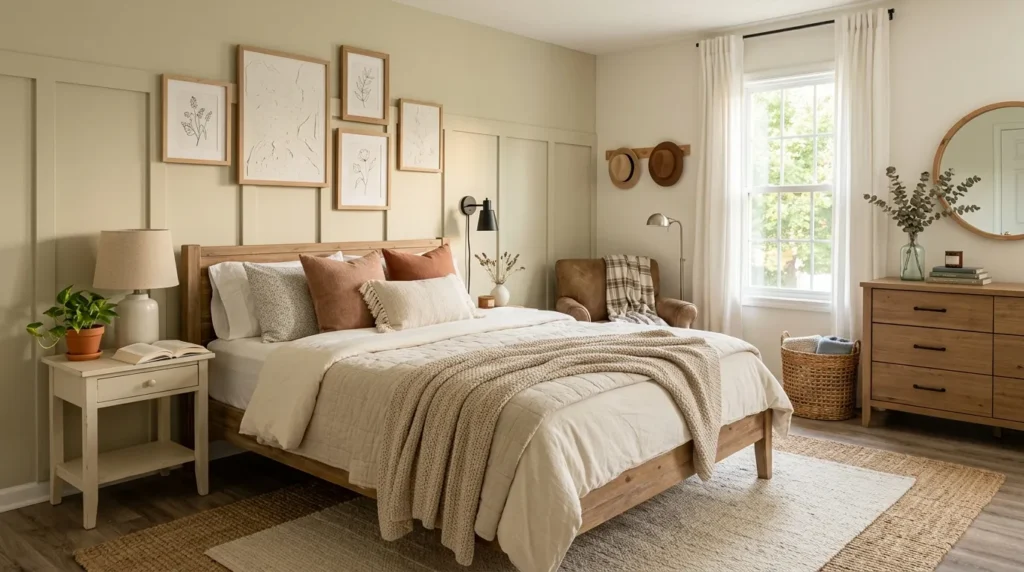
1. Rearrange the Furniture
Quick Benefits
- Costs nothing
- Changes the room’s visual flow
- Can improve functionality
- Creates a fresh perspective
- Helps identify what furniture you actually need
Why It Works
Before spending a dollar, reconsider your bedroom layout.
Furniture placement has a huge influence on how a room feels. A bed pushed into an awkward corner, an oversized dresser blocking natural light, or a chair that rarely gets used can make a bedroom feel smaller and less comfortable.
Rearranging gives you an opportunity to solve those problems without purchasing anything.
Start with the bed because it is usually the largest piece and the room’s natural focal point. Then consider how easily you can walk around it and reach the closet, windows, doors, and other frequently used areas.
A better layout can make familiar furniture feel surprisingly new.
How To Style It
Measure large pieces before moving them if you’re working in a tight room.
Try positioning the bed on the longest uninterrupted wall when practical.
Place nightstands symmetrically if the room allows, but don’t force symmetry if it makes the space less functional.
Move dressers away from windows when possible so natural light remains unobstructed.
If you have a chair that has become a clothing pile, relocate it or remove it.
Take photos of two or three possible arrangements before deciding.
Sometimes seeing the layout from a different perspective makes the best option obvious.
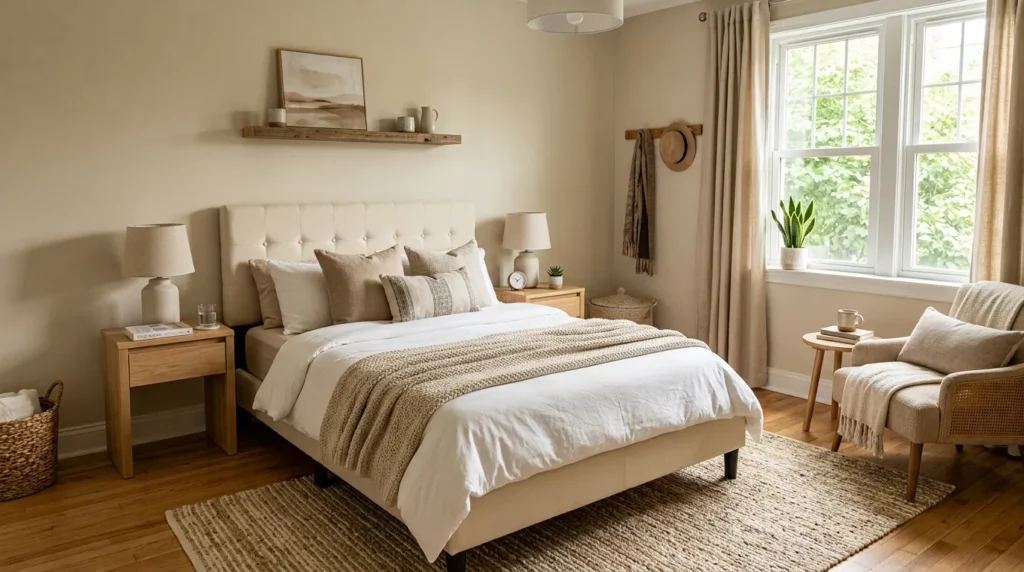
2. Shop Your Home
Quick Benefits
- Requires little or no spending
- Gives existing items a new purpose
- Creates variety
- Reduces unnecessary purchases
- Makes decorating more sustainable
Why It Works
You may already own many of the things needed to refresh your bedroom.
A small table from the living room could become a nightstand. A decorative basket from the entryway could hold extra blankets. A framed print from a hallway might look better above the bed.
Moving objects between rooms changes the visual context.
Something that feels ordinary in one space can suddenly look intentional somewhere else.
This is one of the simplest ways to experiment with your decorating style before buying anything new.
How To Style It
Walk through your home with an open mind.
Look for:
- Lamps
- Baskets
- Mirrors
- Artwork
- Small tables
- Vases
- Throws
- Pillows
- Plants
- Decorative trays
Choose items that share at least one characteristic with your bedroom, such as color, material, or shape.
Don’t worry if pieces don’t perfectly match.
A bedroom usually feels more personal when furniture and accessories look collected rather than purchased as one complete set.
Try moving three to five objects first.
Live with the arrangement for a few days before deciding whether anything else is necessary.
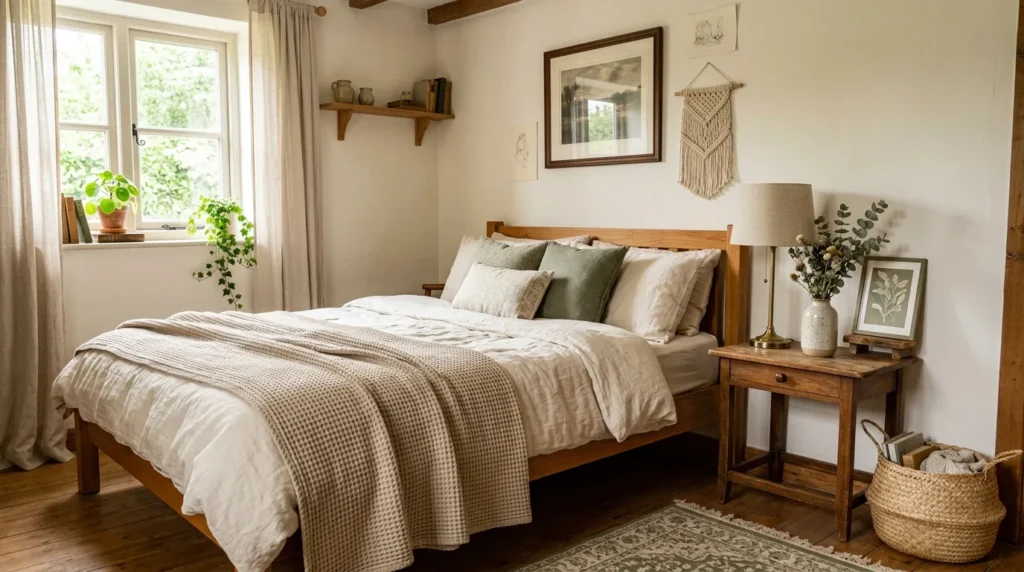
3. Refresh the Bedding
Quick Benefits
- Creates an immediate visual change
- Adds softness
- Improves comfort
- Doesn’t require new furniture
- Makes the bed feel more inviting
Why It Works
The bed is typically the largest visual element in a bedroom.
That makes bedding one of the easiest places to create a noticeable transformation.
You don’t necessarily need a new comforter or duvet.
Sometimes changing the arrangement of your existing pillows, adding a folded blanket, or introducing one new pillow cover is enough.
Layering also gives inexpensive bedding a more thoughtful appearance.
The goal is to create texture and dimension without buying an entire matching set.
How To Style It
Start with the bedding you already own.
Add a folded throw across the bottom third of the bed.
Use two or three different pillow sizes rather than lining up identical pillows.
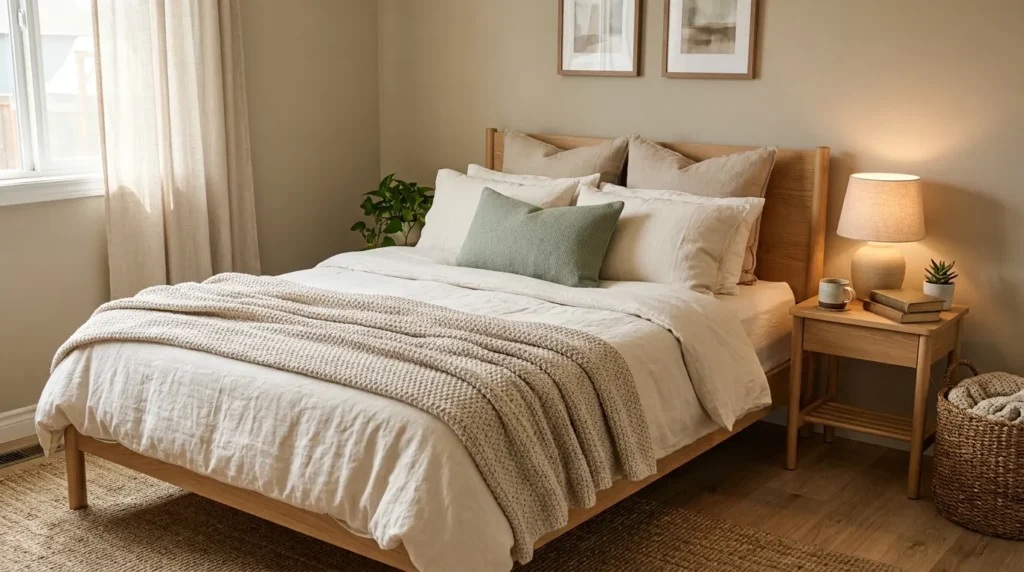
If your bedding is plain, introduce texture through a knitted blanket, quilt, linen pillowcase, or woven accent pillow.
Choose colors that already exist elsewhere in the room.
For example, if you have beige curtains and natural wood furniture, consider cream, oatmeal, tan, and muted brown bedding.
If your room is mostly white, a dusty blue or muted green accent can add subtle color without overwhelming the space.
4. Paint One Wall
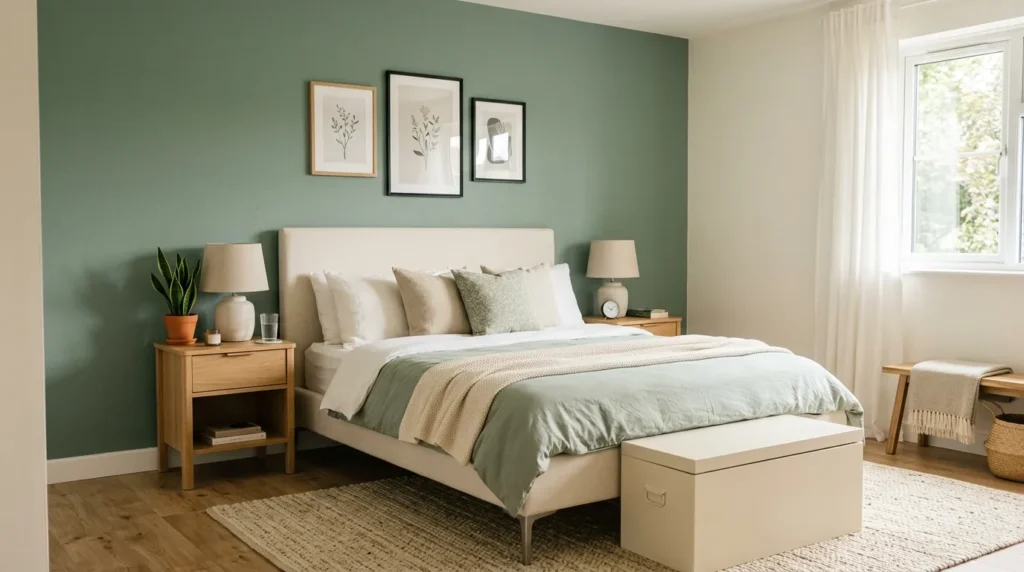
Quick Benefits
- Creates a strong focal point
- Costs less than repainting the entire room
- Adds personality
- Can make the bed area feel intentional
- Works with many decorating styles
Why It Works
Paint remains one of the most cost-effective ways to change the appearance of a room.
But if your budget is limited, you don’t necessarily need to paint every wall.
A single accent wall behind the bed can create a visual anchor while using significantly less paint.
The wall becomes a backdrop for the bed, artwork, lighting, and bedding.
This approach works especially well when the rest of the room is neutral.
How To Style It
Choose a color that complements your existing furniture.
Warm beige, muted sage, dusty blue, soft taupe, and earthy clay can all create a cozy bedroom atmosphere.
For a dramatic look, consider a deeper navy, forest green, or charcoal.
Before painting, test a sample on the wall and observe it during different times of day.
Natural and artificial light can change how a color appears.
Keep the bedding relatively simple if the accent wall is bold.
If you rent, check your lease before painting or consider removable wallpaper as an alternative.
5. Thrift the Decor
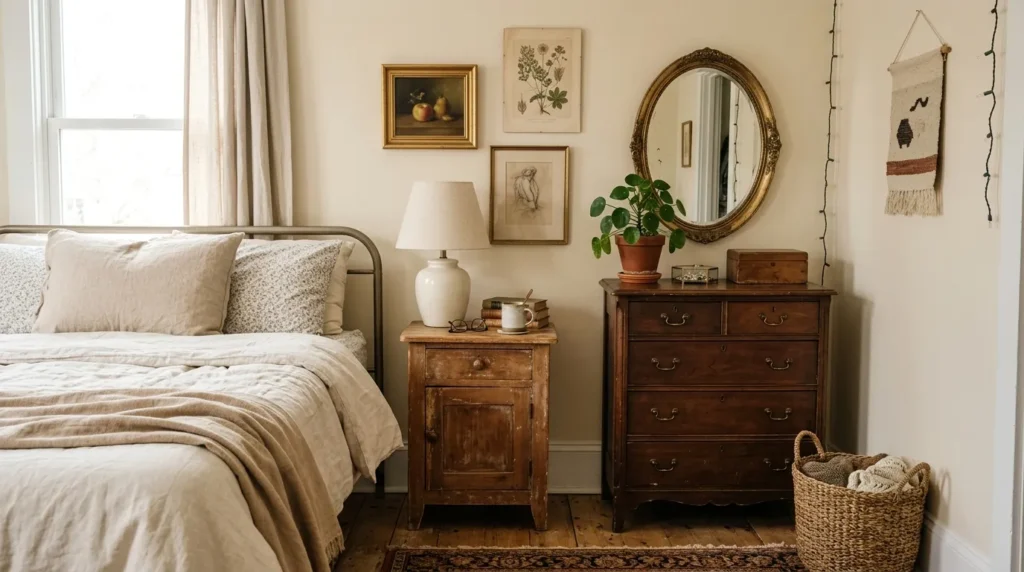
Quick Benefits
- Keeps costs down
- Adds character
- Provides unique pieces
- Supports reuse
- Can improve furniture quality for less
Why It Works
Secondhand shopping can be especially useful when decorating on a tight budget.
Thrift stores, estate sales, flea markets, local resale groups, and online marketplaces can offer furniture and accessories at substantially lower prices than buying everything new.
The best secondhand finds aren’t always immediately perfect.
A solid wood nightstand with an outdated finish may have more potential than a brand-new inexpensive piece.
Look beyond the current color or hardware and consider the shape, construction, and size.
How To Style It
Search for practical pieces first.
Good secondhand candidates include:
- Wood nightstands
- Small dressers
- Mirrors
- Lamps
- Frames
- Benches
- Baskets
- Side tables
Check furniture carefully for structural damage before purchasing.
For wooden pieces, cleaning, sanding, and a fresh finish can create a dramatic transformation.
Replace outdated hardware with simple new pulls if needed.
Avoid buying something merely because it’s inexpensive.
A bargain is only useful if the piece actually works in your room.
6. Upgrade the Lighting
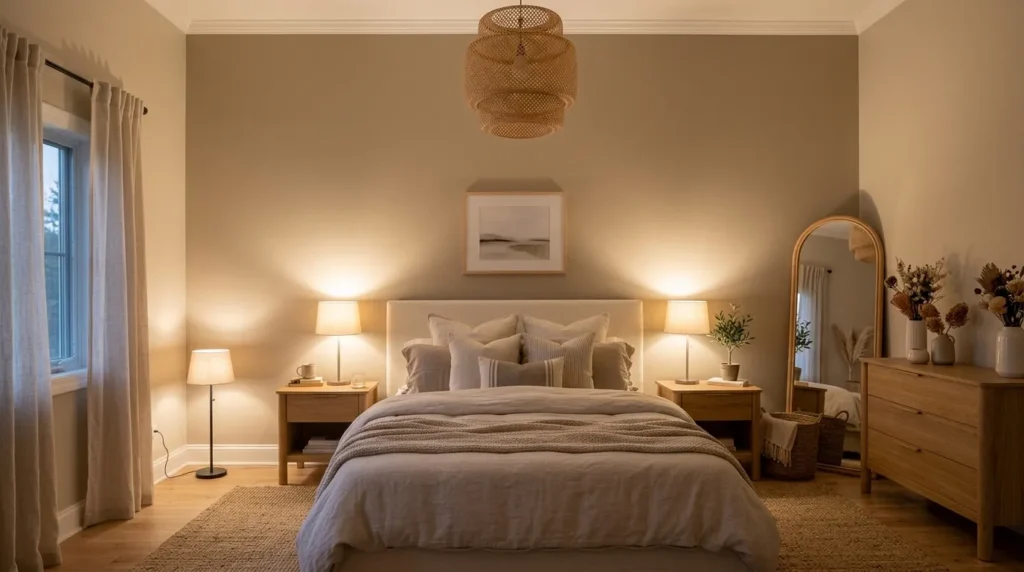
Quick Benefits
- Changes the mood
- Makes the room feel warmer
- Improves functionality
- Highlights decor
- Can be inexpensive
Why It Works
Lighting is frequently overlooked when people try to refresh a bedroom on a budget.
Yet changing a lamp or bulb can alter the atmosphere more than adding another decorative accessory.
Bedrooms generally benefit from multiple light sources rather than one bright overhead fixture.
A bedside lamp provides practical reading light, while a floor lamp or small accent light can create a softer layer.
Warm-toned bulbs can also make neutral colors and natural materials feel more inviting.
How To Style It
Start with your bedside tables.
If your existing lamps look dated, search secondhand stores or affordable home retailers for simple replacements.
Use matching lamps if you like symmetry, or choose coordinating but different lamps for a more collected look.
Consider plug-in wall sconces if they work with your setup and rental restrictions.
Add a small lamp to a dresser.
Use a floor lamp in an empty corner.
Choose bulbs with a comfortable warm-white appearance for evening use.
The goal is layered light rather than brightness everywhere.
7. Create DIY Artwork
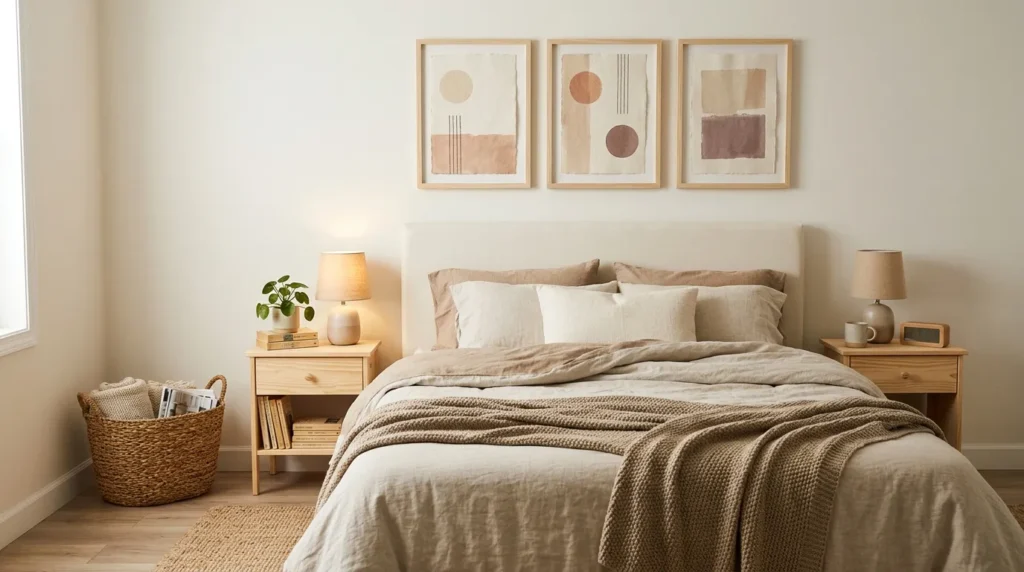
Quick Benefits
- Saves money
- Adds personality
- Customizes colors
- Fills empty walls
- Can become a meaningful focal point
Why It Works
Artwork can be expensive, but your bedroom doesn’t need a gallery filled with original pieces.
Simple DIY artwork can look polished when the colors, scale, and framing work with the room.
You can create abstract paintings, pressed botanical displays, fabric art, photo arrangements, or minimalist line drawings.
The best projects don’t necessarily require advanced artistic skills.
Often, a simple composition with a limited palette looks more sophisticated than an overly complicated project.
How To Style It
Choose two or three colors already present in your bedroom.
For example:
Cream + beige + terracotta
or
White + sage + charcoal
Create several small pieces that work together.
Use inexpensive frames from thrift stores or discount retailers.
For a larger statement, create one oversized canvas using simple abstract shapes.
You can also frame fabric, pages from old books, botanical prints, or personal photographs.
Keep the scale appropriate to the wall.
One larger piece can often have more impact than many tiny pieces scattered around the room.
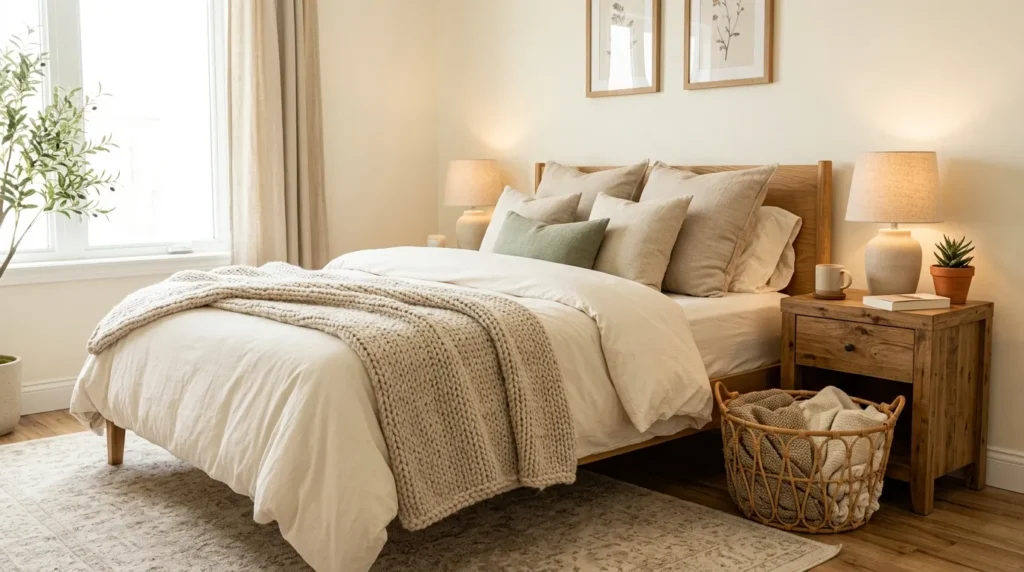
8. Add Cozy Textures
Quick Benefits
- Makes the room feel warmer
- Adds visual depth
- Improves comfort
- Works with inexpensive accessories
- Creates a layered appearance
Why It Works
Texture is particularly valuable when you’re decorating with a limited budget.
A room with inexpensive furniture can still feel thoughtfully designed when different textures are layered throughout.
Think about the contrast between smooth cotton bedding, a knitted throw, a woven basket, a wood nightstand, and a soft rug.
These differences create visual interest without requiring expensive decorative objects.
How To Style It
Choose three or four textures.
Try combining:
- Cotton
- Linen
- Wool or knitted fabric
- Woven rattan
- Natural wood
Add a small rug beside the bed if you don’t already have one.
Place a textured throw at the foot of the bed.
Use a woven basket for blankets or laundry.
Choose curtains with subtle texture instead of shiny synthetic fabric.
You don’t need to buy everything new.
Look around your home for existing blankets, baskets, and textiles that can be moved into the bedroom.
9. Style the Nightstands
Quick Benefits
- Improves the bedroom’s focal area
- Creates visual balance
- Adds useful storage
- Costs little
- Makes everyday routines easier
Why It Works
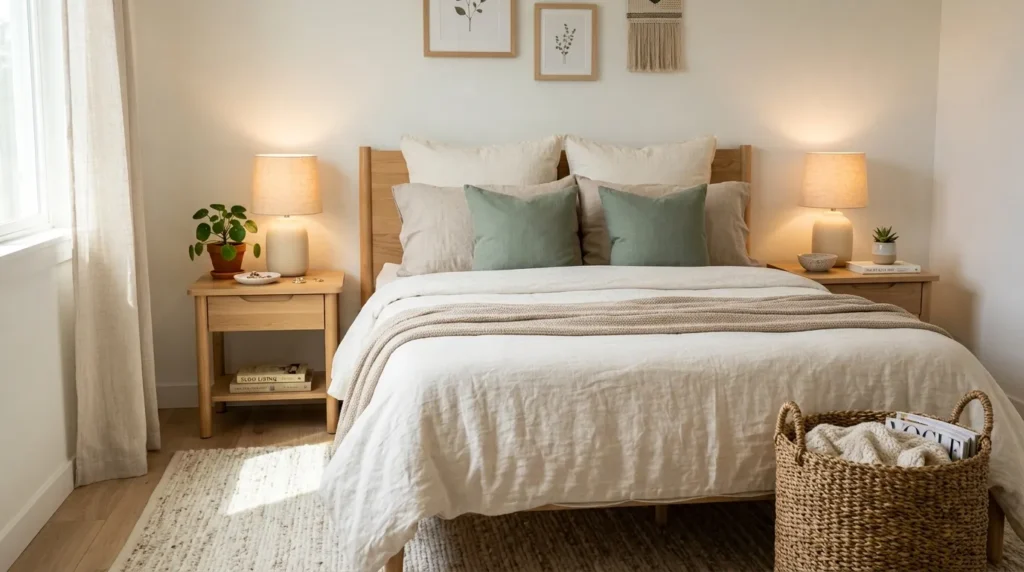
Nightstands are small, but because they’re close to the bed, they receive a lot of visual attention.
A cluttered nightstand can make the entire bedroom feel untidy.
A simple arrangement can make even an inexpensive nightstand look intentional.
The trick is to combine practical items with one or two decorative elements.
You don’t need a large collection of accessories.
How To Style It
Start by removing everything.
Return only the essentials.
A simple arrangement could include:
- Table lamp
- Small book
- Ceramic dish
- Tiny plant or vase
Use a small tray to contain loose items.
Keep chargers and cables organized.
If your nightstand has an open shelf, add one basket or a stack of books.
For a mismatched pair of nightstands, use similar lamps or accessories to visually connect them.
This creates balance without requiring identical furniture.
10. Declutter and Edit
Quick Benefits
- Costs nothing
- Makes the room feel larger
- Highlights favorite pieces
- Improves organization
- Creates an immediate visual refresh
Why It Works
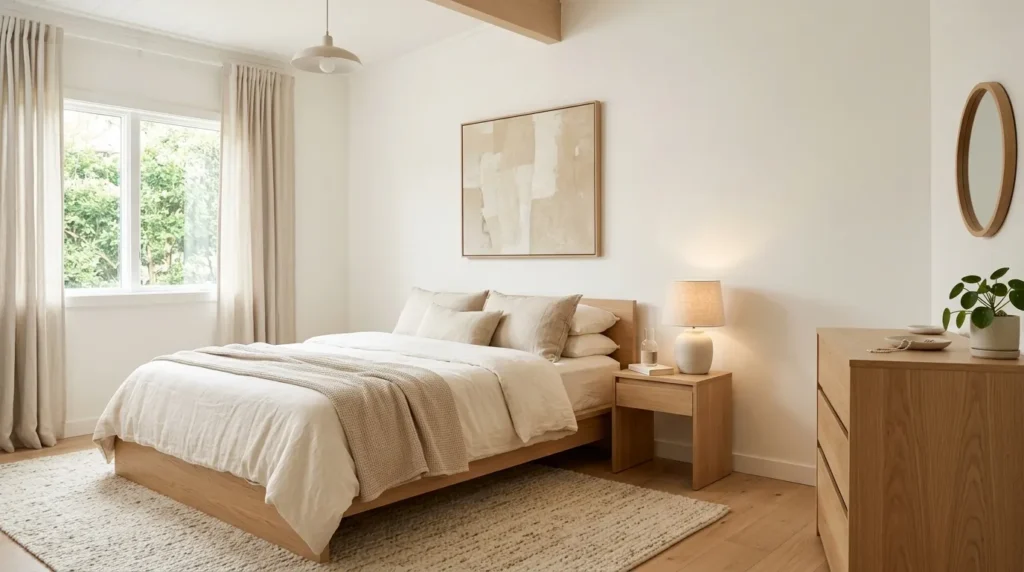
Sometimes the most affordable bedroom makeover is removing things.
Bedrooms tend to accumulate clothing, bags, paperwork, unused furniture, random boxes, and decorative objects that no longer serve a purpose.
When too much is visible, even beautiful furniture can disappear into the clutter.
Editing creates negative space.
That empty space allows your bedding, artwork, furniture, and lighting to become more noticeable.
This is why decluttering can make a room feel completely different without buying a single item.
How To Style It
Work around the room rather than trying to clean everything at once.
Start with:
Nightstands: Remove anything you don’t use regularly.
Dresser: Clear the top and return only useful or meaningful objects.
Floor: Remove boxes, bags, clothing, and unused furniture.
Closet: Separate frequently worn items from things you no longer use.
Walls: Remove artwork that doesn’t fit your current style.
Create a small donation box as you work.
Once the room is edited, stop before adding anything new.
You may discover that the room already contains everything it needs.
How to Decorate a Bedroom on a $100 Budget
You can make a meaningful change with a small budget if you spend it strategically.
Instead of buying several unrelated accessories, choose one area to improve.
For example:
$100 Bedding Refresh
- New pillow covers
- One textured throw
- New bathrobe or blanket basket
- Small decorative pillow
Or:
$100 Lighting Refresh
- Two affordable bedside lamps
- Warm bulbs
- Small accent light
Or:
$100 Wall Refresh
- One large canvas
- Simple frame
- Paint supplies
- Small decorative print
The exact prices will vary, but the principle remains the same: concentrate your budget where the visual impact will be strongest.
How to Make Cheap Bedroom Decor Look Expensive
The secret isn’t necessarily buying expensive things.
It’s creating consistency.
Choose a limited color palette.
Repeat materials.
Keep surfaces relatively uncluttered.
Use larger artwork instead of many tiny pieces.
Layer bedding.
Choose curtains that reach close to the floor.
Use warm lighting.
Mix textures.
Most importantly, pay attention to proportion.
A simple inexpensive lamp can look much more sophisticated when it’s appropriately sized for the nightstand.
A budget throw can look intentional when its color relates to the rug or artwork.
Good styling often matters more than the original price tag.
Where to Spend and Where to Save
When money is limited, prioritize the things you use every day.
Worth Spending More On
- Mattress
- Pillow
- Quality everyday bedding
- Durable storage
- Frequently used seating
Good Places to Save
- Decorative accessories
- Artwork
- Picture frames
- Accent pillows
- Small tables
- Baskets
- Seasonal decor
A comfortable mattress isn’t the place to cut corners simply for the sake of decorating.
But there is little reason to spend a large amount on a decorative tray when an affordable version can serve the same purpose.
Budget Bedroom Decorating Mistakes to Avoid
Buying before planning: Shopping without a clear direction often leads to unnecessary purchases.
Too many small accessories: Cheap decor can become expensive clutter.
Ignoring scale: An oversized piece can make an inexpensive room feel poorly planned.
Trying to match everything: Coordinated doesn’t mean identical.
Replacing perfectly good furniture: Paint, hardware, or a new arrangement may be enough.
Following trends too closely: Choose pieces you genuinely enjoy rather than replacing decor every season.
Forgetting storage: A beautiful bedroom won’t stay beautiful if everyday items have nowhere to go.
Shopping only new: Secondhand stores can provide useful furniture and character at lower prices.
FAQ
How can I decorate my bedroom cheaply?
Start with changes that cost little or nothing, such as rearranging furniture, decluttering, shopping your home, and changing the arrangement of existing accessories. Then prioritize one or two affordable updates, such as new pillow covers, a secondhand lamp, inexpensive artwork, or a textured throw.
How can I make my bedroom look expensive on a budget?
Focus on consistency, proportion, and texture. Use a restrained color palette, layer bedding, keep surfaces tidy, choose appropriately sized furniture, add warm lighting, and repeat a few materials throughout the room. A well-styled inexpensive room can look more polished than a room filled with costly but unrelated pieces.
What should I buy first when decorating a bedroom on a budget?
Start with the pieces that affect comfort and function, such as bedding, lighting, and storage. If your existing furniture works well, there’s no need to replace it immediately. Once the essentials are comfortable, use inexpensive accessories and artwork to personalize the space.
Can I decorate a bedroom without buying anything?
Absolutely. Rearranging furniture, decluttering, moving accessories from other rooms, changing artwork placement, reorganizing the closet, and restyling the bed can all create a noticeable difference. Sometimes removing unnecessary items has a greater visual impact than adding new decor.
Where can I find cheap bedroom furniture?
Consider thrift stores, estate sales, local resale groups, consignment stores, flea markets, and online secondhand marketplaces. Look for solid construction and useful proportions rather than focusing only on the current finish. A simple cleaning, paint update, or hardware replacement can transform an inexpensive secondhand piece.
What colors work best for a budget-friendly bedroom?
Neutral colors such as cream, beige, warm white, taupe, and soft gray are versatile and easy to coordinate. Muted blue, sage, terracotta, and dusty rose can add personality without making the room difficult to style. Choose colors that work with the furniture and textiles you already own.
How do I make old bedroom furniture look better?
Clean the furniture thoroughly first. Depending on the material and condition, you may be able to paint, stain, refinish, or simply replace the hardware. Even changing drawer pulls and styling the surface more intentionally can make an older dresser or nightstand feel refreshed.
Conclusion
Decorating a beautiful bedroom on a limited budget is less about finding the cheapest possible products and more about making thoughtful decisions.
Start with what you already own.
Move the furniture. Clear the clutter. Shop other rooms in your home. Restyle the bed. Reposition artwork. Change your lighting.
Then spend carefully on the areas that will make the biggest difference.
A secondhand nightstand may be more valuable than a collection of inexpensive decorative objects. A textured throw may completely change the appearance of your bed. A fresh coat of paint can create a focal point for the price of a few meals out.
The goal isn’t to make your bedroom look expensive.
The goal is to make it feel comfortable, personal, organized, and intentionally decorated.
Give yourself permission to work slowly. A bedroom doesn’t have to be completed in one weekend. Add pieces when they genuinely improve the space, and let your room evolve as your taste changes.
Sometimes the most satisfying makeover is the one that proves you didn’t need to spend much money at all.
Related Articles
- 10 Cozy Bedroom Ideas That Feel Warm and Inviting
- 10 Small Bedroom Ideas That Make the Space Feel Bigger
- 10 Minimal Aesthetic Bedroom Ideas for Adults
- 10 Bedroom Wall Decor Ideas That Make Your Room Stand Out
- How to Make a Small Bedroom Feel More Comfortable