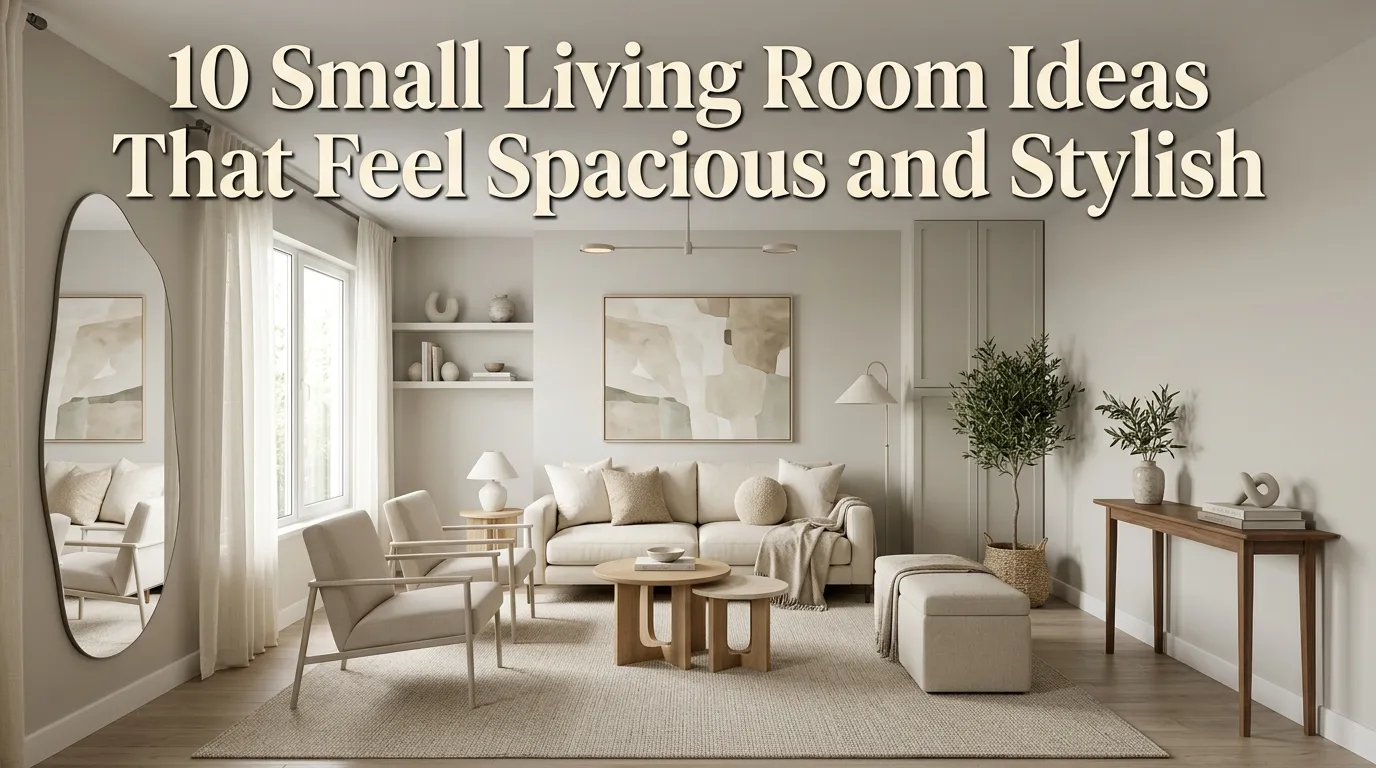
10 Small Living Room Ideas That Feel Spacious and Stylish
A small living room can be comfortable, beautiful, and surprisingly functional. The challenge is finding the right balance between having everything you need and leaving enough visual breathing room for the space to feel open.
When square footage is limited, furniture scale, lighting, color, storage, and layout all matter. A sofa that is only slightly too large can make the entire room feel crowded. Too many small decorative pieces can create visual noise. On the other hand, an empty room with undersized furniture may technically feel open but fail to provide the comfort a living room is supposed to offer.
The goal is not to make a small room look like a large one. It is to make every inch work harder while maintaining a sense of openness.
One thing I’ve noticed in compact living rooms is that the most successful designs rarely depend on complicated decorating tricks. They usually start with a thoughtful furniture arrangement, a restrained color palette, clear walkways, and a few carefully chosen decorative layers.
Light also plays an important role. Natural daylight, strategically placed mirrors, and multiple light sources can prevent a compact room from feeling dark or enclosed. Meanwhile, furniture with exposed legs, vertical storage, and multifunctional pieces can preserve valuable floor space.
Whether you’re decorating an apartment, updating a small family room, or working with an awkward living room layout, the ideas below can help you create a space that feels comfortable without appearing overloaded.
You don’t have to replace everything, either. Sometimes moving the sofa, removing one unnecessary piece, or changing the scale of your rug can make a noticeable difference.
Table of Contents
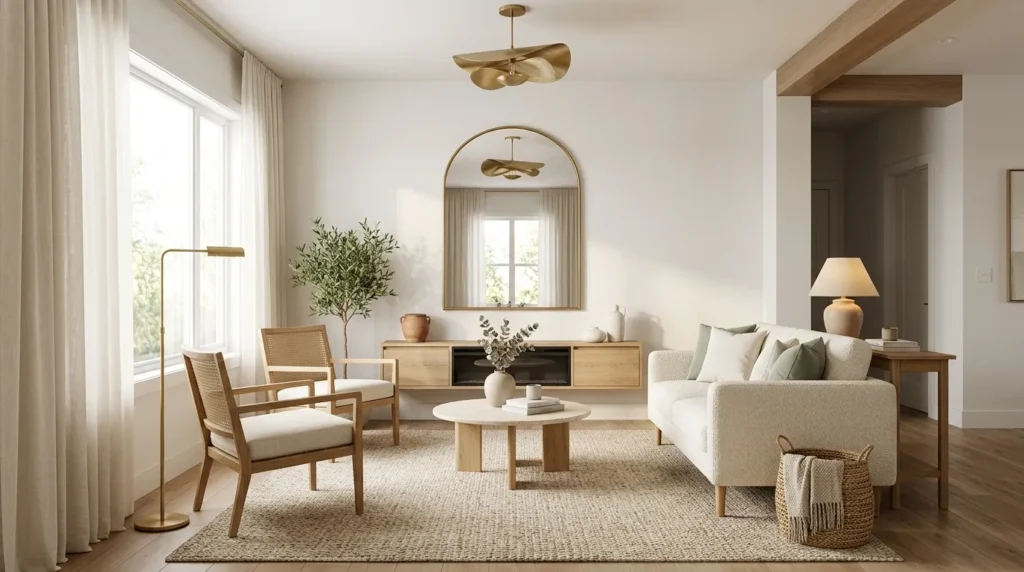
1. Float the Furniture
Create breathing room by positioning furniture thoughtfully instead of pushing everything against the walls.
2. Choose a Light Palette
Use soft colors to create a brighter and more visually open atmosphere.
3. Scale the Sofa
Choose seating that provides comfort without overwhelming the room.
4. Use Clear Surfaces
Keep tables and shelves visually light to reduce clutter.
5. Add a Large Rug
Anchor the seating area with a rug that connects the furniture.
6. Emphasize Natural Light
Arrange the room to make the most of available daylight.
7. Go Vertical
Use wall height for storage and decor while preserving floor space.
8. Choose Dual-Purpose Pieces
Select furniture that performs more than one useful function.
9. Create Visual Continuity
Repeat colors, materials, and shapes to make the room feel cohesive.
10. Edit the Decor
Use fewer, more intentional accessories for a polished finish.
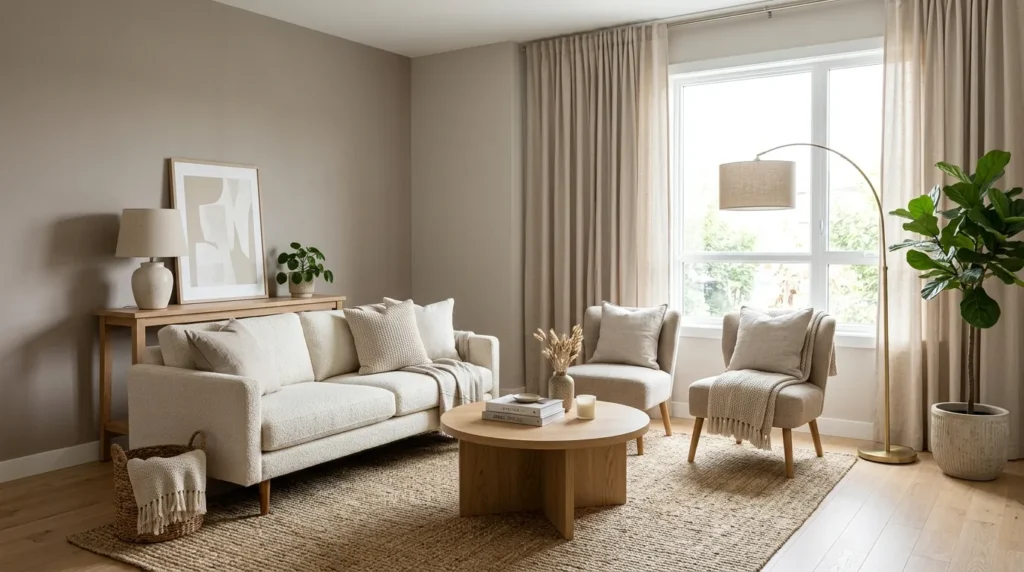
1. Float the Furniture
Quick Benefits
- Creates clearer walking paths
- Defines the seating area
- Prevents a cramped appearance
- Improves conversation
- Makes the layout feel intentional
Why It Works
One of the most common small living room habits is pushing every piece of furniture against the walls. While this can seem like the best way to create floor space, it doesn’t always produce the most functional arrangement.
Furniture can sometimes work better slightly away from the walls. Even a small amount of space behind a sofa can create a more deliberate layout and make the seating area feel defined.
The key is not to float furniture simply for the sake of doing so. The arrangement needs to support how people actually use the room.
If the living room is used for conversation, position seating so people can comfortably see one another. If the room also functions as a television area, orient the main seating toward the screen without blocking major pathways.
How To Style It
Start with the largest piece, usually the sofa.
Place it where it creates the strongest possible seating arrangement while preserving a comfortable path through the room.
Add one or two accent chairs if there is enough space. A compact chair can often provide more useful seating than a second oversized sofa.
Use a coffee table that leaves sufficient clearance around it.
Avoid creating a maze between the entry, seating area, and other rooms.
If floating the sofa leaves an awkward gap behind it, use a narrow console table for a lamp, books, or a few decorative pieces.
The arrangement should feel open but still connected.
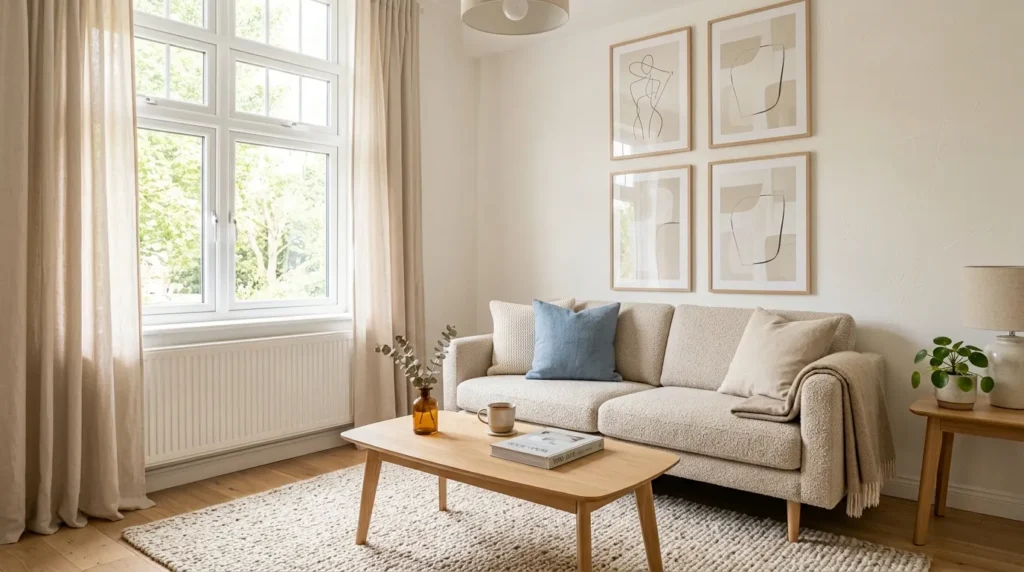
2. Choose a Light Palette
Quick Benefits
- Reflects available light
- Creates visual calm
- Makes furniture feel less heavy
- Helps small rooms appear brighter
- Makes decorating easier
Why It Works
Color cannot change the actual dimensions of a room, but it can influence how spacious the room feels.
Light and related colors tend to create a more continuous visual field, especially when used across walls, larger furniture pieces, curtains, and rugs.
That doesn’t mean a small living room has to be completely white.
Cream, warm beige, pale gray, soft taupe, muted blue, and light sage can all create an open atmosphere.
The important thing is to avoid too many unrelated colors competing for attention.
A limited palette also makes it easier to introduce texture without creating visual chaos.
How To Style It
Choose one primary neutral and two or three supporting shades.
For a warm living room, try:
- Warm white
- Cream
- Oatmeal
- Natural wood
For a cooler modern palette:
- Soft white
- Pale gray
- Dusty blue
- Light oak
For an organic-inspired room:
- Ivory
- Beige
- Soft sage
- Warm brown
Repeat the same colors across the rug, pillows, curtains, artwork, and furniture.
If you want stronger contrast, use it selectively. A black lamp, dark wood table, or deeper accent pillow can provide definition without making the entire room feel visually heavy.
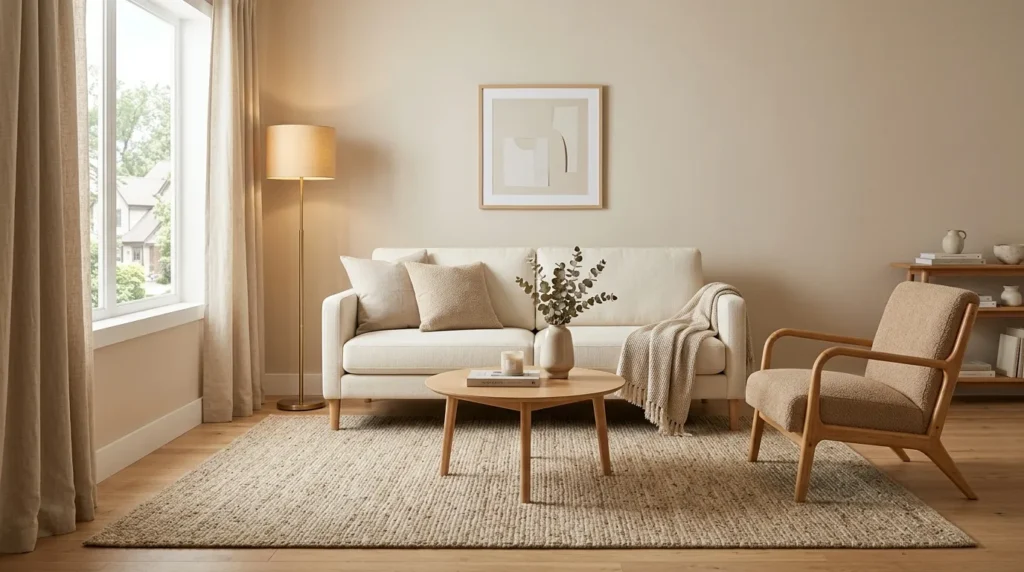
3. Scale the Sofa
Quick Benefits
- Preserves floor space
- Improves movement
- Makes the room feel balanced
- Provides comfortable seating
- Prevents visual overcrowding
Why It Works
The sofa is often the largest piece of furniture in a living room, so its size has an enormous impact on the space.
A large sectional may look beautiful in a showroom but overwhelm a compact room. Conversely, choosing an extremely small sofa simply because it takes up less space can make the room uncomfortable.
The right sofa should provide enough seating while leaving practical space for movement.
Look at the sofa’s total footprint rather than just its width. Deep cushions, wide arms, and bulky backs can consume more space than expected.
How To Style It
Measure the room before shopping for a sofa.
Consider:
- Overall width
- Depth
- Arm width
- Back height
- Doorway clearance
- Walking space around it
A streamlined sofa with narrower arms can provide more usable seating than a bulky model with oversized cushions.
Furniture with visible legs can also expose more floor beneath the piece, helping it feel lighter visually.
If you love sectional seating, consider a compact L-shaped design rather than an oversized configuration.
For very narrow rooms, a loveseat paired with one compact accent chair may create a better layout than a large sofa.
4. Use Clear Surfaces
Quick Benefits
- Reduces visual clutter
- Makes furniture appear lighter
- Simplifies cleaning
- Creates breathing room
- Highlights favorite objects
Why It Works
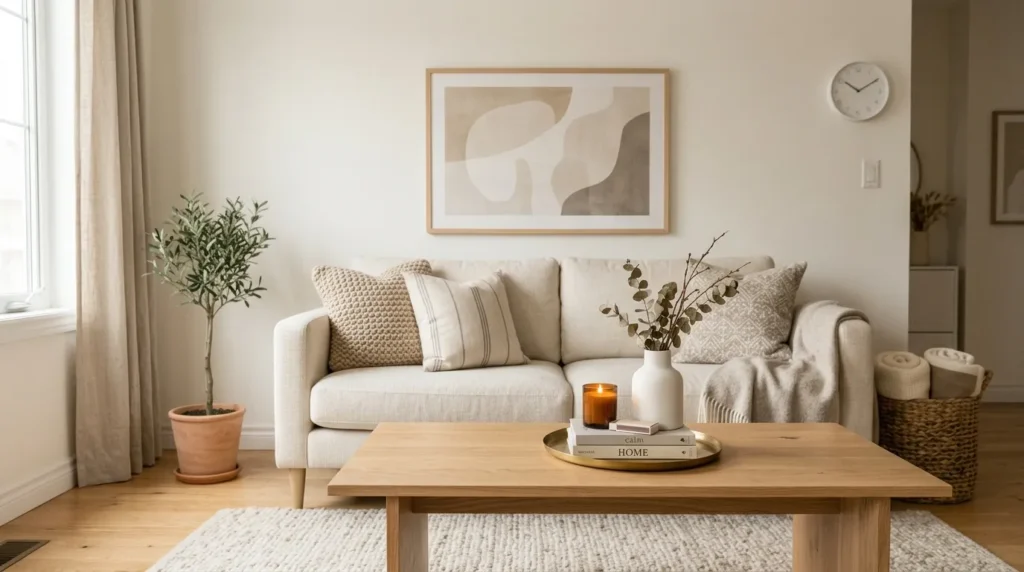
Small rooms tend to show clutter quickly.
A few books, candles, remotes, decorative objects, and miscellaneous items can make a coffee table or console appear completely covered.
Keeping surfaces relatively clear gives the eye places to rest.
This doesn’t mean your living room should be bare. It means accessories should be grouped intentionally rather than scattered everywhere.
One well-composed tray can look more polished than ten individual objects spread across a table.
How To Style It
Choose one focal arrangement for the coffee table.
Try a simple combination of:
- Decorative tray
- Two stacked books
- Small vase
- Candle
- Decorative bowl
You don’t need every item.
For console tables, use one lamp or tall object, a small grouping of books or decor, and some open space.
On shelves, alternate objects with empty sections.
If you have children or use the living room heavily, prioritize functional surfaces. Leave enough room for drinks, books, and everyday activities.
A stylish room still needs to function like a home.
5. Add a Large Rug
Quick Benefits
- Connects furniture
- Defines the seating area
- Adds warmth
- Creates visual structure
- Makes the room feel finished
Why It Works
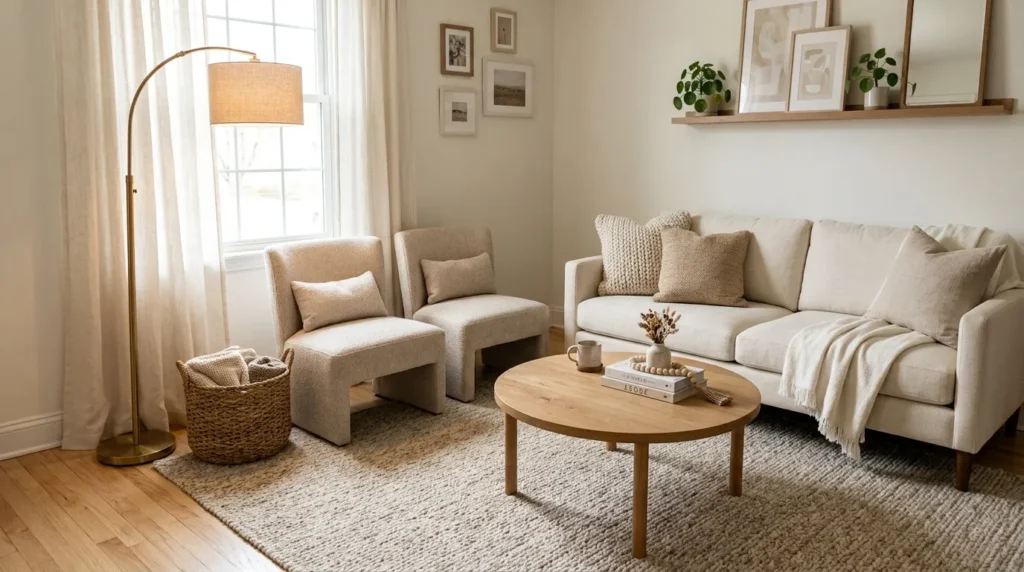
It may seem counterintuitive, but a larger rug can sometimes make a small living room feel more cohesive than a tiny one.
A small rug placed only underneath the coffee table can visually separate the table from the seating.
A properly sized rug, however, can connect the sofa and chairs into one unified zone.
This makes the room feel intentional rather than fragmented.
The rug also adds texture and can introduce a subtle pattern without covering the entire room.
How To Style It
Whenever possible, place at least the front legs of the sofa and accent chairs on the rug.
In particularly compact rooms, a rug positioned beneath the main seating arrangement can provide enough visual connection without covering the entire floor.
Choose a pattern that is proportional to the room.
Subtle geometric patterns, faded traditional designs, stripes, or textured solids can work well.
If your furniture is mostly neutral, a patterned rug can add character.
If the room already contains several patterns, choose a quieter rug.
6. Emphasize Natural Light
Quick Benefits
- Makes the room feel brighter
- Creates visual openness
- Enhances colors and textures
- Reduces reliance on artificial lighting
- Improves the overall atmosphere
Why It Works
Natural light is one of the most valuable assets in a small living room.
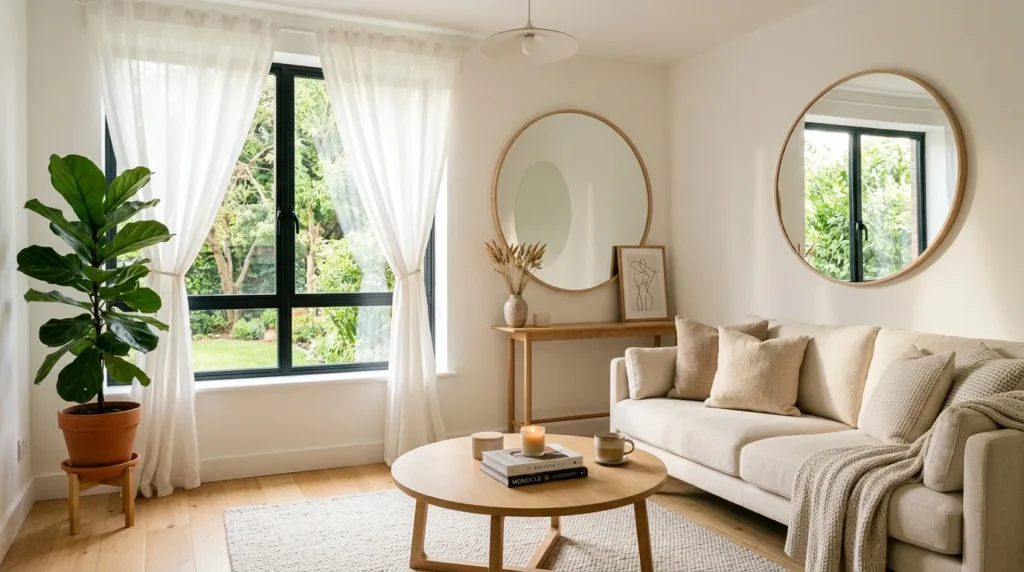
Blocking a window with oversized furniture or heavy curtains can make the entire space feel darker.
Instead, arrange the room so daylight can travel as freely as possible.
Mirrors can also help reflect available light when positioned thoughtfully.
Light-colored surfaces can reinforce the effect by reflecting rather than absorbing as much visual brightness.
How To Style It
Keep tall furniture away from the main window when possible.
Use lightweight curtains that allow some daylight to pass through.
Hang curtains high and wide enough to frame the window without covering too much glass when open.
Place a mirror on a wall where it can reflect natural light or an attractive view.
Keep windowsills relatively uncluttered.
During the day, open curtains fully to maximize daylight.
If the room is naturally dark, combine these strategies with multiple artificial light sources rather than relying on a single overhead fixture.
7. Go Vertical
Quick Benefits
- Adds storage without consuming floor area
- Draws the eye upward
- Uses overlooked wall space
- Helps organize small rooms
- Creates architectural interest
Why It Works
When floor space is limited, walls become valuable real estate.
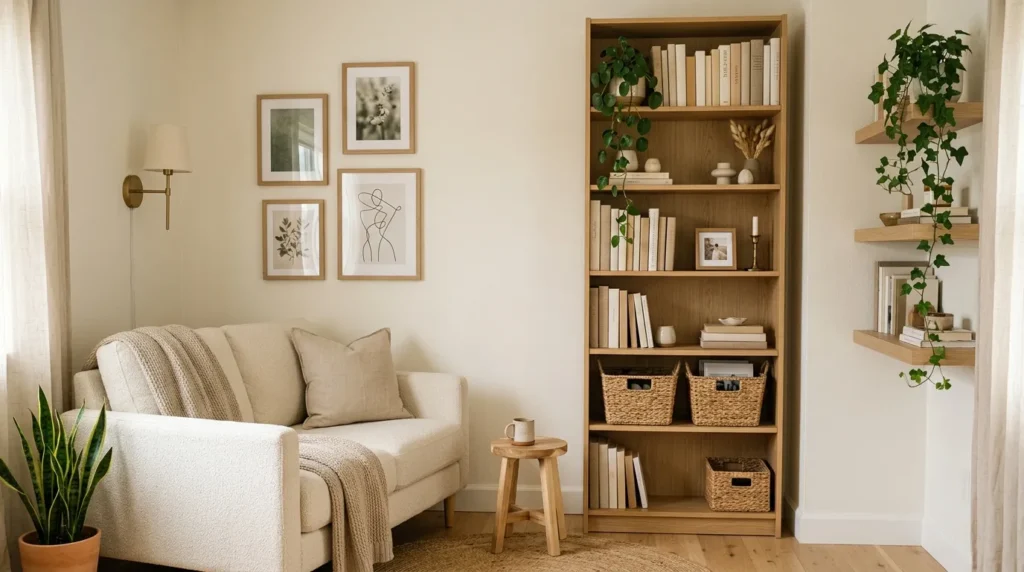
Tall bookcases, floating shelves, vertical artwork, wall sconces, and narrow cabinets can provide useful storage and decoration while leaving more floor visible.
Vertical arrangements can also emphasize the height of the room.
The important part is to avoid filling every wall with objects. A few intentional vertical elements can create more impact than a crowded collection of shelves.
How To Style It
Choose one tall storage piece rather than several short units if the room’s proportions allow it.
Use floating shelves for books, artwork, plants, and small accessories.
Hang artwork vertically where appropriate.
Install sconces beside artwork or seating areas to save table space.
Keep the bottom portion of a wall relatively open if possible.
For a narrow room, a tall bookcase with a smaller footprint can provide substantial storage without creating another wide obstacle.
Use baskets on lower shelves to conceal practical items.
8. Choose Dual-Purpose Pieces
Quick Benefits
- Saves floor space
- Adds flexibility
- Provides extra storage
- Reduces furniture quantity
- Improves functionality
Why It Works
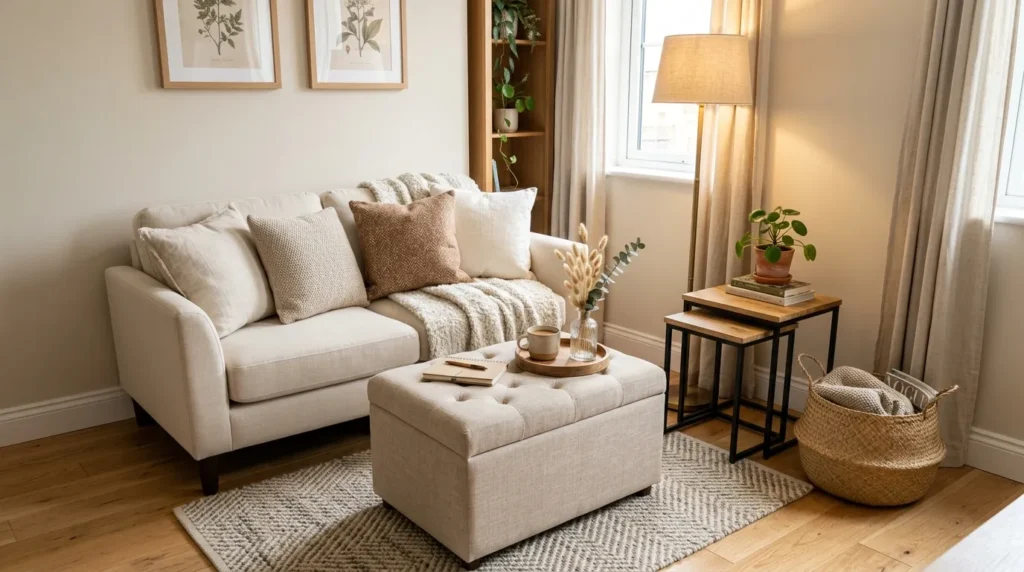
Furniture that performs more than one job is particularly useful in a compact living room.
An ottoman can function as a footrest, extra seating, or a coffee table when paired with a tray.
A storage bench can provide seating while hiding blankets.
A nesting table can expand when guests arrive and tuck away afterward.
These pieces allow you to meet multiple needs without filling the room with separate furniture.
How To Style It
Consider your actual routines before choosing multifunctional furniture.
If you frequently have guests, choose an ottoman that can double as seating.
If blankets and board games tend to clutter the room, use a storage coffee table or ottoman.
If you work occasionally from the sofa, a C-shaped side table may be more practical than a large desk.
Choose pieces that can be moved easily.
Lightweight furniture gives you more flexibility when you need to rearrange the room for entertaining, cleaning, or everyday activities.
9. Create Visual Continuity
Quick Benefits
- Makes the room feel cohesive
- Reduces visual interruptions
- Helps furniture blend together
- Creates a polished appearance
- Makes small spaces easier to decorate
Why It Works
A small room can feel busy when every piece looks unrelated.
Visual continuity helps the eye move smoothly around the space.
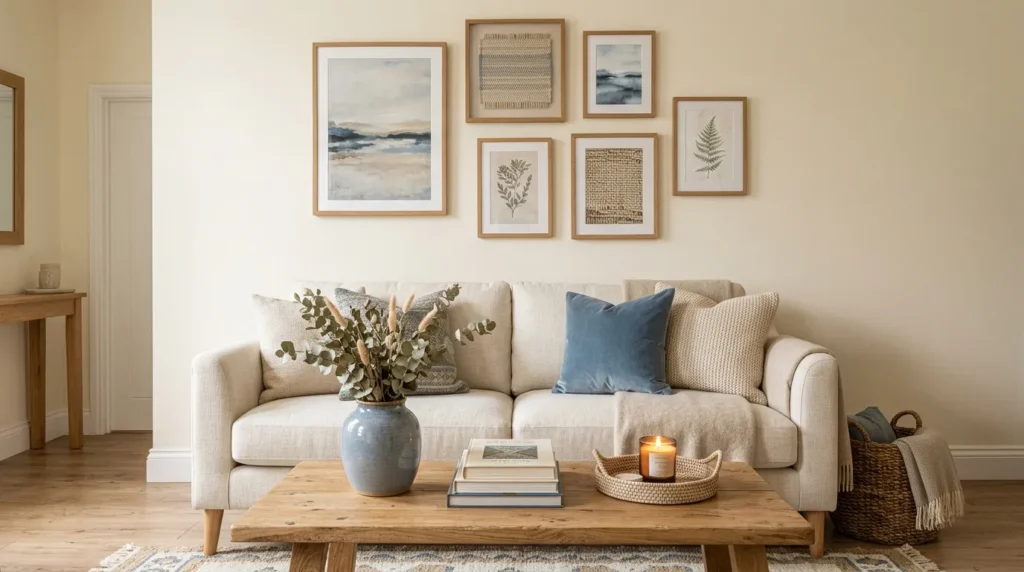
This can come from repeated colors, materials, shapes, or finishes.
For example, warm wood on the coffee table can be repeated in a picture frame or side table. A muted blue from the rug can appear again in one pillow and a piece of artwork.
The repetition doesn’t have to be exact.
In fact, using slightly different shades and materials usually feels more natural than matching everything perfectly.
How To Style It
Choose a small group of recurring elements.
For example:
Colors: Cream, warm beige, muted blue.
Materials: Oak, linen, woven fibers.
Shapes: Rounded coffee table, curved lamp, rounded accessories.
Then repeat those elements around the room.
Avoid purchasing matching furniture sets if possible.
Instead, choose individual pieces that share a common visual language.
This gives the room personality while keeping the overall composition cohesive.
10. Edit the Decor
Quick Benefits
- Creates visual breathing room
- Makes favorite pieces stand out
- Reduces clutter
- Simplifies cleaning
- Gives the room a polished appearance
Why It Works
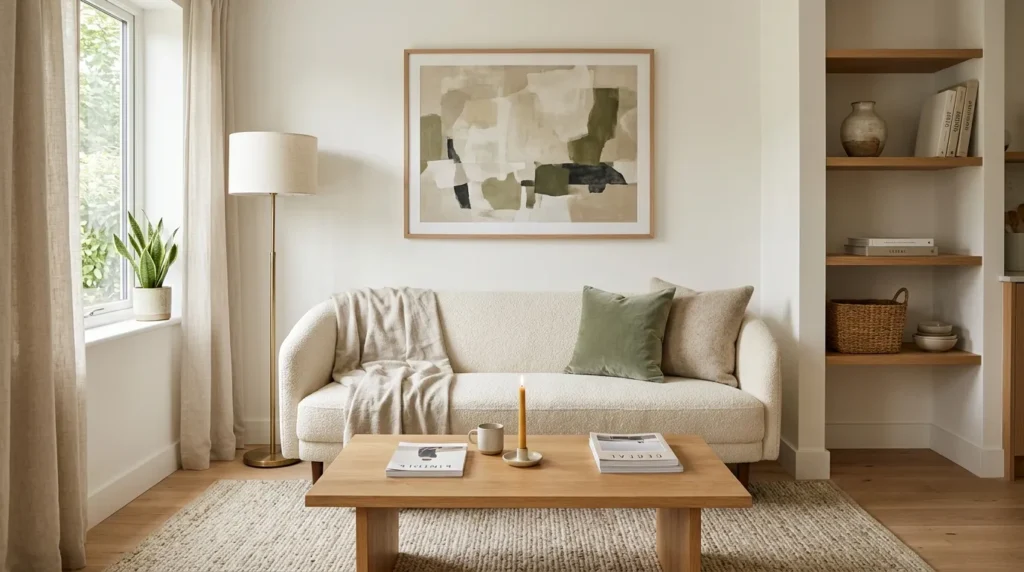
One of the easiest ways to make a small living room feel larger is to remove things that don’t contribute to the room.
This doesn’t mean adopting an extremely minimalist style.
It means editing.
If every shelf, table, and wall has something on it, there is nowhere for the eye to rest.
A few meaningful pieces can have much more impact when they are surrounded by empty space.
This is particularly important for Pinterest-inspired rooms because photographs often look appealing due to their careful balance of filled and empty areas.
How To Style It
Walk around the room and identify items that are:
- Duplicates
- Rarely used
- Visually distracting
- Too large for the space
- No longer meaningful
Remove a few items and live with the room for several days.
You may discover that you don’t miss them.
Keep the pieces that add function, personality, texture, or visual interest.
Rotate seasonal decor rather than keeping everything on display year-round.
The result should feel collected and comfortable rather than sparse.
How to Arrange Furniture in a Very Small Living Room
Start by identifying the room’s natural focal point.
This might be a fireplace, television, large window, architectural feature, or artwork.
Then position the main seating toward that focal point.
Avoid blocking major walkways.
If the room has multiple entry points, prioritize the path people use most frequently.
For a narrow living room, place the sofa along the longest wall and use compact chairs or nesting tables where appropriate.
For a square room, a sofa paired with two smaller chairs can create a balanced conversation area.
For an open-plan apartment, use the back of the sofa to subtly define the living area from the dining or kitchen zone.
Don’t feel obligated to push everything against the walls. The best arrangement is the one that creates a natural relationship between the furniture while preserving movement.
How to Make a Small Living Room Look Expensive
A sophisticated room is usually more about editing and proportion than price.
Start with a cohesive color palette.
Choose one substantial rug rather than several small ones.
Use curtains that reach toward the floor.
Mix materials such as wood, linen, metal, glass, and woven fibers.
Add one or two larger pieces of artwork rather than filling the walls with tiny prints.
Keep surfaces tidy.
Use warm lighting.
Most importantly, pay attention to scale.
A modestly priced sofa that fits the room properly can look more polished than an expensive oversized sectional that overwhelms it.
Small Living Room Ideas for Renters
Renting doesn’t prevent you from creating a stylish and comfortable small living room.
Focus on changes that don’t require permanent modifications.
Try:
- Freestanding bookshelves
- Removable hooks
- Large rugs
- Floor lamps
- Table lamps
- Lightweight curtains
- Decorative mirrors
- Removable artwork solutions
- Storage ottomans
- Narrow console tables
If painting is not allowed, use artwork, textiles, and furniture to introduce color.
Large mirrors can also add personality while reflecting light.
Choose furniture that can move with you when your lease ends.
FAQ
How can I make a small living room feel bigger?
Use appropriately scaled furniture, maintain clear walking paths, choose a cohesive light color palette, maximize natural light, and avoid excessive decor. A properly sized rug can connect the seating area, while mirrors and vertical storage can add visual openness without requiring more floor space.
What furniture is best for a small living room?
Look for sofas with appropriate depth and narrower arms, compact accent chairs, nesting tables, storage ottomans, and furniture with visible legs. Multifunctional pieces can be particularly useful because one item can perform several jobs without consuming additional floor space.
Should a small living room have a large rug?
A properly sized rug can actually make a small living room feel more cohesive. Rather than choosing a tiny rug that sits only beneath the coffee table, look for one large enough to connect the main seating pieces. Ideally, the front legs of the sofa and chairs should sit on the rug.
What colors make a small living room look larger?
Light, related colors such as warm white, cream, beige, pale gray, and soft muted colors can help create a visually open atmosphere. You don’t have to avoid darker colors completely. Use deeper shades selectively in artwork, pillows, lighting, or furniture for contrast.
How do I decorate a small living room without making it cluttered?
Start with the essential furniture and add decorative layers gradually. Keep coffee tables and shelves relatively clear, use baskets to contain practical items, and avoid displaying every accessory you own. Choose a few meaningful pieces and leave some empty space around them.
Where should I put my sofa in a small living room?
The best position depends on the room’s architecture and focal point. Place the sofa where it supports conversation and doesn’t obstruct major walkways. It can sit against a wall or float slightly away from one if the layout allows. Measure the room and consider doorways before committing to a large sofa.
How can I add storage to a small living room?
Use vertical shelving, narrow cabinets, floating shelves, storage ottomans, baskets, and furniture with built-in compartments. Take advantage of wall height while keeping the floor relatively open. Store frequently used items within easy reach and less-used belongings in closed or higher storage.
Conclusion
A small living room doesn’t need to compete with a large one. It simply needs a smarter approach to furniture, color, storage, lighting, and decoration.
Start with the layout. Give the sofa and other seating enough room to function comfortably while protecting the main walking paths. Choose furniture according to the room’s actual dimensions rather than relying on pieces that look good in a much larger space.
Then work on visual openness. A restrained color palette, natural light, clear surfaces, and vertical storage can make the room feel calmer and more spacious.
Don’t overlook comfort. A properly sized rug, soft textiles, warm lighting, and multifunctional furniture can make a compact room feel genuinely inviting.
Finally, edit your decor. You don’t need to fill every shelf or wall. Give your favorite pieces room to stand out.
The best small living rooms aren’t empty. They’re intentional.
Every piece has a reason to be there, every pathway remains usable, and every decorative layer contributes something to the overall atmosphere.
Start with one change that would make your room work better today. Move the sofa, clear a surface, replace an oversized piece, or introduce a lighter textile. Then build from there until the room feels open, comfortable, and unmistakably yours.
Related Articles
- 10 Small Living Room Ideas with Smart Furniture Layouts
- 10 Modern Living Room Ideas with Luxury Style
- 10 Cozy Living Room Ideas for a Warm and Inviting Home
- 10 Living Room Wall Decor Ideas That Make a Room Stand Out
- 10 Neutral Living Room Ideas That Feel Warm and Sophisticated