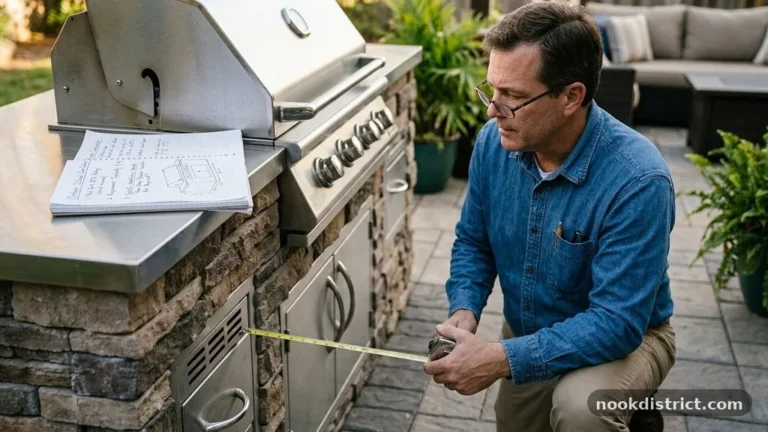
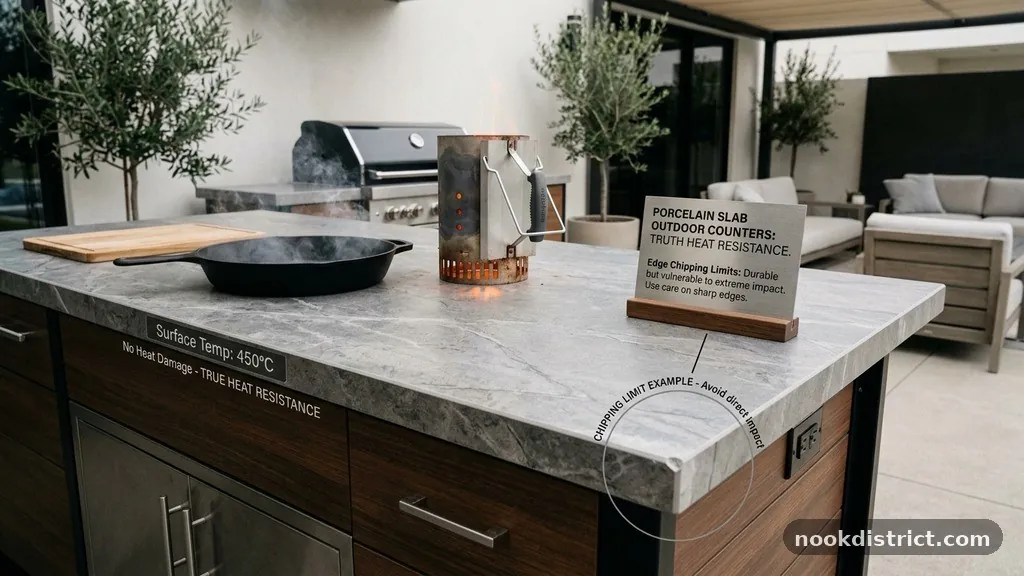
Porcelain Slab Outdoor Counters: Heat Resistance and Edge Chipping Limits
Porcelain slab outdoor counters are becoming a preferred choice for modern backyards because they offer a blend of durability and aesthetic versatility. Homeowners often inquire about how these surfaces handle extreme summer temperatures and whether the edges are prone to damage during daily use. Understanding the technical limits of porcelain is essential before you commit to a major renovation project.
This article provides a clear look at the physical properties of these materials, offering the facts you need to make an informed decision for your kitchen or dining area. By examining heat thresholds and edge integrity, you can determine if this surface matches your outdoor lifestyle.
The Truth About Heat Resistance
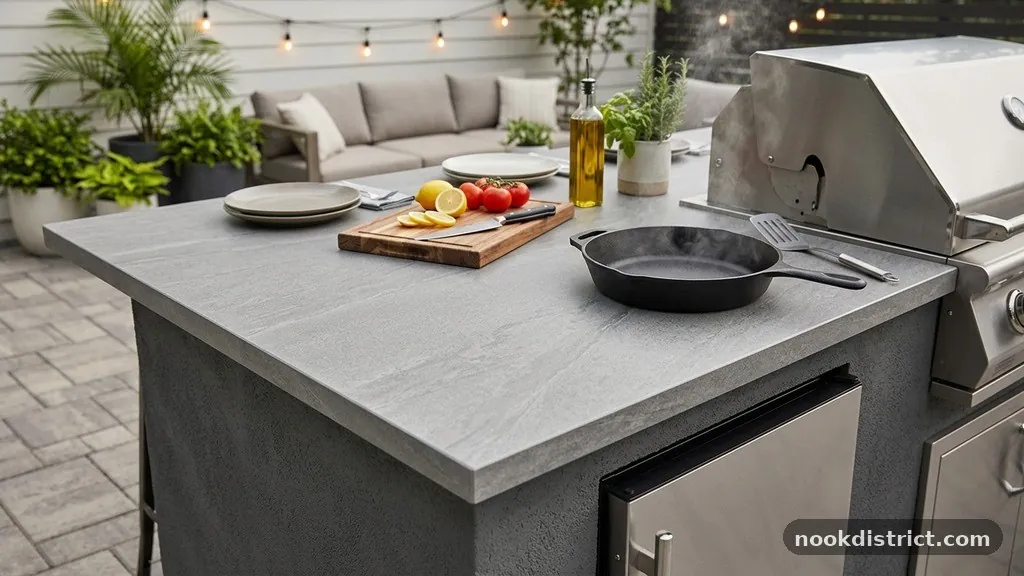
Porcelain slab outdoor counters are manufactured through an intense firing process that occurs at temperatures exceeding 2,200 degrees Fahrenheit. Because the material is already subjected to such extreme heat during production, it is naturally resistant to thermal shock.
You can place a hot pan directly onto the surface without causing the discoloration or scorching that often plagues synthetic stone products. This high-temperature tolerance is a significant advantage for outdoor kitchens where grills and hot serving dishes are common.
While the material itself is fireproof, the resin or binders used in some manufacturing processes can vary by brand. It is important to confirm the specific composition of your chosen slab before assuming it is invincible.
Most high-quality outdoor porcelain products are completely inorganic, meaning they will not melt, emit toxic fumes, or change color when exposed to open flames or hot grease. This makes them significantly safer than quartz, which contains plastic resins that can discolor if a hot pan sits on the surface for too long.
Comparing Material Performance
When evaluating heat resistance, it helps to see how porcelain stacks up against other popular outdoor materials. The following table provides a general comparison of how these surfaces react to high heat sources common in outdoor cooking environments.
| Material | Heat Resistance Rating | Risk of Scorching |
|---|---|---|
| Porcelain | Excellent | Extremely Low |
| Quartz | Poor to Moderate | High (Resin Damage) |
| Granite | High | Low (Sealer Damage) |
| Concrete | Moderate | Moderate (Staining) |
Understanding Edge Chipping Limits
The most common concern regarding a porcelain countertop is the vulnerability of its edges to physical impact. Because porcelain is a dense and brittle material, a sharp blow from a heavy object like a cast-iron skillet can cause a chip.
This is particularly true at the exposed edge of the slab, which is the point of highest stress. While the surface itself is incredibly hard and scratch-resistant, it lacks the internal flexibility of natural stone like granite or soapstone.
Fabricators often recommend specific edge profiles to mitigate this risk. A squared-off edge is the most susceptible to chipping because it concentrates the force of an impact into a very small area.
By opting for a rounded or beveled edge profile, you spread the energy of an accidental strike across a wider surface. This simple design choice can significantly extend the lifespan of your outdoor installation and keep the finish looking new for many years.
The Role of Fabrication and Installation
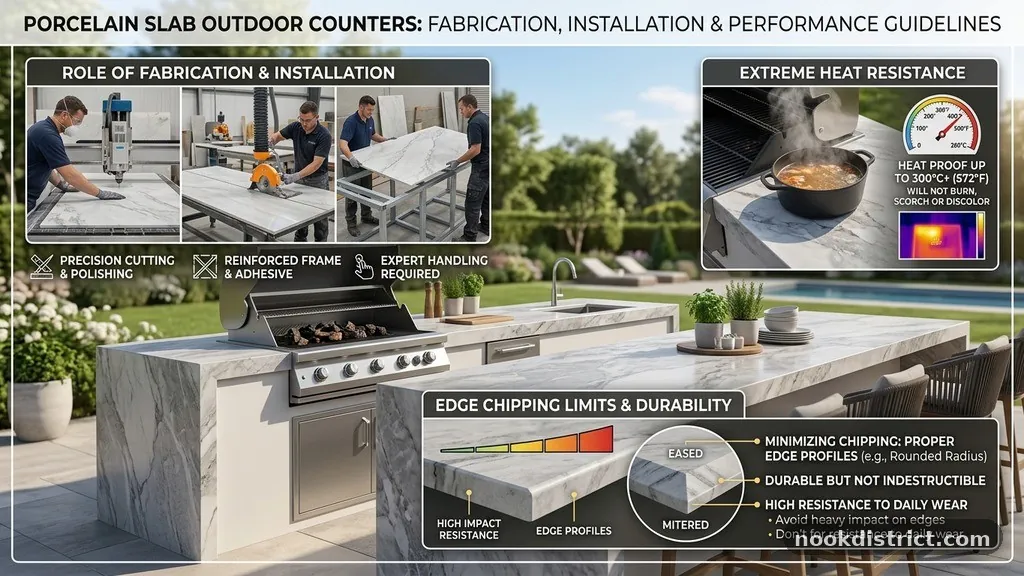
The quality of your installation plays a massive role in how well your counters handle daily wear. A professional fabricator knows exactly how to support the slab to prevent structural stress that could lead to cracks or edge failures.
If the substrate beneath the porcelain is not perfectly level or lacks sufficient support, the slab may experience tension. Over time, this hidden tension makes the edges much more likely to chip or flake when they are bumped.
Proper fabrication also involves polishing the edges to a smooth, uniform finish. A rough or poorly cut edge is more likely to catch on clothing or kitchen tools, increasing the likelihood of an impact.
High-quality fabrication ensures that the edge is not just aesthetically pleasing but also structurally sound. Always ask your installer about their specific experience with porcelain, as it requires different diamond-tipped tools and techniques compared to softer materials like marble or granite.
Maintenance Strategies for Longevity
Maintaining your porcelain slab outdoor counters is relatively straightforward compared to porous natural stones. Because the surface is non-porous, it does not require regular sealing to prevent stains from wine, oil, or citrus.
You can simply wipe the surface clean with a mild soap and water solution to remove debris or spills. This low-maintenance requirement is a key reason homeowners choose porcelain for high-traffic outdoor areas.
Despite its low maintenance, you should still practice basic care to preserve the integrity of the edges. Avoid using the edge as a cutting board or a place to hammer meat, as these actions create unnecessary stress points.
If you do notice a small chip, many professional fabricators carry color-matched epoxy kits that can fill the void effectively. While a repair is often visible upon close inspection, it prevents the chip from growing larger and keeps the edge smooth to the touch.
Climate Considerations for Outdoor Use
Outdoor environments subject surfaces to constant fluctuations in temperature and humidity. Porcelain handles these cycles better than almost any other countertop material.
Because it has a very low water absorption rate, it will not crack due to freeze-thaw cycles that often destroy concrete or natural stone. This makes it an ideal choice for regions with harsh winters where moisture penetration is a constant concern for outdoor structures.
You should consider the thermal expansion and contraction of the surrounding framework. If your outdoor kitchen is built using wood or metal, these materials will expand and contract at different rates than the porcelain slab.
Your installer should leave a small expansion gap where the slab meets walls or other fixtures to accommodate this movement. This detail prevents the slab from being pushed against an immovable object, which is a common cause of edge cracking in outdoor installations.
Comparing Porcelain to Natural Stone
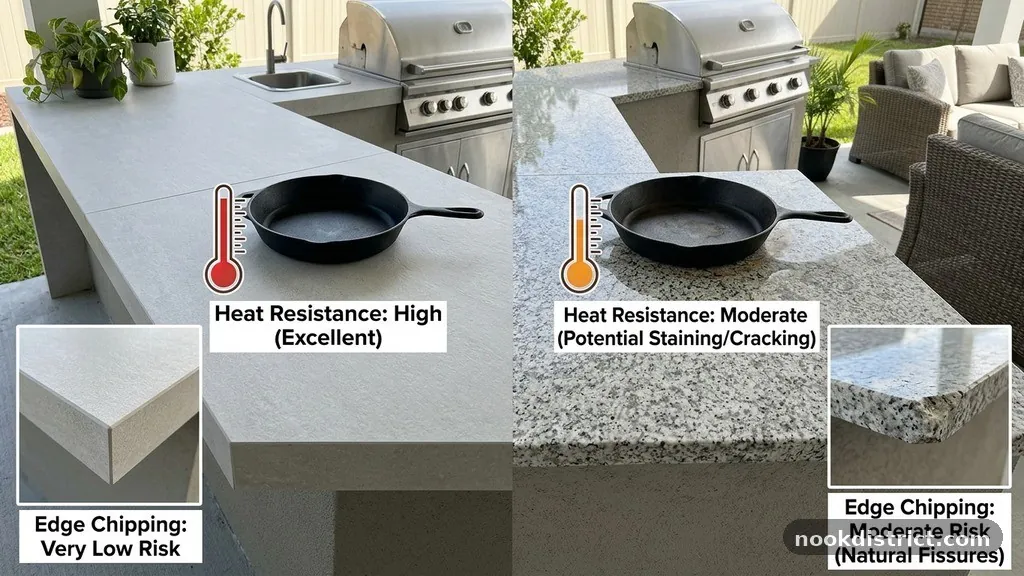
Many homeowners weigh the benefits of porcelain against natural stone like granite. Granite is a beautiful, natural material that has been used for decades, but it requires periodic sealing to maintain its resistance to stains.
In an outdoor setting, granite can also be susceptible to fading from UV exposure if it is a darker, more porous variety. Porcelain offers a more consistent appearance and color stability that does not degrade under the harsh sun.
However, granite does offer a certain level of “toughness” that porcelain lacks. If you hit a granite edge with a heavy pot, it is less likely to chip, though it might sustain a scratch or a dent.
Porcelain is the opposite: it is virtually impossible to scratch with standard kitchen tools, but it is more brittle when faced with a blunt force impact. Your choice ultimately depends on whether you prioritize scratch resistance or impact durability in your outdoor workspace.
Selecting the Right Thickness
The thickness of your porcelain slab is a critical factor in both aesthetics and performance. Most outdoor porcelain slabs are available in 12mm or 20mm thicknesses.
A thicker slab provides more mass and inherent strength, which can be an advantage for large overhangs or bar-style seating areas. However, a thinner slab is often sufficient for standard countertops when properly supported by a solid plywood or concrete base.
If you are looking for a “thick” look, fabricators can miter the edges to create the appearance of a massive block of stone. This process involves cutting the edge at a 45-degree angle and bonding it to a matching piece of porcelain.
While this looks stunning, it does create a seam that must be carefully maintained. Ensure your fabricator is experienced in mitering, as a poor bond at the mitered edge is a common failure point for outdoor counters.
Common Myths About Porcelain Surfaces
There is a persistent myth that porcelain is “too fragile” for serious outdoor use. This belief often stems from early-generation tile products that were not designed for countertop applications.
Modern porcelain slabs are engineered for durability, using advanced compression techniques that create a material far stronger than standard floor tiles. When installed correctly, these surfaces can easily withstand the rigors of an active family backyard.
Another myth is that porcelain is difficult to repair if it does break. While it is true that you cannot simply “sand out” a deep chip like you might with wood or solid surface materials, it is not impossible to restore.
Professional stone repair technicians have developed specialized methods for patching porcelain that are nearly invisible. The National Kitchen and Bath Association offers resources for finding qualified installers who understand the nuances of these modern materials.
Essential Features for Your Project
When planning your outdoor kitchen, you should look for specific features that ensure the longevity of your porcelain slab. High-quality slabs from reputable manufacturers often include built-in UV resistance to prevent fading over time.
You should also check for a comprehensive warranty that covers both material defects and, in some cases, professional installation errors. Do not settle for generic tile products, as they lack the structural density required for a countertop surface.
* Look for slabs with a through-body color pattern so that chips are less noticeable.
* Prioritize rounded or bullnose edge profiles to reduce the risk of impact damage.
* Ensure the substrate is reinforced to prevent sagging or tension cracks.
* Choose a matte or honed finish to minimize the appearance of water spots.
* Verify that the product is specifically rated for outdoor temperature fluctuations.
Frequently Asked Questions
Do porcelain countertops chip easily?
Porcelain is a very hard material, but it is also brittle. While it is highly resistant to scratching, a sharp, heavy impact on an exposed edge can cause a chip. Choosing a rounded edge profile helps reduce this risk significantly.
What is the main downside of porcelain outdoor slabs?
The primary limitation is the brittleness of the edges. Unlike natural stone, which may dent or scratch, porcelain can chip if hit with enough force. This requires users to be mindful of heavy objects near the edge of the counter.
How do I repair a chip in my porcelain counter?
Small chips can usually be repaired with a color-matched epoxy resin kit. For larger chips or cracks, it is best to consult a professional stone fabricator who can patch the area and polish it to match the surrounding finish.
Can I leave porcelain counters out in the winter?
Yes, porcelain is an excellent choice for cold climates. Because it is non-porous and has a low water absorption rate, it will not crack due to freezing moisture like concrete or certain natural stones might.
Does the sun fade porcelain countertops?
No, high-quality porcelain slabs are UV stable. They will not lose their color or pattern even with constant exposure to direct sunlight, making them an ideal choice for sunny patios and outdoor kitchens.
Planning Your Outdoor Space
Porcelain slab outdoor counters represent a sophisticated choice for any homeowner looking to combine style with low-maintenance durability. By understanding the specific limits regarding edge chipping and heat resistance, you can design a space that functions perfectly for your needs.
The material’s ability to withstand extreme temperatures and environmental elements makes it a superior option for many backyard projects. If you prioritize a clean, modern aesthetic and want a surface that resists stains and UV damage, porcelain is a strong contender.
Take the time to consult with a professional fabricator before finalizing your design. They can provide guidance on the best edge profiles, support systems, and material thicknesses for your specific layout.
With the right installation and a little bit of care, your new countertops will remain a stunning and functional feature of your home for many years to come. Start by exploring the latest collections from trusted manufacturers to find the perfect color and texture for your lifestyle.