10 Small Balcony Ideas with Beautiful Greenery
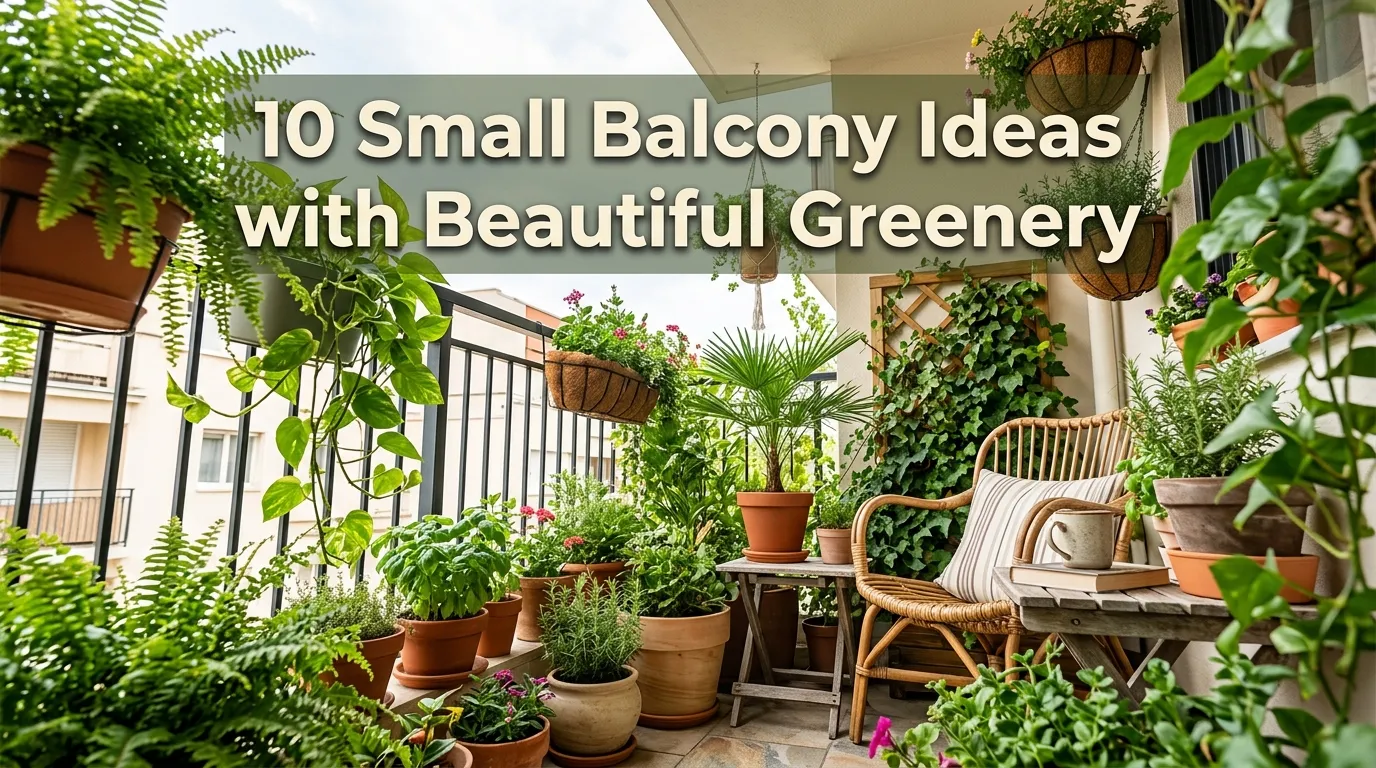
A small balcony can become one of the most enjoyable spaces in a home when greenery is used thoughtfully. Even a narrow apartment balcony can feel fresh, private, and inviting with the right combination of plants, containers, seating, and vertical elements.
The biggest challenge is usually space. A balcony has a limited footprint, so filling the floor with large pots and furniture can quickly make it feel crowded. Instead, the most successful small balcony designs use the walls, railings, corners, and overhead space to create layers.
I’ve noticed that greenery looks especially effective when it isn’t scattered randomly. A few repeated plant shapes or matching containers can make a compact balcony feel much more intentional. Tall plants can soften a blank wall, trailing plants can fill vertical space, and smaller pots can add detail without taking up valuable floor area.
You also don’t need a complicated collection of plants. Start with the amount of sunlight your balcony receives, then choose varieties that suit those conditions. A sunny balcony can support many flowering plants and herbs, while a shaded space may be better suited to plants that tolerate lower light.
Comfort matters just as much as planting. A small chair, foldable bistro set, bench, or floor cushion can turn the balcony into a place to actually enjoy the greenery.
The ten ideas below focus on practical ways to make a small outdoor area feel lush without overwhelming it. Whether you have a tiny apartment balcony or a narrow terrace, these approaches can help you create a peaceful green retreat.
Table of Contents
1. Vertical Plant Wall
Use vertical space to create abundant greenery without crowding the floor.
2. Railing Planters
Add flowers and foliage along the balcony edge.
3. Corner Greenery
Turn an unused corner into a lush focal point.
4. Hanging Plants
Use overhead space for cascading greenery.
5. Compact Herb Garden
Combine useful plants with attractive containers.
6. Layered Plant Stands
Create height with slim tiered displays.
7. Climbing Greenery
Soften walls and railings with vertical plants.
8. Cozy Plant-Filled Seating
Combine greenery with a comfortable outdoor retreat.
9. Matching Planters
Create visual cohesion with coordinated containers.
10. Miniature Balcony Garden
Layer different plant heights into a complete small-space garden.
1. Vertical Plant Wall
Quick Benefits
- Saves floor space
- Adds visual height
- Creates a lush backdrop
- Works on narrow balconies
- Makes blank walls more attractive
Why It Works
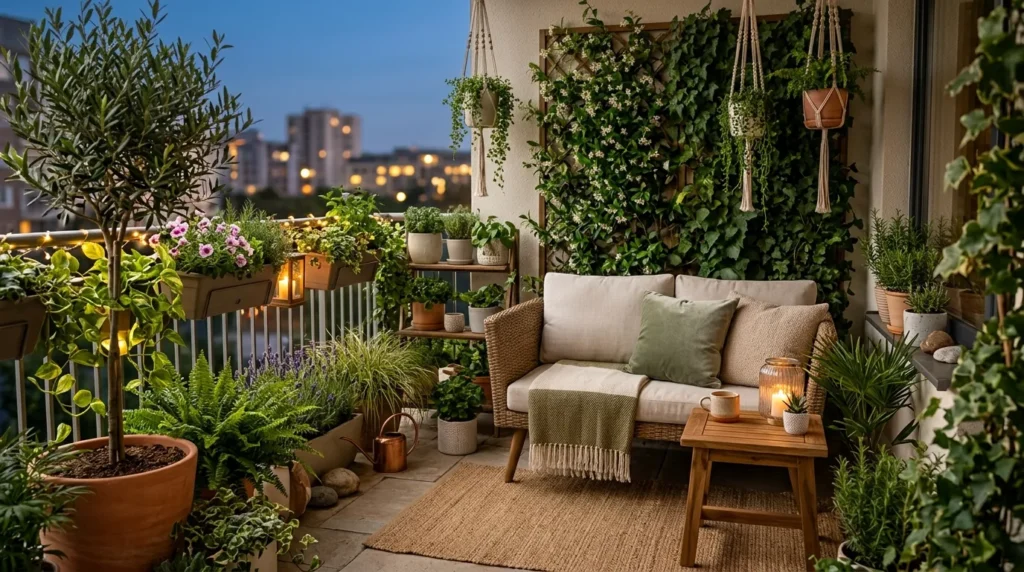
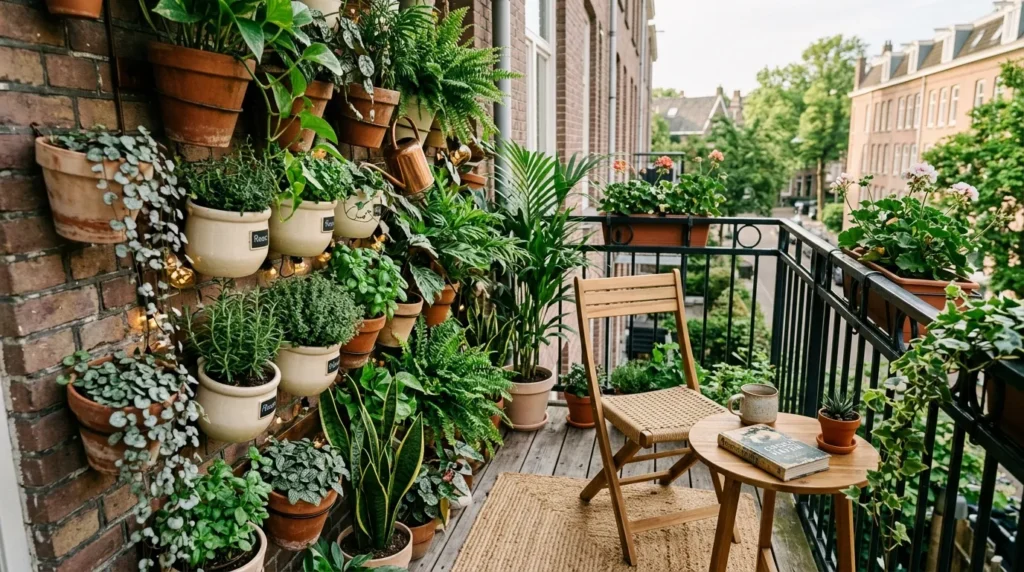
When floor space is limited, the walls become valuable gardening space.
A vertical plant display allows you to create layers of greenery without filling the walking area with pots. It can also make a small balcony feel more enclosed and private.
A simple trellis, wall-mounted planter system, narrow shelving unit, or collection of hanging containers can provide the foundation.
How To Style It
Start with one wall rather than covering every available surface.
Use a combination of upright and trailing plants to create variation.
Choose containers that are lightweight and appropriate for outdoor use.
Keep the arrangement visually organized by repeating one or two planter finishes.
If the wall receives direct sun, select plants that tolerate those conditions. For shaded balconies, choose varieties suited to lower light.
2. Railing Planters
Quick Benefits
- Uses unused railing space
- Adds color at eye level
- Keeps floors open
- Works for flowers and herbs
- Creates a finished balcony edge
Why It Works
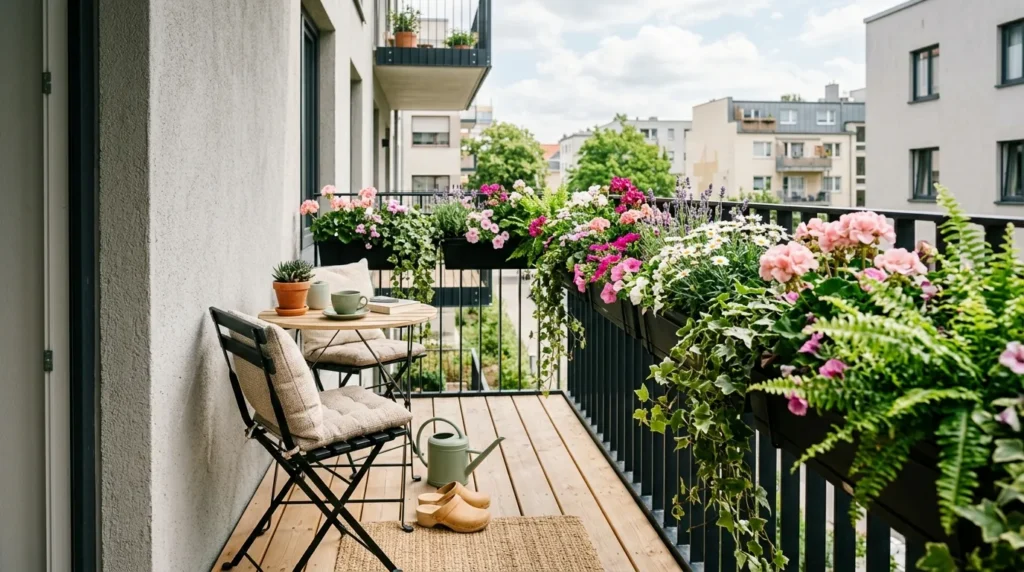
Balcony railings often provide an overlooked opportunity for planting.
Railing planters can create a continuous line of greenery without reducing the usable floor area. They are especially effective on narrow balconies where every inch matters.
Flowers can add seasonal color, while herbs and foliage plants provide a more restrained appearance.
How To Style It
Use secure railing containers designed for your balcony’s railing type.
Repeat similar containers along one section rather than filling the entire perimeter.
For a lush appearance, combine upright flowers with trailing plants.
Choose colors that complement your outdoor furniture.
Always check building rules and make sure planters are safely secured, particularly in windy locations.
3. Corner Greenery
Quick Benefits
- Uses awkward space
- Creates a focal point
- Adds height
- Keeps the center open
- Makes the balcony feel fuller
Why It Works
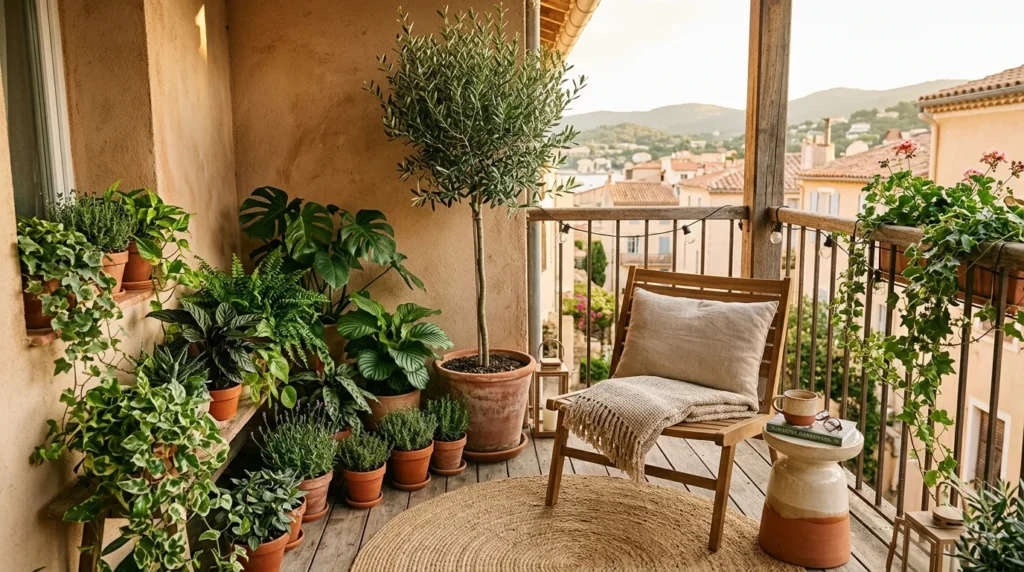
Corners are often difficult to furnish but can be perfect for plants.
A tall container plant can fill vertical space while smaller pots create a gradual transition toward the seating area.
This approach also helps keep the central walking area clear.
How To Style It
Place the tallest plant at the back.
Add one medium-sized container beside it.
Use smaller pots or a low planter at the front.
Choose plants with different leaf shapes to create texture.
A slim plant stand can provide additional height without taking up much floor area.
4. Hanging Plants
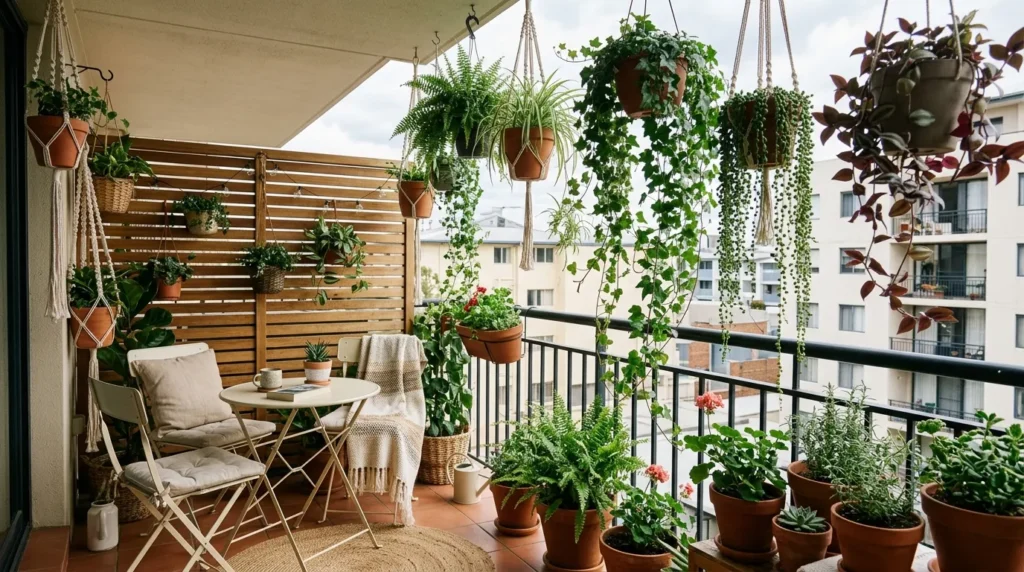
Quick Benefits
- Frees floor space
- Adds cascading texture
- Creates a lush atmosphere
- Softens hard surfaces
- Works especially well on small balconies
Why It Works
Hanging plants bring greenery into the upper part of the balcony.
Trailing foliage creates movement and can make the space feel more abundant without adding another pot to the floor.
Hanging baskets can also soften railings, walls, and overhead structures.
How To Style It
Use strong, secure hooks and appropriate hanging hardware.
Place trailing plants where they won’t interfere with doors, walkways, or neighboring spaces.
Group two or three hanging planters at slightly different heights for a relaxed arrangement.
If your balcony is exposed to wind, choose sturdy containers and plants appropriate for the conditions.
5. Compact Herb Garden
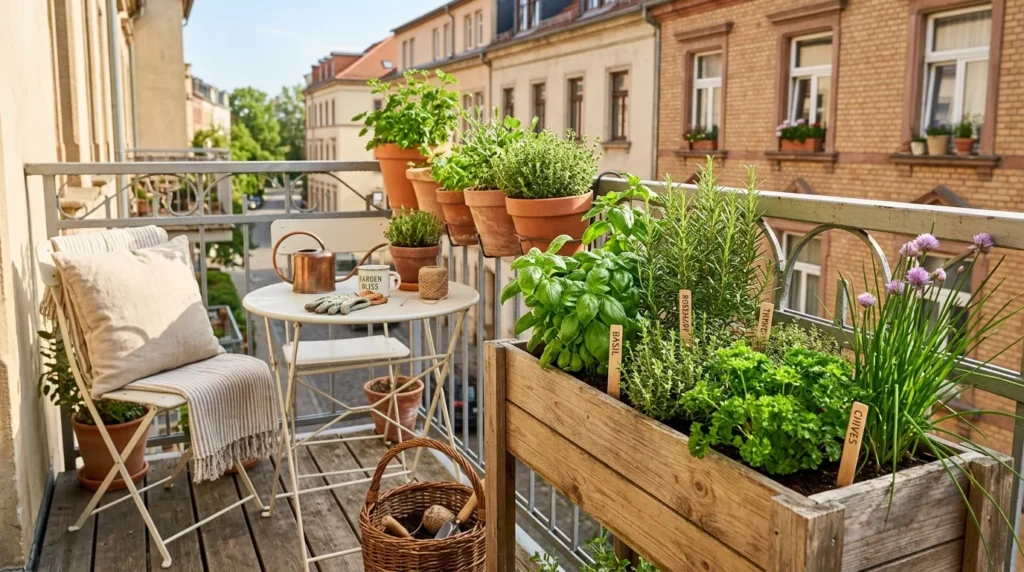
Quick Benefits
- Provides useful greenery
- Works in containers
- Adds fragrance
- Fits small spaces
- Can support everyday cooking
Why It Works
Herbs are ideal for balconies because many varieties grow well in containers.
A small herb collection can also make the balcony feel more like a real garden rather than simply an outdoor sitting area.
Basil, thyme, rosemary, mint, parsley, chives, and other herbs can work depending on your climate and sunlight.
How To Style It
Use a narrow planter box or several compact pots.
Place sun-loving herbs where they receive appropriate light.
Group herbs by watering needs when possible.
Use simple terracotta, ceramic, or neutral containers.
Add small labels if you enjoy an organized garden look.
Keep mint in its own container because it can spread aggressively in suitable conditions.
6. Layered Plant Stands
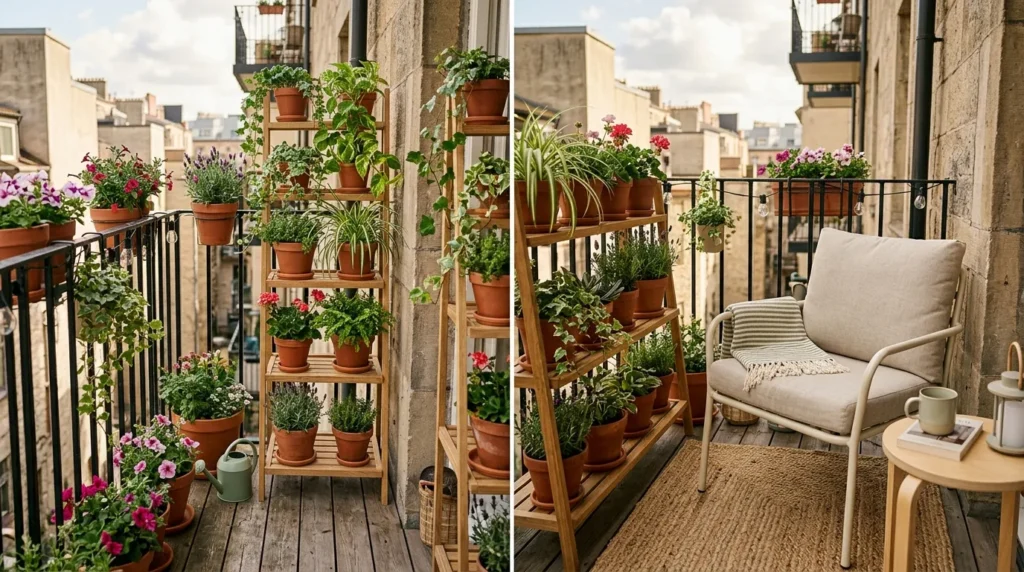
Quick Benefits
- Adds vertical dimension
- Uses small footprints
- Displays multiple plants
- Keeps containers organized
- Creates a lush corner
Why It Works
A tiered plant stand can hold several containers within the footprint of one larger pot.
This makes it useful for balconies where floor space is limited.
Different plant heights also create a more natural visual rhythm than placing every pot at the same level.
How To Style It
Choose a narrow stand that fits comfortably without blocking the walkway.
Place larger plants toward the bottom.
Use medium-sized foliage in the middle.
Reserve smaller or trailing plants for the upper shelves.
Choose pots with a common color or material to keep the display cohesive.
7. Climbing Greenery
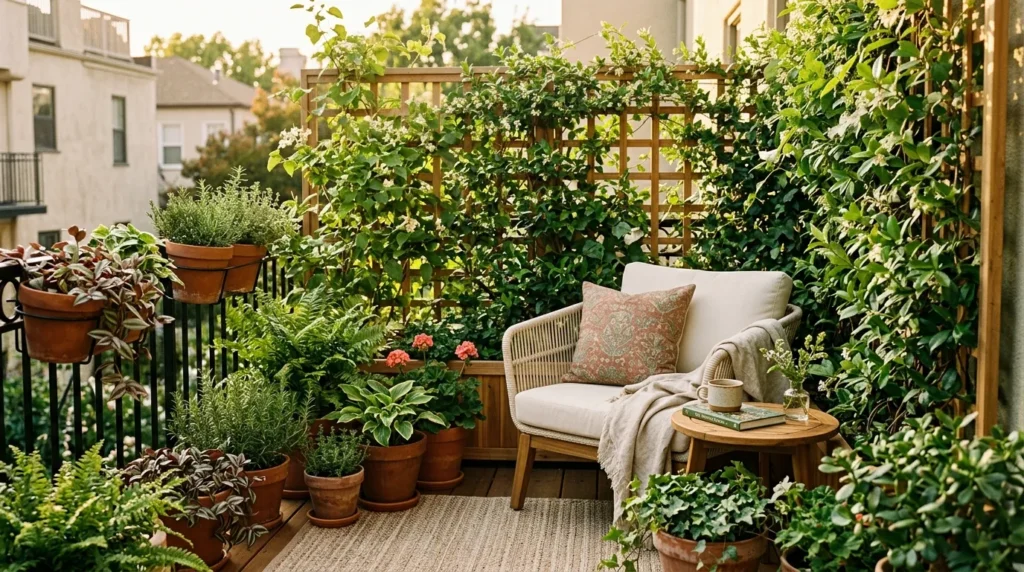
Quick Benefits
- Uses vertical space
- Adds privacy
- Softens railings
- Creates a garden-like atmosphere
- Can make walls feel less stark
Why It Works
Climbing plants can transform a hard balcony surface into a greener backdrop.
A trellis gives climbing plants a defined structure and can also act as a visual screen.
This is particularly useful when you want more privacy without installing a bulky partition.
How To Style It
Use a sturdy trellis suitable for outdoor conditions.
Select climbing plants based on sunlight, climate, container size, and local growing conditions.
Train young growth along the support as the plant develops.
Keep the structure manageable so it doesn’t interfere with neighboring balconies or building maintenance.
8. Cozy Plant-Filled Seating
Quick Benefits
- Combines comfort and greenery
- Creates a destination
- Makes the balcony more usable
- Adds visual softness
- Works in very small spaces
Why It Works
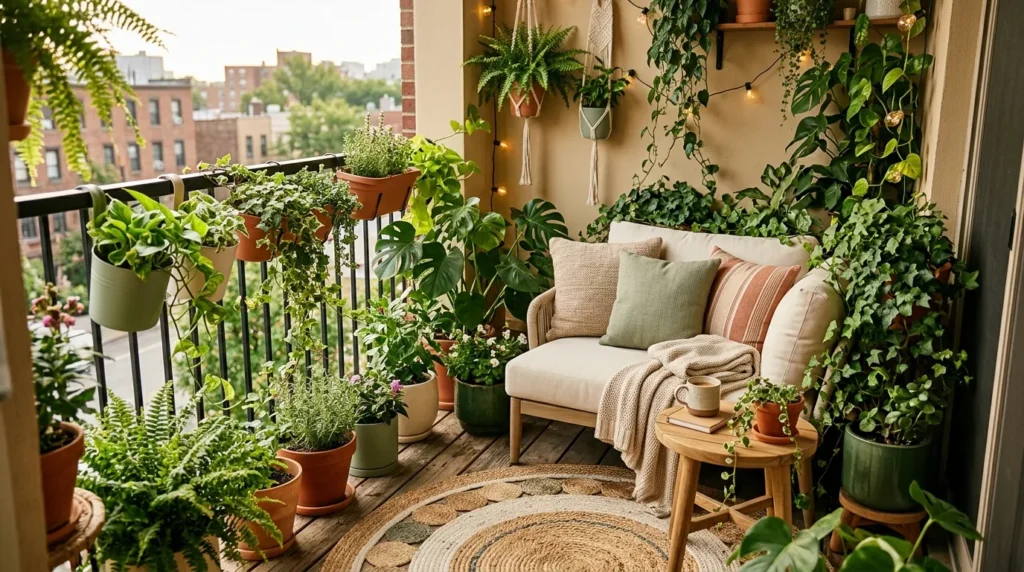
A balcony becomes much more valuable when it offers a comfortable place to sit.
Even a single chair can become a relaxing garden retreat when surrounded by plants.
The greenery creates a sense of enclosure while the seating gives the space a clear purpose.
How To Style It
Choose compact furniture.
A folding bistro chair, slim lounge chair, small bench, or narrow outdoor loveseat can work depending on the available width.
Place taller plants behind the seating.
Add one or two smaller pots beside the chair.
Use a weather-resistant cushion in cream, olive, beige, or another natural shade.
A small side table can hold a drink, book, or gardening tools.
9. Matching Planters
Quick Benefits
- Creates visual cohesion
- Makes small spaces feel organized
- Supports different plant types
- Adds decorative structure
- Makes inexpensive plants look more intentional
Why It Works
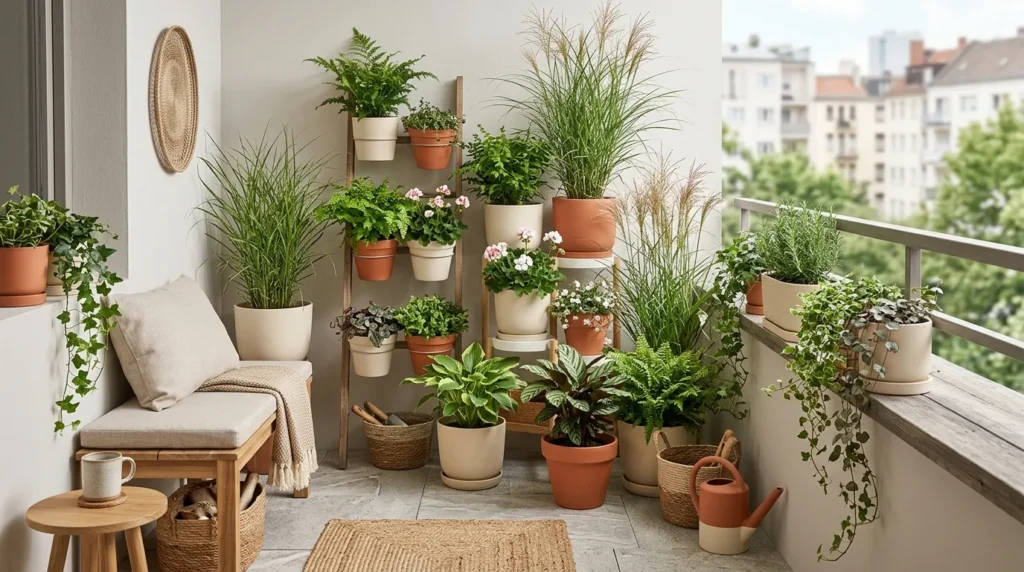
A collection of unrelated containers can make a tiny balcony feel visually busy.
Repeating the same planter material or color creates continuity.
This doesn’t mean every pot has to be identical. A coordinated palette is often enough.
How To Style It
Choose one primary container material.
Terracotta creates warmth.
Light ceramic feels softer.
Dark planters can create modern contrast.
Natural wood planters work well with greenery.
Use different sizes and shapes within the same visual family.
Place the largest containers at the corners and smaller ones near seating areas.
10. Miniature Balcony Garden
Quick Benefits
- Combines multiple planting levels
- Creates a complete garden feeling
- Works with limited space
- Adds variety
- Can be customized to your lifestyle
Why It Works
A small balcony doesn’t have to rely on one type of plant.
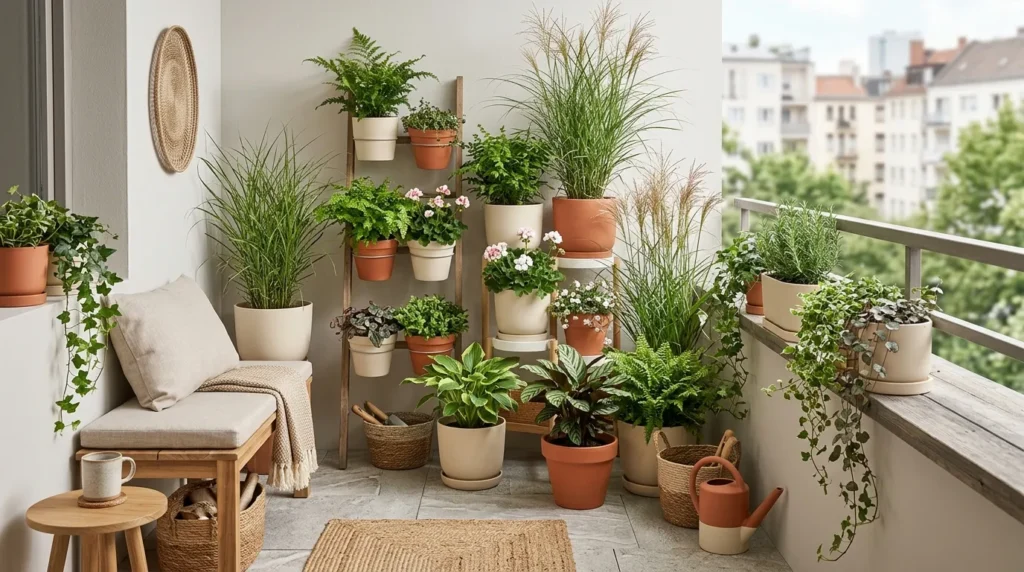
Combining floor pots, railing planters, hanging baskets, shelves, and climbing greenery creates layers from the floor upward.
This makes the balcony feel more like a miniature garden rather than a collection of isolated containers.
How To Style It
Begin with one structural plant or small tree where appropriate.
Add medium-height foliage around it.
Use trailing plants near railings or shelves.
Include flowering plants for seasonal color.
Leave enough open space for movement and comfortable use.
The goal is lushness without sacrificing function.
What Plants Are Best for a Small Balcony?
The best plants depend on sunlight, wind exposure, temperature, container size, and your local climate.
For sunny balconies, many herbs, flowering plants, succulents, and sun-tolerant foliage plants can work.
For shadier balconies, select plants known to tolerate lower light.
Before buying, observe how much direct sunlight the balcony actually receives. Morning light, intense afternoon sun, and filtered light create very different growing conditions.
How Do You Make a Small Balcony Look Lush?
Use vertical layers.
Place taller plants at the back or corners, medium plants around the seating area, and trailing plants along railings or shelves.
Hanging baskets and wall-mounted planters add greenery without taking up floor space.
Repeating plant types can also make a small collection feel fuller and more cohesive.
The goal isn’t to fill every available surface. Leave some open space so the greenery has room to stand out.
How Do You Arrange Plants on a Small Balcony?
Start with the largest pieces first.
Place tall plants in corners or against walls. Add medium containers near them and use smaller plants along the front.
Then look upward.
Hanging baskets, climbing plants, and wall-mounted planters can create additional layers.
Keep doors, walkways, drainage areas, and necessary building access clear.
A practical arrangement is more enjoyable than one that looks attractive but makes the balcony difficult to use.
How Can I Add Privacy With Balcony Plants?
Tall plants, climbing greenery, trellises, and layered containers can all help soften views from neighboring buildings.
A combination often works better than one continuous screen.
Use taller plants along the exposed edge and lower plants around the seating area.
Make sure the plants and structures are appropriate for the balcony’s weight limits and building regulations.
Related Articles
- 10 Small Balcony Ideas That Feel Calm and Peaceful
- 10 Garden Decor Ideas That Feel Like a Luxury Garden
- 10 Garden Decor Ideas That Increase Curb Appeal
- 10 DIY Garden Projects That Add Instant Character
- 10 Backyard Landscape Design Ideas with Beautiful Greenery
Frequently Asked Questions
How do I decorate a very small balcony with plants?
Use vertical space instead of filling the floor. Railing planters, hanging baskets, wall-mounted containers, narrow plant stands, and climbing plants can create layers of greenery while keeping the center open. Add one compact chair or bistro set to maintain functionality.
What plants are easiest to grow on a balcony?
Easy choices vary by climate and light, but herbs, many flowering annuals, certain succulents, and adaptable foliage plants can work well in containers. Choose varieties according to your balcony’s sunlight, wind, temperature, and watering conditions rather than selecting plants based only on appearance.
How many plants should I put on a small balcony?
There isn’t one ideal number. Start with the balcony’s usable floor area and the mature size of the plants. A few large plants combined with smaller hanging or railing plants can create a fuller effect than many tiny pots while leaving enough room to move comfortably.
Can I grow herbs on a small balcony?
Yes. Many herbs grow successfully in containers when provided with suitable light, drainage, and watering. Basil, thyme, rosemary, parsley, chives, and mint are common container choices. Keep herbs with similar growing requirements together when possible.
How do I keep a balcony garden from looking cluttered?
Repeat container colors or materials, group plants by height, and leave intentional open space. Avoid placing many unrelated small pots everywhere. A few larger containers combined with vertical planting can create a more organized appearance.
Can plants provide privacy on a balcony?
Yes. Tall container plants, trellises with suitable climbers, and layered foliage can help screen views. The right approach depends on the balcony’s sunlight, wind, available space, and building rules. Keep all containers and structures secure.
How do I make my balcony feel like a garden?
Create layers of greenery from floor to ceiling. Combine a few larger plants with railing containers, hanging baskets, climbing plants, and smaller pots. Add natural materials such as wood, terracotta, stone, or woven textures, then include comfortable seating to turn the space into an outdoor retreat.
Conclusion
A small balcony can become a surprisingly lush garden when every level of the space is used thoughtfully.
Instead of filling the floor with pots, look upward. Railing planters, hanging baskets, climbing plants, wall displays, and narrow plant stands can create greenery without taking away valuable walking space.
Start with the balcony’s conditions. Observe the sunlight, wind, and available room before choosing plants and containers. Then build the arrangement around one or two larger pieces and gradually add smaller layers.
Comfort also matters. A single chair surrounded by greenery can create a peaceful place to enjoy your morning coffee, read a book, or simply step outside for fresh air.
Don’t worry about creating a perfect garden immediately. Plants grow, arrangements change, and your preferences develop over time.
Choose a few plants that suit your balcony, repeat attractive containers, and leave enough breathing room for everyday use. With thoughtful layering, even the smallest outdoor space can feel green, calm, and inviting.