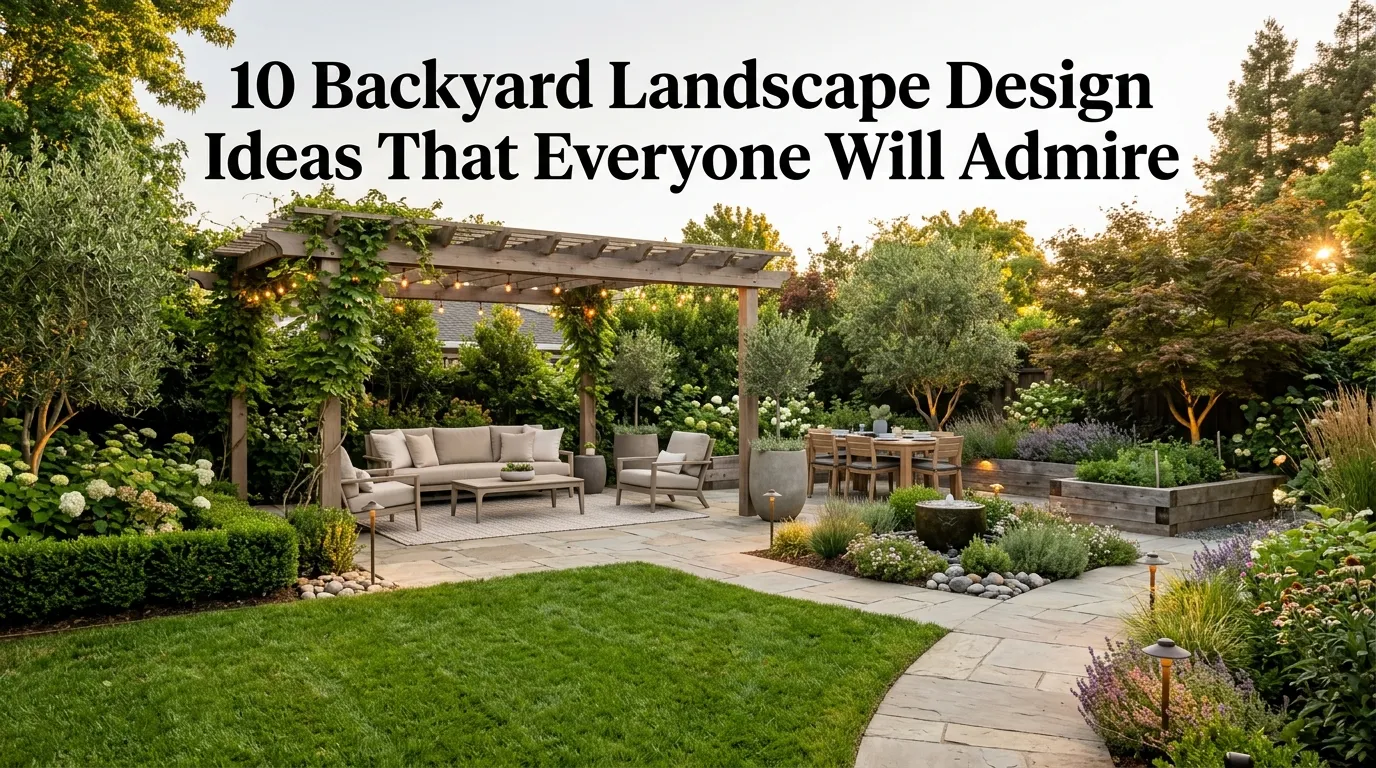
10 Backyard Landscape Design Ideas That Everyone Will Admire
A backyard doesn’t have to be enormous or professionally landscaped to feel beautiful. With the right combination of plants, pathways, seating, lighting, and hardscape elements, even an ordinary outdoor space can become somewhere you genuinely enjoy spending time.
The best backyard designs balance beauty with everyday function. A garden may look lovely in photographs, but if there’s nowhere comfortable to sit, no practical path through the yard, or more maintenance than you have time for, the space quickly becomes frustrating.
That’s why thoughtful planning matters more than simply adding more plants.
Start by considering how you actually use your backyard. Do you host friends for dinner? Need an open area for children or pets? Want a quiet corner for morning coffee? Prefer low-maintenance landscaping? Once you know the purpose, it becomes much easier to choose the right plants, furniture, surfaces, and decorative details.
I’ve noticed that the most appealing outdoor spaces usually have a few repeated elements. Similar plants are grouped together, pathways have a clear destination, seating feels connected to the landscape, and lighting creates a gentle transition from the house to the garden.
You also don’t need to complete everything at once. A backyard can evolve over several seasons. Begin with the structure—paths, planting beds, seating areas, and shade—then add smaller details such as containers, outdoor rugs, lighting, and decorative accents.
Whether you’re working with a suburban yard, a compact backyard, or a larger property, these ideas can help you create an outdoor space that looks considered without feeling overly formal.
Table of Contents
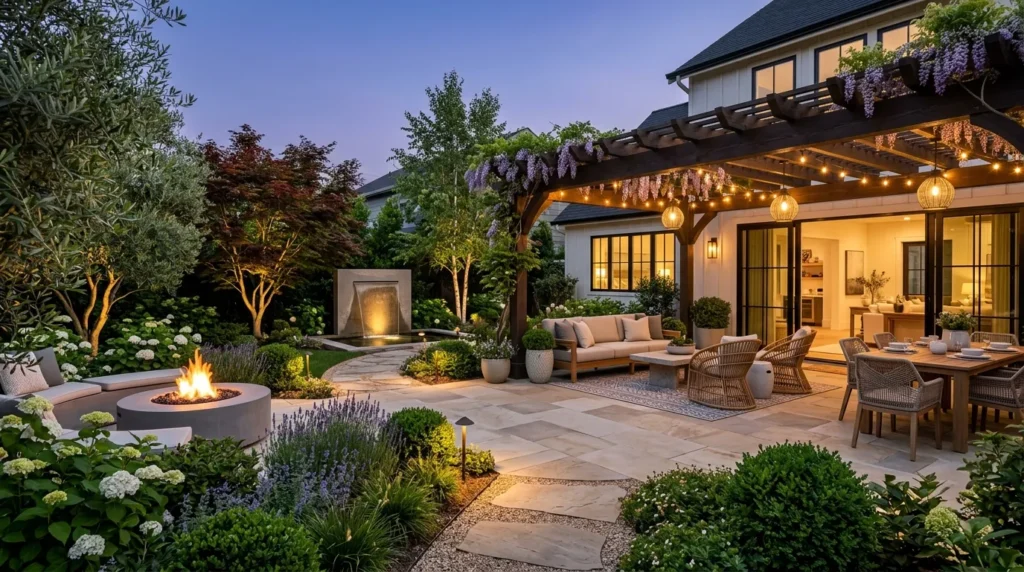
1. Layered Garden Beds
Combine plants of different heights and textures for a fuller, more natural-looking landscape.
2. Defined Seating Areas
Create a comfortable outdoor destination for relaxing, dining, and entertaining.
3. Curved Garden Paths
Use gently flowing pathways to add movement and connect different parts of the yard.
4. Natural Stone Features
Introduce durable stone elements to add structure, texture, and visual interest.
5. Outdoor Dining Spaces
Design a practical dining area that makes backyard entertaining easier.
6. Layered Landscape Lighting
Use several types of outdoor lighting to extend the usability of the yard after sunset.
7. Privacy Planting
Combine trees, shrubs, grasses, and structures to create a more private outdoor retreat.
8. Mixed Texture Landscaping
Blend plants, stone, wood, and other materials for a landscape with visual depth.
9. Welcoming Entry Views
Create a beautiful view from the house so the backyard feels connected to your living space.
10. Low-Maintenance Zones
Choose practical planting and hardscape areas that look attractive without constant upkeep.
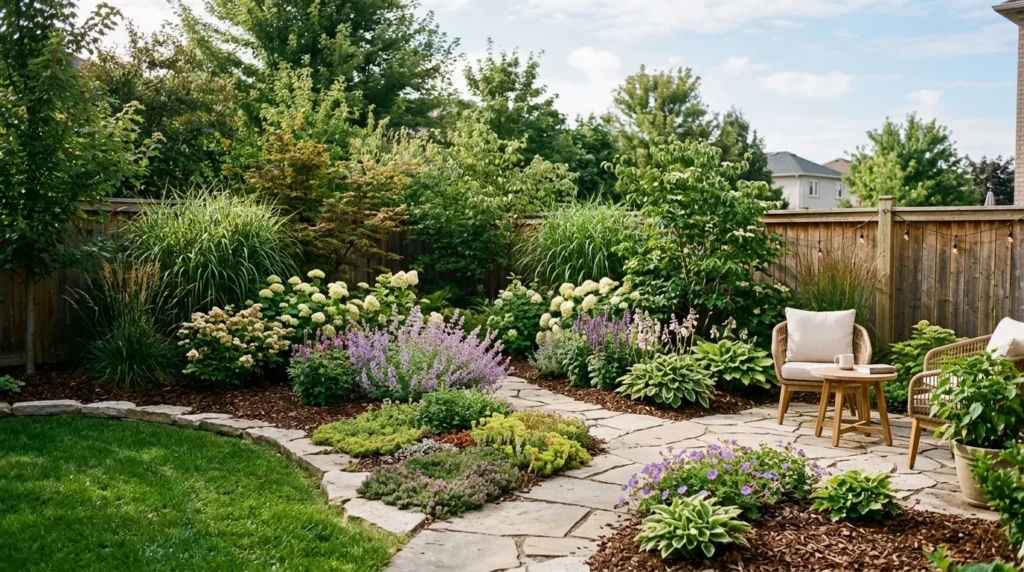
1. Layered Garden Beds
Quick Benefits
- Adds depth to flat yards
- Creates visual interest
- Makes planting areas look fuller
- Works with many landscape styles
- Provides opportunities for seasonal color
Why It Works
A garden bed with plants all at the same height can look flat and unfinished.
Layering creates a more natural composition by combining tall, medium, and low-growing plants.
Think of the planting bed as a backdrop. Taller shrubs or ornamental trees establish the upper layer. Medium-height perennials fill the middle. Groundcovers and lower plants soften the edge.
This approach also helps the garden look interesting from different viewpoints.
The key is choosing plants that suit your local climate, soil, sunlight, and available water.
A beautiful planting scheme that struggles in the conditions of your yard won’t remain beautiful for long.
How To Style It
Start at the back of the bed with taller plants.
Place medium-height shrubs and perennials in front.
Finish the border with lower plants or groundcovers.
Repeat certain plants throughout the bed rather than choosing one of everything.
For example, a bed might combine ornamental grasses, flowering perennials, evergreen shrubs, and low groundcover.
Use repetition to create rhythm.
Leave enough space between plants for mature growth.
Always check the mature size of plants before planting rather than planning around their size at the garden center.
2. Defined Seating Areas
Quick Benefits
- Gives the backyard a clear purpose
- Encourages outdoor living
- Makes entertaining easier
- Creates a visual focal point
- Helps divide large yards into useful zones
Why It Works
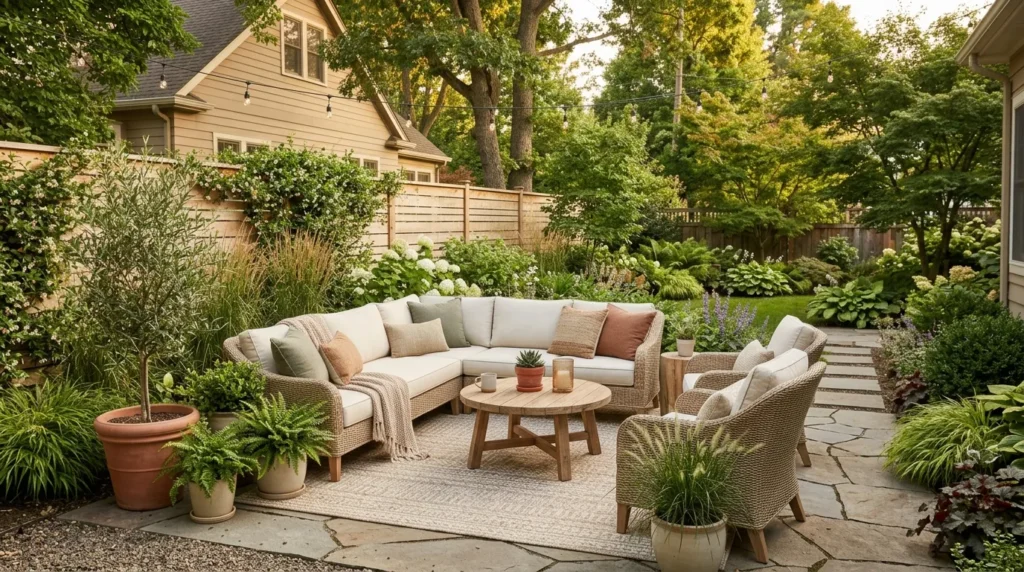
A backyard often feels more inviting when it has a clear destination.
Instead of scattering chairs across the lawn, create a dedicated seating area.
This could be a small patio, deck, gravel terrace, or simple area beneath a pergola.
The seating area doesn’t need to be elaborate.
What matters is creating a comfortable relationship between furniture and landscape.
People naturally gravitate toward spaces that feel protected, comfortable, and connected to their surroundings.
How To Style It
Choose furniture according to how you’ll use the space.
For casual conversations, use a sofa or several comfortable chairs around a coffee table.
For dining, allow enough room for chairs to move comfortably.
Add an outdoor rug to visually define the area if appropriate for your climate and furnishings.
Use planters around the edges rather than filling the entire space.
A small side table provides a practical place for drinks.
If the area receives strong afternoon sun, consider a shade structure, umbrella, pergola, or strategically placed tree.
3. Curved Garden Paths
Quick Benefits
- Adds movement
- Connects different areas
- Creates visual depth
- Makes the landscape feel more natural
- Can guide visitors through the yard
Why It Works
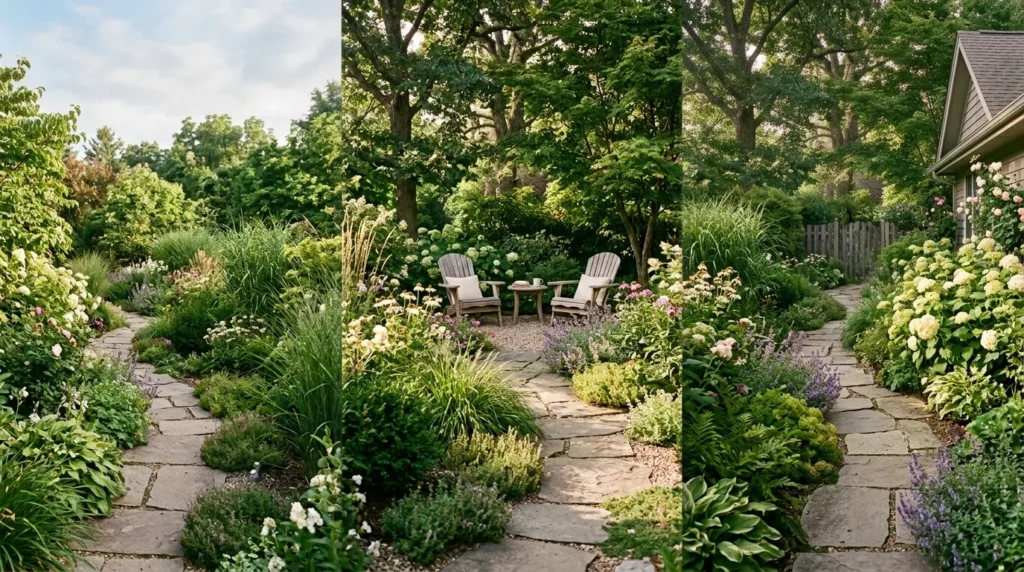
Straight pathways are practical, but curved paths can create a softer landscape experience.
A gently winding path can make a backyard feel larger because the destination isn’t immediately visible.
It also provides opportunities to place plants, benches, containers, or small garden features along the route.
The curve should feel purposeful rather than forced.
A path that wanders without leading anywhere can quickly become inconvenient.
How To Style It
First decide where the path needs to go.
Common destinations include:
- Patio
- Garden shed
- Pool
- Seating area
- Fire pit
- Side gate
- Vegetable garden
Use natural stone, gravel, brick, pavers, or another surface appropriate for your climate.
Keep the walking surface stable and reasonably level.
Plant low-growing greenery along the edges.
Repeat the same materials or plants elsewhere in the backyard to create continuity.
For a more informal garden, allow plants to soften the pathway edges.
4. Natural Stone Features
Quick Benefits
- Adds permanent structure
- Creates natural texture
- Works with many landscape styles
- Can define planting areas
- Ages beautifully
Why It Works
Stone introduces a visual connection to the natural environment.
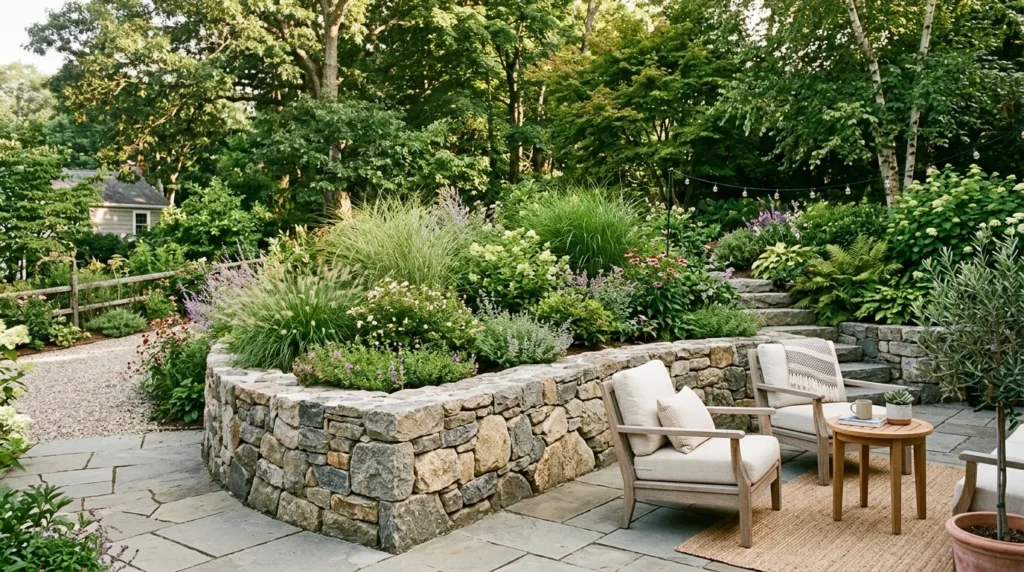
It can be used for retaining walls, pathways, patios, edging, steps, seating walls, or decorative features.
Natural stone is particularly effective when the rest of the landscape contains plenty of greenery because the hard material provides contrast.
You don’t need to use stone everywhere.
One well-designed stone feature can become the focal point of the backyard.
How To Style It
Choose stone that complements your home’s exterior.
Warm tan or brown stone can work well with traditional homes and natural wood.
Gray stone often suits contemporary landscapes.
Use irregular stone for a relaxed garden appearance.
For a more structured design, choose regularly shaped pavers.
Combine stone with soft plantings.
Ornamental grasses, shrubs, flowering plants, and groundcovers can soften hard edges.
Avoid mixing too many different stone types unless the landscape has a deliberately eclectic style.
5. Outdoor Dining Spaces
Quick Benefits
- Encourages outdoor meals
- Supports entertaining
- Makes patios more functional
- Creates a social focal point
- Connects indoor and outdoor living
Why It Works
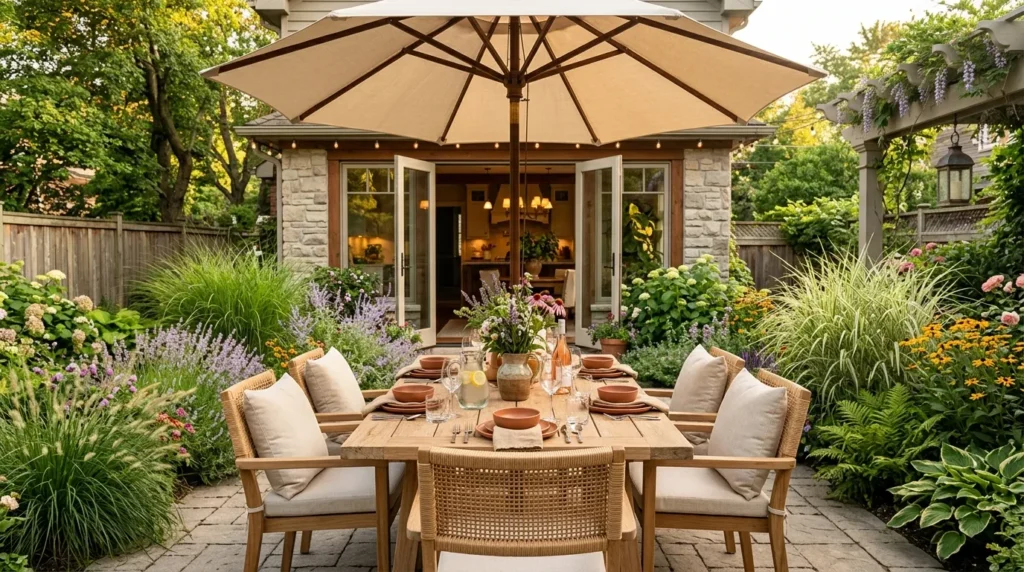
If you enjoy hosting, a dedicated dining area can transform how you use the backyard.
Rather than carrying chairs and tables across the lawn every time guests arrive, create a permanent or semi-permanent outdoor dining zone.
Positioning also matters.
A dining table close to the house makes serving food easier.
A location with attractive garden views can make everyday meals feel more special.
How To Style It
Choose a table size based on the number of people you normally host.
Allow enough clearance around the table for chairs.
Add an umbrella or other shade solution where needed.
Use outdoor cushions in colors that relate to nearby planting or the home’s exterior.
Place container plants around the dining area rather than directly in walking paths.
For evening entertaining, incorporate soft lighting nearby.
Keep practical items such as serving trays and outdoor dishware easy to access.
6. Layered Landscape Lighting
Quick Benefits
- Extends outdoor use into the evening
- Highlights landscape features
- Improves visibility
- Adds atmosphere
- Connects the house to the yard
Why It Works
Outdoor lighting shouldn’t simply illuminate everything equally.
Layering creates a more natural and attractive effect.
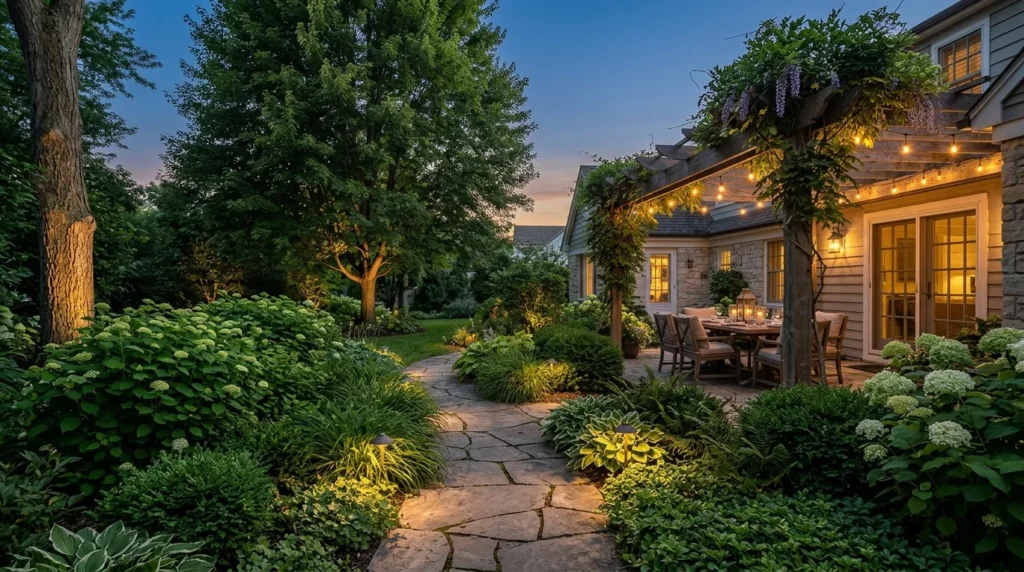
Path lights help guide movement. Accent lights highlight trees or architectural features. Wall or step lights improve safety around transitions. Soft lighting near seating areas creates an inviting atmosphere.
The goal is subtle illumination rather than a brightly lit yard.
A dark area can actually make illuminated features feel more dramatic.
How To Style It
Start with functional areas.
Light pathways, stairs, entrances, and changes in elevation appropriately.
Then choose one or two landscape features to highlight.
A mature tree, textured stone wall, planting bed, or architectural feature can become a beautiful nighttime focal point.
Use warmer, softer lighting where possible for entertaining areas.
Avoid placing bright lights directly at eye level.
Consider timers or smart controls so lighting operates when you actually need it.
7. Privacy Planting
Quick Benefits
- Creates a sense of seclusion
- Softens property boundaries
- Adds greenery
- Can reduce visual distractions
- Makes outdoor areas feel more intimate
Why It Works
A backyard can be beautifully landscaped and still feel uncomfortable if it is completely exposed.
Privacy planting creates visual separation while keeping the landscape natural.
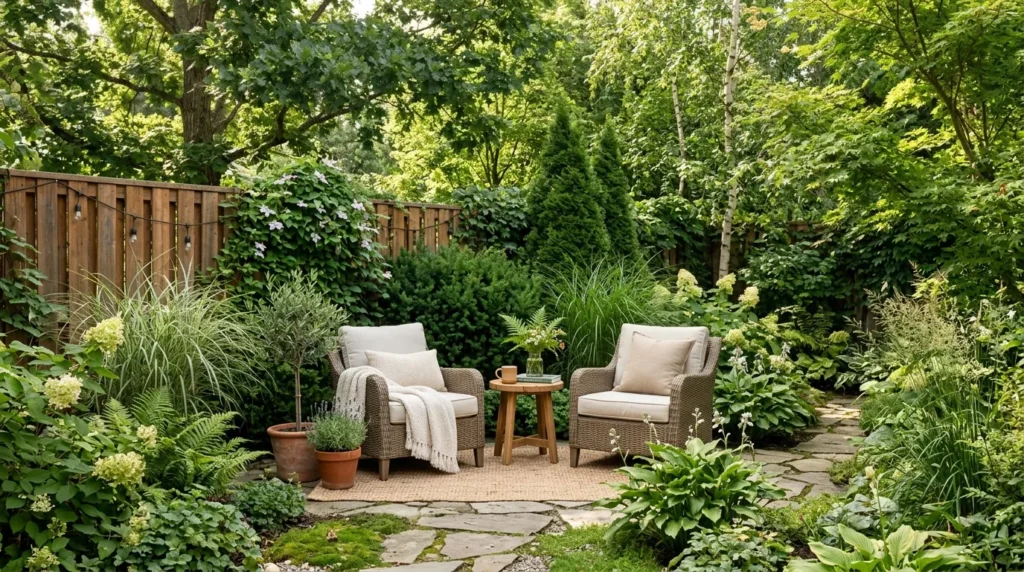
Instead of installing a solid wall everywhere, consider combining plants with existing fences, screens, trellises, or structures.
Different plant heights create more depth than a single uniform hedge.
Choose plants based on mature size and local growing conditions.
How To Style It
Use a combination of evergreen and deciduous plants where appropriate.
Tall trees can create an upper privacy layer.
Shrubs provide middle-height screening.
Ornamental grasses can soften the lower edge.
A trellis with suitable climbing plants can provide additional screening without requiring a large footprint.
Avoid planting large trees too close to structures, utility lines, or property boundaries.
Plan for mature growth.
The goal is to create privacy without creating future maintenance problems.
8. Mixed Texture Landscaping
Quick Benefits
- Creates visual depth
- Prevents repetitive planting
- Makes the garden more interesting
- Adds contrast
- Works in modern and traditional landscapes
Why It Works
Texture can come from both plants and hardscape.
A landscape filled with smooth lawn and one type of shrub can feel flat.
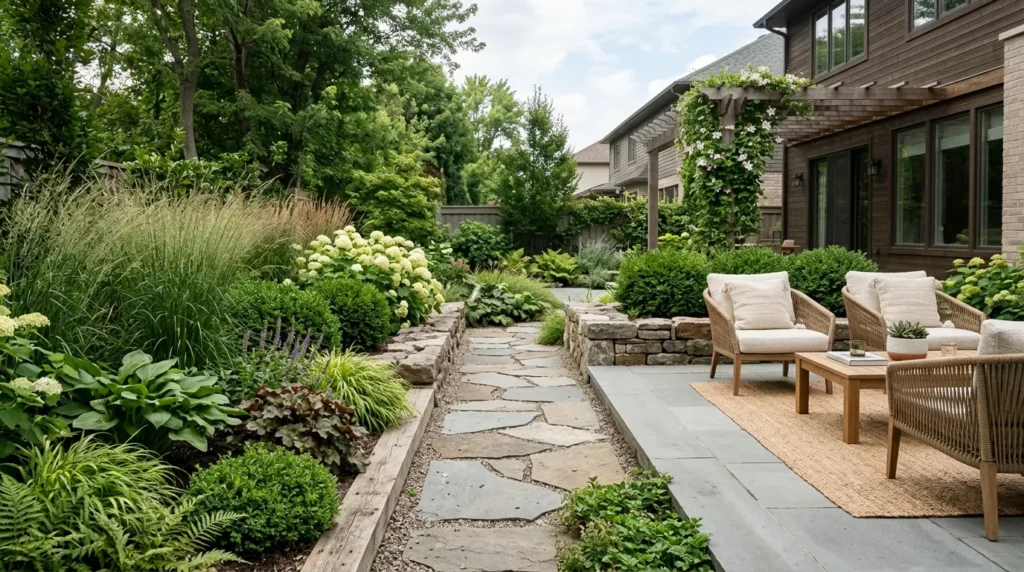
Mixing fine ornamental grasses with broad-leaved plants, textured stone, rough wood, and smooth paving creates contrast.
This makes the landscape more visually interesting even when the color palette is restrained.
Texture is especially useful in gardens that rely heavily on greens and neutrals.
How To Style It
Combine different plant forms.
Try:
- Fine ornamental grasses
- Broad-leaf perennials
- Rounded shrubs
- Upright plants
- Groundcovers
Then introduce hardscape materials such as natural stone or wood.
Keep the overall color palette controlled.
A green garden with several textures can feel much richer than one with many unrelated flower colors.
Repeat textures throughout the backyard so the landscape feels connected.
9. Welcoming Entry Views
Quick Benefits
- Improves the view from inside
- Connects indoor and outdoor spaces
- Creates a strong focal point
- Makes the backyard feel intentional
- Encourages you to use the space more often
Why It Works
A backyard should be enjoyable even when you’re looking at it from inside the house.
If your kitchen, living room, or bedroom overlooks the yard, treat that view as part of your home’s design.
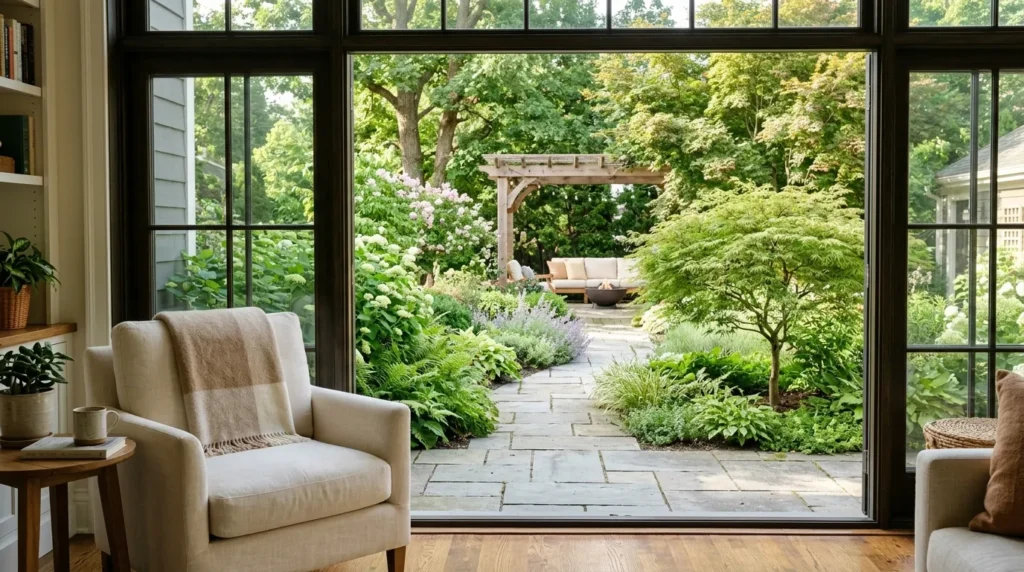
A carefully positioned tree, garden bed, sculpture, water feature, or seating area can become a focal point visible through the windows.
This is one of the most overlooked landscape opportunities.
You don’t always need to landscape every corner.
Instead, identify the views you see most often.
How To Style It
Stand inside your home and look through the windows.
Identify what currently catches your eye.
If the view is unattractive, consider adding a focal planting area.
A small ornamental tree can provide structure.
A layered garden bed can create seasonal interest.
A simple bench can become a visual destination.
Frame the view with taller plants around the edges while keeping the central area relatively open.
This creates a natural composition from inside and outside.
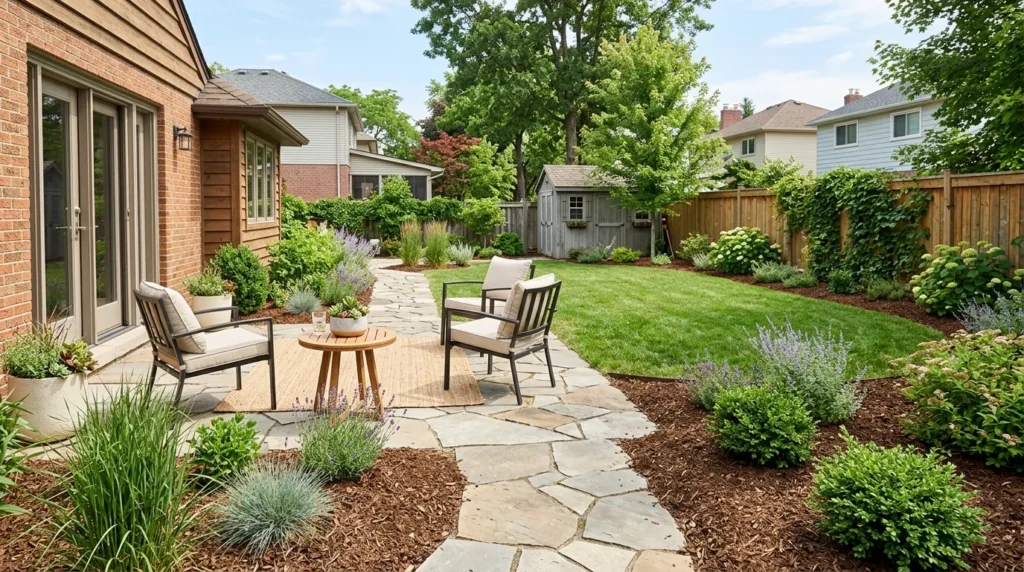
10. Low-Maintenance Zones
Quick Benefits
- Reduces routine upkeep
- Makes the yard easier to enjoy
- Conserves time
- Creates practical outdoor spaces
- Supports long-term landscape health
Why It Works
A landscape that looks beautiful for one month but requires constant work may not be the right landscape for your lifestyle.
Low-maintenance design isn’t about creating a yard with no plants.
It’s about choosing appropriate plants and organizing the space intelligently.
Grouping plants with similar water and sunlight requirements can simplify maintenance.
Mulched planting beds can help reduce weeds and protect soil moisture.
Hardscape areas can also reduce the amount of lawn that requires regular mowing.
How To Style It
Start by identifying the areas that currently take the most work.
If a large lawn requires more maintenance than you want, consider replacing a portion with planting beds, patio space, or another appropriate landscape treatment.
Choose plants suited to your local climate.
Group plants according to their growing requirements.
Use mulch where appropriate.
Avoid creating dozens of tiny planting beds scattered throughout the yard.
Fewer, larger zones are often easier to maintain.
How to Plan a Backyard Landscape Design
Before buying plants or materials, create a simple plan.
Start with a rough drawing of the property.
Mark:
- House
- Doors
- Windows
- Existing trees
- Fences
- Utilities
- Sunny areas
- Shaded areas
- Existing patios
- Drainage concerns
Then identify how you want to use the space.
Perhaps you need:
- Dining space
- Lounge area
- Children’s play area
- Garden
- Pool
- Fire pit
- Storage
- Privacy
Once the functions are clear, connect them with pathways.
Only after the basic layout is established should you start selecting plants and decorative details.
This approach can prevent expensive changes later.
How to Make a Backyard Look More Expensive
A polished backyard usually comes from consistency rather than excessive decoration.
Choose a limited material palette.
Repeat the same stone or paver material in multiple locations.
Use a consistent color family for outdoor furniture and accessories.
Group plants instead of scattering individual specimens everywhere.
Create clear transitions between lawn, planting beds, patios, and paths.
Keep garden edges maintained.
Add warm outdoor lighting.
Most importantly, avoid trying to incorporate every landscaping trend into one yard.
A restrained landscape with strong structure often looks more sophisticated than one filled with unrelated features.
Backyard Landscaping Ideas for Entertaining
If entertaining is your priority, design the yard around movement.
Keep the kitchen or back door connected to the main dining area.
Provide comfortable seating nearby.
Create a clear path between the house and outdoor destinations.
Use durable surfaces around dining and cooking areas.
Provide shade.
Add lighting for evening use.
Keep plants away from areas where they will interfere with chairs and walking paths.
A small backyard can work beautifully for entertaining if the space is organized.
You don’t need a huge lawn.
A well-designed patio with comfortable seating, greenery, and lighting can be more useful than a large open area with no defined purpose.
Common Backyard Landscape Mistakes
Planting too closely: Small plants can grow much larger than expected.
Ignoring mature size: Always check the eventual height and width of trees and shrubs.
Using too many materials: Excessive variation can make the landscape feel disjointed.
Forgetting drainage: Water management should be considered before installing new planting or hardscape.
Overusing lawn: Grass isn’t always the most practical surface for every part of the yard.
Poor lighting placement: Bright lights aimed toward seating areas can create glare.
Skipping pathways: People will naturally create their own routes if the intended path isn’t convenient.
Designing only for appearance: A beautiful yard should still support the way your household actually lives.
FAQ
How do I make my backyard look professionally landscaped?
Focus on structure and repetition. Define planting beds, create clear pathways, group plants rather than scattering individual specimens, repeat materials, and establish designated seating or dining areas. Good landscape design is usually more about proportion and organization than adding a large number of decorative elements.
What is the easiest way to improve a backyard?
Start by cleaning and editing the space. Remove unwanted plants, organize outdoor furniture, define planting areas, add mulch where appropriate, and create a clear seating destination. Once the foundation is tidy, adding plants, lighting, containers, or a pathway can have a much stronger visual effect.
How can I make a small backyard look bigger?
Use curved or diagonal pathways, create distinct zones, keep the center relatively open, and use plants of different heights to create depth. Avoid filling every corner with furniture or large plants. A cohesive material palette can also make the yard feel visually larger.
What plants are best for low-maintenance landscaping?
The best plants depend heavily on your local climate, soil, sunlight, and water availability. Choose species that are well adapted to your region rather than simply selecting plants labeled as low maintenance. Local native or climate-appropriate plants are often useful starting points.
How do I create privacy in my backyard?
Combine several layers of screening instead of relying on one solid barrier. Trees, shrubs, ornamental grasses, trellises, fences, and strategically placed structures can work together. Consider the mature size of plants and avoid placing large trees too close to structures or utilities.
How can I make my backyard better for entertaining?
Create a defined seating or dining area near the house, provide shade, ensure comfortable pathways, and add appropriate outdoor lighting. Choose durable furniture and surfaces that can handle regular use. Keep serving routes between the kitchen and outdoor dining area as direct as possible.
Is stone good for backyard landscaping?
Stone can be an excellent landscape material for paths, patios, retaining walls, edging, and decorative features. Select a material appropriate for your climate and intended use. Combining stone with plants and softer textures helps prevent the landscape from feeling overly hard or formal.
Conclusion
A memorable backyard doesn’t have to be the biggest, most expensive, or most elaborate one on the street.
The spaces people enjoy most usually have something simpler going for them: they are designed around how people actually live.
A comfortable seating area gives the yard a destination. A curved path makes the landscape easier to explore. Layered planting adds depth. Natural stone provides structure. Privacy plants make the space feel more comfortable. Thoughtful lighting keeps the garden inviting after sunset.
Start with the foundation rather than the accessories.
Think about what you want the backyard to do, then create zones that support those activities. After that, introduce plants, textures, materials, and lighting that connect everything together.
Don’t feel pressured to complete the entire landscape in one season.
Build the major structure first, observe how you use the space, and make adjustments over time. A backyard can become more beautiful as plants mature and your ideas evolve.
The best landscape is ultimately one that looks beautiful from the patio, feels welcoming when guests arrive, and makes you want to step outside on an ordinary day.
Related Articles
- 10 Backyard Landscape Ideas for Small Yards
- 10 Backyard Patio Ideas for Outdoor Entertaining
- 10 Backyard Privacy Ideas for a More Peaceful Outdoor Space
- 10 Garden Decor Ideas That Feel Like a Resort
- 10 DIY Garden Projects That Add Instant Character