How to Organize a Small Bedroom for Maximum Space
A small bedroom doesn’t necessarily need more storage. In many cases, it needs better storage decisions.
When every square foot matters, a chair covered in clothes, an overstuffed nightstand, or a bed surrounded by bulky furniture can quickly make the room feel smaller than it actually is. The solution isn’t always buying another organizer. Sometimes it’s using the space you already have more intelligently.
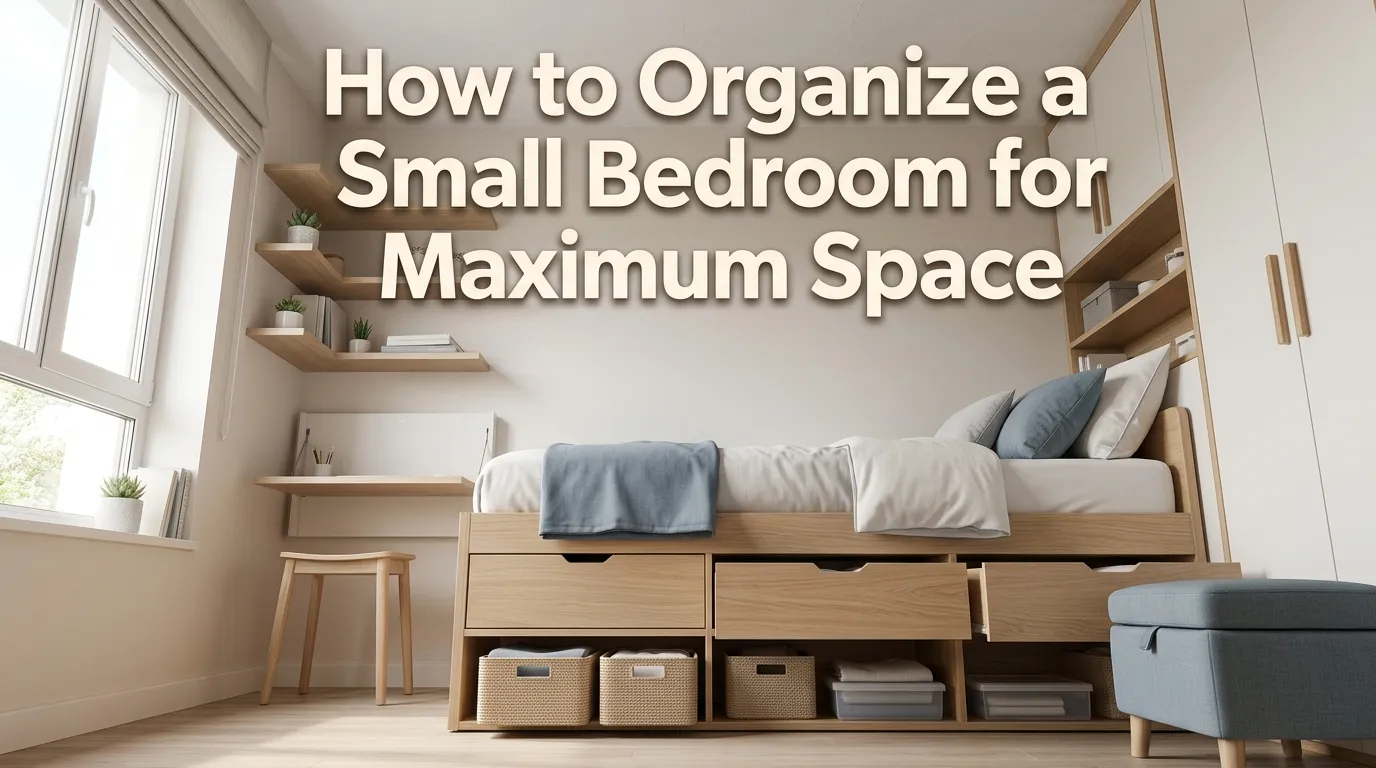
The most effective small-bedroom organization starts with the largest piece in the room: the bed. From there, look at vertical space, unused corners, under-bed storage, closet capacity, and the surfaces that tend to collect clutter.
I’ve noticed that organized small bedrooms usually have one thing in common: everything has a logical place. Everyday items stay accessible, while less frequently used belongings are moved higher, lower, or somewhere outside the main living zone.
That doesn’t mean your bedroom needs to look minimalist or perfectly styled all the time. It simply means the room works with your habits instead of against them.
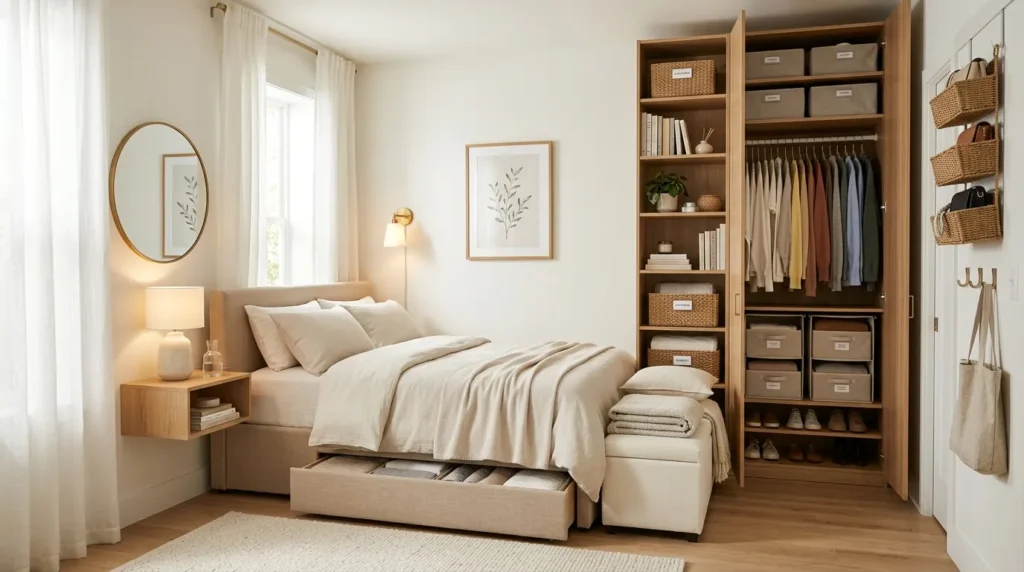
A few thoughtful changes can make a meaningful difference. A wall-mounted nightstand can free floor space. Matching slim hangers can increase usable closet capacity. Storage boxes under the bed can turn forgotten space into a useful storage zone. Even moving a dresser a few inches or changing how clothing is folded can improve the room’s flow.
If you’re dealing with a small bedroom in an apartment, starter home, guest room, dorm-style space, or older house with limited closets, these ideas can help you create a room that feels calmer, easier to maintain, and more spacious.
Table of Contents
1. Start With The Bed
Organize the room around its largest and most important piece of furniture.
2. Use Vertical Storage
Take advantage of walls and higher areas instead of adding more floor furniture.
3. Maximize The Closet
Make every section of your closet work harder without overcrowding it.
4. Use Under-Bed Space
Turn the unused area beneath the bed into practical hidden storage.
5. Choose Slim Furniture
Replace bulky pieces with furniture designed for smaller rooms.
6. Add Wall Storage
Move selected storage functions from the floor onto the walls.
7. Organize Nightstands
Keep bedside surfaces useful without allowing them to become clutter zones.
8. Create A Clothing System
Give everyday clothes, accessories, laundry, and seasonal pieces designated homes.
9. Clear Visual Clutter
Reduce unnecessary objects to make the room feel more open.
10. Maintain The System
Build simple habits that prevent the bedroom from becoming cluttered again.
1. Start With The Bed
Quick Benefits
- Creates a clear room layout
- Protects valuable floor space
- Makes furniture placement easier
- Improves walking paths
- Establishes the main storage strategy
Why It Works
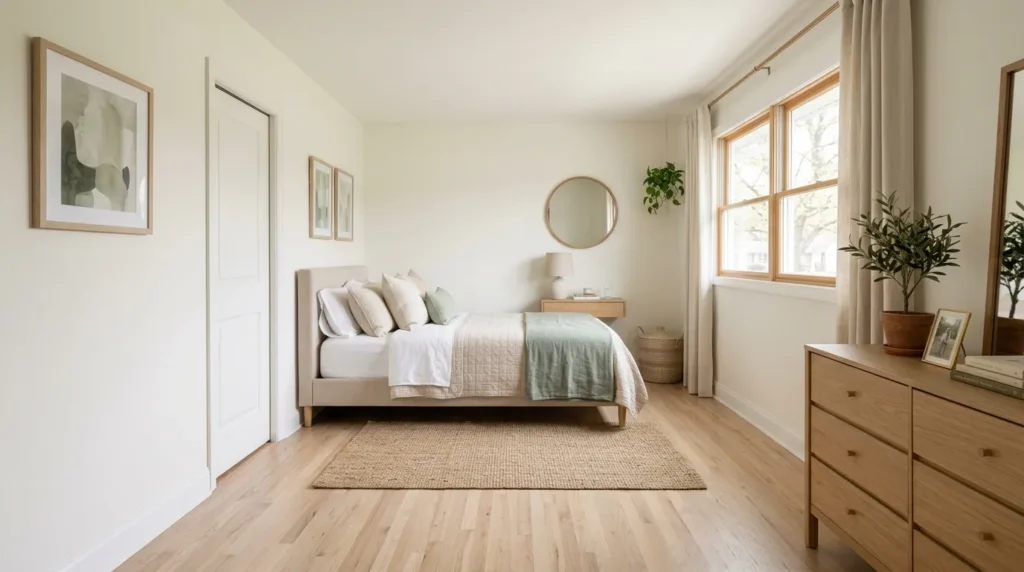
The bed is usually the largest object in a bedroom, so its position has an enormous effect on how much usable space remains.
In a small room, starting with smaller furniture and trying to fit the bed around it often creates awkward gaps and narrow pathways.
Instead, decide where the bed works best first.
Ideally, you want comfortable access to the bed without creating unnecessary obstacles between the entrance, closet, and other important areas.
Once the bed is positioned, you can determine whether you actually have room for two nightstands, a dresser, a chair, or additional storage.
Sometimes the best organization decision is simply removing one piece of furniture that doesn’t earn its floor space.
How To Style It
Measure the room before moving everything.
Mark the bed’s approximate footprint with painter’s tape if you’re experimenting with a new arrangement.
Then test different positions.
Consider:
- Door swing
- Closet access
- Window placement
- Heating and cooling vents
- Electrical outlets
- Walking paths
If the room is very narrow, placing the bed against a wall may be necessary.
In other rooms, centering it on the longest wall can create better symmetry.
Don’t automatically add two nightstands.
One compact nightstand or a wall-mounted shelf may be more practical.
2. Use Vertical Storage
Quick Benefits
- Frees floor space
- Uses overlooked wall area
- Adds accessible storage
- Makes furniture less necessary
- Works in very small rooms
Why It Works
When floor space is limited, look upward.
Walls offer some of the most underused storage potential in small bedrooms.
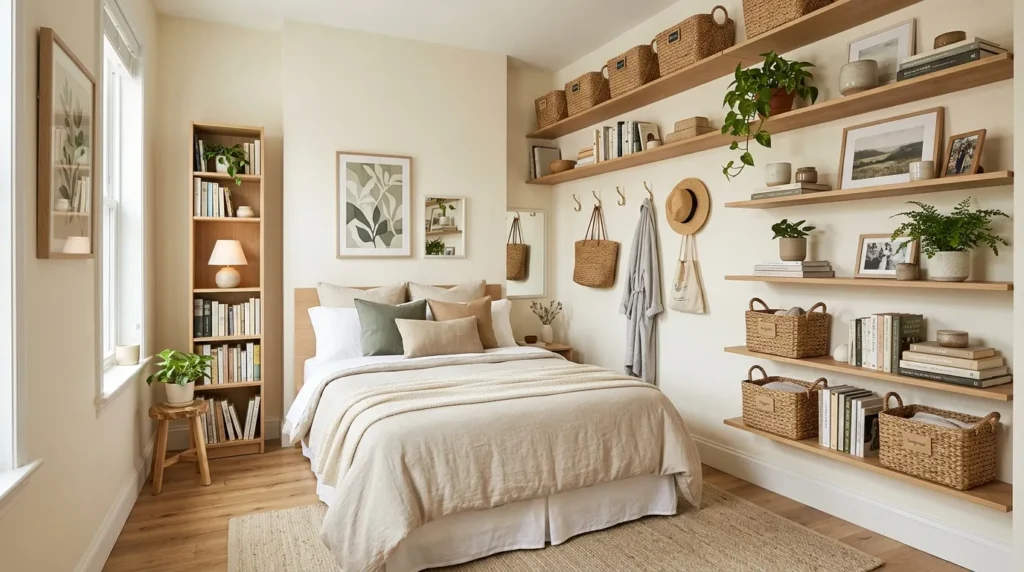
Tall bookcases, floating shelves, pegboards, wall hooks, hanging organizers, and narrow cabinets can store belongings without consuming the same footprint as traditional furniture.
Vertical storage also allows you to divide belongings by how often you use them.
Keep everyday items within easy reach.
Move seasonal or rarely used belongings higher.
This creates a more efficient storage hierarchy.
How To Style It
Install shelves above a dresser, desk, or unused section of wall.
Use attractive baskets or matching storage boxes to prevent small objects from creating visual clutter.
A tall, narrow bookcase can often provide more storage than a short, wide one while occupying less valuable floor area.
Use hooks for:
- Bags
- Hats
- Robes
- Scarves
- Everyday accessories
Avoid filling every inch of wall space.
Leave some open wall area so the room doesn’t feel visually crowded.
3. Maximize The Closet
Quick Benefits
- Increases usable clothing storage
- Reduces bedroom clutter
- Makes getting dressed easier
- Prevents duplicate purchases
- Uses existing storage more efficiently
Why It Works
A small closet can feel even smaller when clothes aren’t organized according to how they’re actually used.
The goal isn’t simply to fit more clothing inside.
It’s to make the available storage easier to see and access.
If you can’t see what you own, the closet can become difficult to maintain.
You may end up pulling several items out to find one shirt or forgetting about clothing pushed toward the back.
A simple organization system can make a surprisingly large difference.
How To Style It
Begin by removing clothing you no longer wear.
Then organize what’s left by category.
For example:
- Tops
- Pants
- Dresses
- Jackets
- Workwear
- Occasion clothing
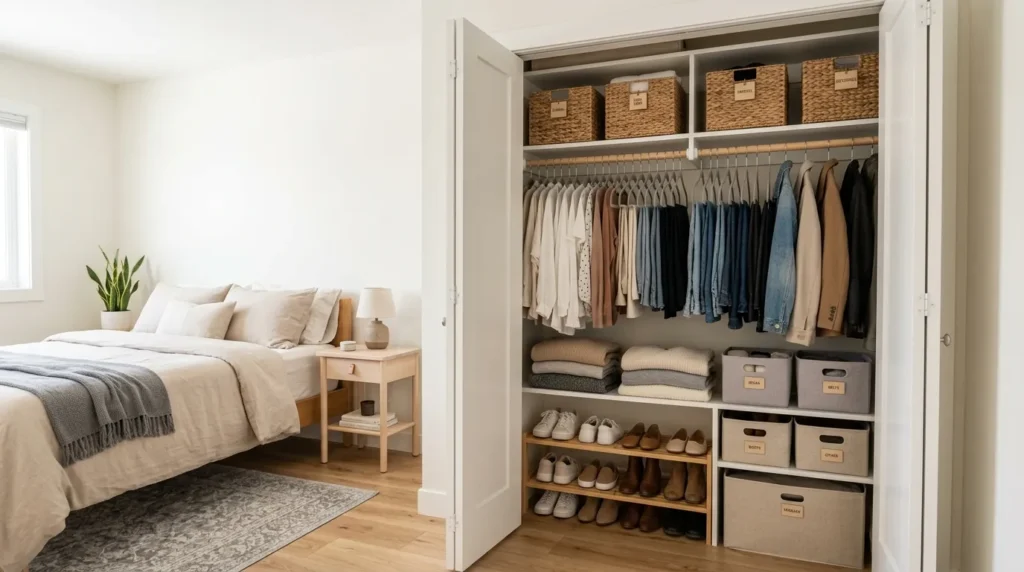
Use slim matching hangers to create a consistent profile.
Fold sweaters and heavier items rather than hanging everything.
Add shelf dividers or baskets where useful.
Place frequently worn pieces at eye level.
Move seasonal clothing to higher shelves or under-bed storage when appropriate.
Don’t buy closet organizers until you’ve measured the actual space.
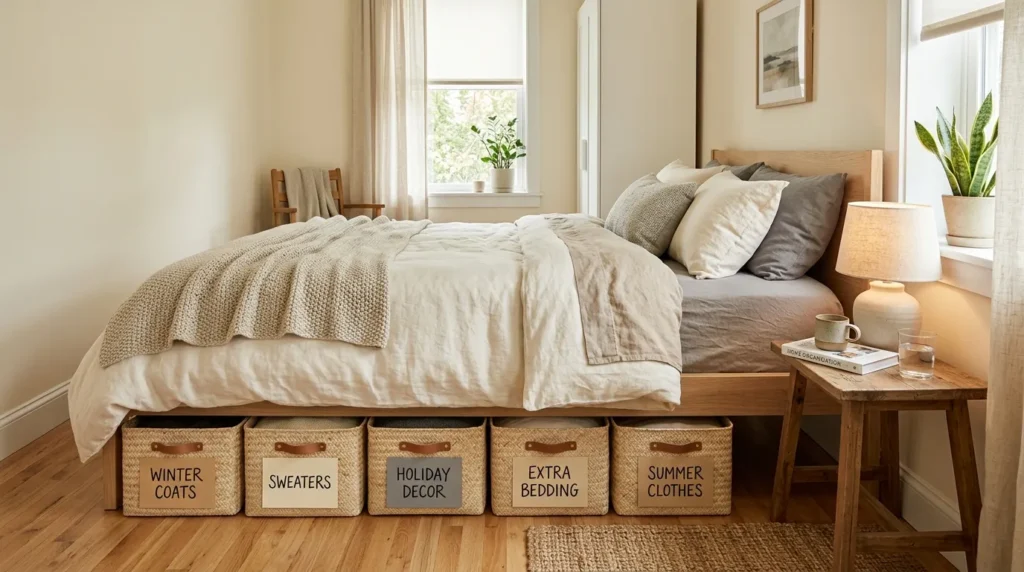
4. Use Under-Bed Space
Quick Benefits
- Uses hidden storage
- Keeps belongings out of sight
- Works without extra furniture
- Great for seasonal items
- Helps free closet space
Why It Works
The space underneath a bed is easy to overlook because it’s hidden.
But in a small bedroom, that unused area can become one of your most valuable storage zones.
It is particularly useful for belongings you don’t need every day.
Think seasonal clothing, extra bedding, shoes, luggage accessories, or keepsakes.
The important part is keeping everything contained.
Loose bags and random boxes underneath the bed can quickly become difficult to manage.
How To Style It
Use shallow containers that slide easily beneath the bed.
Choose clear containers when visibility is useful or labeled fabric boxes for a softer appearance.
Group belongings by category.
For example:
Box 1: Winter clothing
Box 2: Extra bedding
Box 3: Shoes
Box 4: Seasonal accessories
Measure the available clearance before purchasing containers.
If your bed has no built-in clearance, consider a storage bed rather than raising it with unsuitable supports.
5. Choose Slim Furniture
Quick Benefits
- Preserves floor area
- Improves walking space
- Reduces visual bulk
- Makes cleaning easier
- Works especially well in narrow rooms
Why It Works
Not all furniture occupies space equally.
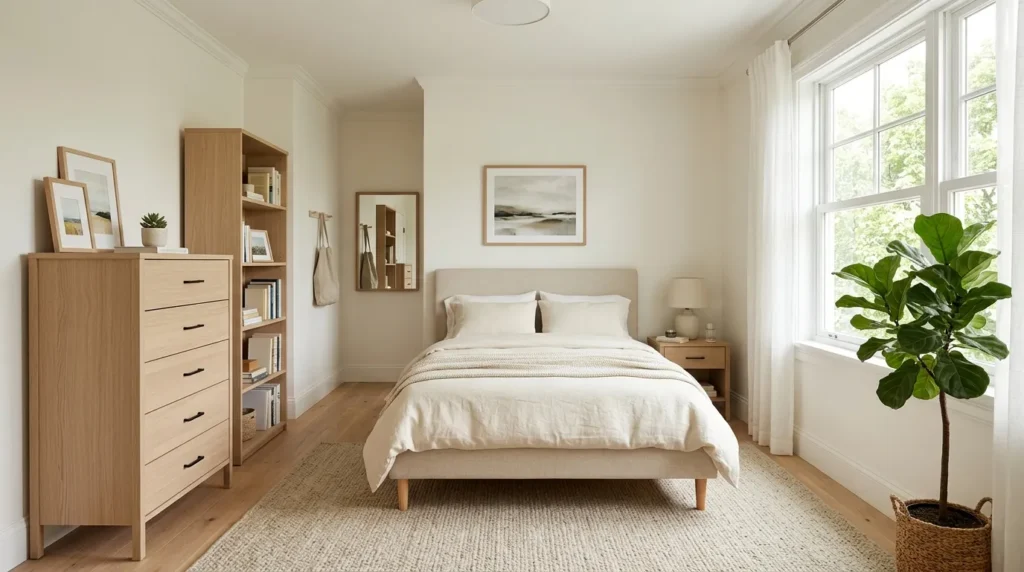
A deep dresser may provide plenty of storage, but it can make a small bedroom feel crowded.
Slim-profile furniture gives you many of the same functions with a smaller footprint.
Furniture with visible legs can also create more visual openness because you can see more floor underneath it.
This doesn’t mean every piece needs to be tiny.
Instead, choose furniture based on what the room can realistically accommodate.
How To Style It
Look for:
- Narrow dressers
- Slim nightstands
- Tall bookcases
- Wall-mounted desks
- Shallow cabinets
- Beds with integrated drawers
Measure depth as carefully as width.
A piece that technically fits against a wall can still interfere with walking if it projects too far into the room.
Choose one substantial storage piece rather than several small pieces when possible.
6. Add Wall Storage
Quick Benefits
- Keeps floors clear
- Creates convenient storage
- Works in awkward corners
- Reduces furniture needs
- Makes everyday items accessible
Why It Works
Wall storage is particularly useful for items you use frequently but don’t necessarily want sitting on the floor.
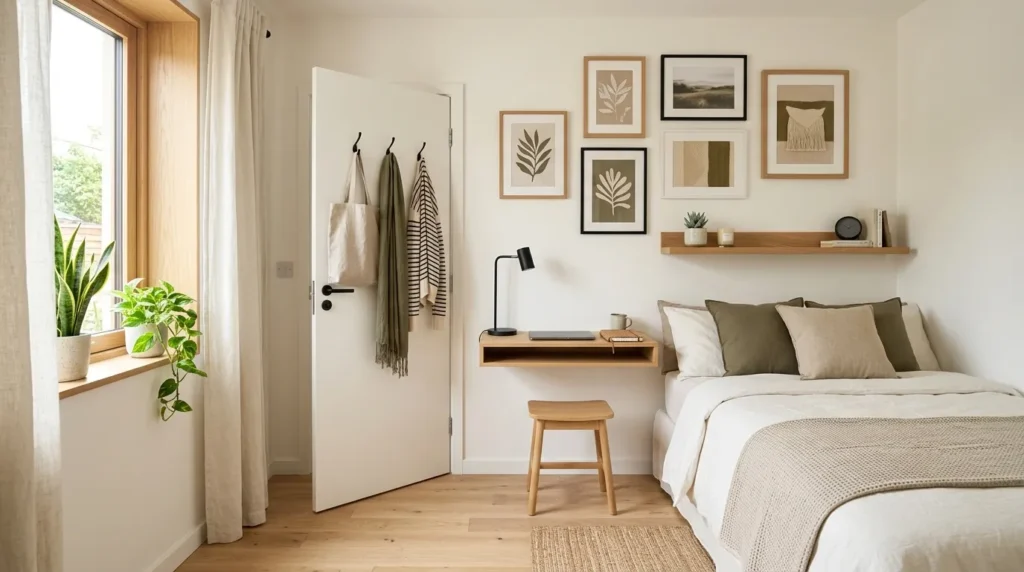
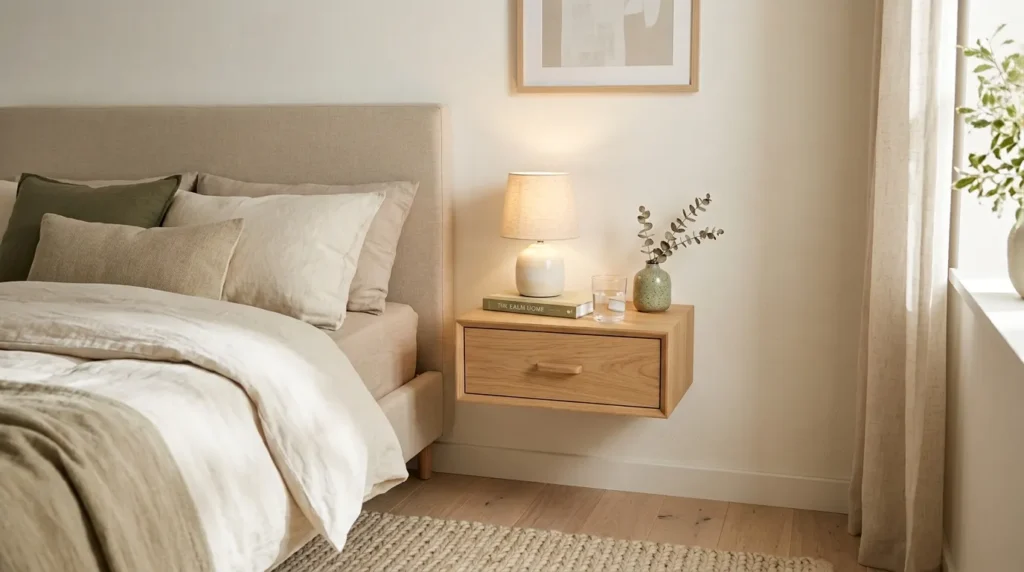
A wall-mounted shelf can replace a nightstand.
A row of hooks can replace a freestanding coat rack.
A wall-mounted desk can replace a traditional desk when floor space is limited.
The goal is to move appropriate functions upward.
How To Style It
Install hooks behind the bedroom door for robes, bags, or frequently worn clothing.
Use a narrow floating shelf beside the bed for a lamp, phone, book, and small personal items.
Consider a pegboard above a desk or vanity for accessories and supplies.
A full-length mirror can also be wall-mounted or leaned carefully in an appropriate location instead of occupying a large area with a bulky frame.
Always follow the manufacturer’s installation instructions and use hardware appropriate for the wall and expected load.
7. Organize Nightstands
Quick Benefits
- Reduces visual clutter
- Makes bedtime routines easier
- Creates more usable surface space
- Prevents small items from accumulating
- Can eliminate unnecessary furniture
Why It Works
Nightstands tend to become catch-all surfaces.
Receipts, chargers, books, glasses, skincare, water bottles, and miscellaneous objects can quickly pile up.
In a small bedroom, that clutter has an outsized visual effect.
A clean nightstand creates an immediate feeling of order.
It also forces you to think about what you actually need within arm’s reach.
How To Style It
Keep only essential daily items on top.
A simple arrangement might include:
- Lamp
- Book
- Water glass
- Small decorative object
Use the drawer for personal items.
If you don’t have a nightstand, a floating shelf can provide enough space for the basics.
A wall-mounted reading light can eliminate the need for a table lamp and free even more surface area.
8. Create A Clothing System
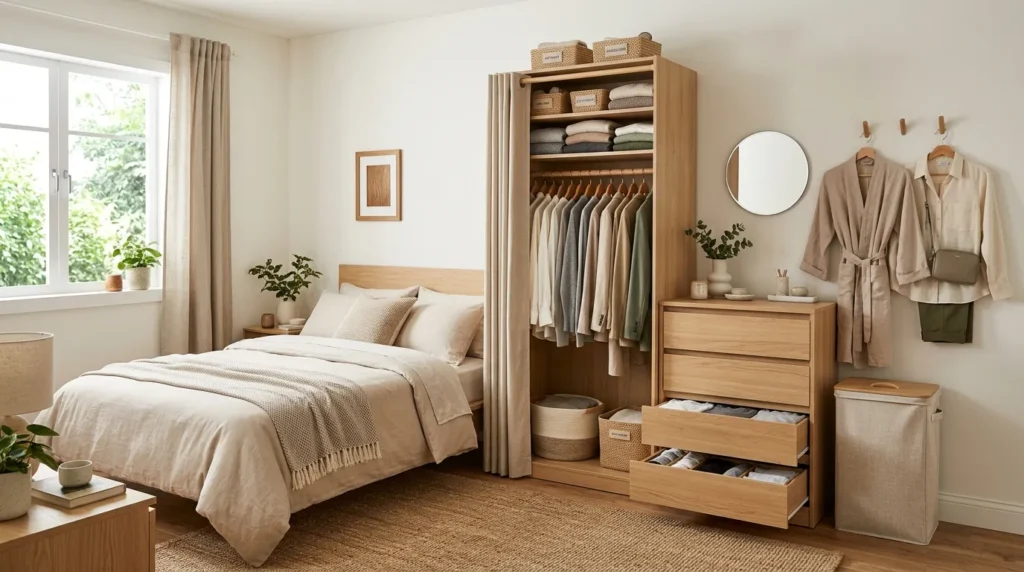
Quick Benefits
- Simplifies daily routines
- Keeps clothing off the floor
- Makes laundry easier to manage
- Prevents closet overflow
- Reduces decision fatigue
Why It Works
Organization isn’t only about containers.
It’s also about creating predictable routines.
Clothing is one of the biggest sources of bedroom clutter because it moves through several stages: clean, worn once, dirty, seasonal, and occasionally needed.
Without a system, those categories quickly mix together.
A small bedroom benefits from clear boundaries.
Dirty clothing should have a designated laundry basket.
Clean clothing should return to the closet or dresser.
Clothing that can be worn again needs a temporary location that isn’t the floor or bed.
How To Style It
Choose a laundry hamper that fits the room.
If floor space is extremely limited, consider a slim vertical hamper.
Add a few hooks for clothes you plan to wear again.
Use drawer dividers for smaller items.
Fold clothing according to drawer dimensions rather than creating oversized stacks.
Store seasonal pieces elsewhere when practical.
The best system is the one that takes seconds to maintain.
9. Clear Visual Clutter
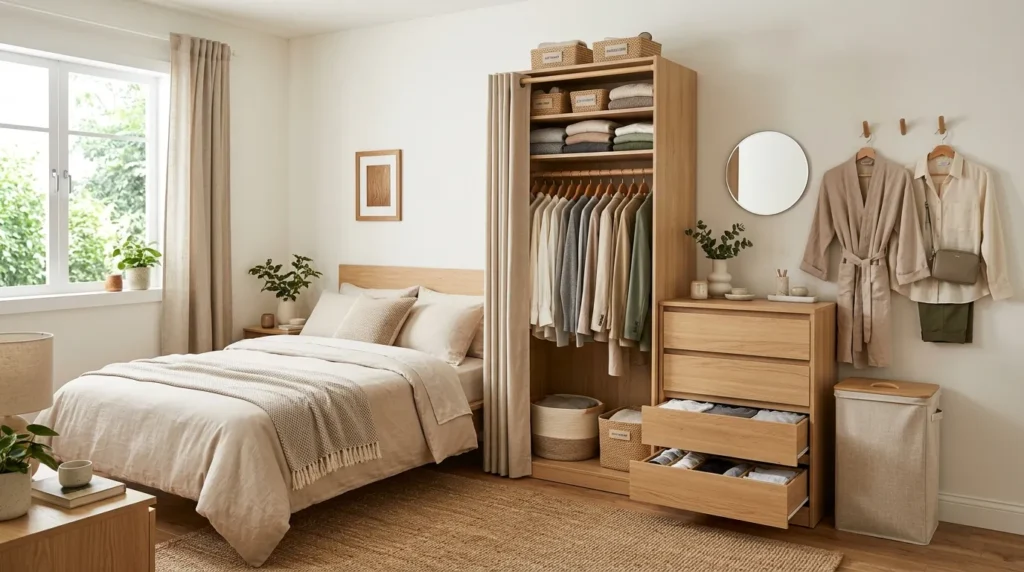
Quick Benefits
- Makes the room feel calmer
- Improves the appearance of available space
- Makes cleaning easier
- Highlights favorite decor
- Reduces visual distractions
Why It Works
Physical clutter and visual clutter aren’t always the same thing.
A bedroom can technically be organized while still feeling crowded because too many colors, patterns, objects, or exposed storage containers compete for attention.
Visual simplicity doesn’t require an empty room.
It means creating a hierarchy.
Some things should stand out.
Other things should quietly support the room.
How To Style It
Choose a restrained palette for large surfaces.
Use matching or coordinating storage containers where practical.
Keep the top of the dresser relatively edited.
Group small objects together rather than scattering them around the room.
Hide chargers and cords when possible.
Limit open shelving to items you actually enjoy seeing.
A useful test is to remove several decorative objects temporarily.
If the room immediately feels calmer, you may have discovered that the issue was visual overload rather than lack of storage.
10. Maintain The System
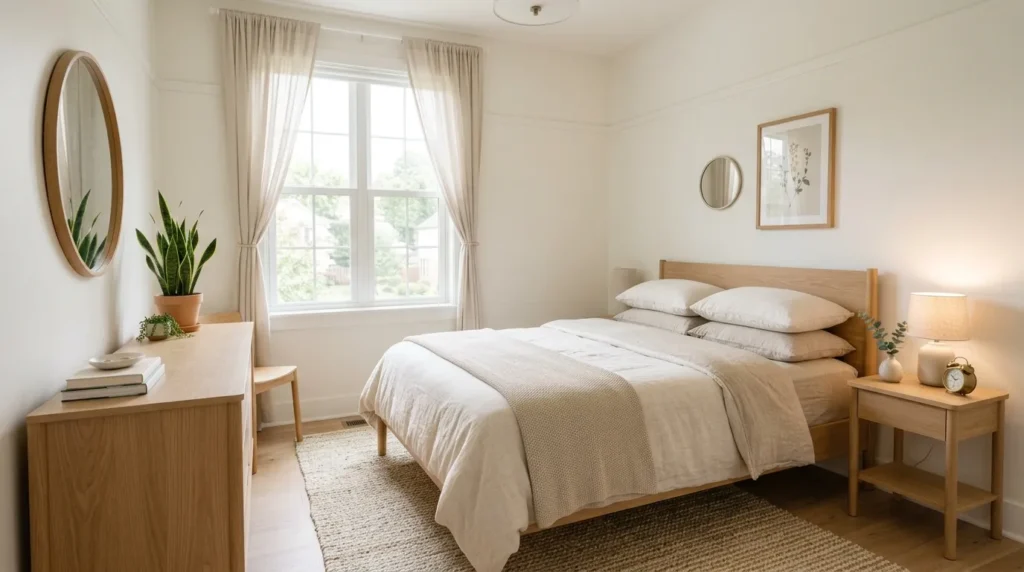
Quick Benefits
- Prevents clutter from returning
- Saves time
- Keeps storage functional
- Makes cleaning easier
- Creates long-term organization
Why It Works
The best organization system is not the one that looks perfect on the first day.
It’s the one you can maintain on an ordinary Tuesday.
If putting something away requires several steps, you’re less likely to do it consistently.
That is why simple systems usually outperform complicated ones.
Every item should have a logical home.
When something repeatedly ends up on the floor, chair, or dresser, that’s useful information.
The storage system may need to change.
How To Style It
Create a few simple habits.
Daily: Put clothes away, clear the nightstand, and make the bed.
Weekly: Return misplaced items and review surfaces.
Monthly: Remove things that no longer belong.
Seasonally: Rotate clothing and bedding when appropriate.
Don’t aim for perfection.
Aim for a room that can return to order quickly.
How To Organize a Small Bedroom Step by Step
If your bedroom currently feels overwhelming, don’t try to organize everything at once.
Use this order.
Step 1: Remove Obvious Clutter
Start with trash, packaging, empty containers, and items that clearly belong somewhere else.
Step 2: Clear The Floor
A clear floor immediately gives you more room to work.
Step 3: Edit Clothing
Remove items you no longer wear or need.
Step 4: Measure Storage
Measure closets, drawers, shelves, and under-bed clearance.
Step 5: Assign Categories
Decide where clothing, accessories, books, bedding, shoes, and personal items belong.
Step 6: Use Existing Storage First
Before buying organizers, make the most of your current furniture.
Step 7: Add Vertical Storage
Use walls where appropriate.
Step 8: Contain Small Items
Use boxes, baskets, drawer dividers, and trays.
Step 9: Improve The Furniture Layout
Make sure storage furniture isn’t blocking natural movement.
Step 10: Create A Maintenance Routine
Spend a few minutes each day returning things to their designated places.
Small Bedroom Storage Ideas That Don’t Require More Furniture
You don’t always need another dresser or cabinet.
Try using:
- The back of the bedroom door
- Wall hooks
- Floating shelves
- Under-bed boxes
- Closet doors
- Hanging organizers
- Storage ottomans
- Bedside wall shelves
- Tall narrow shelving
- Drawer dividers
- Over-door organizers
Think about unused surfaces before adding another piece of furniture.
A few small storage improvements can preserve more floor space than one large storage unit.
What To Get Rid Of First
If your bedroom feels overcrowded, start with items that don’t contribute to your everyday life.
Look for:
- Clothing you never wear
- Damaged items you haven’t repaired
- Empty packaging
- Duplicate accessories
- Outdated paperwork
- Unused decor
- Broken electronics
- Items that belong elsewhere
Don’t organize things you already know you don’t want.
Decluttering first makes the organization process faster and more effective.
FAQ
How do I organize a very small bedroom?
Start by prioritizing the bed, walking paths, clothing storage, and everyday essentials. Use vertical walls, under-bed storage, slim furniture, and the back of doors where appropriate. Remove items you don’t use before buying organizers. The goal is to maximize usable storage without filling the room with additional furniture.
How can I make a small bedroom feel bigger?
Keep walking areas clear, reduce visual clutter, use appropriately scaled furniture, and take advantage of vertical storage. Light colors and mirrors can help create a brighter appearance, but organization and furniture placement often make the biggest practical difference. Avoid filling every empty wall or corner.
What should I store under my bed?
Under-bed storage works well for seasonal clothing, extra bedding, shoes, luggage accessories, and other belongings you don’t use every day. Use shallow containers with labels so items remain easy to identify. Avoid storing anything that could be damaged by moisture or that needs frequent access.
How can I organize a small bedroom without a closet?
Use a combination of a narrow wardrobe, clothing rack, dresser, under-bed containers, wall hooks, and shelves. Keep everyday clothing easily accessible and move seasonal items to higher or less convenient storage. A simple clothing system is more important than having a large number of organizers.
How do I organize clothes in a small bedroom?
Start by removing clothing you no longer wear. Group remaining pieces by category and use slim hangers to maximize hanging space. Fold suitable clothing vertically or according to drawer dimensions. Use under-bed storage for seasonal pieces and designate a specific place for laundry and clothes that can be worn again.
Is a dresser necessary in a small bedroom?
Not always. A dresser is useful if you need drawer storage, but it can consume valuable floor space. Depending on your clothing collection, a combination of closet storage, under-bed drawers, a narrow wardrobe, and wall-mounted storage may work better.
How do I keep a small bedroom organized?
Create a home for every frequently used item and make returning things easy. Put clothing away regularly, keep the floor clear, edit surfaces, and periodically remove belongings you no longer use. A short daily reset is usually easier to maintain than occasional large organizing sessions.
Conclusion
Organizing a small bedroom isn’t about squeezing as many belongings as possible into every available corner.
It’s about deciding what deserves space and then creating a practical home for those things.
Start with the bed and furniture layout. Protect your walking paths. Make the closet work harder. Use the area under the bed. Look upward for storage opportunities. Choose slim furniture when you need additional pieces, and don’t underestimate the value of a simple wall shelf or a few well-placed hooks.
Most importantly, declutter before buying more storage.
A room filled with organizers can still feel crowded if it contains too many things.
Once you’ve created a system, keep it simple enough to maintain. A few minutes of daily tidying can prevent small piles from becoming a major weekend project.
The goal isn’t a perfectly staged bedroom.
It’s a room where you can find what you need, move comfortably, relax at the end of the day, and enjoy the space you have.
Even a very small bedroom can feel surprisingly functional when every part of it is working intentionally.
Related Articles
- How to Organize a Small Bedroom Like a Home Organizer
- How to Make a Small Bedroom Feel More Comfortable
- 10 Small Living Room Ideas That Feel Spacious and Stylish
- 10 Minimal Aesthetic Bedroom Ideas for Adults
- How to Declutter Your Home Room by Room