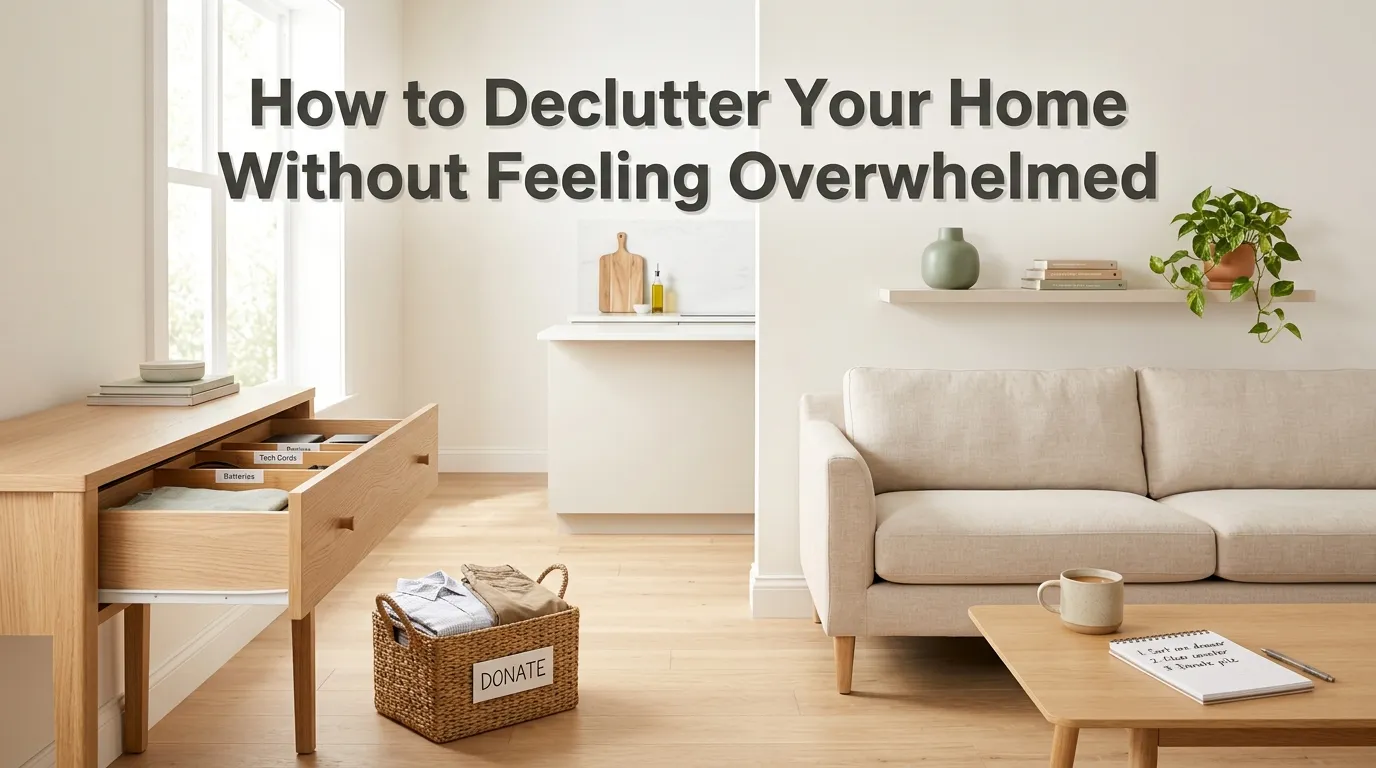
How to Declutter Your Home Without Feeling Overwhelmed
Decluttering your home can sound simple until you look around and realize how many decisions are involved.
A crowded kitchen counter, overflowing closet, packed bathroom cabinet, or pile of miscellaneous items can create the feeling that the entire house needs attention at once. That is often where people get stuck. The problem isn’t always a lack of motivation. Sometimes the project simply feels too large to know where to begin.
The good news is that decluttering doesn’t require an entire weekend, a perfectly organized house, or a dramatic minimalist makeover. A calmer home can begin with one drawer, one shelf, or one small category.
In my experience, the most sustainable approach is to make fewer decisions at a time. Instead of pulling everything out of every room, work in manageable sections. Instead of asking whether something might be useful someday, consider whether it serves a purpose in your current life. Instead of trying to organize items you don’t use, reduce the amount first.
It also helps to separate decluttering from organizing. Baskets and storage containers can make a room look tidier, but they don’t solve the problem when there are simply too many things.
This guide walks through practical ways to declutter your home without turning the process into an exhausting project. You’ll find room-by-room strategies, simple decision rules, storage advice, and realistic habits that make it easier to maintain the progress afterward.
The goal isn’t an empty home. It’s a home where the things you keep have a clear place and support the way you actually live.
Table of Contents
1. Start Small
Choose one manageable area instead of tackling the entire home.
2. Set a Short Timer
Use brief sessions to make decluttering feel achievable.
3. Sort by Category
Group similar items to make decisions easier.
4. Use Four Simple Piles
Create clear destinations for everything you handle.
5. Declutter Visible Surfaces
Clear countertops and other high-impact areas first.
6. Simplify Your Closet
Reduce clothing that no longer fits your current lifestyle.
7. Tackle the Kitchen
Remove duplicate and rarely used kitchen items.
8. Reduce Bathroom Clutter
Create breathing room by clearing unnecessary products.
9. Create a Home for Everything
Give useful belongings a logical place to live.
10. Maintain the Progress
Build simple habits that prevent clutter from returning.
1. Start Small
Quick Benefits
- Reduces decision fatigue
- Creates quick visible progress
- Makes the project less intimidating
- Helps build momentum
- Requires little time
Why It Works
The biggest mistake many homeowners make is beginning with a project that is too large.
Telling yourself to “declutter the house” doesn’t provide a clear first action. A single drawer does.
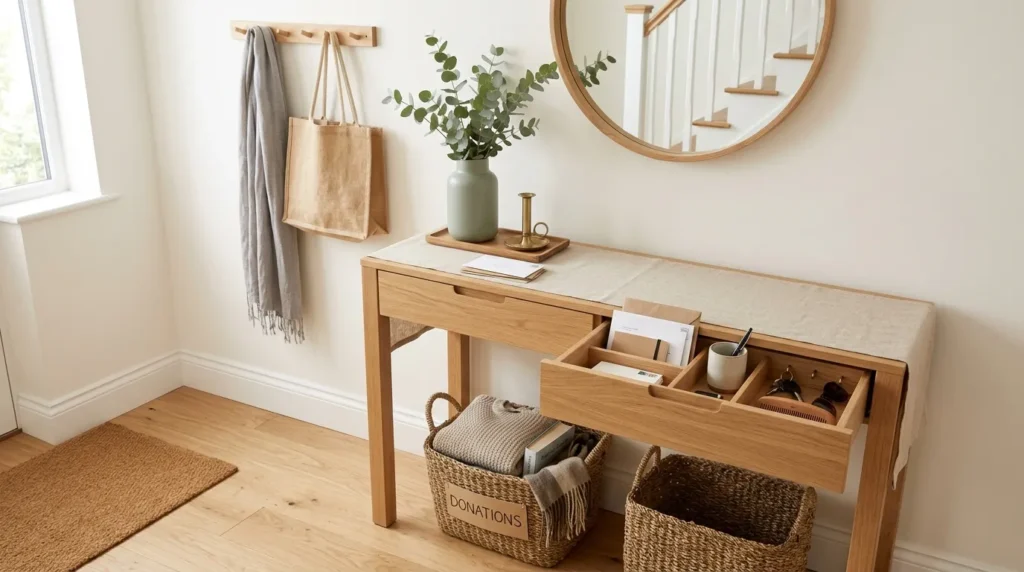
Choose one contained area where you can see the boundaries of the project. A nightstand, bathroom shelf, kitchen drawer, or small section of a closet can be enough for the first session.
Finishing one small area creates a visible result and helps you learn which decisions feel easy or difficult.
How To Style It
Choose an area that takes between 10 and 30 minutes.
Remove only the items from that specific space.
Sort them before putting anything back.
Discard obvious trash immediately.
Return useful items to their designated homes.
Don’t move into another room simply because you noticed another cluttered surface. Stay with the original area until it is finished.
Once you’re comfortable with the process, gradually increase the size of the area.
2. Set a Short Timer
Quick Benefits
- Prevents long exhausting sessions
- Creates a clear stopping point
- Makes decluttering easier to start
- Works with busy schedules
- Encourages consistent progress
Why It Works
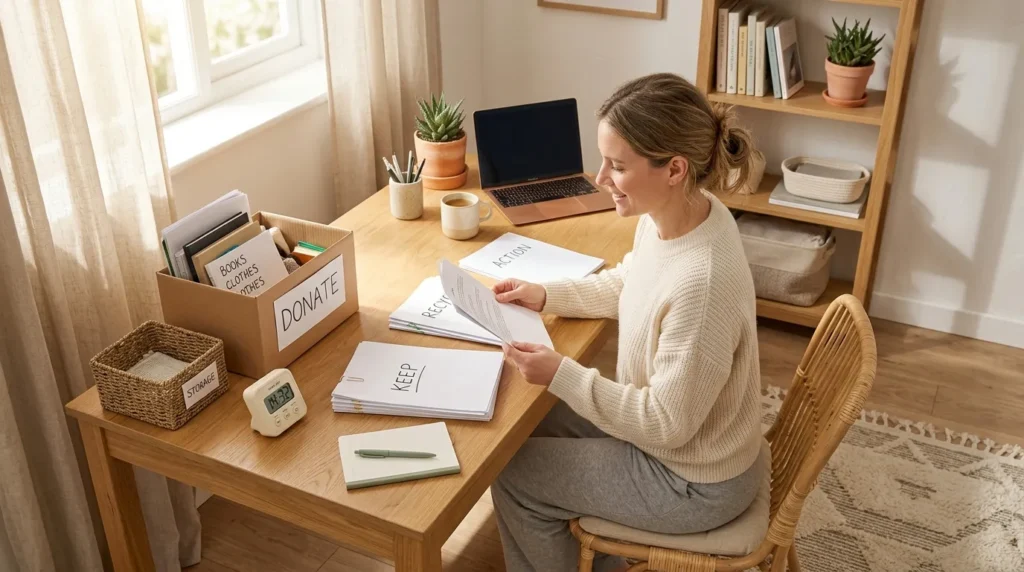
A short session can feel much more approachable than spending an entire Saturday sorting belongings.
A timer also creates a useful boundary. You don’t have to decide how long you can tolerate decluttering because the session already has an ending.
Ten or fifteen focused minutes can be enough to clear a drawer, sort mail, or reduce a small collection.
How To Style It
Set a timer for 10, 15, or 20 minutes.
Choose one specific task before beginning.
Work continuously until the timer ends.
Avoid checking your phone or starting unrelated chores.
When the timer finishes, stop or take a break.
If you have more energy, begin another short session later.
The consistency matters more than completing a massive amount in one day.
3. Sort by Category
Quick Benefits
- Makes duplicates easier to notice
- Creates clearer decisions
- Prevents random organizing
- Shows how much you own
- Works throughout the house
Why It Works
Sometimes clutter is difficult to recognize because similar items are scattered across several rooms.
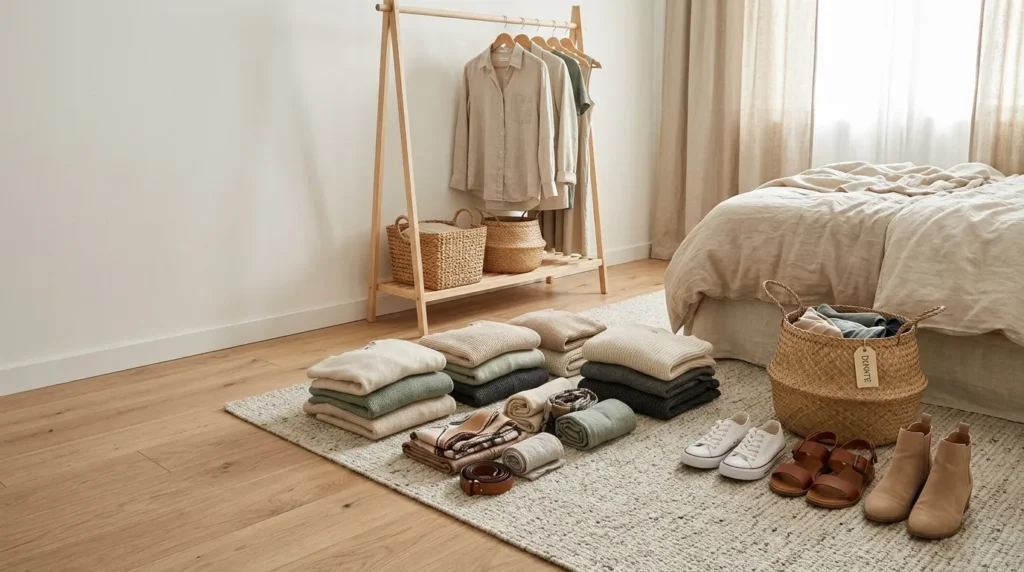
You may think you have only a few candles, pens, reusable bags, or cleaning products until everything is gathered together.
Category-based decluttering reveals the actual quantity.
It also helps you compare items directly rather than making isolated decisions.
How To Style It
Choose one category at a time.
Examples include:
- Towels
- Water bottles
- Mugs
- Makeup
- Books
- Cleaning supplies
- Craft materials
- Clothing
- Cables
- Food storage containers
Gather the category together where there is enough room to sort it.
Keep the items you regularly use, identify duplicates, and remove things that no longer serve a useful purpose.
Don’t create a new category simply because something catches your attention.
4. Use Four Simple Piles
Quick Benefits
- Makes sorting straightforward
- Reduces indecision
- Gives belongings clear destinations
- Keeps the process organized
- Prevents items from being shuffled around
Why It Works
Decluttering becomes harder when every object requires a completely different decision.
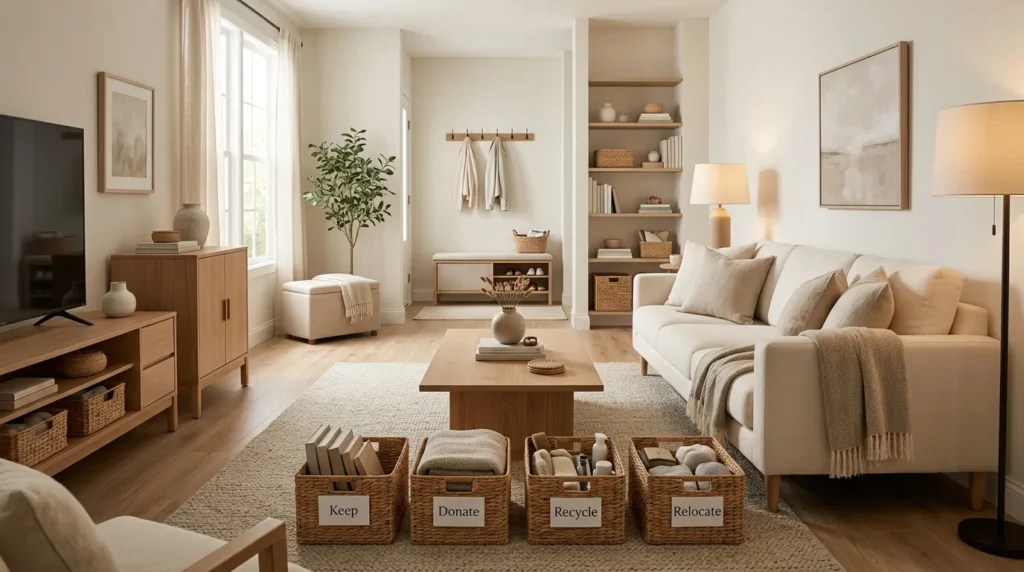
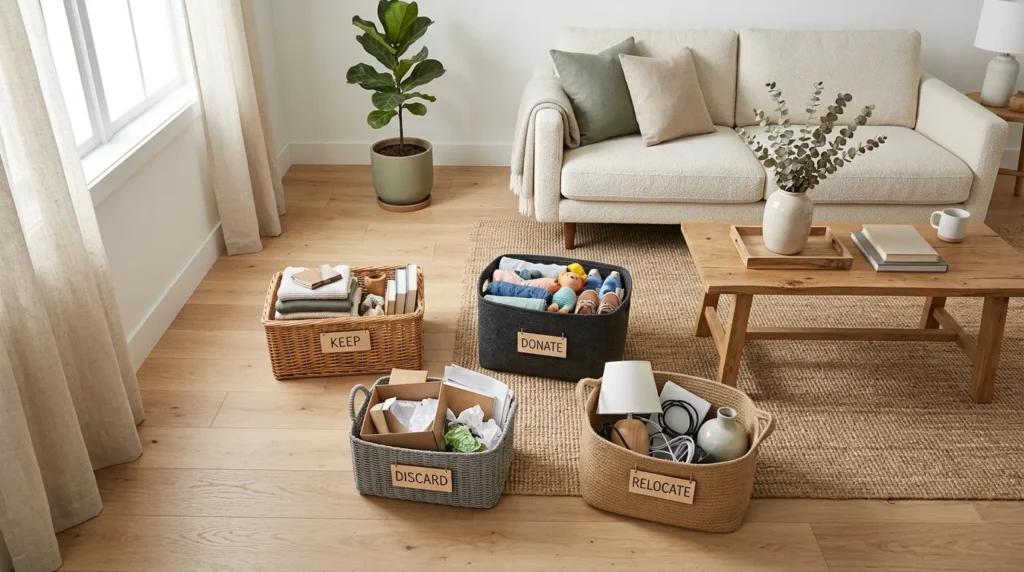
Four basic destinations simplify the process:
Keep: Items you use and want to keep.
Donate: Useful items you no longer need.
Discard: Broken, expired, unusable, or genuinely unwanted items.
Relocate: Items that belong somewhere else in the home.
This simple framework prevents you from repeatedly handling the same object.
How To Style It
Use four clearly separated areas or bags.
Move quickly through obvious decisions.
For uncertain items, create a small “decide later” box rather than allowing every object to stop your progress.
Set a date to revisit that box.
Avoid using “decide later” as a permanent storage category.
5. Declutter Visible Surfaces
Quick Benefits
- Creates immediate visual calm
- Makes rooms feel cleaner
- Improves everyday usability
- Produces noticeable results
- Encourages continued progress
Why It Works
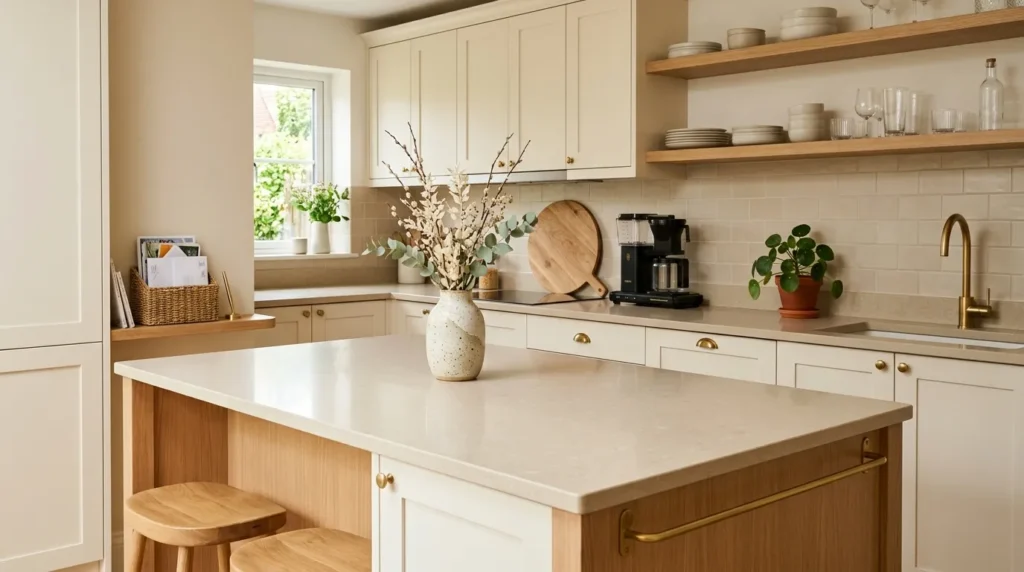
Visible clutter has a disproportionate effect on how a room feels.
A kitchen counter covered with appliances, mail, packaging, and miscellaneous objects can make the entire room appear untidy even when the cabinets are organized.
Clearing visible surfaces creates an immediate difference.
How To Style It
Start with one high-traffic surface.
Remove everything.
Separate useful items from objects that simply landed there.
Return everyday items to their homes.
Store less frequently used items in cabinets or drawers when practical.
Leave some empty space.
A completely empty surface isn’t necessary. The goal is to make the area functional and visually breathable.
6. Simplify Your Closet
Quick Benefits
- Makes getting dressed easier
- Frees storage space
- Reduces visual clutter
- Reveals what you actually wear
- Makes organization easier
Why It Works
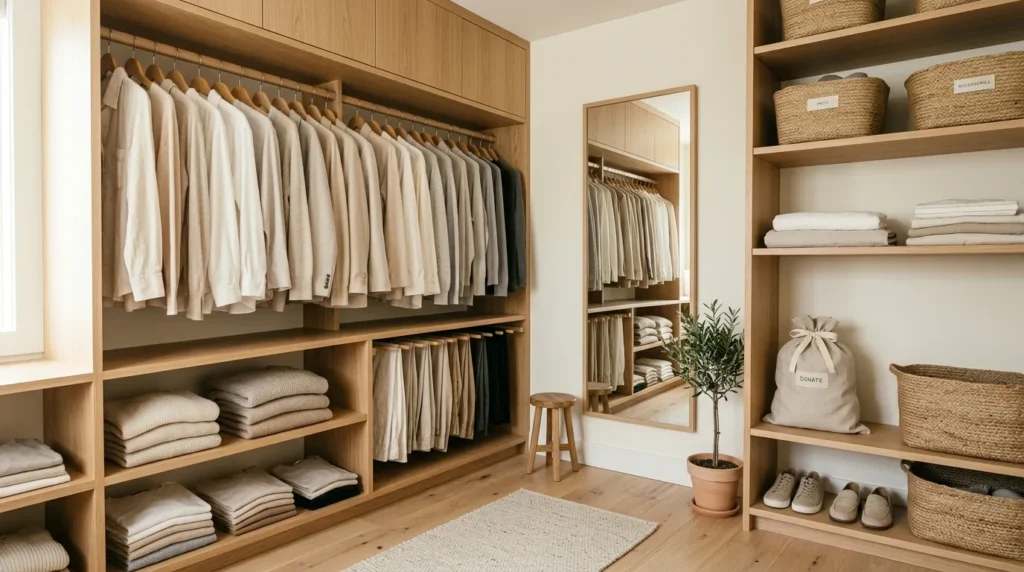
Closets often become storage areas for different versions of our lives.
Clothing that doesn’t fit, pieces that haven’t been worn for years, damaged items, and impulse purchases can occupy valuable space.
A useful closet reflects your current lifestyle rather than an imagined future one.
How To Style It
Take one category at a time.
Start with obvious items such as damaged clothing, uncomfortable pieces, and things that no longer fit your current needs.
Then examine duplicate items.
Consider whether you reach for the piece regularly and whether it works with the clothes you actually wear.
Don’t empty your entire closet if that makes the process stressful.
A single shelf or clothing category is enough for one session.
7. Tackle the Kitchen
Quick Benefits
- Creates more usable counter space
- Makes cooking easier
- Reduces duplicate items
- Improves cabinet access
- Makes food preparation feel calmer
Why It Works
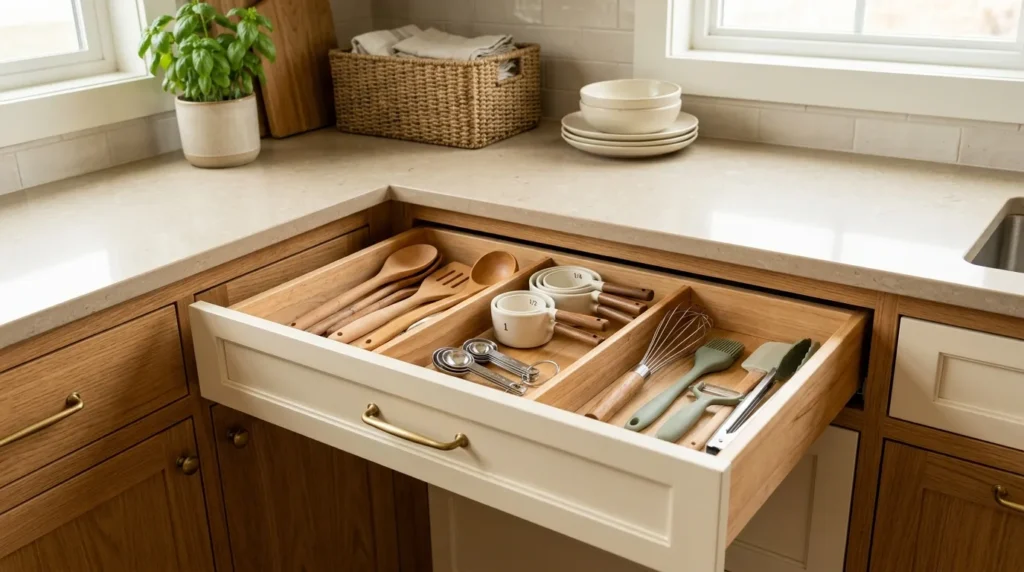
Kitchen clutter often comes from accumulation rather than one major problem.
Extra mugs, duplicate utensils, rarely used gadgets, mismatched containers, and expired food can gradually consume storage.
Removing unnecessary items makes the remaining kitchenware easier to access.
How To Style It
Start with one drawer or cabinet.
Check for duplicate tools.
Match food storage containers with their lids.
Discard expired or unusable products.
Look at countertop appliances honestly.
If an appliance is rarely used and takes up valuable space, consider whether another storage location or a different solution makes more sense.
Keep everyday tools within easy reach.
8. Reduce Bathroom Clutter
Quick Benefits
- Makes cleaning easier
- Creates more storage space
- Reduces expired products
- Improves daily routines
- Makes counters feel calmer
Why It Works
Bathrooms can accumulate products quickly.
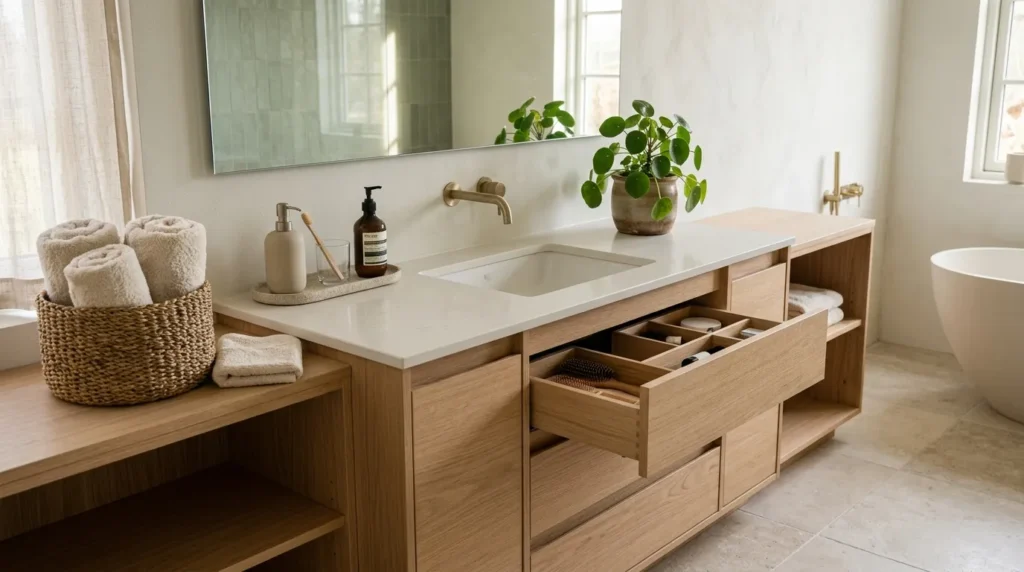
Partially used cosmetics, duplicate toiletries, expired skincare, old samples, and products that don’t work for you can take over drawers and cabinets.
Reducing these items makes the room easier to maintain.
How To Style It
Begin with one drawer or shelf.
Check expiration information and product condition where applicable.
Discard empty containers and products you no longer use.
Group similar items together.
Keep everyday products accessible.
Use small organizers only after reducing the quantity.
This order matters because containers can’t solve excess.
9. Create a Home for Everything
Quick Benefits
- Makes tidying easier
- Reduces future clutter
- Saves time
- Improves household routines
- Helps everyone put items away
Why It Works
An item without a designated home tends to migrate.
It lands on a counter, chair, table, or floor until someone moves it again.
Giving frequently used items logical homes makes everyday tidying much easier.
The best storage location is usually close to where the item gets used.
How To Style It
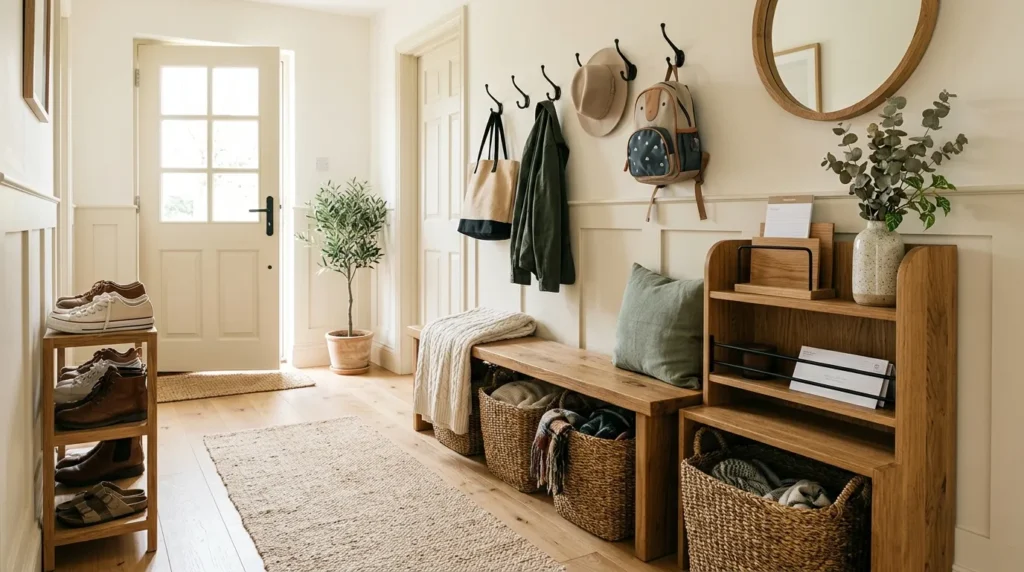
Observe where items naturally accumulate.
If shoes always collect near the door, create storage there.
If mail gathers on the kitchen counter, establish a mail station nearby.
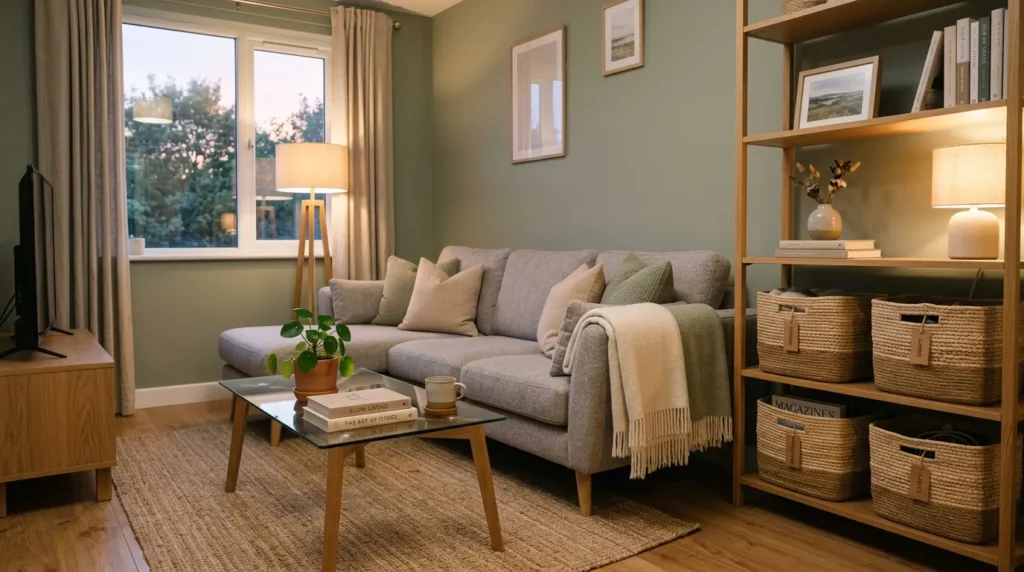
If blankets constantly end up on the sofa, use a nearby basket.
Don’t create complicated systems.
The easier a storage system is to use, the more likely it is to remain functional.
10. Maintain the Progress
Quick Benefits
- Prevents large clutter buildup
- Makes future sessions shorter
- Keeps rooms easier to manage
- Builds sustainable habits
- Protects the work you’ve already done
Why It Works
Decluttering isn’t particularly useful if every room returns to its previous condition a few weeks later.
Maintenance doesn’t require constant cleaning.
Small habits can prevent everyday accumulation from becoming overwhelming again.
How To Style It
Create simple routines.
Return items after using them.
Clear kitchen counters at the end of the day.
Process mail before it becomes a pile.
Keep a donation bag in an accessible location.
When something new enters the home, consider where it will live.
Schedule a short decluttering session periodically instead of waiting until the clutter feels unmanageable.
How Do I Start Decluttering When Everything Feels Overwhelming?
Start with the smallest visible area you can finish.
A drawer, shelf, countertop section, or nightstand is enough.
Remove the items, sort them into clear categories, and return only what belongs there.
Avoid thinking about the entire house while working.
The purpose of the first session isn’t to finish your home. It’s to create one completed area and establish a process you can repeat.
What Should I Declutter First?
Start with obvious clutter and easy decisions.
Trash, expired products, broken objects, duplicates, and items you already know you don’t use are good starting points.
After those decisions become easier, move toward more sentimental or complicated categories.
This approach creates progress without forcing you to make difficult emotional decisions at the beginning.
How Long Does It Take To Declutter a Home?
There isn’t a fixed timeline because homes and belongings vary significantly.
Some people prefer short daily sessions, while others dedicate a few hours to one category.
The more useful goal is consistency.
A 15-minute session repeated regularly can gradually create substantial change without requiring an entire weekend.
How Do I Declutter Without Regretting What I Get Rid Of?
Avoid making decisions while exhausted or frustrated.
For uncertain belongings, use a temporary decision box and revisit those items later.
Consider whether the item is useful, functional, meaningful, or realistically likely to be used.
If an object has strong sentimental value, don’t force yourself to remove it simply because it takes up space. Decluttering is about creating a home that works for you, not following a rigid number of possessions.
How Do I Keep My Home From Becoming Cluttered Again?
Give frequently used belongings clear homes and make those homes easy to access.
Reduce unnecessary purchases and deal with incoming items promptly.
A donation bag can make it easier to remove things you no longer use.
Short maintenance sessions also help prevent small piles from becoming large projects.
The most sustainable system is one that fits naturally into your existing routines.
Related Articles
- How to Organize a Small Bedroom Without Extra Cabinets
- How to Organize a Small Bedroom Without Spending Money
- How to Make a Small Bedroom Feel Open with Smart Layouts
- How to Decorate a Living Room with Stylish Accessories
- 10 DIY Wall Art Ideas Using Budget-Friendly Supplies
Frequently Asked Questions
What is the easiest way to start decluttering?
Choose one small, contained area such as a drawer, shelf, or countertop section. Remove everything from that space, sort the items, and return only what belongs there. Completing a small project creates visible progress and makes it easier to continue without taking on the entire home at once.
How do I declutter when I don’t have much time?
Use short sessions. Ten to twenty minutes can be enough to clear a drawer, sort a bathroom shelf, process mail, or reduce one category. Set a timer and choose one task before starting. Small, repeated sessions can make the process more manageable than waiting for an entire free day.
What should I do with things I don’t want?
Useful items in good condition can often be donated, gifted, or otherwise passed along. Broken or unusable items may belong in the appropriate waste or recycling stream. Handle sensitive documents and materials according to local disposal guidance. Try to move unwanted items out of the house promptly so they don’t become another pile.
How do I declutter sentimental items?
Save sentimental belongings for later, after easier categories are finished. Consider which objects genuinely carry meaning rather than keeping every item connected to a memory. Photographs can sometimes preserve the memory of bulky objects, but meaningful physical items can also be kept. The goal is thoughtful selection rather than eliminating everything sentimental.
Should I buy storage containers before decluttering?
Usually, reduce the amount first. Buying containers before sorting can lead to organizing things you don’t actually need. Once you know what you’re keeping, measure the available space and choose storage that fits the items and the way you use them.
How do I declutter a home with children?
Work on one category at a time and involve children when appropriate. Keep frequently used items accessible and create simple homes for toys, books, clothing, and school supplies. Periodically review items that have been outgrown or are no longer used. Simple storage systems are generally easier for children to maintain.
What is the difference between decluttering and organizing?
Decluttering reduces the number of items you keep. Organizing determines where the remaining items belong. Decluttering first makes organizing more effective because storage systems aren’t being used to accommodate things that aren’t useful or wanted.
Conclusion
Decluttering your home doesn’t have to become a massive project.
The most effective approach is often much simpler: choose one small area, make a few clear decisions, and stop before the process becomes exhausting.
Start with easy wins such as trash, broken items, duplicates, expired products, and obvious clutter. Once those decisions become easier, move into more challenging categories such as clothing, sentimental belongings, and miscellaneous storage.
Remember that the purpose isn’t to create an empty house. Your home still needs books, clothes, kitchen tools, decorations, children’s belongings, hobbies, and the things that make everyday life comfortable.
The difference is intentionality.
When useful belongings have logical homes and unnecessary items no longer compete for space, everyday routines become easier. Counters become more usable. Closets become easier to navigate. Cabinets stop overflowing.
Choose one small area today. Finish it completely. Then let that small success guide the next one.
A calmer home can be built gradually, one decision at a time.