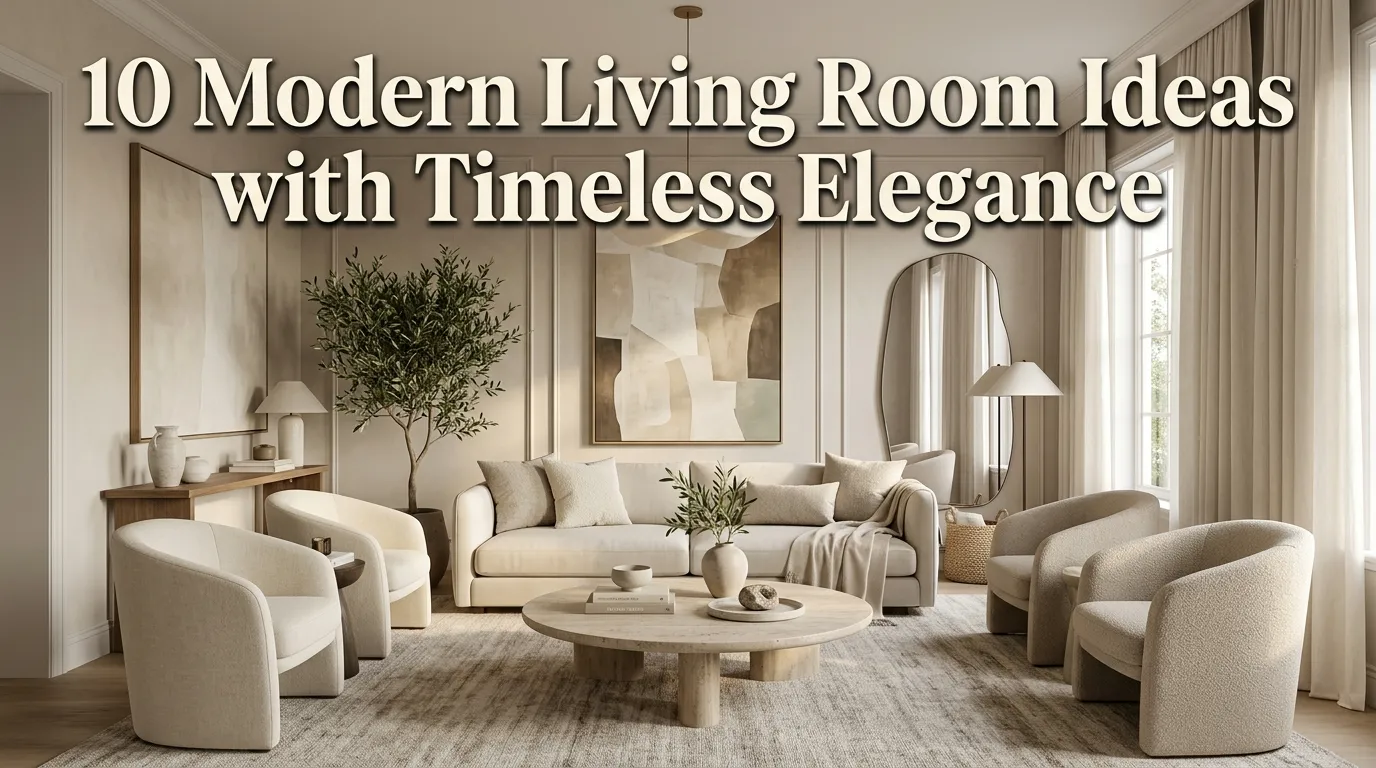
10 Modern Living Room Ideas with Timeless Elegance
A modern living room can feel polished without becoming cold, and elegant without looking overly formal. The most successful spaces balance clean lines with comfortable materials, restrained colors, natural textures, and a few carefully chosen decorative pieces.
That balance matters because living rooms have to do more than look good in photographs. They are where people relax after work, entertain friends, watch movies, read, and spend everyday time together. A beautiful room that isn’t comfortable quickly becomes impractical.
I’ve noticed that timeless rooms rarely depend on a single trend. Instead, they use a strong foundation—quality-looking furniture shapes, classic materials, balanced proportions, and a cohesive palette—and then add personality through smaller details that can change over time.
You don’t need a completely redesigned room to create this effect. A new rug can anchor the seating area. Better lighting can soften the atmosphere. Natural wood can warm up contemporary furniture, while artwork can give a neutral room a sense of identity.
The ideas below focus on creating a living room that feels current today but doesn’t depend on short-lived decorating trends. They work particularly well for homeowners and renters who want a sophisticated space that still feels comfortable and lived-in.
Whether your room is large and open or compact and multifunctional, start with the pieces that have the greatest visual impact. Once the foundation is right, smaller accessories become much easier to choose.
Table of Contents
1. Warm Neutral Palette
Create an elegant foundation with soft, timeless colors.
2. Sculptural Modern Sofa
Use a clean-lined sofa as the room’s comfortable focal point.
3. Natural Wood Details
Add warmth and character through carefully selected wood pieces.
4. Layered Area Rugs
Give the seating area depth with thoughtfully chosen floor textiles.
5. Statement Lighting
Use distinctive lighting to add elegance and atmosphere.
6. Curated Wall Art
Bring personality to the room through restrained artwork.
7. Marble Accent Pieces
Introduce subtle stone details for a refined finish.
8. Textured Soft Furnishings
Combine fabrics to make modern furniture feel inviting.
9. Balanced Open Layout
Arrange furniture for both conversation and everyday movement.
10. Minimal Elegant Styling
Finish the room with fewer, more intentional accessories.
1. Warm Neutral Palette
Quick Benefits
- Creates a calm foundation
- Works with many furniture styles
- Makes rooms feel cohesive
- Allows artwork to stand out
- Adapts easily through the seasons
Why It Works
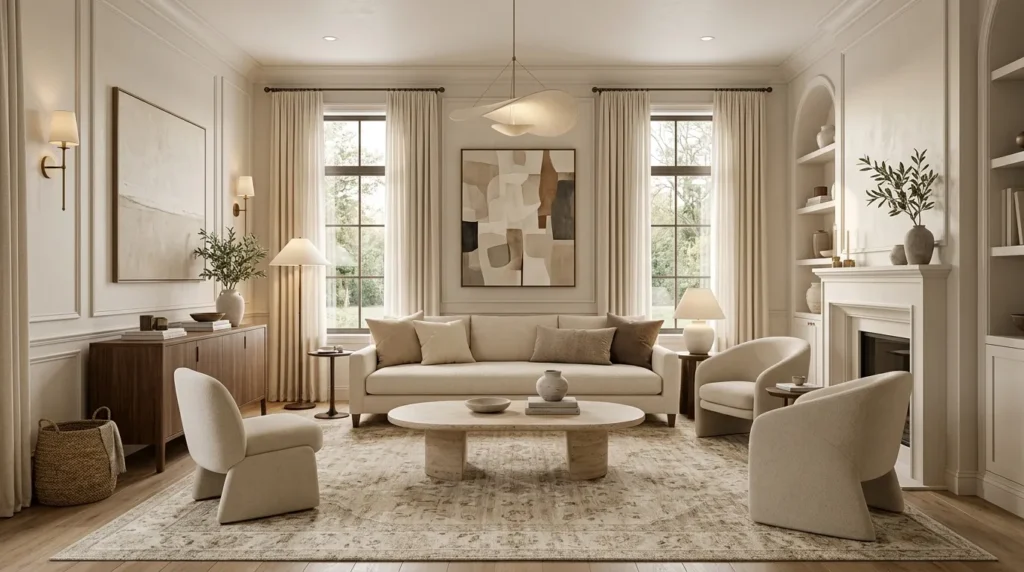
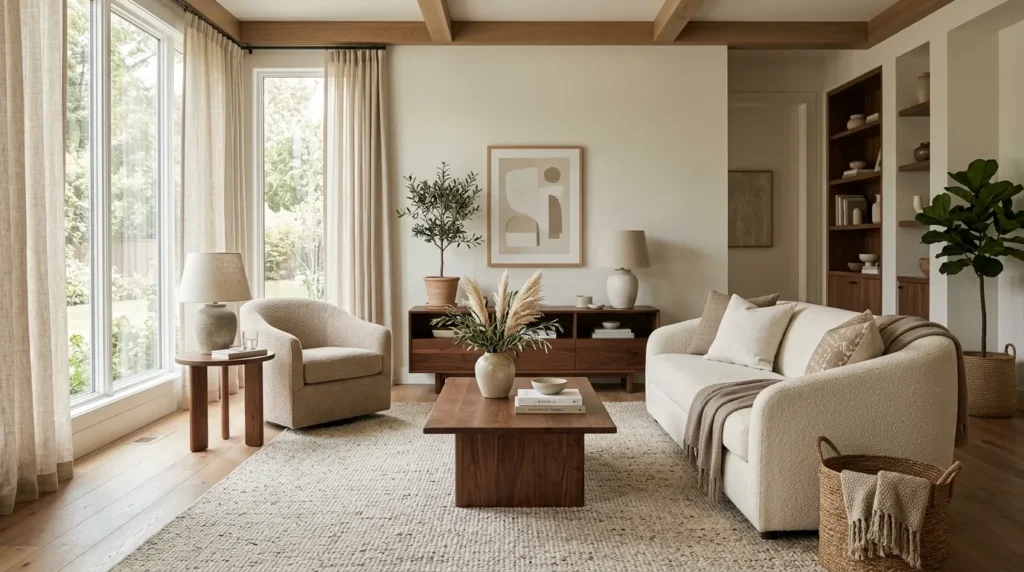
Warm neutrals have a timeless quality because they don’t compete for attention. Cream, ivory, beige, taupe, warm gray, and soft brown can create an elegant backdrop while allowing furniture and architectural details to remain visible.
The important distinction is between a neutral room and a flat room. Using one beige tone everywhere can make the space feel dull. Layering several related shades creates depth while maintaining visual calm.
Warm neutrals also work particularly well with natural materials such as oak, walnut, linen, wool, stone, and leather.
How To Style It
Choose one dominant neutral for the largest surfaces, such as walls or a large rug.
Then introduce two or three supporting shades through upholstery, curtains, pillows, artwork, and accessories.
Use darker brown, charcoal, or black sparingly for definition.
For example, cream walls can work with a beige sofa, taupe rug, walnut table, and charcoal picture frames.
Repeat important shades throughout the room so the palette feels connected.
2. Sculptural Modern Sofa
Quick Benefits
- Establishes the room’s focal point
- Combines comfort with visual appeal
- Works with restrained decor
- Creates a contemporary foundation
- Can suit both large and small spaces
Why It Works
The sofa is often the largest piece of furniture in the living room, making its shape particularly important.
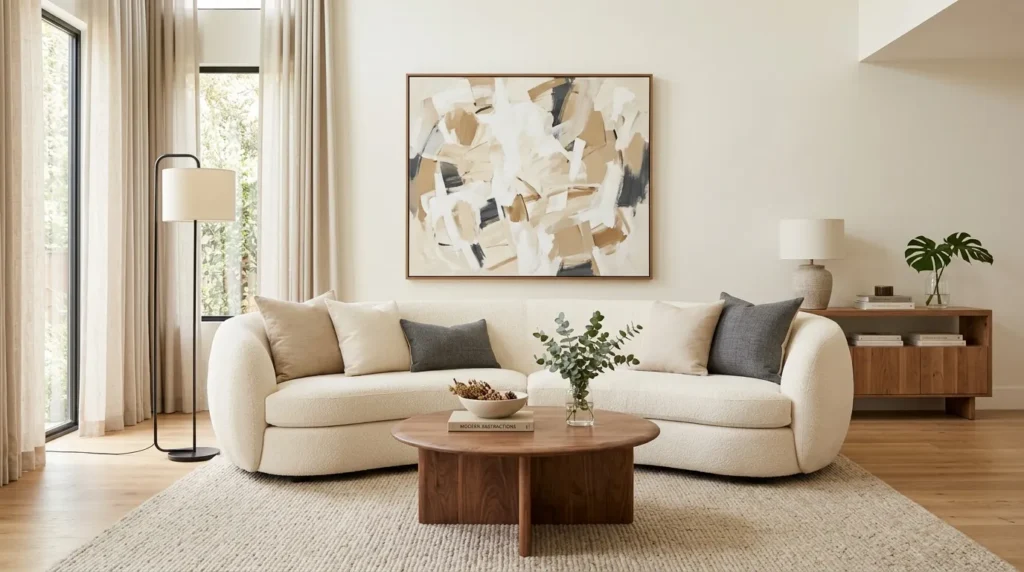
A sofa with simple, sculptural lines can make a room feel modern without relying on trendy decorative details. Rounded arms, generous cushions, low profiles, or gently curved silhouettes can soften the clean geometry often associated with contemporary interiors.
Comfort remains essential. Elegant furniture shouldn’t feel like something that belongs only in a showroom.
How To Style It
Choose upholstery in cream, oatmeal, beige, warm gray, or another versatile neutral.
If the room is small, a streamlined sofa with visible legs can create a lighter visual footprint.
For a larger room, a deeper sofa or sectional can provide comfortable seating while anchoring the space.
Add a few pillows in different textures rather than covering the sofa with numerous patterns.
Keep enough space around the sofa for natural movement.
3. Natural Wood Details
Quick Benefits
- Adds warmth to modern interiors
- Introduces organic texture
- Balances smooth surfaces
- Creates visual contrast
- Complements neutral palettes
Why It Works
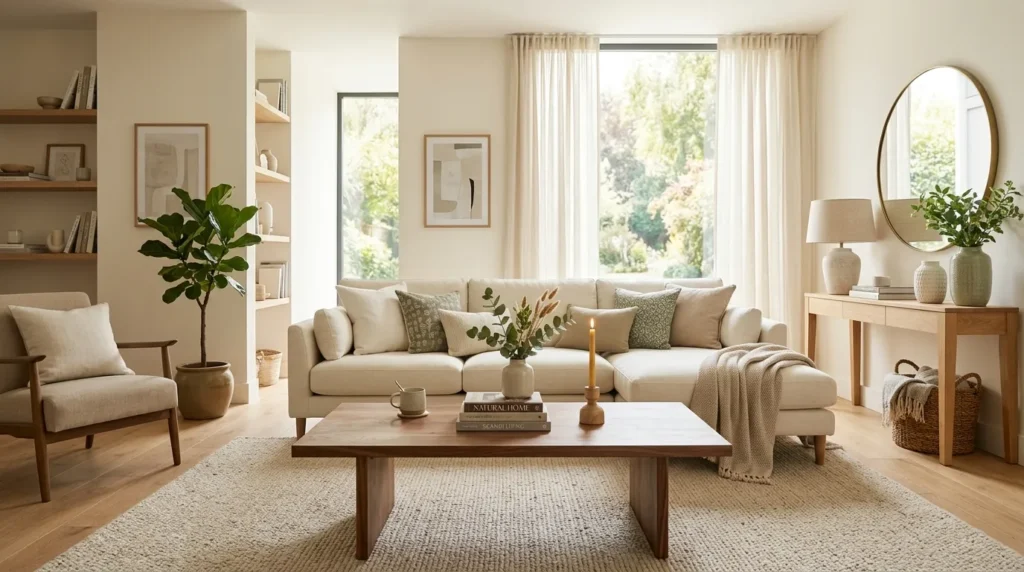
Modern interiors can sometimes feel overly sleek when every surface is glossy, painted, or manufactured. Natural wood introduces variation through grain, color, and texture.
A wood coffee table, console, shelving unit, or accent chair can soften the room while maintaining a sophisticated appearance.
Wood also ages gracefully, which makes it particularly suitable for a timeless decorating approach.
How To Style It
Choose one dominant wood tone and repeat it across several pieces.
Light oak works beautifully with cream and soft beige.
Walnut creates more contrast and pairs well with ivory, charcoal, and warm gray.
Avoid turning the room into a matching furniture set. A coffee table, console, and small decorative wood object can be enough to establish continuity.
Pair wood with stone, linen, wool, or leather for a balanced material palette.
4. Layered Area Rugs
Quick Benefits
- Defines the seating zone
- Adds softness underfoot
- Introduces subtle pattern
- Makes furniture feel connected
- Helps large rooms feel organized
Why It Works
A rug can visually unite separate pieces of furniture. Without one, sofas, chairs, and tables can sometimes appear like individual objects scattered around the room.
The right rug creates a foundation for the entire seating arrangement.
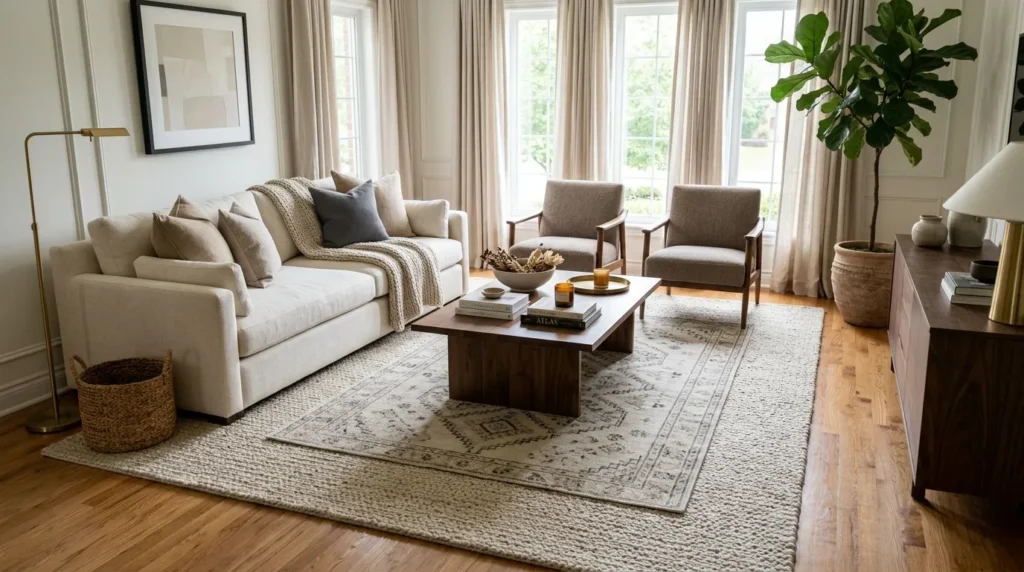
For a timeless living room, subtle patterns and natural-looking textures are particularly useful because they add interest without becoming the dominant feature.
How To Style It
Choose a rug large enough for at least the front legs of the main seating pieces to sit on it.
For a large open room, consider an oversized rug that accommodates the entire conversation area.
Cream, beige, taupe, muted gray, and soft brown work well with modern interiors.
If you want additional texture, consider wool, jute, or another suitable natural-fiber option.
Layering a smaller patterned rug over a larger neutral base can work in larger rooms, but keep the patterns restrained.
5. Statement Lighting
Quick Benefits
- Creates a focal point
- Adds atmosphere
- Highlights architectural features
- Improves evening comfort
- Makes the room feel finished
Why It Works
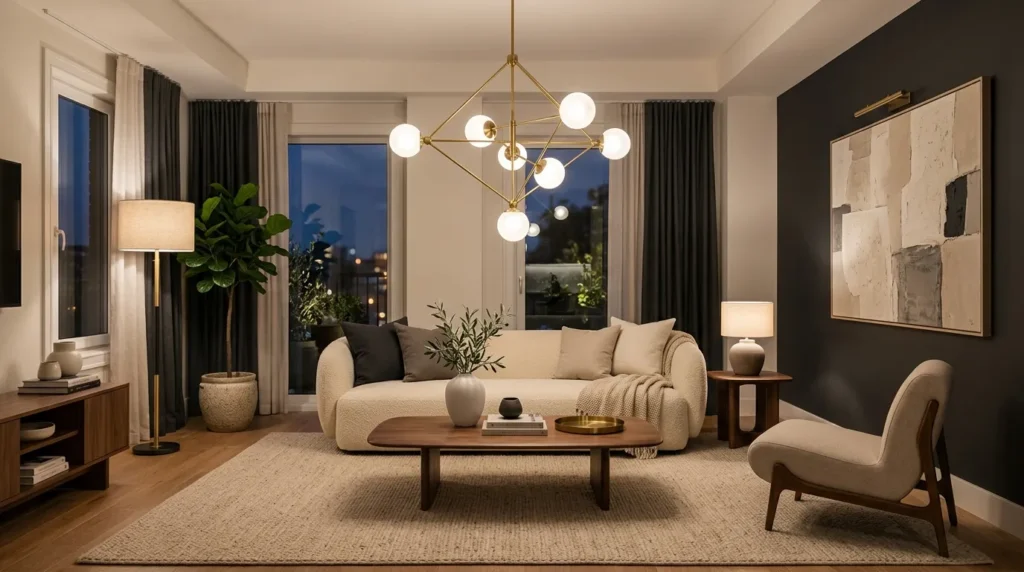
Lighting is often treated as a purely practical decision, but it can function as one of the room’s strongest decorative elements.
A sculptural pendant, elegant chandelier, oversized floor lamp, or distinctive table lamp can give a modern living room character without adding clutter.
Layered lighting is even more effective because it allows the room to change throughout the day.
How To Style It
Start with general illumination, then add task and accent lighting.
Place a floor lamp beside a reading chair. Use table lamps on a console or side tables. Add a statement ceiling fixture if the room’s proportions allow it.
Choose finishes that complement the existing palette—brass, matte black, aged metal, ceramic, glass, or natural wood.
Use warm, comfortable lighting in the evening to make neutral materials appear softer.
6. Curated Wall Art
Quick Benefits
- Adds personality
- Creates visual focus
- Complements neutral furniture
- Makes blank walls feel intentional
- Can be changed without major renovation
Why It Works
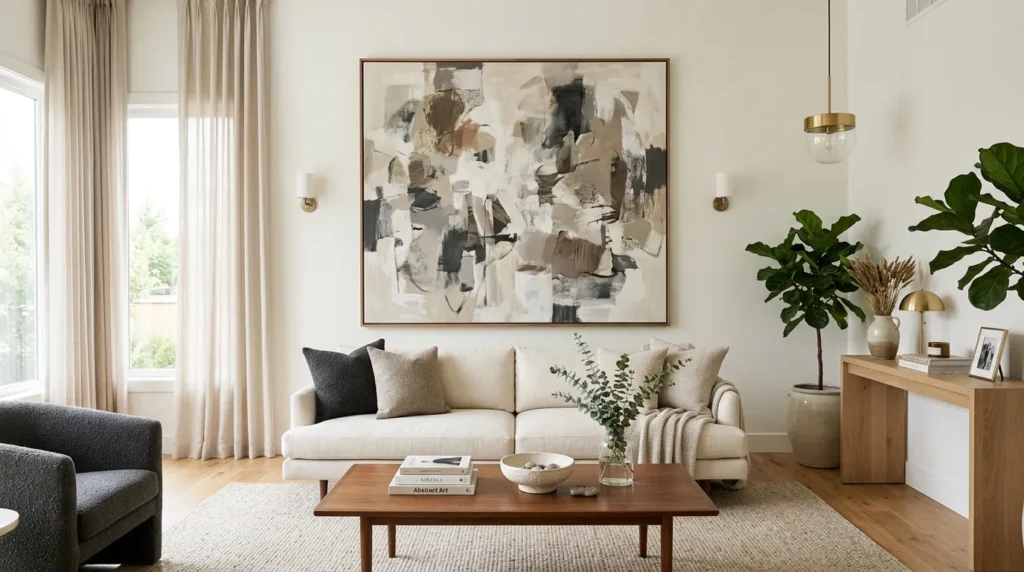
Elegant interiors still need personality. Artwork prevents a modern living room from feeling like a generic furniture showroom.
The best artwork doesn’t necessarily match every other item in the room. Instead, it creates a visual relationship through color, scale, subject, or framing.
Large-scale art can also make a stronger impact than many small decorative pieces.
How To Style It
Choose one large artwork above the sofa or console if you want a strong focal point.
For a gallery arrangement, maintain consistent spacing and use frames that relate to the room’s materials.
Abstract artwork, photography, landscapes, botanical prints, and minimalist line art can all work.
Pull one or two colors from the artwork into pillows or smaller accessories so the room feels connected.
Avoid filling every wall. A little negative space helps the artwork feel more important.
7. Marble Accent Pieces
Quick Benefits
- Adds refined texture
- Introduces natural variation
- Creates subtle contrast
- Works with modern furniture
- Can be used in small doses
Why It Works
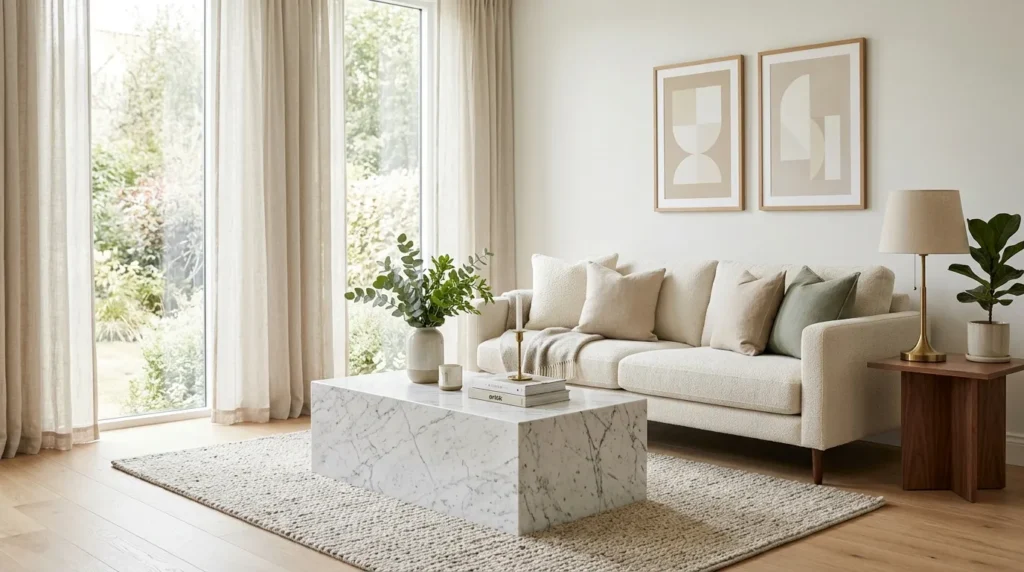
Stone has a naturally elegant appearance because every slab or piece has unique veining and variation.
You don’t need a large marble installation to introduce this quality. A marble coffee table, side table, tray, lamp base, or decorative object can provide enough visual interest.
The key is restraint. Too much stone can make a room feel overly formal.
How To Style It
Use one prominent stone element and keep the surrounding materials relatively simple.
White marble works well with cream, beige, walnut, and brass.
Dark stone creates stronger contrast with lighter furniture.
Pair marble with softer materials such as linen, boucle-style upholstery, wool, or cotton.
Use stone accessories on coffee tables or consoles where their natural pattern can be appreciated without overwhelming the room.
8. Textured Soft Furnishings
Quick Benefits
- Makes modern spaces feel comfortable
- Adds visual depth
- Softens clean furniture lines
- Creates seasonal flexibility
- Helps neutral rooms feel layered
Why It Works
Texture is one of the most useful tools for creating warmth without adding strong colors.
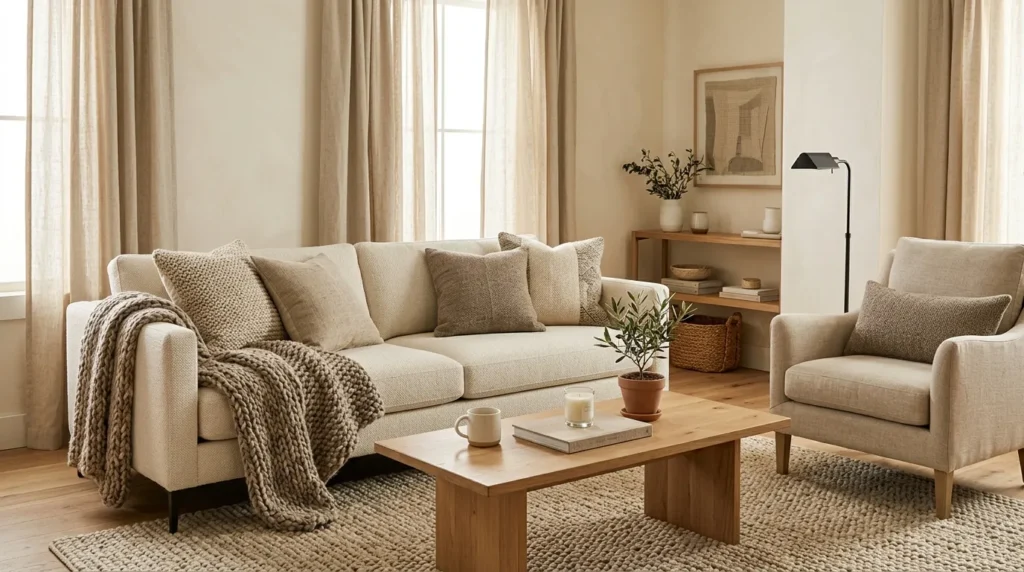
A smooth sofa beside a nubby throw, woven pillow, linen curtain, or wool rug creates contrast that the eye can notice even when the entire palette remains neutral.
This is especially important in modern rooms where furniture tends to have simple shapes.
How To Style It
Combine several fabrics rather than repeating one material.
Try linen curtains with cotton pillows, a wool rug, and a chunky woven throw.
Keep patterns subtle if you want a refined appearance.
Change heavier textures during colder months and lighter fabrics during warmer seasons.
Avoid using too many decorative pillows. Three or four well-selected pieces can create a more sophisticated appearance than a crowded sofa.
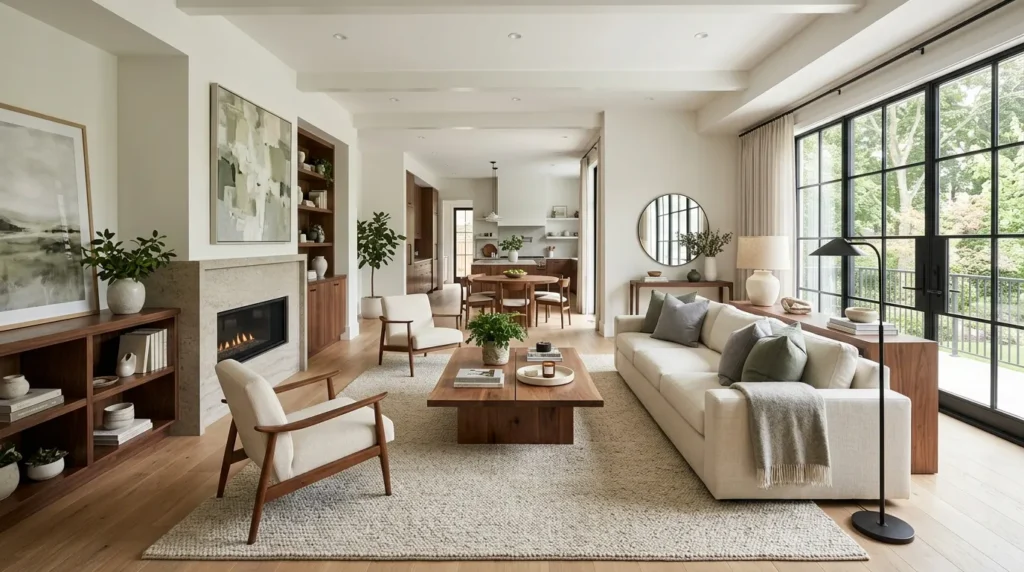
9. Balanced Open Layout
Quick Benefits
- Improves movement
- Makes conversations easier
- Creates visual order
- Helps furniture feel intentional
- Works across room sizes
Why It Works
Beautiful furniture cannot compensate for a poor layout. A timeless living room needs to function naturally.
The seating arrangement should encourage conversation while maintaining comfortable paths through the room.
Furniture doesn’t always have to sit directly against the walls. In larger rooms, floating a sofa can create a more defined conversation area.
How To Style It
Start by identifying the room’s main focal point. This could be a fireplace, large window, television, artwork, or architectural feature.
Arrange the sofa and chairs around that focal point.
Leave enough space between furniture pieces for comfortable movement.
Use a coffee table that is proportional to the seating arrangement and easy to reach.
For open-concept homes, use rugs and furniture placement to visually define the living room without creating physical barriers.
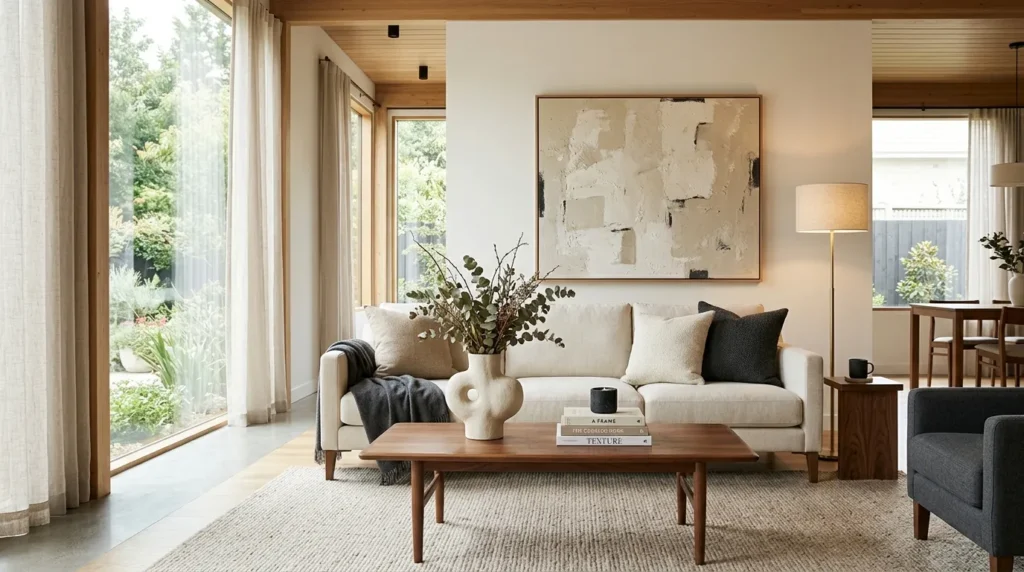
10. Minimal Elegant Styling
Quick Benefits
- Keeps the room visually calm
- Highlights important pieces
- Makes cleaning easier
- Prevents decorative clutter
- Creates a polished appearance
Why It Works
Timeless elegance often comes from editing rather than adding.
A room can contain beautiful furniture and still feel unfinished when every surface is covered with small objects. Removing unnecessary pieces allows the most meaningful elements to stand out.
This doesn’t mean the room has to be minimalist. It simply means every visible object has a reason to be there.
How To Style It
Start with the essentials: seating, rug, coffee table, lighting, curtains, and artwork.
Then add a few decorative layers.
A coffee table might hold a small stack of books, a ceramic bowl, and one natural element.
A console can display a lamp, artwork, and a small arrangement.
Leave some surfaces empty.
If an accessory doesn’t contribute color, texture, function, or personality, consider removing it.
What Makes a Modern Living Room Feel Timeless?
A timeless modern living room combines simple furniture silhouettes, a restrained color palette, natural materials, comfortable textures, balanced proportions, and classic lighting. Instead of relying heavily on short-lived trends, it focuses on pieces that can remain useful and attractive as the room evolves.
How To Make a Modern Living Room Feel Elegant
Elegance comes from proportion and restraint as much as from materials.
Start by reducing visual clutter and establishing a cohesive palette. Then choose furniture with strong silhouettes and comfortable upholstery.
Add natural wood to create warmth and stone or metal for subtle refinement.
Lighting makes a major difference. Use several light sources instead of relying on a single overhead fixture.
Finally, give decorative pieces room to breathe. A large artwork with surrounding negative space can feel more sophisticated than an entire wall filled with small objects.
How To Balance Modern Style With Comfort
Modern design doesn’t require hard surfaces and uncomfortable furniture.
Choose deep, supportive seating where space allows. Add soft rugs, curtains, throws, and cushions to balance cleaner architectural lines.
Natural materials are particularly helpful because they provide warmth without making the room visually busy.
Keep everyday functionality in mind when arranging furniture. Coffee tables need to be accessible, walking paths need to remain clear, and frequently used items need convenient storage.
The result should look polished while still feeling like a room where people actually live.
Related Articles
- 10 Modern Living Room Ideas with Cozy Designer Style
- How to Decorate a Living Room with Stylish Accessories
- How to Decorate a Living Room Like a Professional
- 10 Small Living Room Ideas with Modern Comfort
- 10 DIY Coffee Tables for Modern Living Rooms
Frequently Asked Questions
What colors make a modern living room look elegant?
Warm white, cream, beige, taupe, soft gray, walnut brown, and charcoal are versatile choices. The most important factor is creating contrast between light and dark elements while maintaining a cohesive undertone. Natural wood and muted metallic finishes can provide additional warmth and definition.
How can I make my living room look expensive without remodeling?
Focus on proportion, lighting, textiles, and editing. A properly sized rug, well-arranged furniture, layered lighting, substantial curtains, and a few carefully selected accessories can dramatically improve the room’s appearance. Natural materials such as wood, stone, linen, and wool also add visual richness.
What furniture works best in a timeless modern living room?
Look for comfortable pieces with clean silhouettes and relatively simple details. Neutral upholstery gives you flexibility, while rounded edges or sculptural shapes can soften a contemporary room. Choose furniture based on the room’s scale rather than purchasing pieces simply because they are popular.
How many decorative items should I use?
There is no fixed number. The goal is to avoid visual overcrowding while still giving the room personality. Grouping a few objects of different heights and textures usually creates more interest than scattering many small pieces across every surface.
Should living room furniture match?
Furniture doesn’t need to come from the same collection. In fact, combining complementary materials and shapes often creates a more sophisticated appearance. Repeat colors, wood tones, or finishes to create visual connections between different pieces.
What type of rug works with modern decor?
Low-pile rugs, subtle geometric designs, vintage-inspired patterns, wool textures, and natural-fiber rugs can all complement modern interiors. Choose a size that properly anchors the seating arrangement. A rug that is too small can make an otherwise well-designed room feel disconnected.
How can I make a modern living room feel warmer?
Add natural wood, warm neutral colors, layered textiles, soft lighting, greenery, and tactile accessories. Curtains and rugs are especially useful because they soften large surfaces. A few warm materials can make clean-lined furniture feel much more inviting.
Conclusion
Creating a modern living room with timeless elegance is less about following a particular trend and more about making thoughtful decisions.
Start with a comfortable sofa, a well-proportioned rug, and a cohesive neutral palette. These pieces establish the foundation. Then introduce natural wood, textured fabrics, carefully chosen artwork, and layered lighting to bring warmth and personality into the space.
Remember that elegance doesn’t require perfection. A living room still needs to feel comfortable enough for everyday life. Books on the coffee table, a throw across the sofa, and a few meaningful objects can make the room feel lived-in while maintaining a polished appearance.
The most important step is editing. Rather than filling every surface, choose pieces that contribute something meaningful. A sculptural lamp, beautiful artwork, natural wood table, or stone accent can have more impact when it has enough surrounding space.
If you’re refreshing your room, start with one area rather than changing everything at once. Improve the seating arrangement, replace an undersized rug, update the lighting, or introduce warmer textures.
Small, intentional changes can gradually create a space that feels modern today and comfortable for years to come.