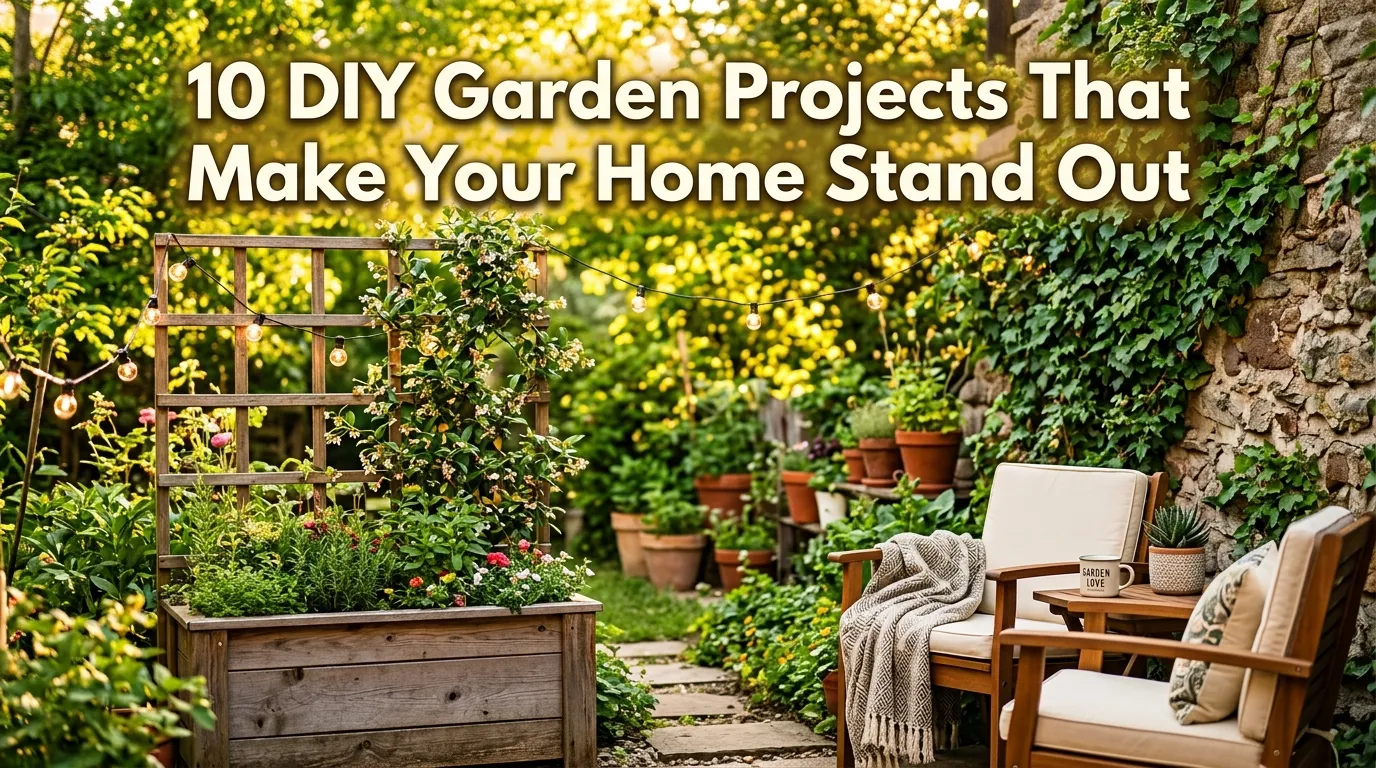
10 DIY Garden Projects That Make Your Home Stand Out
A beautiful garden doesn’t always require an expensive landscape makeover. Some of the most memorable outdoor spaces come from simple DIY projects that add personality, structure, and useful details around the home.
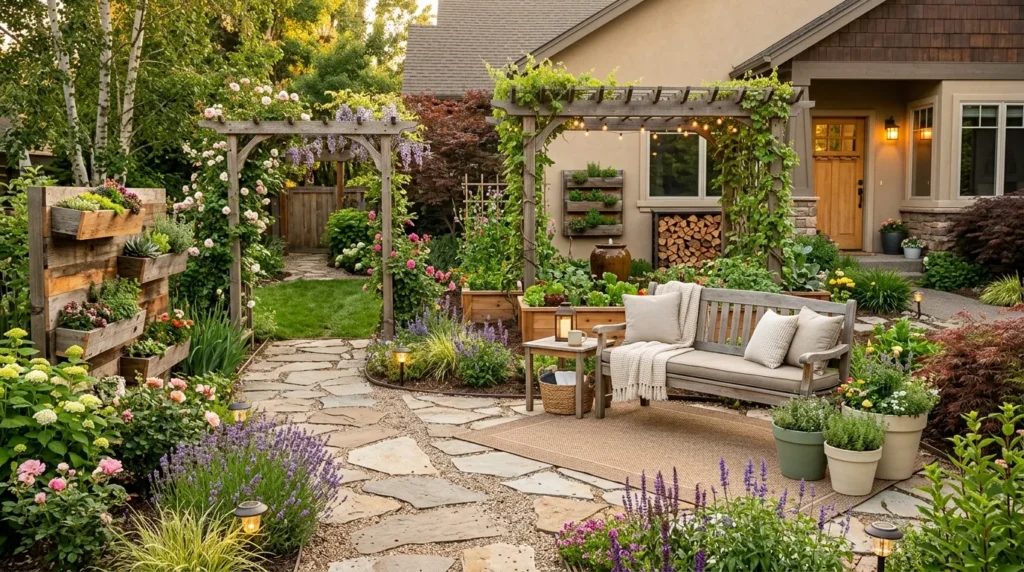
A handmade planter, painted garden bench, decorative pathway, or simple trellis can change how an outdoor area feels without requiring a complete redesign. The key is choosing projects that complement the existing architecture and landscape instead of competing with them.
I’ve found that the best garden DIYs usually serve more than one purpose. A trellis can support climbing plants while adding height. A planter can introduce color while defining an entry path. A garden bench can provide seating while becoming a focal point. These small improvements make the garden feel intentional rather than simply decorated.
Another advantage of DIY projects is flexibility. You can work with materials you already have, adjust dimensions to fit your space, and choose finishes that match your home’s exterior. This makes it easier to create something that feels personal.
Before starting, think about what your garden is missing. Does it need more height? A defined walkway? A welcoming entrance? Additional seating? A place to display flowers? Answering that question helps you choose a project that actually improves the space.
The ten ideas below focus on practical, visually appealing projects that can give your yard more character. Some are suitable for beginners, while others may require more tools or construction experience.
The goal isn’t to make everything look handmade. It’s to add a few thoughtful details that make your outdoor space feel distinctive, welcoming, and connected to your home.
Table of Contents
1. DIY Wooden Planters
Build simple planters that add structure and personality.
2. Painted Garden Pots
Refresh ordinary containers with a custom finish.
3. Garden Trellis
Add height and support climbing plants.
4. DIY Garden Path
Create a defined route through planting areas.
5. Upcycled Garden Bench
Turn reclaimed materials into useful outdoor seating.
6. Vertical Herb Garden
Use a wall or compact structure for edible greenery.
7. Decorative Garden Edging
Give planting beds a cleaner, more finished boundary.
8. DIY Birdhouse Display
Add charm while creating a welcoming wildlife feature.
9. Outdoor Garden Sign
Give your garden a personalized focal point.
10. DIY Potting Station
Create a practical workspace for gardening tasks.
1. DIY Wooden Planters
Quick Benefits
- Adds architectural structure
- Works around entrances and patios
- Can be customized to fit
- Creates defined planting areas
- Complements many home styles
Why It Works
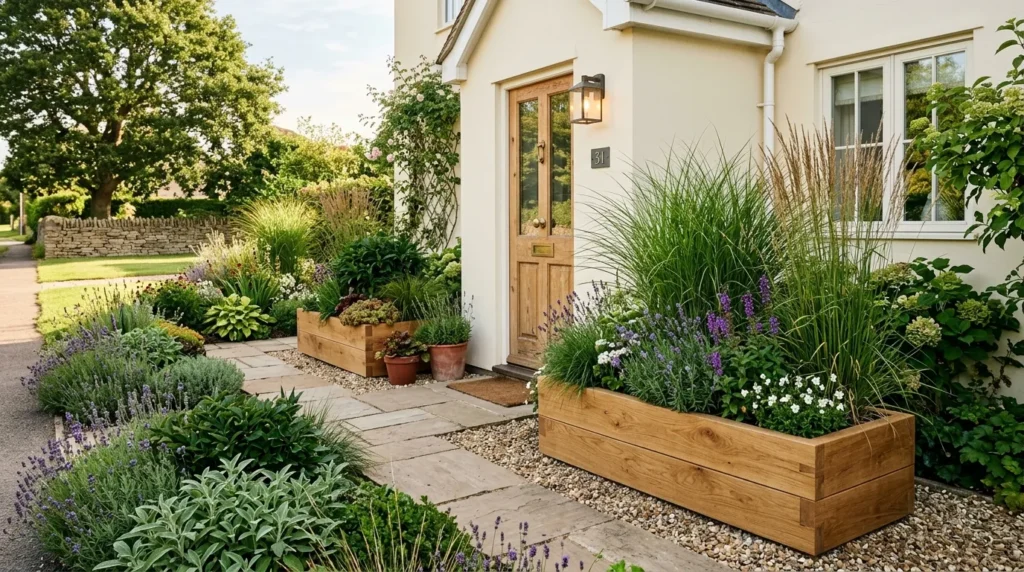
Planters do more than hold plants. Their shape and placement can help define the visual structure of a garden.
A pair of wooden planters beside a front entrance can create symmetry. A long planter can separate a patio from the lawn. Smaller boxes can frame a garden path.
Wood also brings natural warmth to outdoor spaces and works especially well with greenery.
How To Style It
Use exterior-rated lumber and suitable outdoor fasteners.
Keep the design simple with clean rectangular lines.
Sand exposed edges thoroughly.
Apply an exterior finish appropriate for the material and climate.
Add drainage openings and use a suitable liner where appropriate.
For a polished look, repeat the same wood tone in another outdoor feature such as a bench or trellis.
2. Painted Garden Pots
Quick Benefits
- Refreshes old containers
- Adds color
- Requires few materials
- Works for balconies and yards
- Allows easy customization
Why It Works
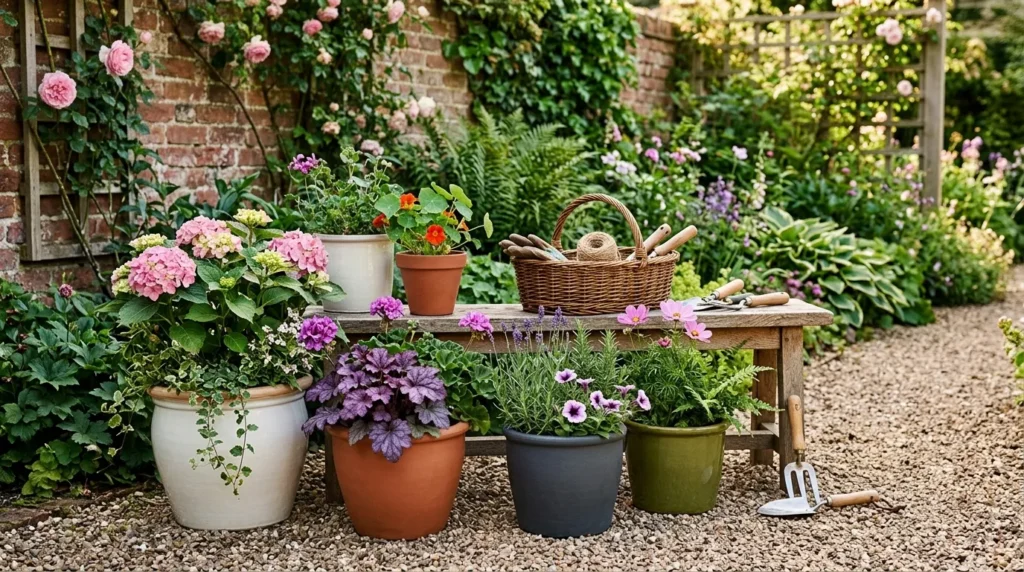
A collection of mismatched pots can make a garden feel visually scattered.
Painting several containers in a coordinated palette creates cohesion.
You can also use color strategically to highlight an entrance, patio, or particular planting area.
How To Style It
Clean containers thoroughly before painting.
Choose coatings designed for the pot material and outdoor conditions.
Neutral shades such as cream, charcoal, terracotta, olive, or warm gray create a sophisticated appearance.
For something more playful, use one accent color across several containers.
Keep the plant colors in mind when choosing the finish.
3. Garden Trellis
Quick Benefits
- Adds vertical interest
- Supports climbing plants
- Creates a focal point
- Can increase privacy
- Makes walls and fences more interesting
Why It Works
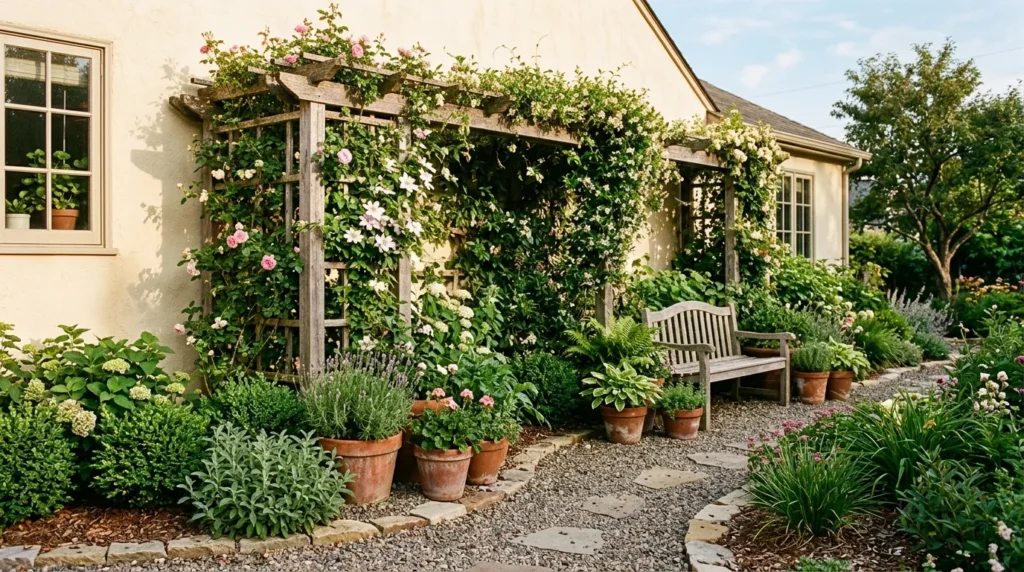
Gardens can sometimes feel visually flat when everything grows at ground level.
A trellis introduces another layer.
It can guide climbing plants upward while adding structure even before the plants mature.
A simple trellis can also help divide different areas of the garden.
How To Style It
Build or purchase a sturdy structure appropriate for the plant you plan to grow.
Position it where it receives suitable light.
Paint or stain the trellis to complement the home’s exterior.
Choose climbing plants according to your local growing conditions.
Leave adequate room for the plant to develop without blocking windows, walkways, or access points.
4. DIY Garden Path
Quick Benefits
- Defines movement
- Adds structure
- Connects garden areas
- Makes planting beds feel intentional
- Improves visual flow
Why It Works
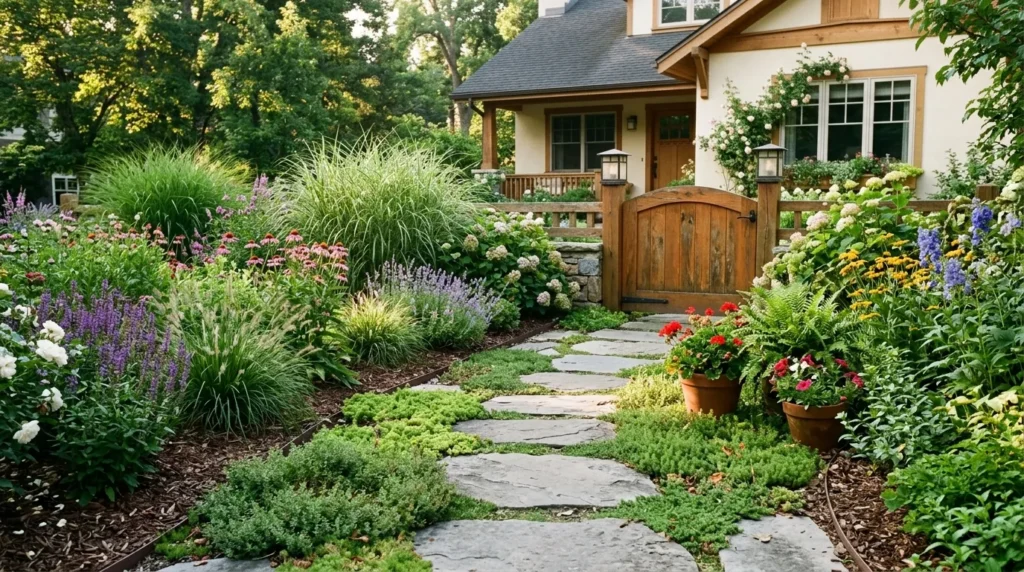
A garden path can change the way the entire yard is perceived.
Instead of seeing separate patches of lawn and plants, the eye follows a clear route through the landscape.
You can create a simple path using gravel, stepping stones, brick, pavers, or other suitable materials.
How To Style It
Begin by deciding where people naturally walk.
Mark the route before purchasing materials.
Keep the width appropriate for comfortable passage.
Use edging to help contain loose materials where necessary.
Curve the path gently when the space allows.
Surround it with low-growing plants or mulch rather than letting tall plants block the walkway.
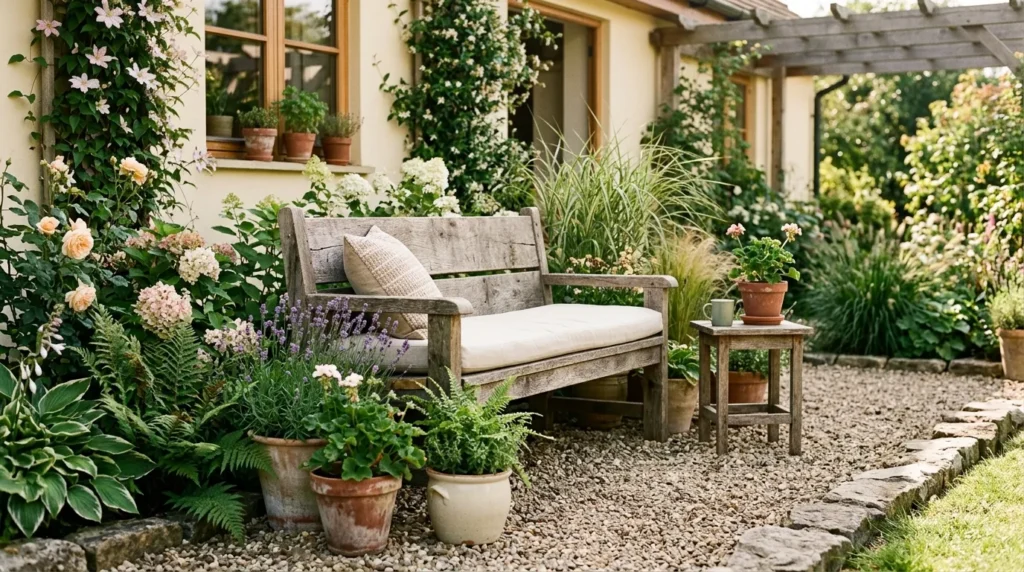
5. Upcycled Garden Bench
Quick Benefits
- Adds seating
- Creates a focal point
- Reuses existing materials
- Makes gardens more functional
- Can suit rustic or modern styles
Why It Works
A garden is more inviting when it offers a place to stop and enjoy it.
A simple bench can turn an unused corner into a destination.
Using reclaimed or repurposed materials can also give the piece character that new furniture doesn’t always have.
How To Style It
Choose sturdy materials that can handle outdoor conditions.
Sand rough surfaces and remove splinters.
Use suitable exterior finishes.
Place the bench where there is a pleasant view or shade when possible.
Surround it with plants rather than placing it directly in the middle of an active pathway.
Add a removable outdoor cushion for comfort.
6. Vertical Herb Garden
Quick Benefits
- Saves ground space
- Makes herbs accessible
- Adds greenery to walls
- Works in small gardens
- Combines function and decoration
Why It Works
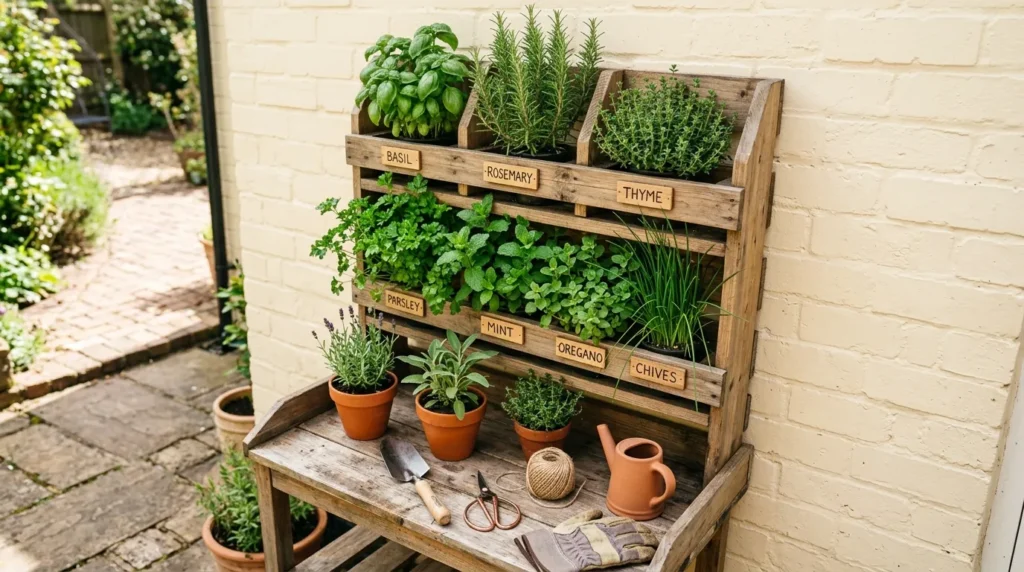
A vertical herb garden is especially useful when there isn’t enough ground space for traditional planting beds.
A wall-mounted planter, tiered shelf, pallet-style structure, or purpose-built frame can create several planting levels.
It also adds visual interest to blank walls.
How To Style It
Choose herbs that suit your local climate and available sunlight.
Place the plants where watering and harvesting are convenient.
Use containers with adequate drainage.
Group herbs with similar growing requirements.
Labeling the plants can add a charming garden detail while making identification easy.
7. Decorative Garden Edging
Quick Benefits
- Defines planting beds
- Creates cleaner lines
- Separates lawn from garden
- Makes the landscape feel finished
- Can be inexpensive
Why It Works
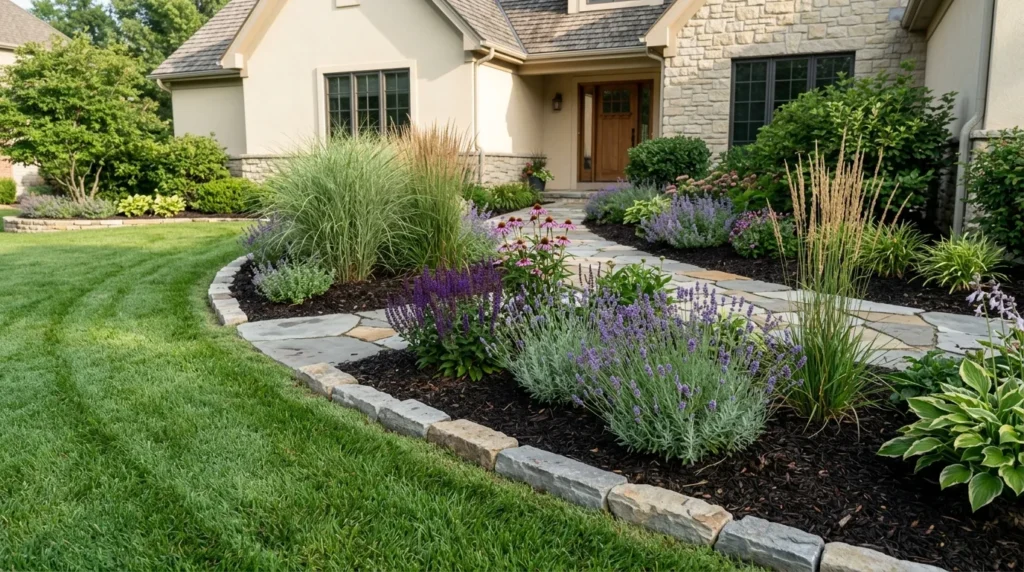
The boundary between lawn, mulch, gravel, and planting beds has a significant effect on the appearance of a garden.
Clean edging gives those areas a deliberate shape.
It can also reduce the visual spread of mulch or gravel into nearby areas.
How To Style It
Choose edging that complements your home’s style.
Natural stone creates an organic appearance.
Brick can feel traditional.
Metal edging offers a cleaner modern line.
Wood can suit casual or cottage-inspired gardens.
Install the edging carefully and keep the line consistent with the shape of the planting bed.
8. DIY Birdhouse Display
Quick Benefits
- Adds personality
- Creates a garden focal point
- Can support local wildlife
- Works in small spaces
- Offers a fun DIY project
Why It Works
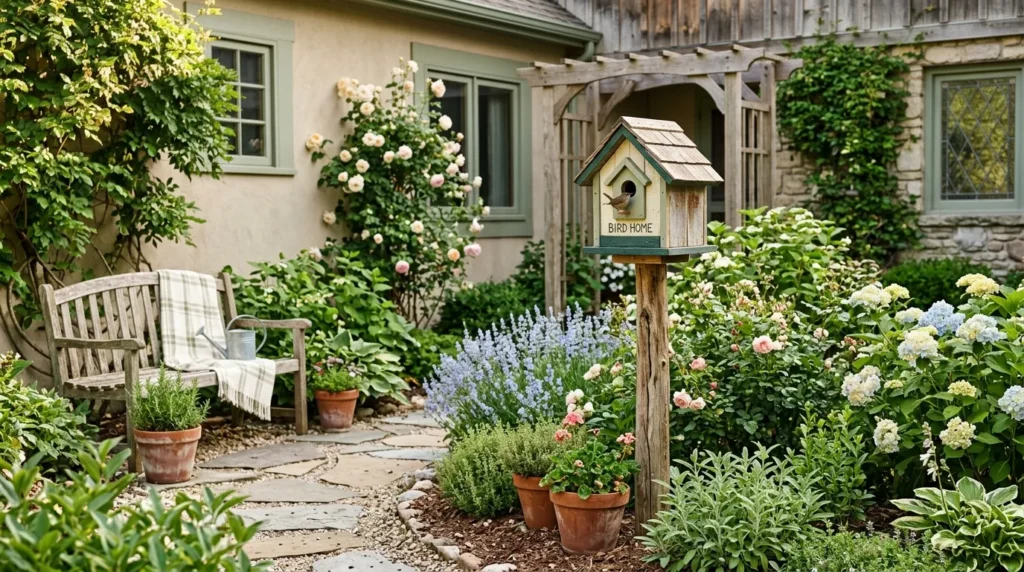
A handmade birdhouse can add charm without requiring a large landscape change.
It also creates an opportunity to introduce a small architectural detail that contrasts with natural greenery.
If you want the birdhouse to serve wildlife, construction and placement matter more than decoration.
How To Style It
Build or select a birdhouse appropriate for the bird species you hope to attract.
Use untreated or wildlife-appropriate materials where suitable.
Avoid decorative elements that create hazards.
Place it in an appropriate location away from excessive disturbance.
For a purely decorative display, you have more flexibility with color and placement.
9. Outdoor Garden Sign
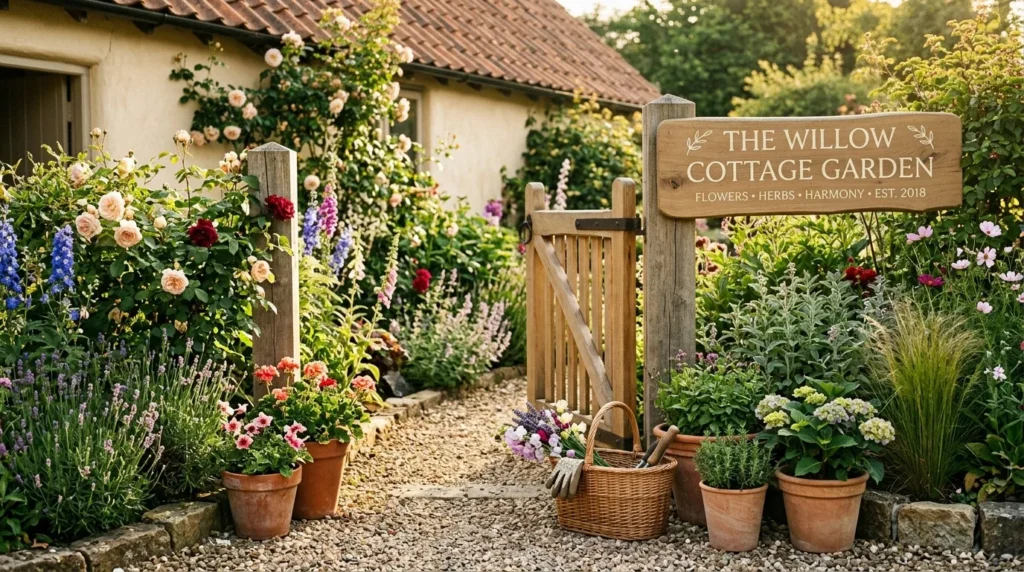
Quick Benefits
- Personalizes the garden
- Creates a focal point
- Works near entrances
- Can identify garden areas
- Adds handmade character
Why It Works
A garden sign can introduce personality without adding much physical clutter.
A simple wooden sign near a vegetable garden, herb area, or pathway can make the space feel intentionally designed.
How To Style It
Use a weather-resistant board.
Sand the surface before applying lettering.
Choose a simple font that can be read from a distance.
Keep the wording short.
Use an outdoor-rated finish to protect the material.
For a sophisticated look, use a neutral background with simple lettering instead of excessive decoration.
10. DIY Potting Station
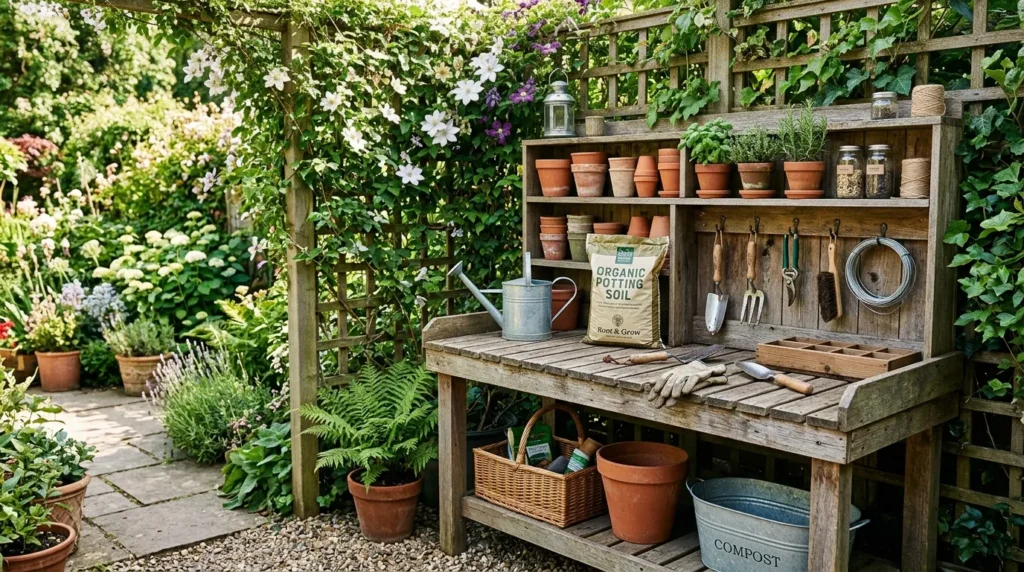
Quick Benefits
- Creates a dedicated gardening workspace
- Keeps tools organized
- Makes planting easier
- Uses vertical storage
- Adds practical character
Why It Works
A potting station combines storage and function in one area.
Instead of keeping soil, pots, hand tools, and gardening supplies scattered around the yard, a dedicated station gives everything a logical home.
It can also become an attractive garden feature when designed thoughtfully.
How To Style It
Use a sturdy outdoor work surface.
Add hooks for hand tools.
Include shelves for pots and containers.
Keep soil and other supplies protected from weather where appropriate.
A reclaimed wood table can work beautifully in a casual garden.
Position the station near the area where you normally plant and water.
What DIY Projects Make a Garden Look Better?
Projects that add structure, function, or a clear focal point tend to have the strongest visual impact.
Wooden planters, trellises, paths, benches, garden edging, and vertical planting systems can change how a garden is organized.
Decorative projects can then add personality.
The best combination usually includes both practical and decorative improvements rather than filling the garden with ornaments.
How Can I Improve My Garden Without Spending a Lot?
Start by repurposing materials you already have.
Old containers can be cleaned and refinished. Reclaimed wood can become a planter or garden sign. Existing stones can sometimes be reused to define a path or planting area.
Focus on projects that solve a visible problem.
Adding structure to an empty corner or defining a messy garden border can create more impact than purchasing many small decorations.
What Is an Easy DIY Garden Project for Beginners?
Painted garden pots, simple garden signs, basic container arrangements, and straightforward vertical herb displays are approachable starting points.
Choose a project that doesn’t require complex structural work.
As your confidence grows, you can move toward projects such as planters, benches, trellises, and garden pathways.
How Do I Make a DIY Garden Project Look Professional?
Good proportions and consistent materials make a significant difference.
Measure carefully before cutting materials.
Sand visible edges.
Use appropriate outdoor finishes.
Repeat colors or materials already present in the landscape.
Avoid adding too many unrelated decorative details.
A simple project with clean lines often looks more polished than an elaborate design with too many elements.
How Do I Choose DIY Projects That Suit My Home?
Look at the architecture and existing landscape.
A modern home can work well with clean-lined planters, simple metal edging, and restrained colors.
A traditional or cottage-style home may suit painted wood, brick edging, classic trellises, and softer planting.
The goal is coordination rather than perfect matching.
Related Articles
- 10 DIY Garden Projects That Add Instant Character
- 10 Garden Decor Ideas That Increase Curb Appeal
- 10 Garden Decor Ideas That Feel Like a Luxury Garden
- 10 Backyard Landscape Design Ideas with Beautiful Greenery
- 10 Small Balcony Ideas with Beautiful Greenery
Frequently Asked Questions
What are the easiest DIY garden projects?
Painted pots, simple garden signs, container gardens, basic herb displays, and decorative edging are accessible starting points. They require less construction than larger projects while still creating visible changes in an outdoor space.
How can I make my garden look expensive with DIY projects?
Focus on simplicity, repetition, and quality finishes. Coordinated planters, clean garden edging, natural materials, and restrained colors can create a more polished appearance. Good proportions and careful installation often have more impact than expensive decorations.
What materials work best for outdoor DIY projects?
Materials need to be appropriate for your climate and intended use. Exterior-rated wood, suitable metals, stone, concrete, and outdoor-rated finishes can all work depending on the project. Choose fasteners and coatings designed for outdoor exposure.
Can I use reclaimed wood in the garden?
Reclaimed wood can work for decorative projects and some garden structures, but inspect it carefully. Avoid material with unknown chemical treatment when it will contact soil or edible plants. Remove nails, splinters, and damaged sections before use.
How do I make a small garden stand out?
Use vertical elements, defined planting beds, coordinated containers, and one or two focal points. A trellis, attractive planter, garden bench, or simple pathway can create structure without requiring a large yard.
What DIY garden project adds the most character?
There isn’t one universal choice, but personalized features such as handmade planters, benches, trellises, signs, and potting stations can make a garden feel distinctive. Choose the project that fills a genuine gap in your existing landscape.
How do I protect DIY garden projects from weather?
Use materials and finishes appropriate for outdoor exposure. Seal or paint suitable wood, use rust-resistant or protected hardware, and follow the manufacturer’s directions for exterior coatings. Inspect projects periodically and repair damaged finishes before deterioration spreads.
Conclusion
A garden doesn’t need a complete renovation to become more memorable.
Sometimes one well-designed DIY project can change the way the entire outdoor space feels. A pair of planters can frame an entrance. A trellis can add height. A simple path can improve movement. A bench can turn an overlooked corner into a place to relax.
Start by identifying what your garden lacks.
If it feels flat, add vertical structure. If the borders look unfinished, add edging. If there isn’t a comfortable place to sit, build or refresh a bench. If gardening supplies are scattered everywhere, create a potting station.
Choose materials that suit the home’s exterior and the demands of your local climate. Measure carefully, use appropriate outdoor materials, and keep the finished design simple.
You don’t have to complete all ten projects.
Pick one that solves a real problem or adds something you’ve been missing. Once that project is finished, the next improvement becomes much easier to see.
The most beautiful DIY gardens aren’t necessarily the ones with the most decorations. They’re the ones where practical features, plants, and personal details work together naturally.