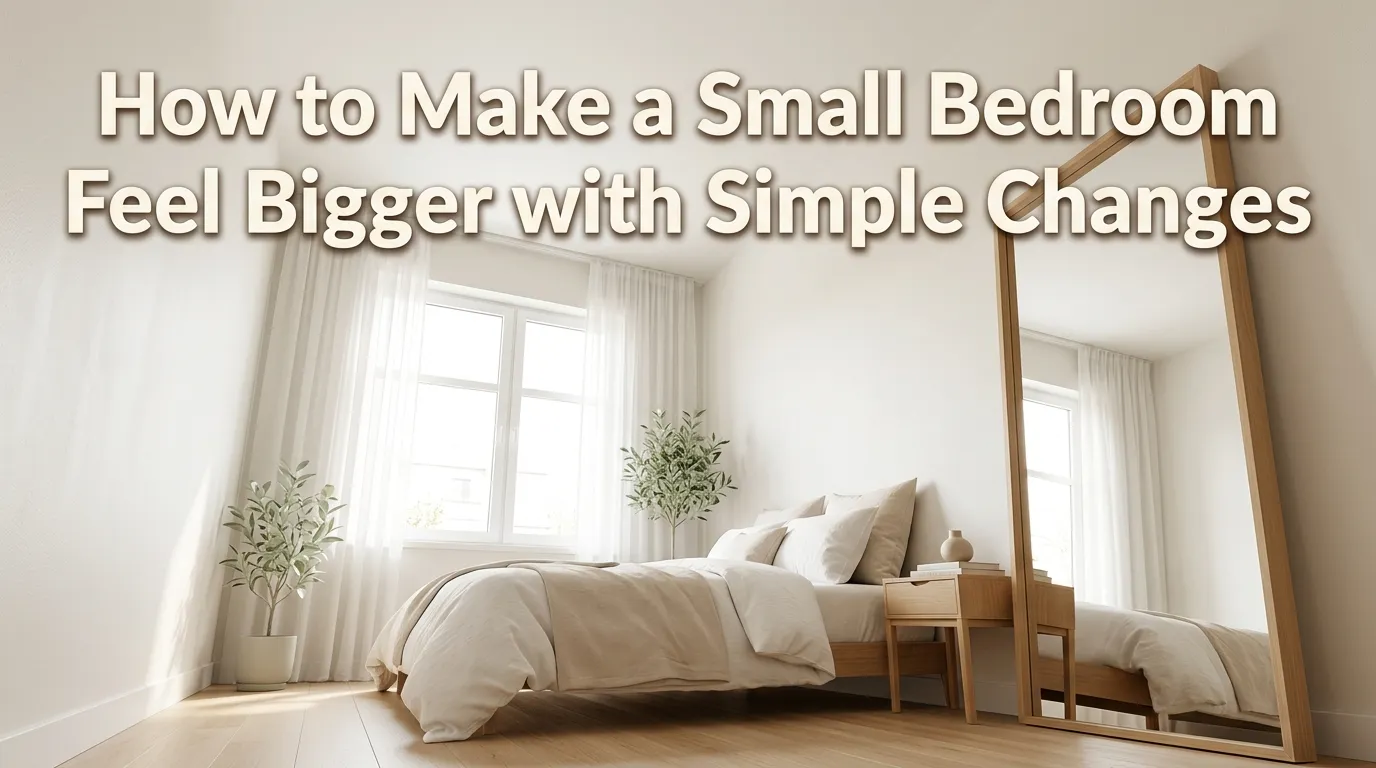
How to Make a Small Bedroom Feel Bigger with Simple Changes
A small bedroom doesn’t have to feel cramped, crowded, or difficult to decorate. Sometimes the difference between a room that feels tight and one that feels surprisingly spacious comes down to a handful of simple changes.
You don’t necessarily need to knock down a wall, replace every piece of furniture, or spend a fortune on a bedroom makeover. The way light moves through the room, how furniture sits on the floor, where your eyes land first, and how much visual clutter is exposed can all influence how spacious the room feels.
I’ve noticed that small bedrooms often become crowded because we try to solve a space problem by adding more things. Another storage cabinet gets squeezed into the corner. A larger dresser replaces a smaller one. Decorative pieces accumulate on every surface. Eventually, the room has less breathing room even though it technically contains more storage.
A better approach is to work with the space you already have.
You can brighten the walls, simplify the bedding, use curtains strategically, choose furniture with a lighter visual profile, clear walking paths, and make better use of vertical space. Even rearranging the existing furniture can sometimes create a noticeable improvement.
The ideas below focus on changes that are realistic for homeowners and renters alike. Some take only a few minutes, while others may involve a small purchase. None require a major renovation.
Whether your bedroom is a compact apartment room, a guest bedroom, a narrow primary bedroom, or simply a space that feels smaller than you’d like, these decorating and organization ideas can help it feel lighter, calmer, and more open.
Table of Contents
1. Brighten The Walls
Use light-reflective colors to create a brighter, more open atmosphere.
2. Clear The Floor
Create more visible floor space by simplifying furniture and clutter.
3. Use Large Mirrors
Reflect natural light and create the impression of additional visual depth.
4. Choose Light Furniture
Use furniture with slimmer profiles and lighter visual weight.
5. Hang Curtains High
Draw the eye upward and make the room feel taller.
6. Simplify The Bedding
Create a cleaner visual field with restrained layers and colors.
7. Use One Large Rug
Connect the room with a properly sized rug instead of several small ones.
8. Improve Furniture Placement
Arrange the room to protect circulation and maximize open space.
9. Use Vertical Space
Take advantage of walls to keep useful items off the floor.
10. Reduce Visual Clutter
Edit surfaces and decor so the room feels calm rather than crowded.
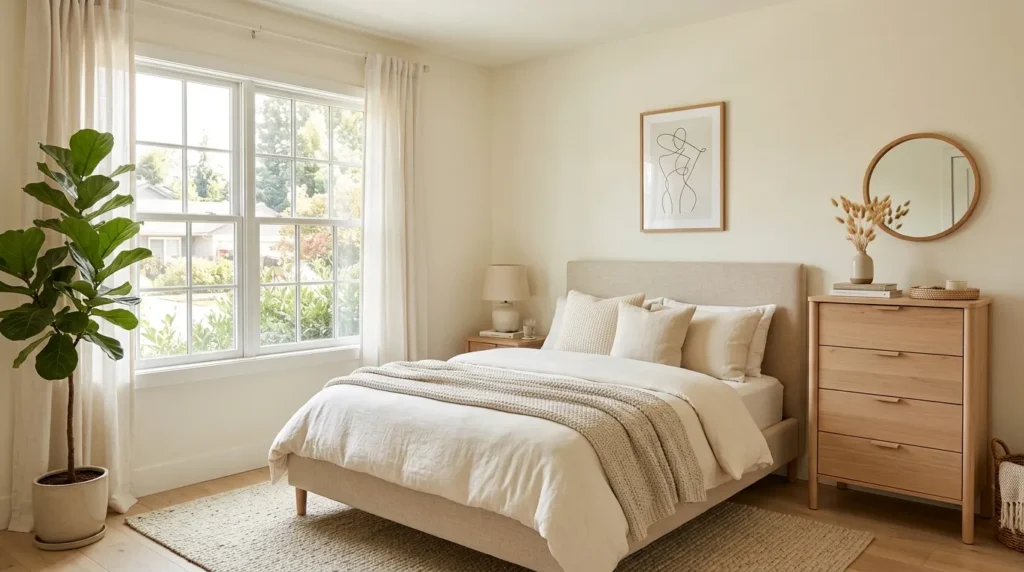
1. Brighten The Walls
Quick Benefits
- Makes the room feel brighter
- Reflects more available daylight
- Creates a calmer backdrop
- Helps furniture stand out
- Makes the space feel visually open
Why It Works
Wall color has a major effect on how a small bedroom is perceived.
Light colors aren’t the only option, but they can reflect more available light and create a sense of openness. Warm whites, soft creams, pale beige, light greige, and gentle pastels can all work beautifully.
The important thing is choosing a color that works with the natural light in your specific room.
A north-facing bedroom may benefit from a warmer neutral, while a bright south-facing room can often handle cooler tones.
You don’t need stark white walls to make a bedroom feel spacious.
In fact, an overly bright white can sometimes feel cold if the room receives limited natural light.
How To Style It
Choose a wall color that coordinates with your flooring, bedding, and larger furniture.
Keep the ceiling lighter than or similar to the walls to create continuity.
If you prefer color, consider muted shades rather than very saturated tones.
Soft:
- Sage
- Powder blue
- Pale taupe
- Warm ivory
- Dusty blush
can add personality without overwhelming the room.
For renters, removable wallpaper or large light-colored artwork can provide a similar visual effect without repainting.
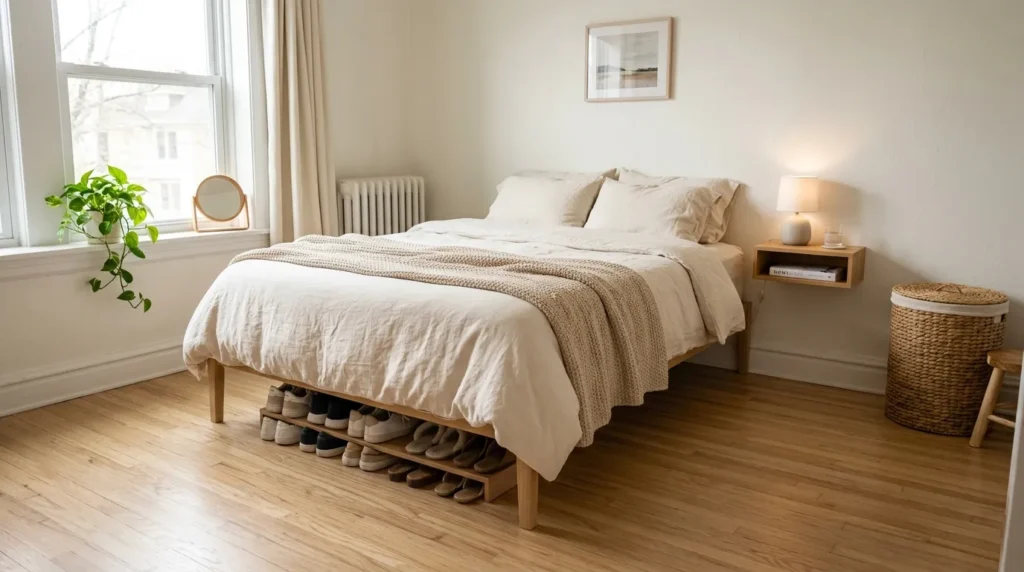
2. Clear The Floor
Quick Benefits
- Makes the room feel more open
- Improves circulation
- Makes cleaning easier
- Reduces visual weight
- Creates a calmer appearance
Why It Works
One of the simplest ways to make a small bedroom feel larger is to show more floor.
When furniture, baskets, shoes, clothing, and storage containers cover much of the floor, the eye sees less continuous space.
That makes the room feel more crowded.
You don’t necessarily need to remove everything.
Instead, look for opportunities to lift items off the floor.
A wall-mounted nightstand can replace a traditional bedside table. A floating shelf can hold books and accessories. A bed with visible legs can create more visual openness underneath.
How To Style It
Walk around the room and identify everything currently sitting on the floor.
Ask whether each item needs to stay there.
Move:
- Shoes into a closet
- Laundry into a hamper
- Bags onto hooks
- Books onto shelves
- Seasonal items under the bed
If you’re buying new furniture, consider pieces with visible legs rather than solid bases.
The goal is to create longer uninterrupted areas of flooring.
That visual continuity can make the bedroom feel noticeably less crowded.
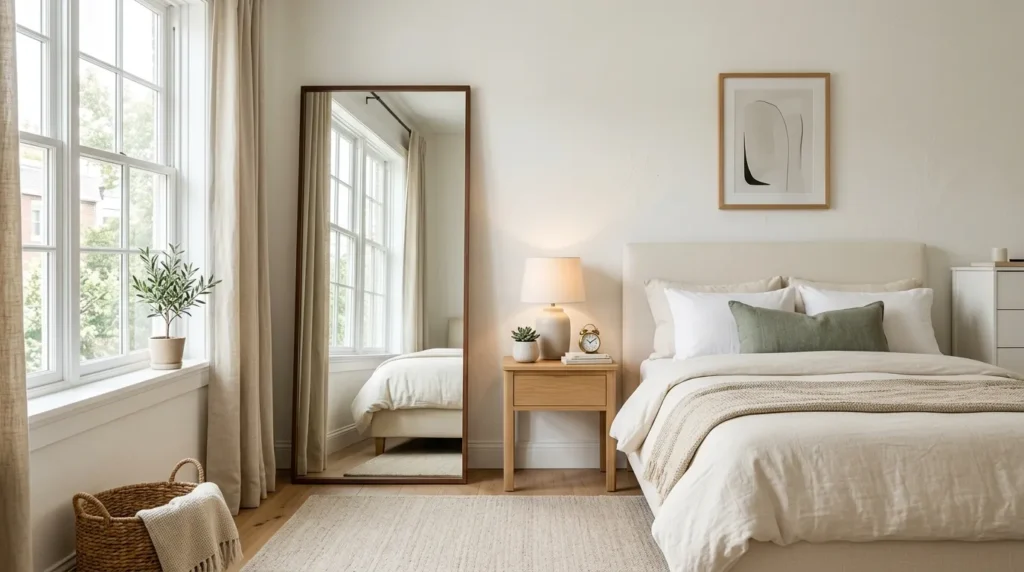
3. Use Large Mirrors
Quick Benefits
- Reflects natural light
- Adds visual depth
- Makes walls feel more expansive
- Creates a useful dressing feature
- Works without changing the room’s footprint
Why It Works
Mirrors are a classic small-space decorating tool for a reason.
A strategically positioned mirror reflects part of the room and can create the impression that the space continues beyond the wall.
It can also bounce daylight deeper into the room.
A large mirror generally has more visual impact than several small mirrors scattered across the wall.
However, placement matters.
You want the mirror to reflect something attractive or useful rather than a cluttered corner.
How To Style It
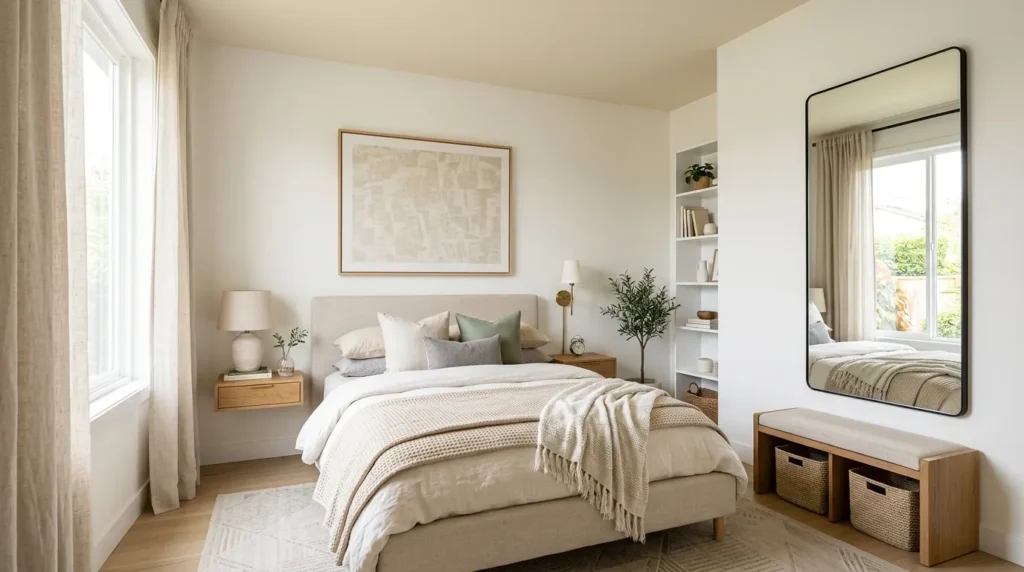
Try placing a full-length mirror against a wall or mounting one opposite a window where it can reflect daylight.
A large rectangular mirror above a dresser can visually expand that section of the room.
For a softer appearance, choose a simple wood or thin metal frame.
Avoid covering every wall with mirrors.
One thoughtfully positioned mirror is often enough.
If you’re renting, a leaning full-length mirror can provide the effect without permanent installation.
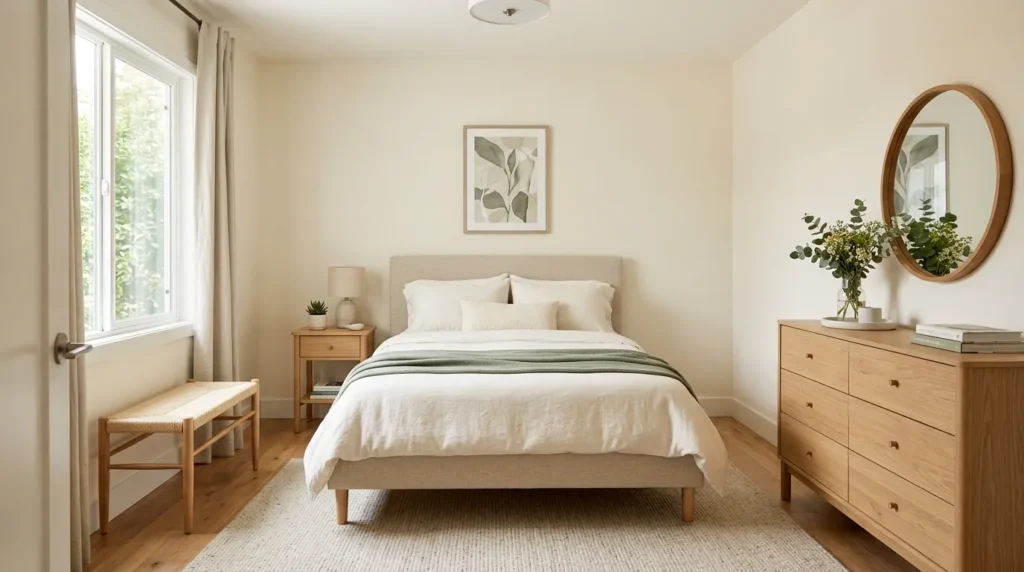
4. Choose Light Furniture
Quick Benefits
- Reduces visual heaviness
- Preserves walking space
- Makes the room feel less crowded
- Improves sightlines
- Creates a lighter appearance
Why It Works
Furniture has both physical and visual weight.
Two pieces may have similar dimensions but feel completely different depending on their shape, color, material, and base.
A solid dark dresser reaching all the way to the floor can look much heavier than a lighter-colored dresser with tapered or exposed legs.
This doesn’t mean you need to replace all your furniture.
Sometimes simply removing one bulky piece can have a greater effect than purchasing several new items.
How To Style It
When choosing furniture, look for:
- Slim legs
- Narrow profiles
- Light wood finishes
- Soft neutral upholstery
- Open shelving
- Rounded edges
- Wall-mounted designs
Avoid oversized pieces that leave only narrow walking paths.
Before purchasing anything, use painter’s tape to mark its dimensions on the floor.
This gives you a better idea of how much visual and physical space it will occupy.
5. Hang Curtains High
Quick Benefits
- Makes ceilings appear taller
- Draws the eye upward
- Creates longer vertical lines
- Frames windows beautifully
- Adds softness without clutter
Why It Works
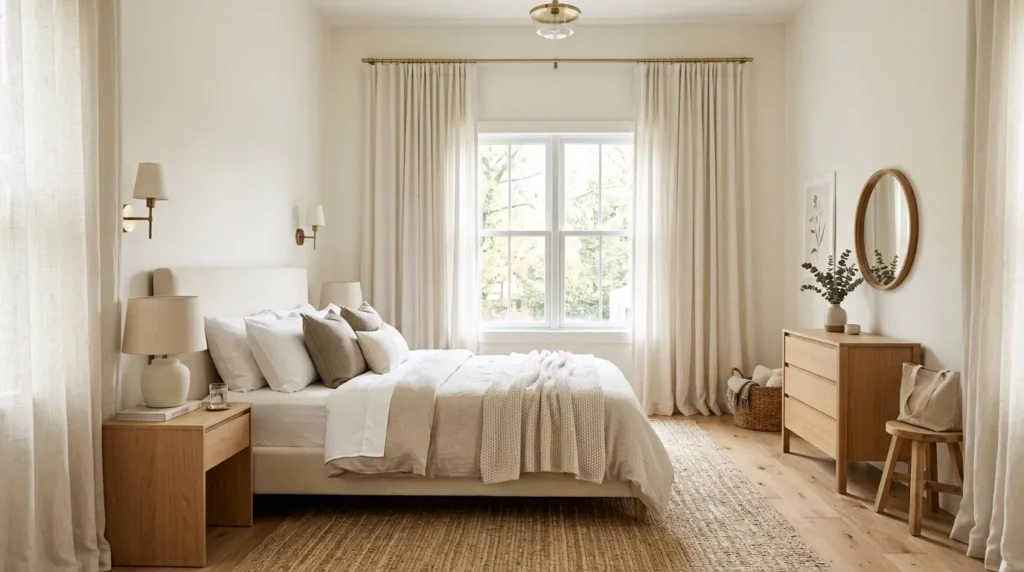
Windows naturally create a strong horizontal and vertical feature in a bedroom.
Curtain placement can emphasize the room’s height.
Mounting curtain hardware slightly above the window frame and allowing panels to extend toward the floor creates a longer visual line.
This can make the ceiling appear higher.
It also helps avoid the chopped-up appearance created by short curtains that stop well above the floor.
How To Style It
Choose curtains that extend close to the floor.
Use a simple fabric such as:
- Linen
- Cotton
- Cotton-linen blend
- Lightweight woven fabric
For a small bedroom, consider colors close to the wall color.
This reduces visual interruption.
If the window is narrow, extend the curtain rod beyond the window frame where practical.
When the curtains are open, more of the window remains visible, allowing the room to benefit from available daylight.
6. Simplify The Bedding
Quick Benefits
- Creates a cleaner focal point
- Reduces visual clutter
- Makes the bed feel less bulky
- Creates a calmer atmosphere
- Makes styling easier
Why It Works
The bed is usually the dominant object in a bedroom.
That means the bedding has a major effect on the room’s visual appearance.
Too many pillows, competing patterns, bulky blankets, and unrelated colors can make the largest surface in the room feel busy.
A simpler bedding arrangement creates a more continuous visual field.
This doesn’t mean your bed needs to look plain.
Texture can add plenty of interest without introducing lots of patterns.
How To Style It
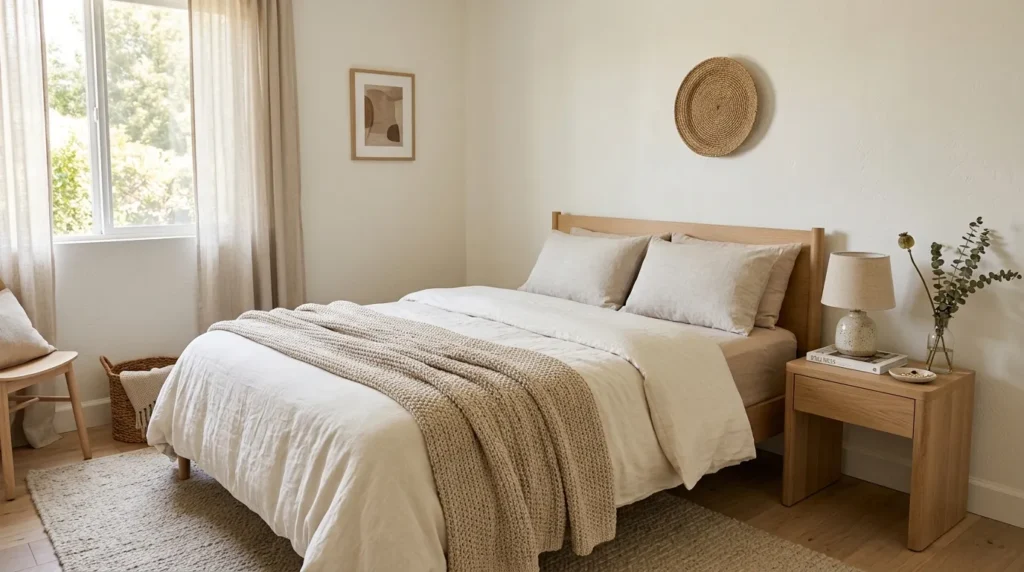
Choose a restrained color palette.
A simple combination could include:
- Cream duvet
- Beige sheets
- One textured throw
- Two or three accent pillows
Layer materials rather than adding excessive objects.
Linen, cotton, quilted fabric, and soft knits can create depth while keeping the overall palette calm.
If your bedroom already has patterned curtains or a colorful rug, keep the bedding relatively quiet.
7. Use One Large Rug
Quick Benefits
- Creates visual continuity
- Makes the bed area feel grounded
- Adds warmth and texture
- Reduces fragmented floor patterns
- Creates a finished appearance
Why It Works
A collection of small rugs can visually divide a small bedroom into separate sections.
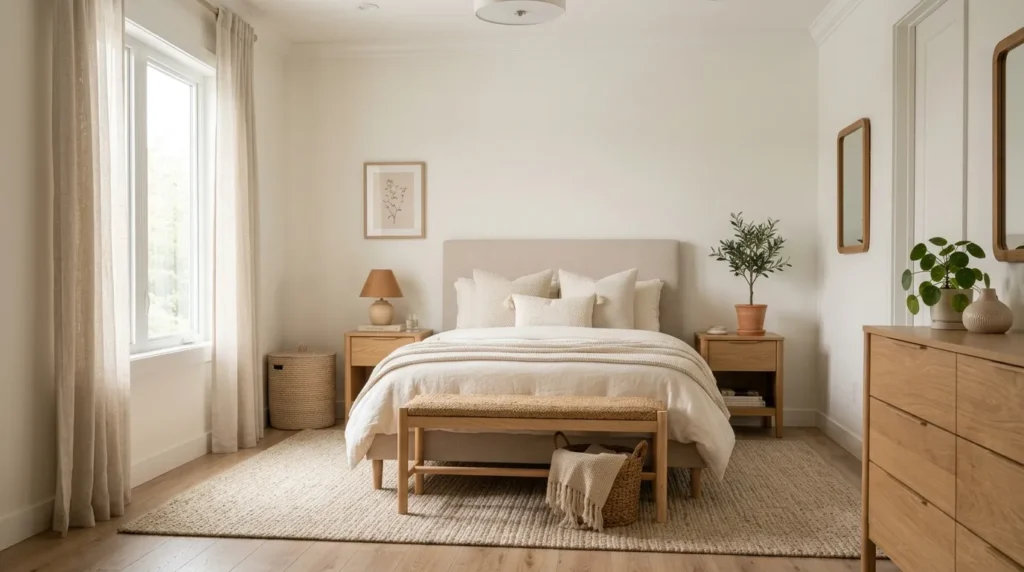
One appropriately sized area rug can instead connect the major furniture pieces.
The rug acts as a visual foundation.
It can also make the bedroom feel more intentional because the bed, nightstands, and surrounding area appear to belong to one composition.
The important part is choosing a size that actually relates to the bed.
How To Style It
For a larger bedroom, an area rug can extend beneath the bed and nightstands.
In a compact room, a runner beside the bed may be more practical if a large area rug would overwhelm the available floor space.
Choose a relatively quiet pattern if your bedding and curtains already have strong patterns.
For a small room, rugs with subtle texture or tonal designs can add interest without creating visual fragmentation.
8. Improve Furniture Placement
Quick Benefits
- Creates better circulation
- Opens visual sightlines
- Makes the room easier to use
- Reduces awkward corners
- Can improve the room without spending money
Why It Works
Sometimes the bedroom isn’t actually too small.
The furniture is simply arranged inefficiently.
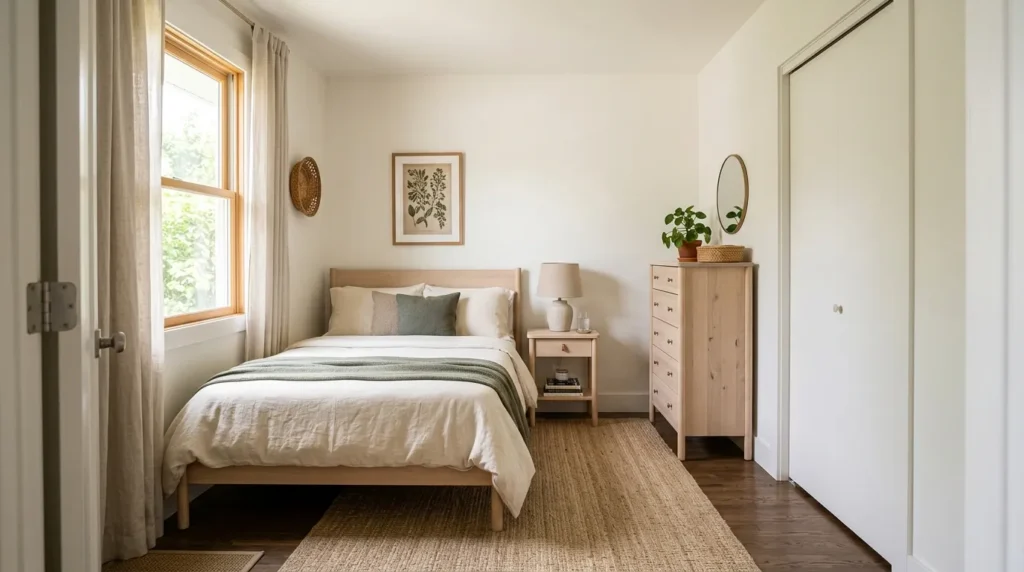
A bed that blocks a closet door, a dresser placed too close to the entrance, or a chair occupying the only open corner can make the room feel cramped.
Furniture placement should account for how you move through the bedroom.
The best layout isn’t necessarily the one that looks symmetrical.
It’s the one that gives you comfortable movement while keeping the main furniture visually organized.
How To Style It
Start by identifying the room’s essential pieces.
Usually:
- Bed
- Nightstand
- Clothing storage
- Lighting
- Optional seating
Place the bed first.
Then protect the main walking paths.
If possible, keep the entrance visually open when you walk into the room.
Don’t automatically push every piece against a wall.
However, in very small rooms, using walls efficiently can preserve more central floor space.
Experiment before committing.
Moving furniture even a few inches can sometimes make a meaningful difference.
9. Use Vertical Space
Quick Benefits
- Keeps floors clear
- Adds storage without expanding the footprint
- Draws attention upward
- Makes awkward walls useful
- Helps organize everyday items
Why It Works
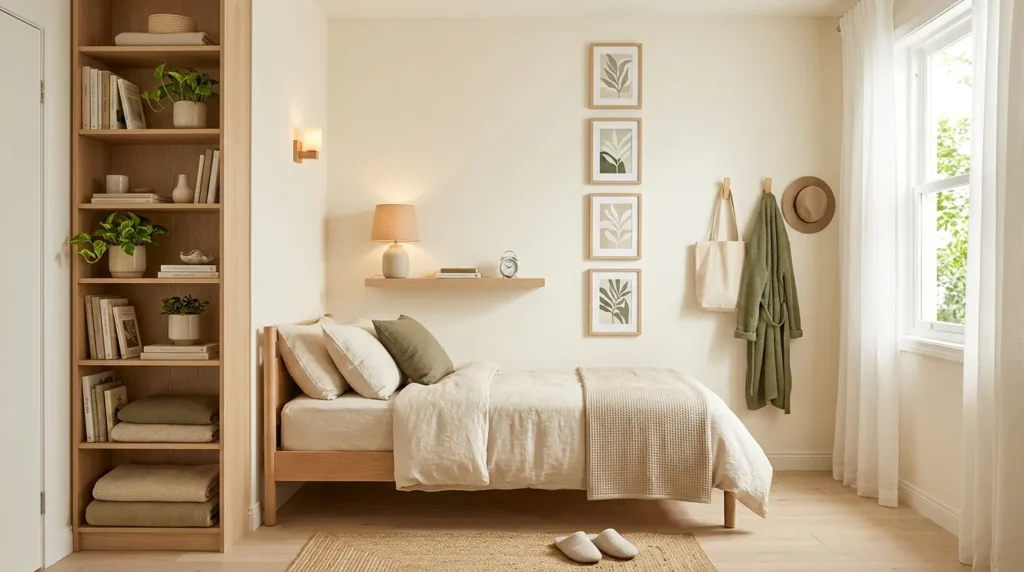
Small bedrooms have limited floor space but still have walls.
Using those walls strategically allows you to store and display belongings without filling the room horizontally.
Tall shelving can provide more storage than a short, wide unit.
Wall-mounted shelves can replace bedside tables.
Hooks can keep bags and robes off chairs and floors.
Vertical organization also encourages the eye to travel upward, emphasizing the height of the room.
How To Style It
Use a tall, narrow bookcase where appropriate.
Install floating shelves above a desk or dresser.
Use wall hooks for:
- Hats
- Bags
- Robes
- Scarves
- Jewelry
Keep frequently used objects within easy reach.
Store less frequently used belongings on higher shelves.
Don’t fill every inch of wall space.
Open areas between storage elements help maintain a sense of visual breathing room.
10. Reduce Visual Clutter
Quick Benefits
- Creates visual calm
- Makes surfaces appear larger
- Helps important features stand out
- Improves the feeling of openness
- Makes cleaning easier
Why It Works
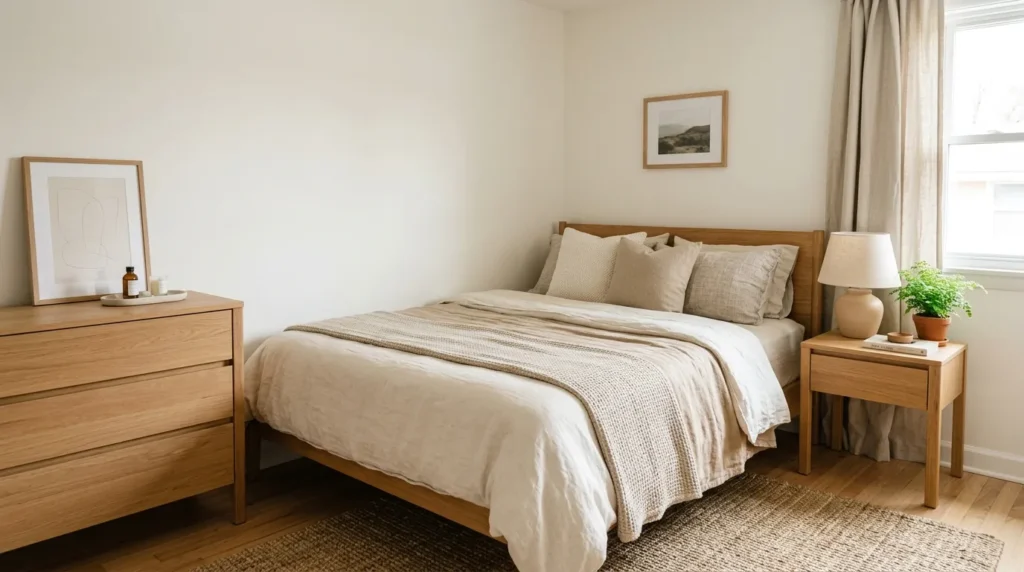
Visual clutter can make a room feel smaller even when its physical layout hasn’t changed.
If every surface contains several objects, the eye has nowhere to rest.
The result can feel busy and crowded.
Reducing visual clutter doesn’t require a minimalist lifestyle.
It simply means choosing what deserves attention.
A small bedroom often benefits from fewer decorative objects, coordinated storage, and clear surfaces.
How To Style It
Start with the nightstand and dresser.
Remove everything that doesn’t serve a purpose or bring genuine enjoyment.
Group smaller items together.
Use a tray for perfumes, skincare, or jewelry.
Keep cords organized.
Store everyday items inside drawers when possible.
On open shelves, combine practical storage with a few decorative pieces.
Try removing five objects from the room rather than adding five new ones.
You may be surprised by how much larger the space feels.
Small Bedroom Changes You Can Make This Weekend
You don’t need to complete a full makeover to see an improvement.
Try this simple weekend plan.
Saturday Morning: Declutter
Remove obvious trash and belongings that don’t belong in the bedroom.
Saturday Afternoon: Rearrange
Experiment with the bed and largest furniture pieces.
Saturday Evening: Edit Surfaces
Clear the nightstand, dresser, and open shelves.
Sunday Morning: Improve Light
Clean the windows, adjust curtains, and reposition lamps.
Sunday Afternoon: Add One Improvement
Choose one meaningful upgrade, such as a mirror, floating shelf, lighter bedding, or appropriately sized rug.
This approach prevents the room from becoming another overwhelming project.
Small Bedroom Mistakes That Make Rooms Feel Smaller
Oversized Furniture
A large dresser or bed frame can consume valuable space and restrict circulation.
Too Many Small Decorations
Several tiny objects can create more visual noise than one larger statement piece.
Short Curtains
Curtains that stop well above the floor can make the room feel visually shorter.
Multiple Tiny Rugs
Small rugs can break up the floor and make the room appear more fragmented.
Dark, Heavy Furniture Everywhere
A few dark pieces can add contrast, but too much visual weight may make a compact room feel enclosed.
Blocking Natural Light
Keep windows as open as practical.
Filling Every Wall
Empty wall space is useful. It gives the room somewhere for the eye to rest.
FAQ
How can I make my small bedroom look bigger without renovating?
Start with furniture placement and clutter. Clear walking paths, remove unnecessary furniture, use light-colored textiles, hang curtains higher, and add one strategically positioned mirror. Wall-mounted shelves and slim furniture can also free floor space without requiring construction.
What colors make a small bedroom look bigger?
Light neutrals such as warm white, cream, pale beige, soft gray, and gentle pastels can help a room feel brighter and more open. The best color depends on natural light and existing finishes. You don’t have to use white; a soft, cohesive palette can create a similar effect.
Does a mirror really make a small bedroom look bigger?
A well-positioned mirror can create the impression of additional depth by reflecting light and parts of the room. A large mirror usually creates a stronger visual effect than several small mirrors. Position it where it reflects natural light or an attractive part of the bedroom.
Should furniture be the same color as the walls?
It doesn’t have to be. However, furniture in similar light tones can blend more easily into the room and reduce visual contrast. If you prefer darker furniture, balance it with lighter walls, bedding, curtains, or rugs so the room doesn’t feel visually heavy.
What type of bed is best for a small bedroom?
A bed with a simple frame and a relatively light visual profile often works well. Storage beds can be especially useful because they combine sleeping space with drawers or compartments. Avoid unnecessarily oversized headboards or bulky frames if floor space is limited.
How do I make a small bedroom feel cozy without making it look crowded?
Focus on texture rather than quantity. Soft bedding, a woven throw, warm lighting, curtains, and a small number of meaningful accessories can create coziness without filling every surface. Keep the floor and main walking paths relatively clear.
Is a large rug good for a small bedroom?
It can be, provided the size works with the room and bed. A properly sized rug can visually connect the bed and surrounding furniture. However, if the room is extremely compact, a runner or smaller strategically placed rug may be more practical.
Conclusion
Making a small bedroom feel bigger doesn’t require a major renovation.
Often, the biggest improvements come from simple visual and practical changes: clearing the floor, improving furniture placement, brightening the walls, using a large mirror, hanging curtains higher, simplifying bedding, and taking advantage of vertical storage.
Start with the changes that cost nothing.
Move the furniture.
Remove unnecessary pieces.
Clear the nightstand.
Open the curtains.
Look at the room from the doorway and notice where your eye stops.
Then consider one or two small upgrades that support the layout rather than adding more clutter.
Remember that spaciousness isn’t only about square footage. It’s also about how easily you can move, how much natural light you see, how clearly the room is organized, and how much visual breathing room exists between objects.
A small bedroom can still feel peaceful, comfortable, and beautifully designed.
The trick is to let the space do more with less.
Related Articles
- How to Organize a Small Bedroom Like a Home Organizer
- How to Organize a Small Bedroom for Maximum Space
- 10 Minimal Aesthetic Bedroom Ideas for Adults
- How to Decorate a Bedroom Without Spending a Fortune
- How to Decorate a Bedroom with Modern Rustic Charm